
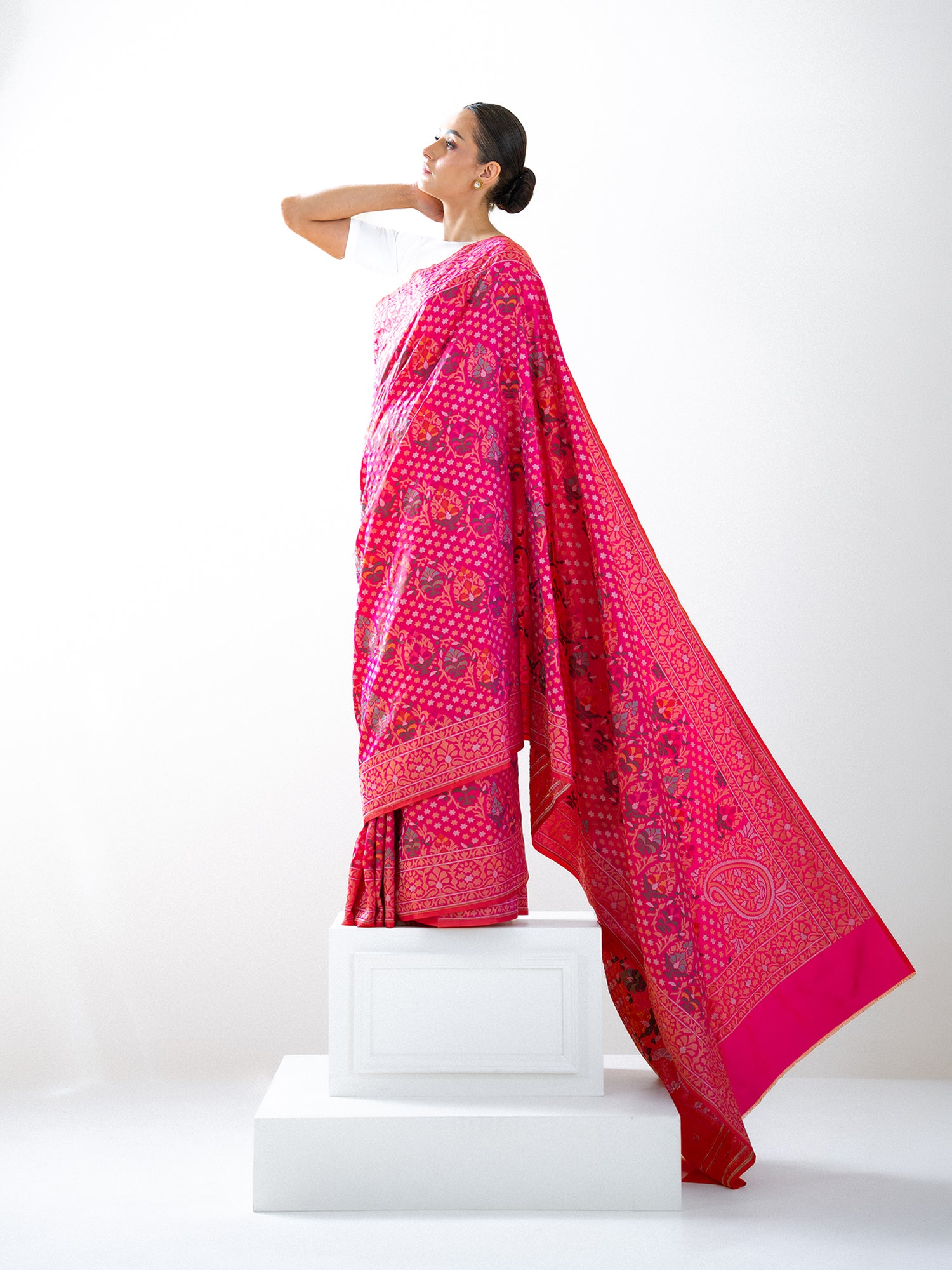
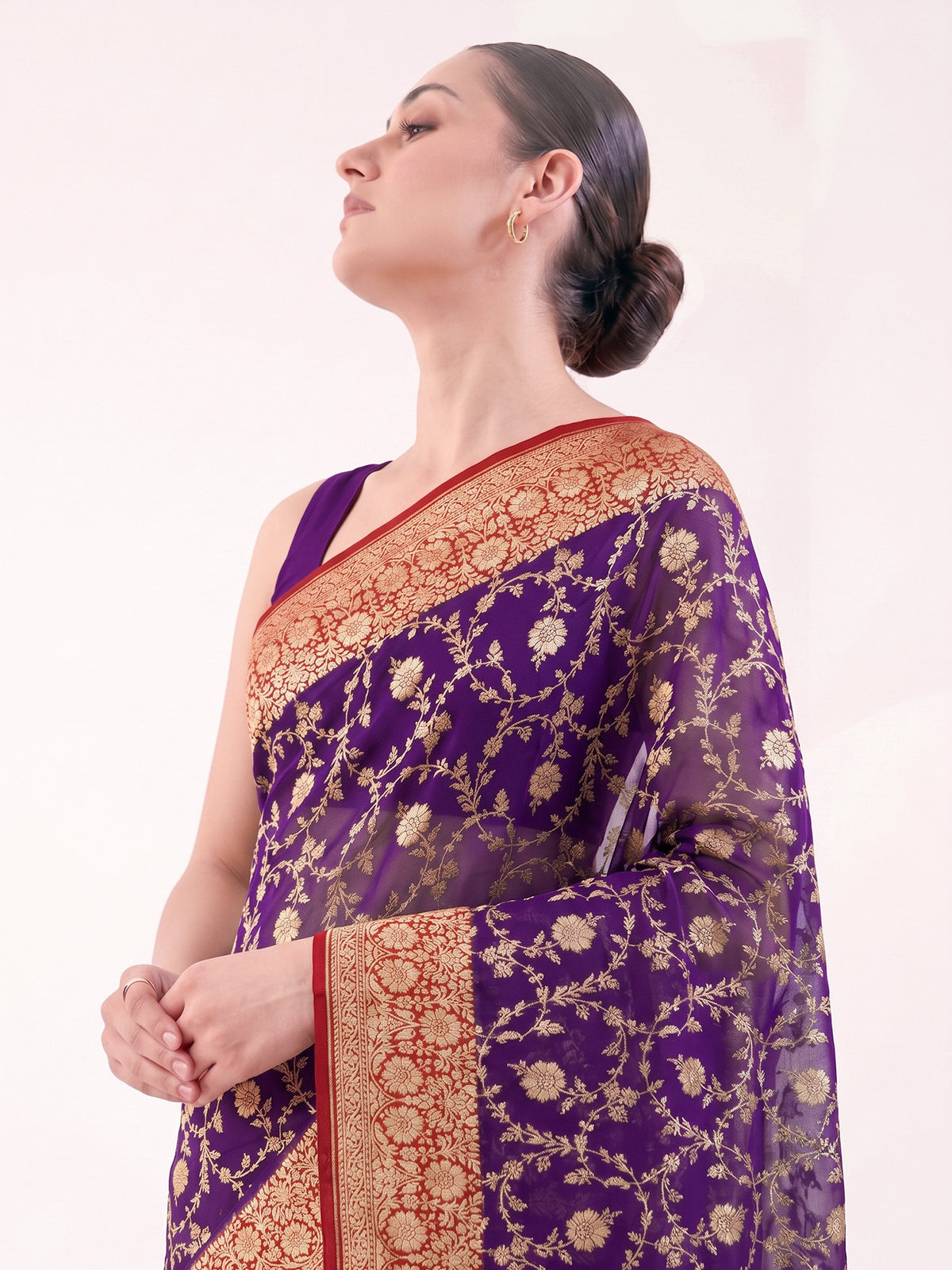
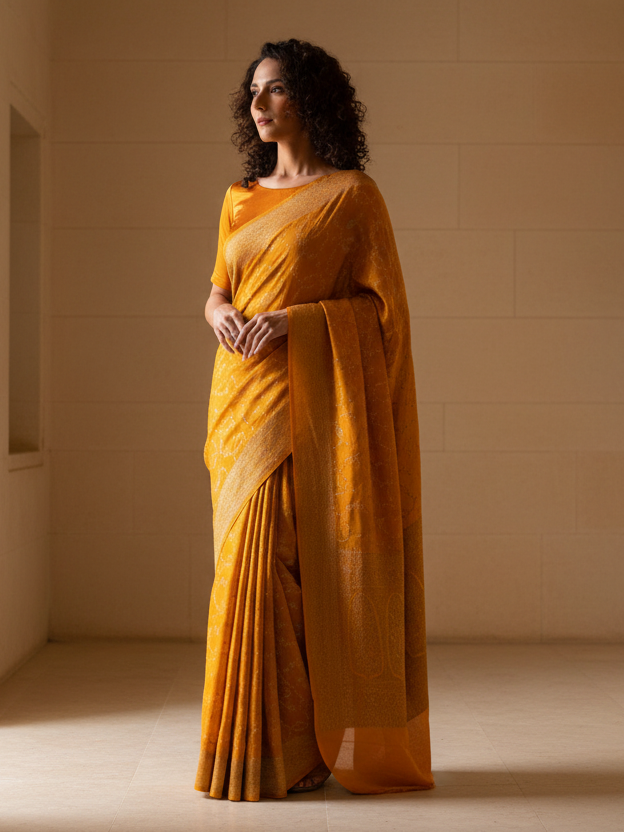
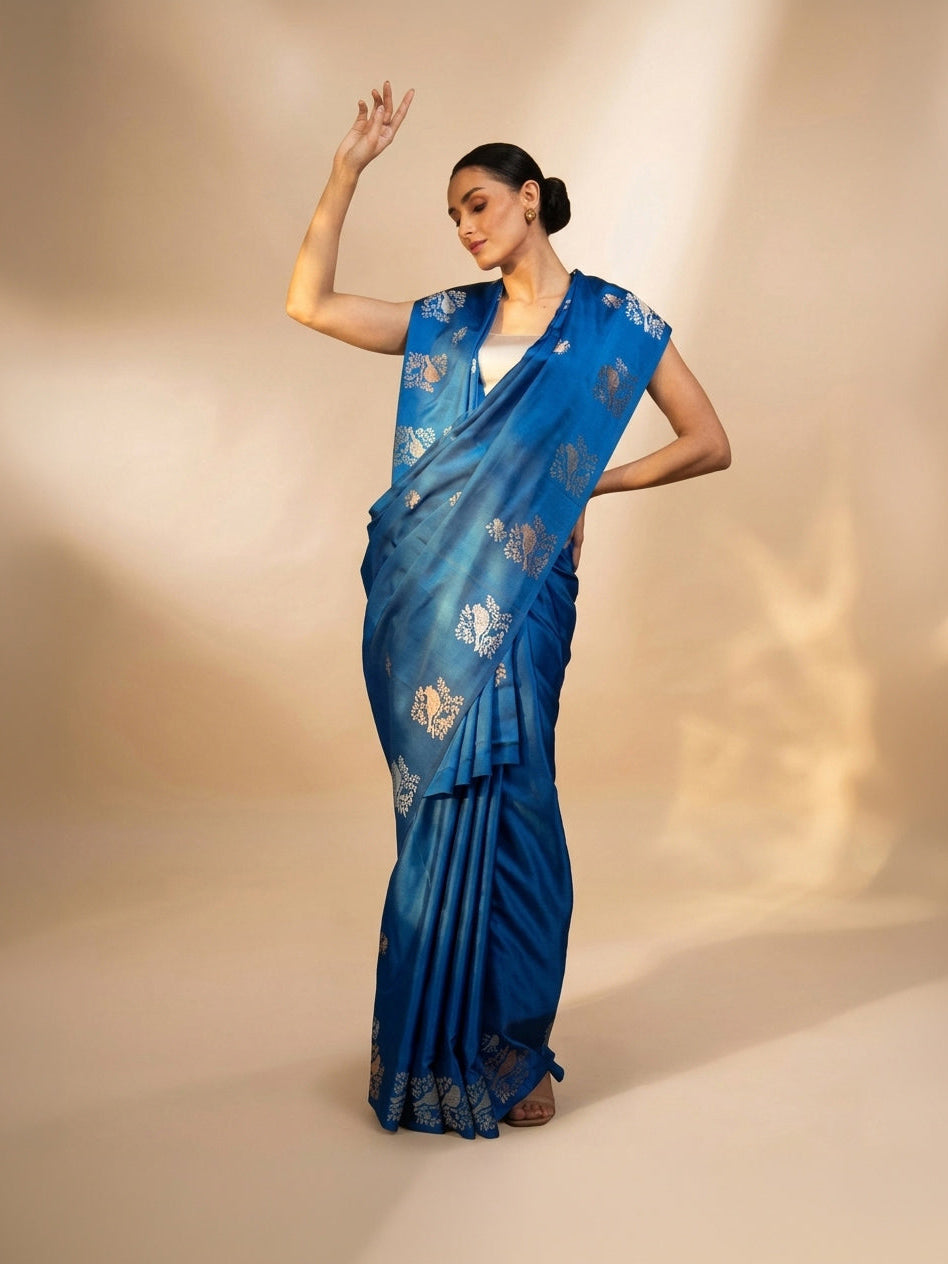
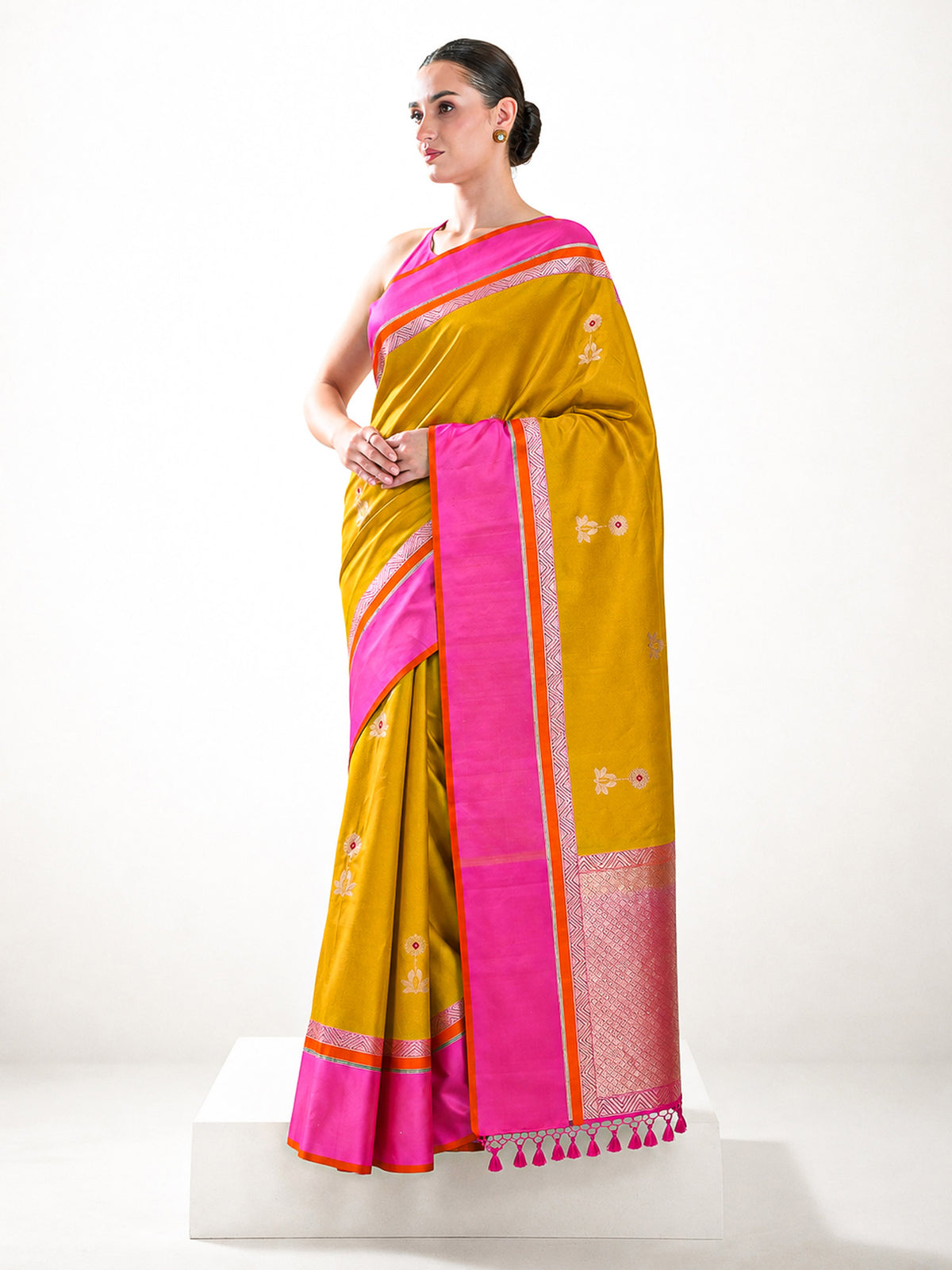

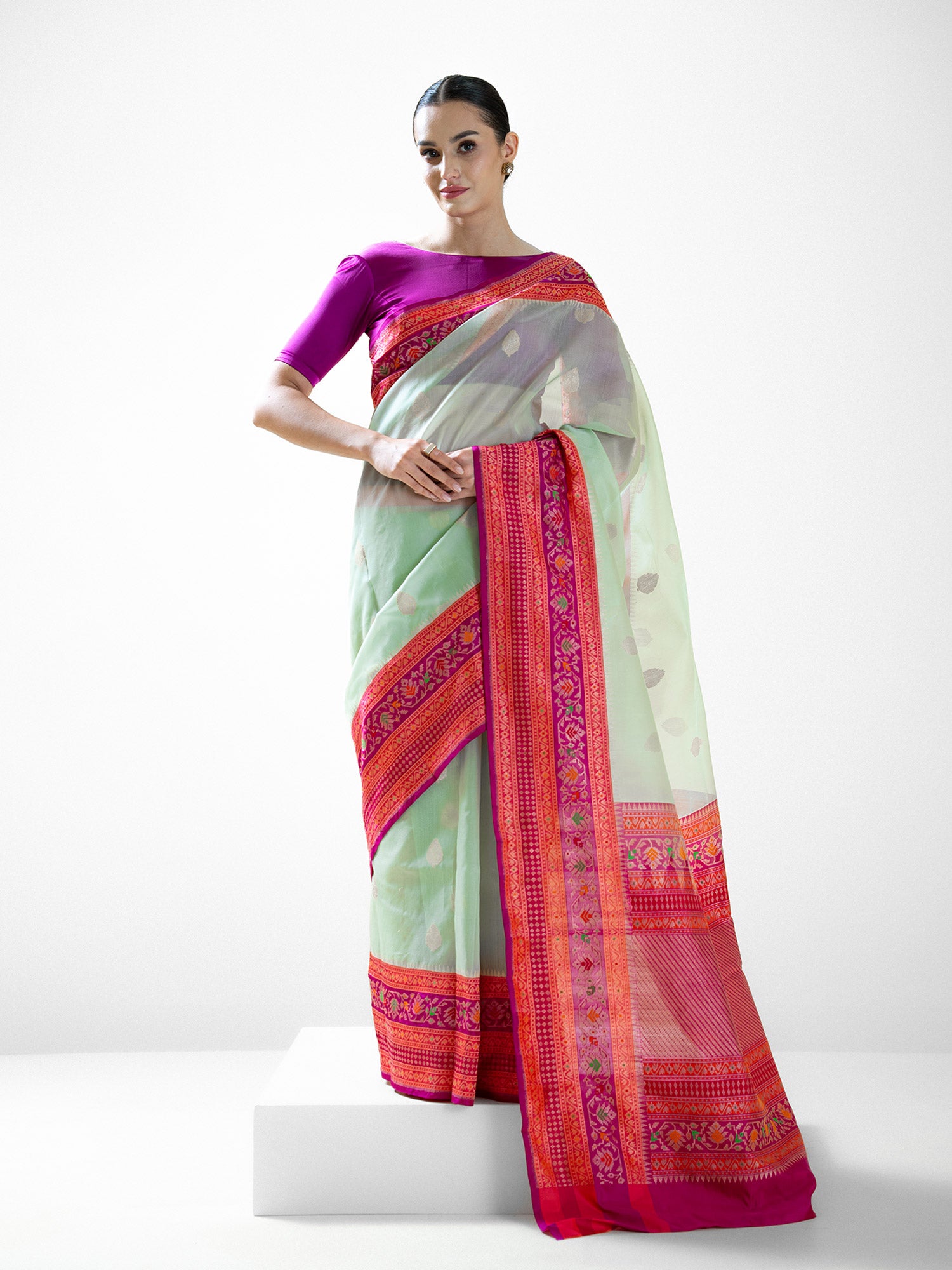
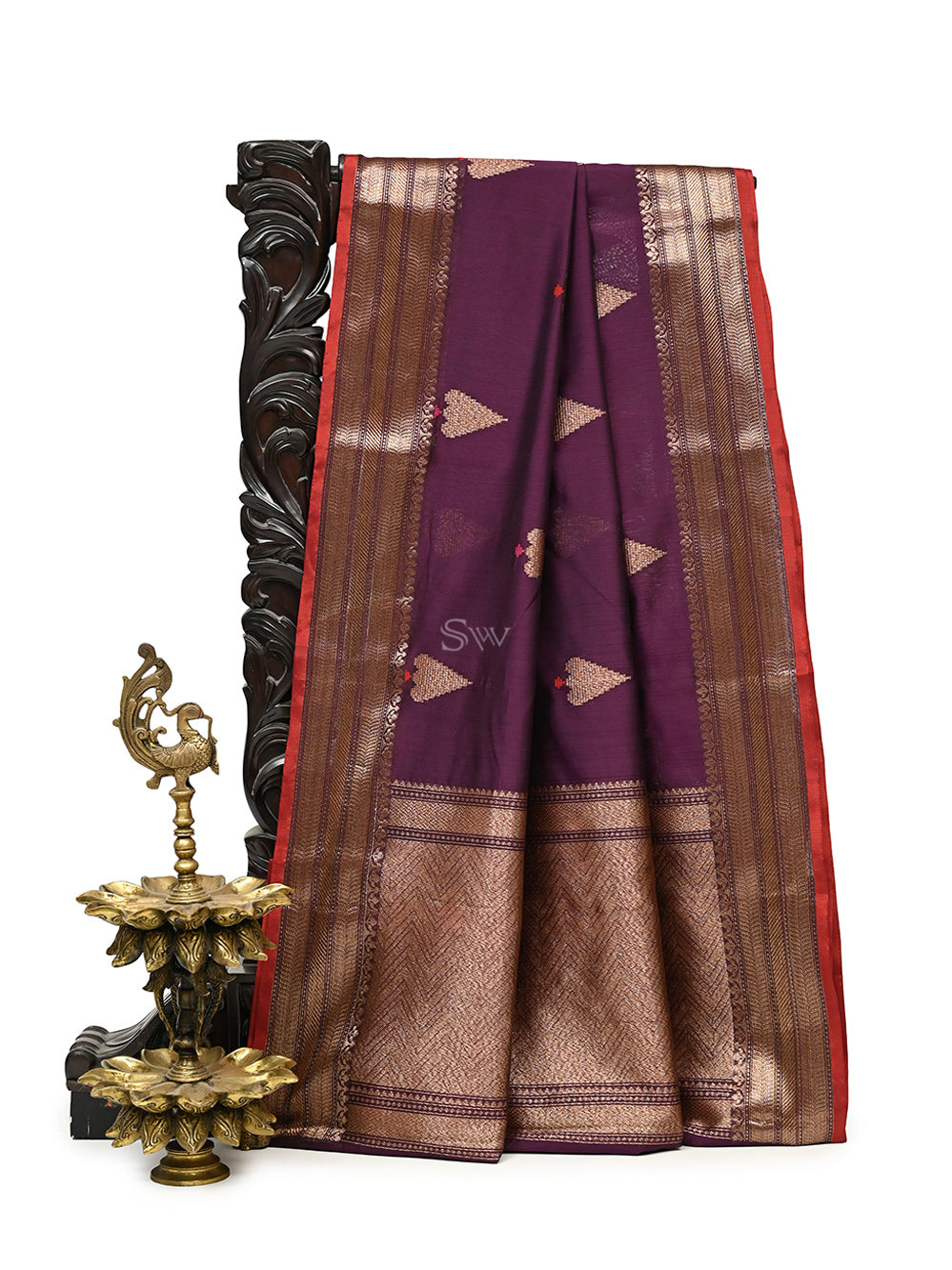


If you have ever seen a saree where one colour seems to melt into another across the body, and wondered how that is even possible on a handloom, you have already seen the magic of a Rangkat Banarasi Saree.
Most Banarasi sarees have one main colour. A red saree is red. A green saree is green. A Rangkat saree is different. It carries several colours in one drape, joined so smoothly that the saree looks like it was painted rather than woven. And that effect is not printed or dyed. It is created thread by thread, on the loom, by a weaver who planned every colour before he even started.
This is why Rangkat is considered one of the hardest weaves in Banaras, and one of the rarest. Very few weavers can do it well.
Whether you are looking for a Banarasi saree for wedding, adding to your saree collection, or simply curious about what makes this weave so special, this guide will walk you through everything in simple language. What it is, how it is made, which fabric suits you, what it costs, how to spot a real one, and how to care for it.
Quick Answer: What is a Rangkat Banarasi Saree?
A Rangkat Banarasi Saree is a handwoven Banarasi saree in which several colours are woven into a single saree, creating smooth colour changes across the body, border and pallu. The colours are joined during weaving itself, not printed or dyed later. Rangkat is a weaving style, not a fabric, so it can be woven on Katan Silk, Organza, Tissue, Georgette and other Banarasi fabrics. It is one of the most difficult Banarasi weaves to create, which makes it rare and highly valued.

Rangkat Banarasi Saree at a Glance
| Detail | In short |
|---|---|
| Where it comes from | Banaras, present-day Varanasi, Uttar Pradesh |
| What it is | A weaving style, not a fabric |
| Known for | Several colours woven into one saree with smooth transitions |
| Weaving methods | Kadwa, Cutwork & Machine-made versions |
| Common fabrics | Katan Silk, Organza, Tissue, Georgette |
| Time to weave | A few weeks to several months, depending on the design |
| Best for | Brides, weddings, festive wear, collectors |
| Price range | Usually ₹35,000 to ₹75,000 for handloom Katan Rangkat, higher for intricate pieces |
What Exactly is a Rangkat Saree?
Think of a normal Banarasi saree as a single-colour canvas with motifs woven on top of it. Now imagine that canvas itself changing colour as your eye travels across it. That is Rangkat.
The colour lives in the fabric, not just in the design. A Rangkat saree may move from deep red to bottle green, or from mustard to wine, or carry several shades in blocks and bands across the body and pallu. Because the colours are joined during the weaving itself, the change looks natural rather than stitched or patched.
Many people assume Rangkat is a type of silk. It is not. It is a style of weaving, which means the same Rangkat effect can be created on different Banarasi fabrics. A Katan Silk Rangkat and an Organza Rangkat will look related in design but feel completely different when you drape them.
The other thing worth knowing is that Rangkat is not defined by simply using many colours. Anyone can put many colours in a saree. What makes a real Rangkat special is how carefully those colours are planned and how smoothly they meet. A good Rangkat looks effortless. Achieving that effortlessness is the hardest part.
Why is it Called Rangkat?
The name comes from the idea of colour being joined or divided within the weave. In Banaras, weavers use the word for sarees where the colour itself is broken up and rejoined across the fabric, rather than running as one continuous shade.
It is a fitting name, because that is exactly what the weaver is doing. He is cutting one colour and bringing in another, again and again, while keeping the fabric smooth and the design aligned. When it is done well, you cannot see the joins. You only see the flow.
Where Did Rangkat Weaving Come From?
Rangkat belongs to Banaras, one of the oldest silk weaving centres in India.
Honestly, nobody can point to a single year when Rangkat began. Banarasi weaving knowledge has always passed from father to son inside weaving families, and very little of it was written down. What weavers in Varanasi will tell you is that Rangkat grew out of centuries of experimenting with colour on the loom, during the long period when Banaras was developing its most ambitious weaving traditions alongside styles like Kadwa, Jangla, Tanchoi and Meenakari.
What is certain is this. Rangkat has always been treated as a weave for skilled hands only. It was never a beginner's design, and it never became common. Even today, when you visit weaving clusters in and around Varanasi, the number of weavers who take on complicated Rangkat orders is small.
How is a Rangkat Banarasi Saree Made?
The process is long, and almost all of the difficulty comes before and during weaving, not after.
Step 1: Planning the colours
Everything begins on paper. The designer decides which colours will sit where, how wide each colour section will be, and how the border and pallu will relate to the body. In most Banarasi sarees, the motif is the main design decision. In Rangkat, the colour layout matters just as much as the motif.
This stage takes real time, because a small mistake here shows up across the entire saree later. If one colour band is too wide, the whole saree looks unbalanced.
Step 2: Preparing the warp and weft
The warp threads run lengthwise on the loom, and the weft threads run across. For a Rangkat saree, both have to be arranged according to the colour plan before weaving starts.
This is the point of no return. Once the loom is dressed with a particular colour arrangement, you cannot change your mind. Everything that happens next depends on getting this right.
Step 3: Weaving
Now the weaver takes over. As he works, he joins one colour section to the next, keeping the tension even and the motifs aligned across the colour change.
Depending on whether the saree is being made in Kadwa or Cutwork, the speed varies a lot. In Kadwa, each motif is woven separately with no threads floating behind it, which is beautiful and very slow. In Cutwork, extra threads run behind the fabric and are trimmed later, which is faster.
For an intricate handwoven Rangkat, this stage can run for months. The weaver may finish only a few inches in a day.
Step 4: Finishing
Once the saree is off the loom, it is checked carefully. Loose threads are trimmed, the weave is inspected for evenness, and the colour joins are examined. Only then is the saree ready.

Why Rangkat is So Difficult to Weave
It helps to understand what the weaver is actually fighting against.
In an ordinary saree, one colour runs through the whole fabric, so the tension stays the same everywhere. In Rangkat, the weaver keeps introducing new colours. Every join is a point where the fabric could pucker, where the motif could shift out of line, or where the colour edge could look messy instead of clean.
He has to prevent all of that, across six yards, without any way to correct a mistake later. There is no undo button on a handloom. A flaw either gets unpicked thread by thread, or it stays in the saree forever.
This is why experienced weavers say Rangkat takes years to learn properly, and why so few weavers offer it. It is also why two Rangkat sarees that look similar in photos can be very different in quality when you see them in person.
Kadwa, Cutwork and Machine-Made Rangkat
Not every Rangkat saree is woven the same way. This single point explains most of the price difference you will see while shopping.
| Feature | Kadwa Rangkat | Cutwork Rangkat | Machine-made Rangkat |
|---|---|---|---|
| How motifs are made | Each motif woven separately by hand, nothing floating behind | Extra threads float behind and are trimmed after weaving | Programmed and produced on power looms |
| Craftsmanship | Highest | High | Basic |
| Time taken | Several months for detailed designs | Weeks | Days |
| Reverse side | Clean, no cut threads | Neatly trimmed thread ends | Uniform machine floats |
| Durability of motifs | Excellent, nothing frays | Very good | Depends on production quality |
| Price | Premium | Mid-range | Affordable |
| Best for | Bridal and heirloom pieces | Weddings, festive wear, gifting | Buyers who want the look at a low price |
So which one should you pick?
There is no single right answer. It depends on why you are buying.
If this is your wedding saree, or something you want your daughter to wear one day, Kadwa Rangkat is worth the extra cost. Nothing is cut, nothing frays, and the saree stays beautiful for decades.
If you love the Rangkat look but want something more affordable for a wedding you are attending or a festival, Cutwork Rangkat gives you genuine handloom craftsmanship at a friendlier price.
Machine-made Rangkat has its place too. It makes the design accessible to many more women. Just buy it knowing what it is, and do not pay handloom prices for it.
Which Fabrics Can Rangkat Be Woven On?
Because Rangkat is a weaving style, you can find it on several Banarasi fabrics. Each one drapes differently and suits different occasions.
| Fabric | How it feels | Best occasion |
|---|---|---|
| Katan Silk | Rich, firm, with a natural sheen and structured pleats | Wedding ceremony, heirloom buying |
| Organza | Light, slightly sheer, airy | Reception, sangeet, summer weddings |
| Tissue | Shimmering and luminous | Evening functions, grand celebrations |
| Georgette | Soft, flowing, easy to carry all day | Mehendi, daytime functions, festive wear |
| Other Banarasi silks | Varies by weave | Depends on design and occasion |
Katan Silk Rangkat
This is the classic choice, and for good reason. Katan is made from twisted filament silk, which gives it body and shine. That firmness holds the colour blocks crisply and makes the pleats fall beautifully, which matters enormously in wedding photographs.
Most brides who want a traditional look choose Katan.
Organza Rangkat
Light and slightly see-through, Organza carries colour in a completely different way. The shades look softer and more delicate. If you find heavy silk uncomfortable, or your function is in summer, this is a lovely option.
Tissue Rangkat
Tissue has a metallic shimmer running through it, so the colours look brighter and more dramatic, especially under evening lighting. It makes a strong statement.
Georgette Rangkat
If you have ever come home from a wedding with your shoulder aching from a heavy saree, you will appreciate Georgette. It flows, it is comfortable for long hours, and it still carries real Banarasi weaving.

Rangkat Banarasi Saree for Wedding: What to Wear When
Indian weddings now stretch across several days, and one saree cannot do everything. Here is a simple way to plan.
| Function | What works best | Why |
|---|---|---|
| Roka or engagement | Organza or Georgette Rangkat | Light, easy to move in, photographs well in daylight |
| Haldi | Georgette Rangkat in yellow or mustard tones | Comfortable for a long, messy, seated function |
| Mehendi | Georgette or Organza Rangkat | You will be sitting with your hands occupied for hours |
| Sangeet | Organza or Tissue Rangkat | Light enough to dance in, with plenty of shine |
| Wedding ceremony | Kadwa Katan Silk Rangkat | Rich, structured, and made to last a lifetime |
| Reception | Tissue or Katan Rangkat in bolder colour combinations | Dramatic under evening lights |
| Post-wedding functions | Katan or Georgette Rangkat | Comfortable but still festive |
For the main ceremony, a Katan Silk Rangkat Banarasi Saree remains the most loved choice. The colour transitions look regal without needing heavy embellishment, and the saree carries itself with the kind of quiet richness that never looks dated in photographs years later.
What Does a Rangkat Banarasi Saree Cost?
Prices vary with fabric, weaving technique and how complicated the colour work is. As a general guide for authentic handloom pieces:
| Type | Indicative price band |
|---|---|
| Georgette or lighter fabric Rangkat | ₹25,000 to ₹40,000 |
| Katan Silk Rangkat, standard designs | ₹36,000 to ₹45,000 |
| Katan Silk Rangkat, more detailed colour work | ₹45,000 to ₹55,000 |
| Kadwa Rangkat with intricate motifs | ₹60,000 and above |
| Custom or heavily detailed bridal Rangkat | ₹1 lakh and above |
Treat these as a planning guide. Sale periods, zari quality and design complexity can move these numbers in both directions.
Why Are Rangkat Sarees So Expensive?
When you understand what goes into one, the price starts to make sense.
The planning alone takes days. Before a single thread is woven, the entire colour layout has to be mapped. This is skilled design work, not decoration.
The weaving is slow. A detailed handwoven Rangkat can take months on the loom. That is one weaver, one loom, one saree, for weeks at a stretch.
Mistakes are expensive. Because nothing can be corrected later, weavers work slowly and carefully. Slow work costs more.
Few weavers can do it. Rangkat needs years of experience. The pool of weavers who take on complex Rangkat orders is small, and their time is in demand.
Good raw materials cost more. Pure silk, well-dyed yarn and quality zari all add to the price, and they are also what makes the saree age well.
Production can never be scaled. You cannot make a hundred identical handwoven Rangkat sarees. Each one is limited by the hands that make it.
So when you pay for a genuine Rangkat, you are not paying for colour. You are paying for planning, patience and rare skill.
Rangkat vs Other Banarasi Weaves
Banaras has many famous weaves, and it helps to know how they differ.
| Weave | Known for | Where the colour or beauty sits |
|---|---|---|
| Rangkat | Several colours woven into one saree | In the fabric itself |
| Meenakari | Colourful Resham threads inside the motifs | In the motifs |
| Kadwa | Each motif woven separately by hand | In the weaving technique |
| Jangla | Dense all-over floral and vine patterns | In the motif density |
| Tanchoi | Self-patterned weaving with little or no zari | In the texture |
| Tissue | Shimmering metallic ground | In the fabric finish |
The two that get confused most often are Rangkat and Meenakari. The simplest way to remember the difference is this. In a Meenakari saree, the colour is inside the flowers and motifs. In a Rangkat saree, the colour is in the cloth. Many premium sarees combine both, with Meenakari motifs woven over a Rangkat base, and those pieces are especially prized.
Rangkat in Today's Fashion
Rangkat has stayed relevant without changing itself, which is rare for any traditional craft.
Part of the reason is that it does not look like anything else. In a wedding hall full of red and gold silks, a Rangkat saree stands apart without needing heavy embroidery, stones or embellishment. The weave alone does the work, which suits the way many women dress today.
The other reason is rarity. As more brides learn how few weavers can actually produce an authentic Rangkat, the saree has moved from being simply beautiful to being something worth seeking out. Designers working with Indian handloom have brought renewed attention to multi-colour Banarasi weaving in recent years, and that interest has reached buyers who had never heard the word Rangkat before.
Today, Rangkat sarees are chosen by brides looking for something rarer than the usual bridal silk, by women building a serious saree collection, and by families who want a piece that will still be worn in thirty years.
How to Know if a Rangkat Saree is Genuine
A few simple checks will tell you a great deal.
Look at the colour joins closely. In a genuine handwoven Rangkat, the transitions look woven and slightly organic. If the colour change looks printed, sharply digital, or sits on top of the fabric rather than inside it, be careful.
Ask how it was woven. This one question tells you more than any other. A good seller will answer immediately: Kadwa, Cutwork, or machine-made. Vagueness here is a warning sign.
Check the reverse side. Kadwa shows clean, separately woven motifs with nothing floating behind. Cutwork shows neatly trimmed thread ends. Machine-made fabric shows perfectly uniform floats.
Look for small irregularities. Handloom weaving always has tiny variations. Flawless, machine-perfect repetition across six yards usually means a power loom, not a master weaver.
Ask for Silk Mark certification. For pure silk sarees, the Silk Mark label issued under the Central Silk Board confirms the silk is genuine.
Ask about the zari. Real zari, tested zari and art zari behave and age very differently. A seller who knows their weaves will tell you which one you are buying.
How to Style a Rangkat Saree
Rangkat already does a lot of talking, so the styling around it should stay calm.
Blouse. Pick one colour from the saree and build the blouse around it. Contrast blouses work beautifully with Rangkat, often better than matching ones. A gold or deep-toned blouse with a multi-coloured Rangkat is a safe and elegant choice.
Jewellery. Traditional gold, kundan or temple jewellery suits Katan Rangkat perfectly. Since the saree carries several colours, avoid heavily coloured stones competing with it. Pearls and plain gold let the weave stay the hero.
Draping. A neat drape with well-set pleats shows the colour bands at their best. If the pallu carries the most colour work, an open or seedha pallu drape displays it beautifully.
Comfort. If you are wearing a heavy Katan Rangkat for a full day, use a firm petticoat and pin the pleats securely. Do one complete trial drape a few days before the function so nothing is rushed on the morning itself.
How to Care for Your Rangkat Saree
-
Dry clean rather than washing at home, and tell the cleaner it is handloom silk with zari
-
Store it wrapped in a soft cotton or muslin cloth, never in a plastic cover
-
Refold it every three to four months so permanent crease lines do not form
-
Keep it away from direct sunlight, which fades colours over time
-
Store in a dry place, since moisture is silk's biggest enemy
-
Do not spray perfume or deodorant directly on the saree
-
Blot spills gently instead of rubbing
-
Iron on low heat with a cotton cloth in between, avoiding the motifs
With this much care, a good Rangkat saree will easily outlive the occasion you bought it for.
Common Myths About Rangkat Sarees
Myth: Rangkat is a type of silk. It is a weaving style. You can find Rangkat on Katan, Organza, Tissue, Georgette and other Banarasi fabrics.
Myth: Every Rangkat saree is Kadwa. Kadwa is the most prestigious method, but Rangkat is also woven in Cutwork and produced on machines. They are not the same thing, and they should not cost the same.
Myth: Any colourful Banarasi saree is a Rangkat. Not at all. Meenakari sarees are colourful too, but the colour sits in the motifs. Rangkat means the colour is in the fabric itself.
Myth: Machine-made Rangkat is just as good. It can look similar in a photograph. It cannot match the individuality, finish or lasting quality of handloom weaving, and no two handwoven sarees are ever identical.
Myth: Rangkat is only for brides. Brides love it, but so do women who wear it for receptions, festivals, family functions and cultural events. Lighter fabrics in particular are very wearable beyond weddings.
Where to Buy an Authentic Rangkat Banarasi Saree
Buy from someone who works directly with Banarasi weavers and is willing to tell you exactly what you are buying: the fabric, the weaving technique, whether it is handloom, and what zari has been used.
At Sacred Weaves, every Banarasi saree comes directly from artisan weavers in Varanasi, with the fabric, technique and craftsmanship details listed for each piece, and Silk Mark certification for pure silk products. The collection includes Katan Silk Rangkat sarees for weddings and collectors, along with lighter Organza, Tissue and Georgette pieces for receptions and festive occasions.
If you are buying from another city or from abroad, live video consultations let you see the colour transitions, weave and zari properly before you decide, which is genuinely useful with a saree like Rangkat where photographs never quite capture the depth.
A Weave Worth Preserving
A Rangkat Banarasi Saree is not just a colourful saree. It is the result of careful planning, a great deal of patience, and a skill that fewer and fewer weavers in Varanasi still carry.
When you drape one, you are wearing months of someone's concentration. Every colour join in that saree was a decision made by a person sitting at a loom, working slowly, knowing that a single mistake could not be undone.
That is what makes Rangkat worth understanding before you buy, and worth looking after once you own it. Choose it for the right occasion, ask the right questions before paying, and store it properly afterwards, and it will still be beautiful when someone in your family wears it long after your own wedding photographs have faded.


