
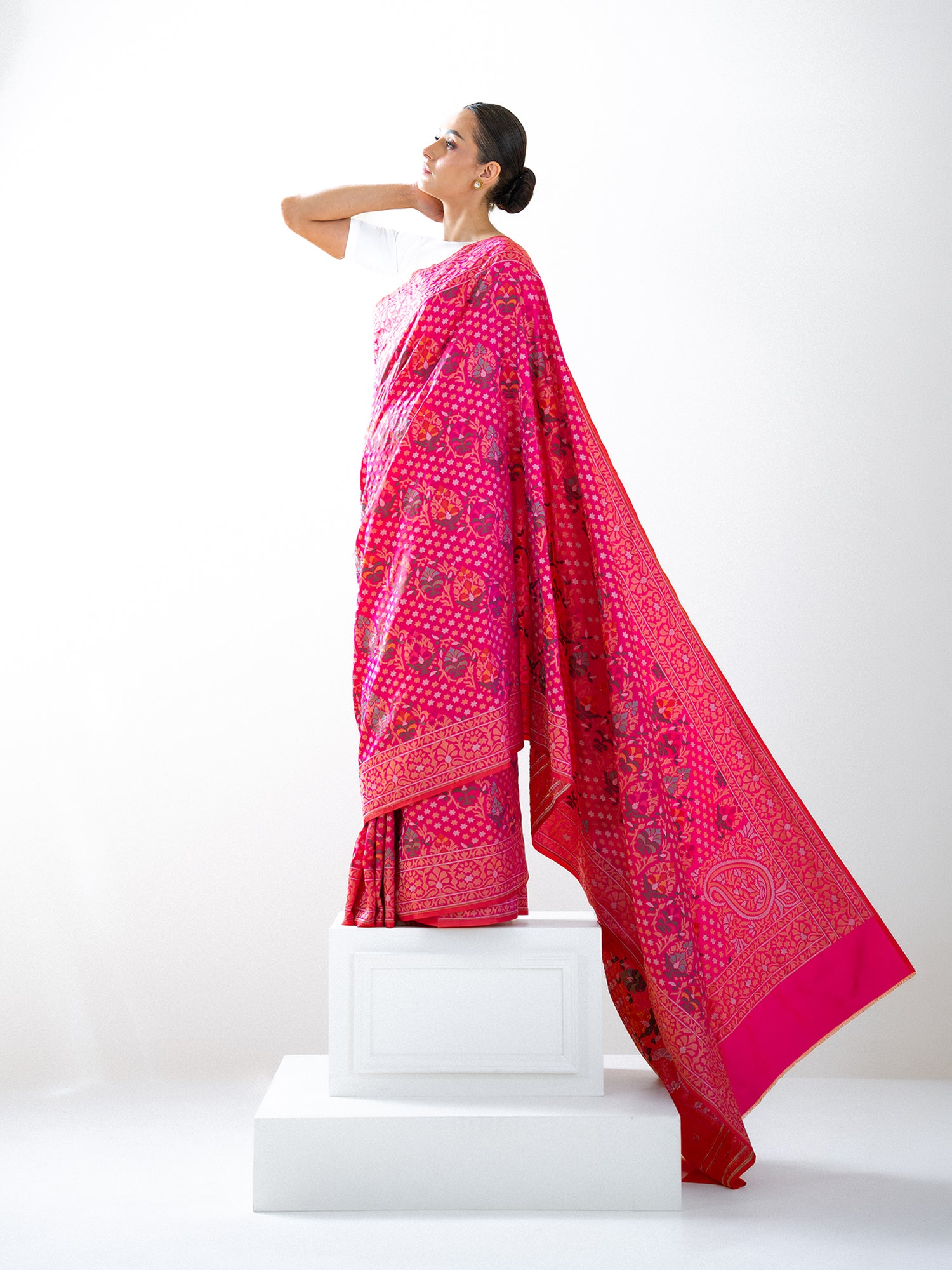
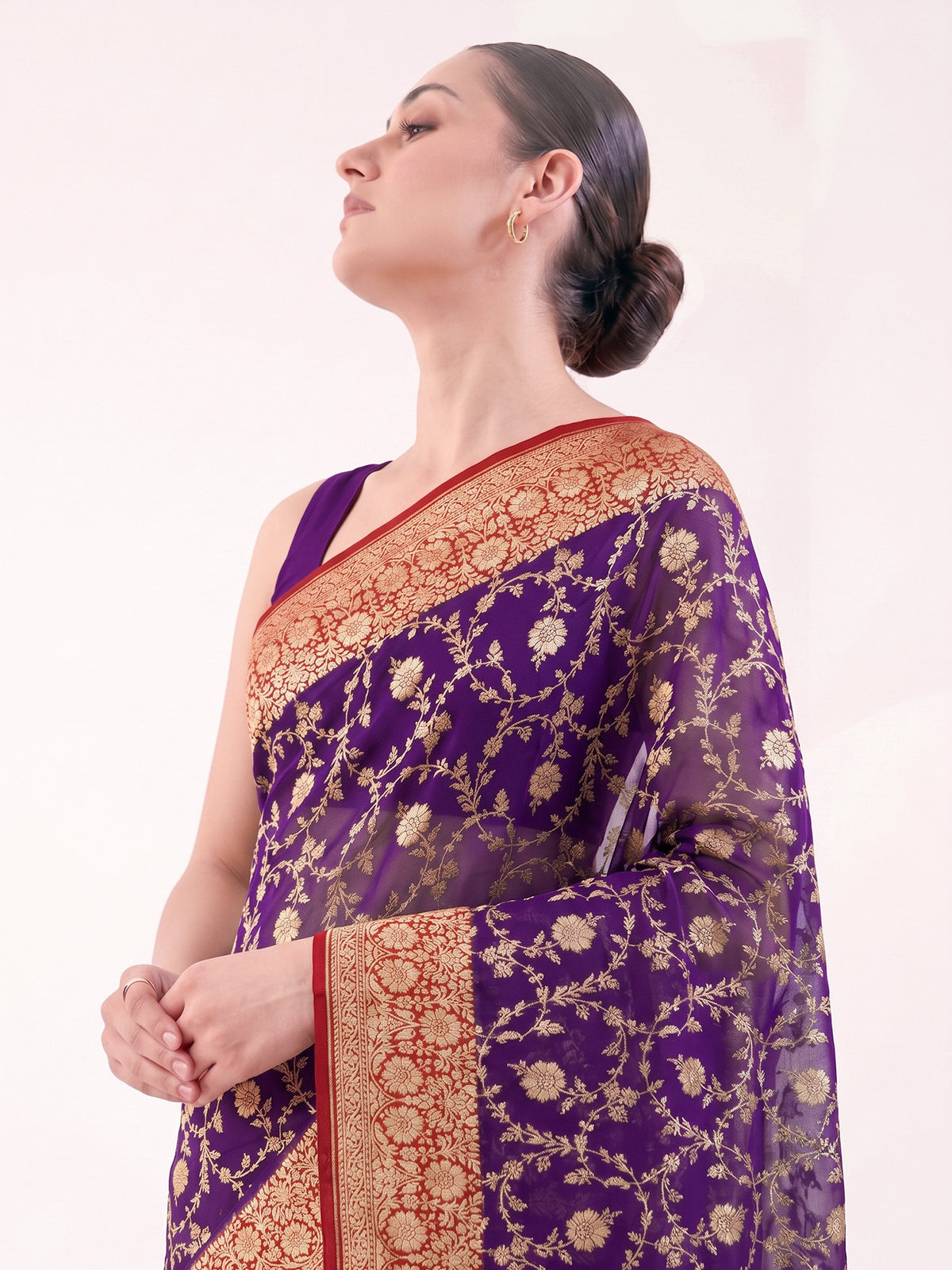
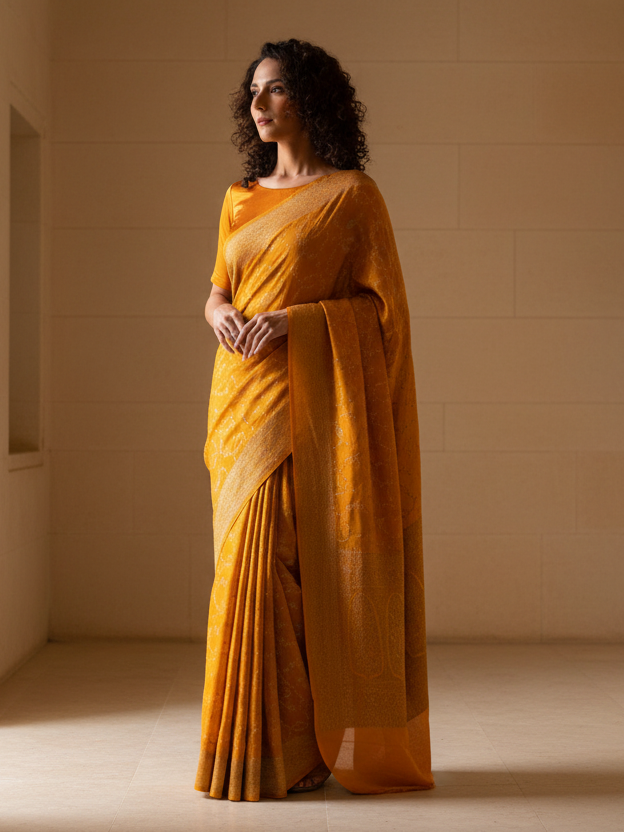
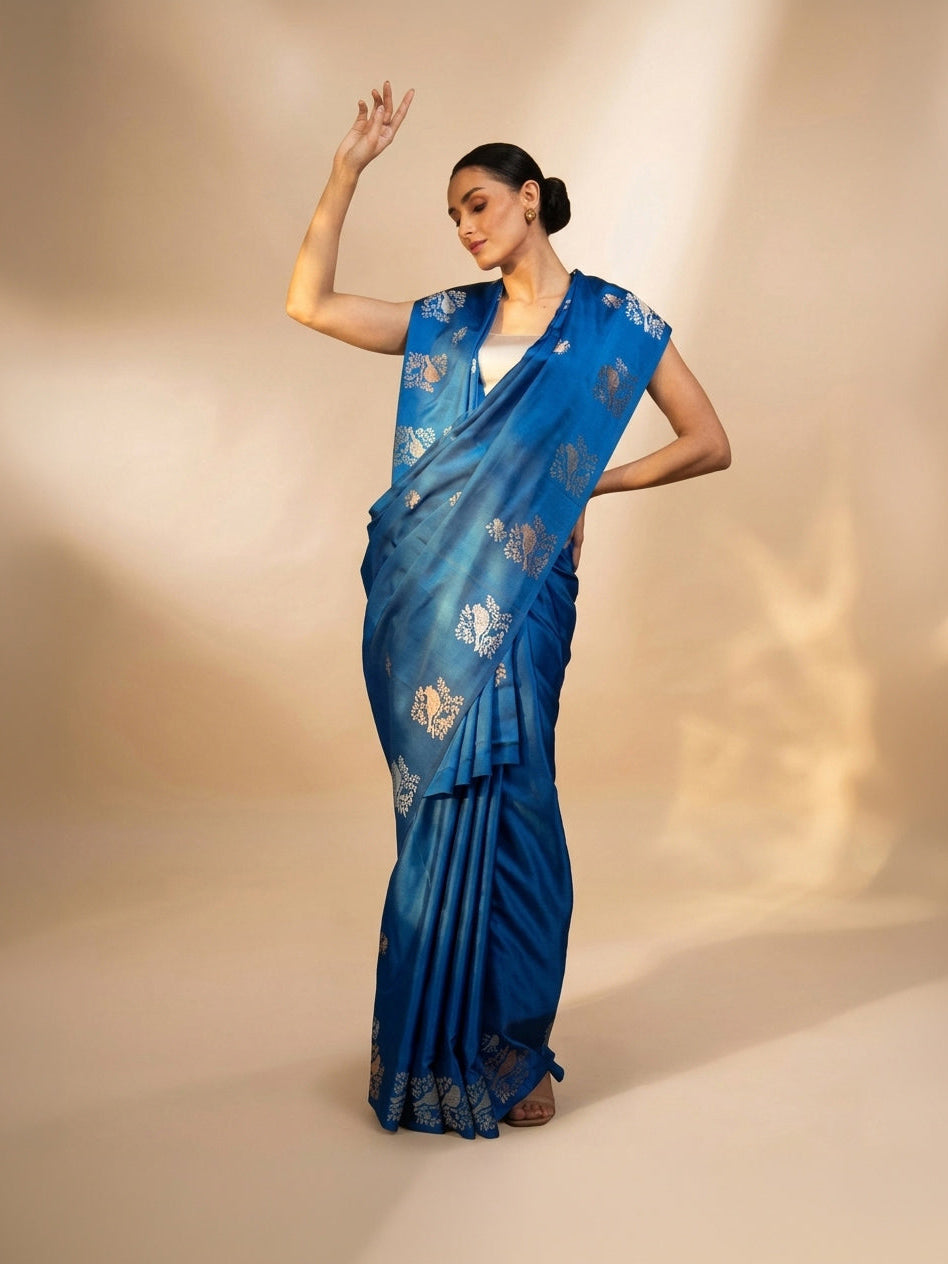
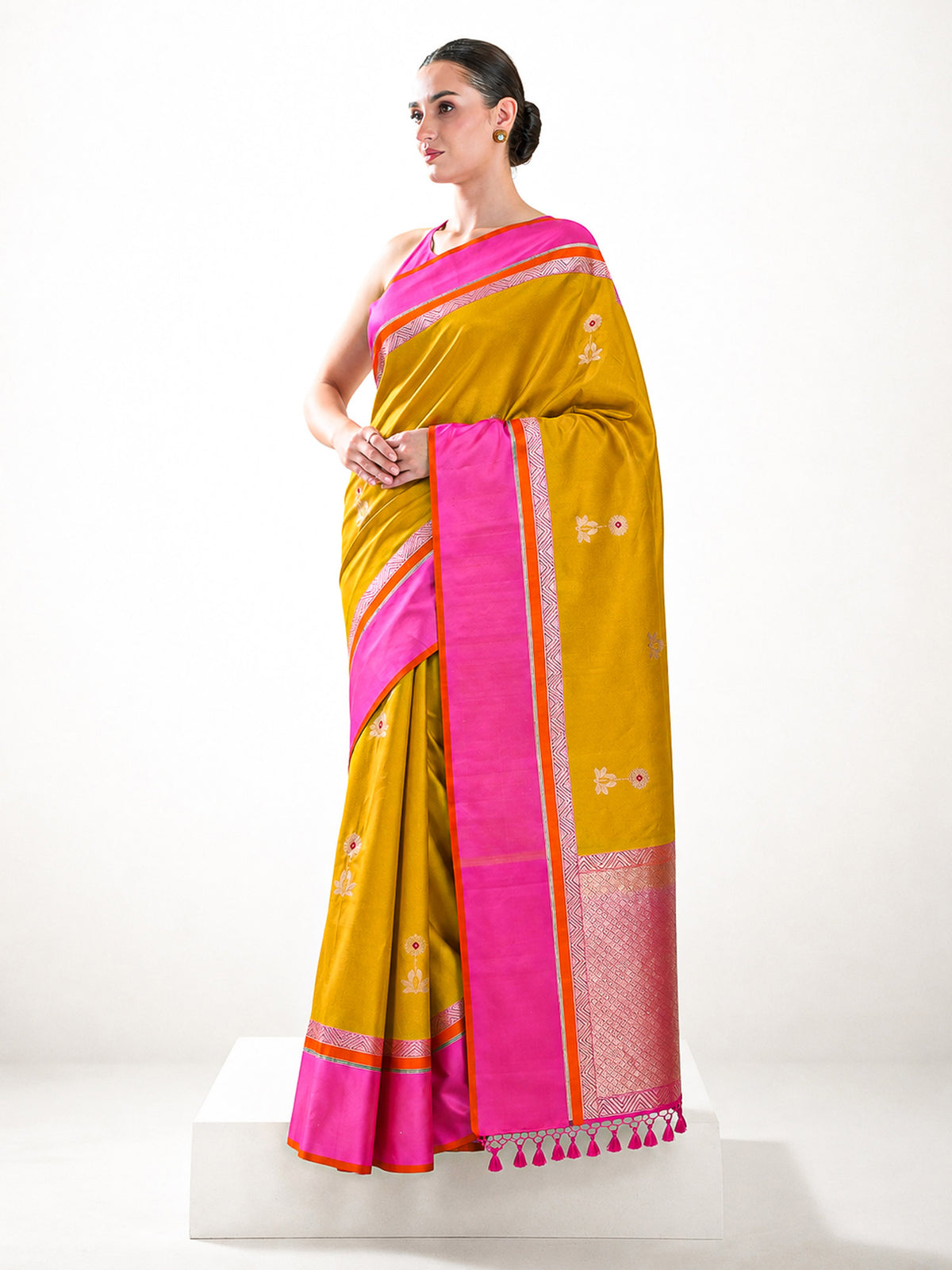

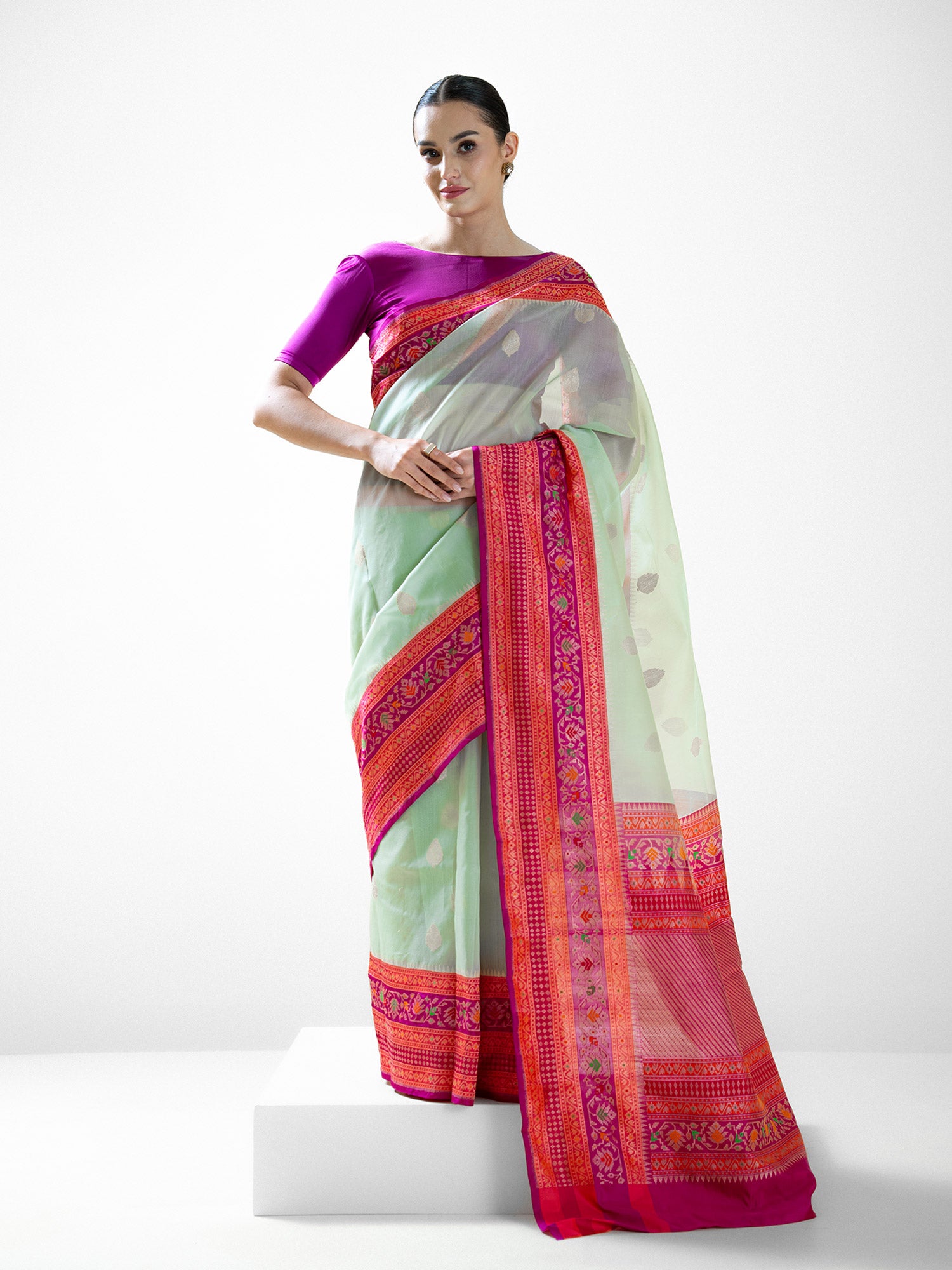
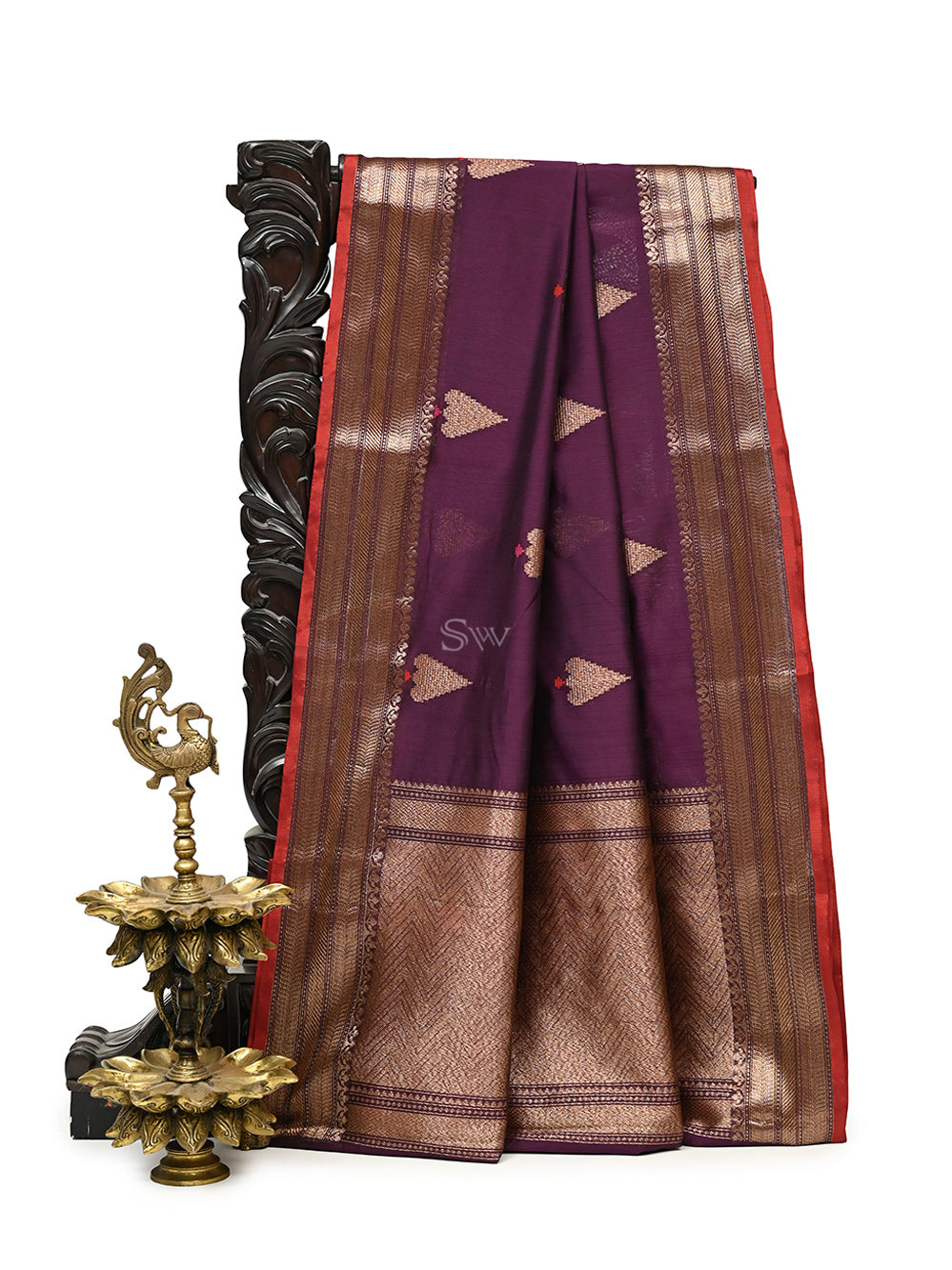


Choosing a wedding saree is rarely a simple decision. You are balancing tradition against comfort, colour against photographs, and, most of all, beauty against budget. And when you begin searching for a Meenakari Banarasi saree for wedding, the price range you see online can feel bewildering. One saree is listed at ₹22,000, another at ₹88,000, and both are described as handloom Meenakari.
The difference is real, and it is explainable. It comes down to the fabric, the weaving technique, the number of Resham colours, the motif, and the number of hours an artisan spent at the loom.
This guide breaks all of that down honestly. You will find indicative price bands for every type of meenakari banarasi silk saree, the best choice for each wedding function, recommendations by budget, the hidden costs most buyers forget, and a clear method to judge whether a saree is fairly priced before you pay for it.
Quick Answer: Which Meenakari Banarasi Saree is Best for a Wedding?
For the main wedding ceremony, a Pure Katan Meenakari Banarasi saree woven in the Kadwa technique is the finest choice, with prices typically ranging from ₹50,000 to ₹90,000 for handloom pieces and crossing ₹1.5 lakh for bespoke bridal weaves. For lighter functions such as mehendi, haldi and sangeet, a Meenakari Khaddi Georgette or Uppada Katan saree offers the same artistry at ₹20,000 to ₹45,000. Wedding guests and family members are usually best served by Meenakari brocade or Organza sarees in the ₹25,000 to ₹45,000 range.

Meenakari Banarasi Saree Price at a Glance
The table below gives indicative price bands for authentic handloom pieces. Prices vary with design, colour count and zari quality, and sale periods can shift them considerably, so treat these as a planning guide rather than a fixed rate card.
| Fabric and Type | Indicative Price Band | Best Suited To |
|---|---|---|
| Meenakari Khaddi Georgette | ₹20,000 to ₹48,000 | Mehendi, sangeet, reception, guest wear |
| Meenakari Uppada Katan Silk | ₹25,000 to ₹40,000 | Haldi, daytime functions, gifting |
| Meenakari Silk Brocade | ₹28,000 to ₹45,000 | Engagement, family weddings, guest wear |
| Meenakari Organza | ₹25,000 to ₹50,000 | Cocktail, reception, summer weddings |
| Meenakari Katan Silk Tissue | ₹45,000 to ₹60,000 | Reception, evening functions |
| Pure Katan Meenakari (Kadwa) | ₹50,000 to ₹90,000 | Wedding ceremony, bridal trousseau |
| Meenakari Bandhani Silk | ₹60,000 to ₹70,000 | Bridal, Rajasthani and Gujarati ceremonies |
| Heavy Bridal Meenakari Jaal on Katan | ₹80,000 to ₹1.2 lakh | Main wedding day |
| Bespoke Shikargah or High Colour-Count Meenakari | ₹1.5 lakh and above | Heirloom and commissioned pieces |
Why a Meenakari Saree is a Natural Choice for Indian Weddings
A wedding trousseau is built around colour. Red for the phere, yellow for haldi, green for mehendi, gold for the reception. The difficulty is that most heavy silk sarees commit you to a single dominant shade.
A meenakari saree solves this beautifully. Because the motifs are woven with multiple Resham (silk) colours, a single saree can carry three, seven or even thirty-six shades within its design while keeping one clear base colour. A red Katan base with green leaves, gold zari outlines and ivory flower centres reads as unmistakably bridal, yet has enough colour variation to look alive in photographs.
That last point matters more than most brides expect. All-gold zari can flatten into a single sheen under harsh mandap lighting and camera flash, while Meenakari motifs keep their definition. In wedding photographs and films that families watch for decades, this difference is visible in every frame.
There is also the matter of permanence. A handloom banarasi meenakari saree is not a seasonal purchase. It is woven to be worn again at your sister's wedding, at festivals, and eventually passed on. That long life is what justifies the price of a good piece.
Best Meenakari Banarasi Saree for Each Wedding Function
Indian weddings are no longer single-day events, and different functions call for very different weights of fabric. Here is how to match the saree to the occasion.
| Function | Recommended Fabric and Design | Indicative Price |
|---|---|---|
| Roka or Engagement | Meenakari Silk Brocade or Organza, light Bel border | ₹28,000 to ₹45,000 |
| Haldi | Meenakari Uppada Katan or Georgette in yellow or mustard | ₹22,000 to ₹38,000 |
| Mehendi | Meenakari Khaddi Georgette Jaal in green or pastel | ₹25,000 to ₹45,000 |
| Sangeet | Meenakari Organza or Tissue with pallu detailing | ₹30,000 to ₹55,000 |
| Wedding Ceremony | Pure Katan Meenakari Kadwa Jaal or Boota | ₹60,000 to ₹1.2 lakh |
| Reception | Meenakari Katan Silk Tissue or Bandhani Meenakari | ₹48,000 to ₹70,000 |
| Griha Pravesh or Mooh Dikhai | Meenakari Katan with Bel border | ₹35,000 to ₹55,000 |

Haldi and Mehendi
These are daytime, floor-seated, long-duration functions. Weight is the enemy. A Meenakari Khaddi Georgette saree drapes softly, breathes in the heat, and still carries the colourful floral Jaal that makes Banarasi weaving special. Yellow, mustard and pastel pista green are the classic choices, and the coloured Resham motifs photograph beautifully against marigold decor.
Sangeet and Cocktail
This is where Organza and Tissue come into their own. A Meenakari Organza saree with scattered butis catches light without adding weight, which matters when you are dancing. Tissue gives a metallic ground that makes the Resham colours glow under evening lighting.
The Wedding Ceremony
For the phere, nothing matches a Banarasi Katan silk saree. Pure Katan has the thread density to hold an intricate Meenakari Jaal without the motifs losing definition, and the weight to fall into the sculptural pleats that look so striking in bridal portraits. Kadwa weaving, where each motif is woven separately with no floating threads behind it, is the premium standard here and the main reason these sarees command higher prices.
The Reception
Reception sarees can afford to be more contemporary. Meenakari Bandhani combinations, pastel Katan with bold Meenakari borders, and Katan Tissue with elaborate pallu work all work well. Because reception photographs are usually taken in low, warm lighting, sarees with higher Meenakari colour counts perform noticeably better than flat zari pieces.
Best Meenakari Banarasi Saree by Budget
Under ₹30,000: Well-Made Entry-Level Handloom
At this level you should expect genuine handloom work on lighter fabrics, usually Khaddi Georgette, Uppada Katan or silk brocade, with Cutwork weaving and modest Resham colour counts. Designs tend to be booti or small Jaal patterns rather than heavy all-over work.
This is a sensible budget for wedding guests, for a bride's mehendi or haldi saree, and for gifting within the family. What you should not expect is heavy Pure Katan with dense Kadwa Meenakari. If a seller offers that at this price, ask hard questions about whether it is handloom.
₹30,000 to ₹50,000: The Sweet Spot
This band offers the best value in the entire market. You can buy Pure Katan Meenakari sarees with well-defined borders and pallu work, Meenakari Katan Tissue for receptions, or a good Meenakari Jaal Khaddi Georgette.
For most brides who are not buying their main wedding saree at the top of the market, and for mothers, sisters and close family, this is where the meenakari silk saree market delivers the most craftsmanship per rupee.
₹50,000 to ₹90,000: Bridal Quality
Here you move into Pure Katan Kadwa Meenakari with dense all-over Jaal or large Boota designs, higher Resham colour counts, and superior zari. These are the sarees woven over several hundred hours of loom time, and they are what most brides choose for the wedding ceremony itself.
Meenakari Bandhani silk sarees, which combine two distinct craft traditions in one piece, also sit in this band and are a striking alternative for brides who want something less conventional.
₹90,000 to ₹1.5 Lakh: Heirloom Pieces
At this level you are buying exceptional craftsmanship: intricate Konia and Jaal compositions, high colour counts with genuinely graded shading, real or heavily tested zari, and weaving that takes months. These are bought to be preserved, not just worn.
Above ₹1.5 Lakh: Bespoke and Commissioned
Custom Shikargah scenes, very high Resham colour counts, and exclusive loom commissions. Expect a lead time of several months, because a fresh naksha has to be plotted, punch cards prepared, yarn dyed to your palette and a loom dedicated to your saree alone.
Checkout our latest Meenakari banarasi saree
The Meenakari Katan Saree: The Bridal Benchmark
If you ask any weaver in Varanasi what a bride should buy, the answer will almost always be Pure Katan.
Katan is made from twisted filament silk, which produces a dense, firm, lustrous fabric. That density is exactly what intricate Meenakari needs. Fine colour transitions inside a flower or a paisley need a tight weave to hold their shape, and a softer fabric will blur them.
A meenakari katan saree also ages well. Handled properly, it holds its structure and colour for decades, which is why these are the pieces that end up being re-draped by the next generation.
| What You Are Paying for in a Katan Meenakari Saree | Effect on Price |
|---|---|
| Pure Katan silk yarn | Higher raw material cost than georgette or brocade blends |
| Kadwa weaving instead of Cutwork | Considerably more loom hours per motif |
| Higher Resham colour count | More bobbins, more thread changes, slower weaving |
| Dense all-over Jaal instead of scattered booti | Multiplies weaving time across the whole body |
| Superior or real zari | Better lustre and far better ageing |

Why Two Meenakari Sarees Can Differ by ₹50,000
This is the question every serious buyer asks, and the answer is measurable in loom hours.
A Banarasi saree is not priced by metre. It is priced by the time and skill it consumed. Reputable sellers now disclose the artisan hours behind each piece, and the spread is revealing. A Meenakari silk brocade saree with moderate detailing may represent around 150 hours of weaving. A Pure Katan Meenakari with denser work can run to 170 hours or more. An elaborate Meenakari Katan Tissue piece can cross 350 hours of artisan time.
That is the difference between roughly four working weeks and nine working weeks on a single saree, by a weaver with decades of training. Once you see the price through that lens, a ₹75,000 saree stops looking expensive and starts looking like skilled labour fairly paid.
| Type of Meenakari Work | Approximate Artisan Hours | Typical Price Effect |
|---|---|---|
| Light booti or border Meenakari on brocade | 120 to 160 hours | Entry-level pricing |
| Meenakari Jaal on Katan, Cutwork | 150 to 200 hours | Mid band |
| Kadwa Meenakari Jaal on Pure Katan | 220 to 300 hours | Bridal band |
| Meenakari on Tissue or very high colour counts | 300 to 400 hours | Premium band |
| Bespoke Shikargah with full Meenakari | 600 hours and above | Heirloom band |
How Resham Colour Count Affects Price
You will see sarees described as 5-colour, 7-colour, 36-colour or 72-colour Meenakari. These are not weaving techniques. They simply state how many coloured Resham shades were woven into the motifs.
| Resham Colours | What It Looks Like | Price Impact |
|---|---|---|
| 5 to 7 colours | Clean multicoloured florals, the most common bridal choice | Baseline |
| 14 colours | Visible shading and depth inside motifs | Moderate increase |
| 36 colours | Elaborate, vividly graded premium work | Significant increase |
| 50 to 72 colours | Near-painterly realism, masterpiece level | Premium to bespoke pricing |
Each additional colour means another dyed bobbin at the loom and another hand-made thread change inside every single motif. On a saree with hundreds of motifs, that arithmetic compounds quickly, which is why colour count moves price so sharply.
Kadwa vs Cutwork: The Single Biggest Price Lever
After fabric, weaving technique is what separates two otherwise similar sarees.
In Cutwork, the extra threads run continuously behind the fabric between motifs and are trimmed after weaving. It is faster, more economical, and perfectly respectable handloom work.
In Kadwa (also written Kadhua), every motif is woven as a separate unit with no floating threads behind it. Nothing is cut, nothing frays, and the motifs survive decades of wear intact. It takes far longer, and it typically adds a substantial premium over a comparable Cutwork saree.
For a wedding saree you intend to keep, Kadwa is worth the difference. For a mehendi or guest saree, Cutwork is an entirely sensible choice.
Best Bridal Colours in Meenakari Banarasi Sarees
| Colour | Why It Works | Best Function |
|---|---|---|
| Classic red | The traditional bridal shade, and the perfect canvas for green and gold Meenakari | Wedding ceremony |
| Magenta and rani pink | Photographs vividly, flatters most Indian skin tones | Wedding, reception |
| Bottle green | Rich and less common, striking with gold zari Meenakari | Wedding, sangeet |
| Inky blue and midnight blue | Modern bridal choice with excellent evening presence | Reception, cocktail |
| Mustard and yellow | Auspicious and luminous in daylight | Haldi, mehendi |
| Wine and dark purple | Regal, understated, excellent for winter weddings | Reception |
| Pastels with bold Meenakari | Contemporary choice for lighter functions | Sangeet, day functions |
The Costs Most Buyers Forget to Budget
The saree price is not the final number. Plan for these.
Blouse stitching. Custom blouse tailoring typically starts around ₹3,000 for a simple design and rises with embellishment. Designer blouse work can run considerably higher, and some sellers offer complimentary basic stitching during sale periods.
Fall and pico. A small but necessary cost, usually a few hundred rupees, and essential for protecting the saree's edge.
Pre-draped or custom work. Pre-stitched drapes and elaborate custom blouse designs can add ₹5,500 to ₹13,000 or more depending on the design.
Petticoat and inner wear. A properly fitted silk or cotton-silk petticoat makes an enormous difference to how a heavy Katan saree falls.
Dry cleaning through the wedding season. Budget for at least one professional clean after the functions.
International shipping and duties. If you are ordering from abroad, check whether shipping is free and whether customs duty applies in your country. Many sellers exclude special-price items from free international shipping.
How to Tell if a Meenakari Saree is Fairly Priced
Before you pay, get clear answers to these five questions. A seller who answers all five confidently is usually pricing honestly.
- Is it handloom or powerloom? This is the single biggest determinant of value. Handloom pieces are unique; powerloom pieces are reproducible in thousands.
- Which weaving technique? Kadwa or Cutwork. If the seller cannot say, that is informative in itself.
- What is the fabric exactly? Pure Katan, Khaddi Georgette, Uppada Katan, Tissue or brocade. These are not interchangeable, and they do not cost the same.
- How many Resham colours are in the Meenakari? A seller who knows their weaves will know this.
- What zari is used? Tested zari, real zari or art zari. This affects both appearance and how the saree ages.
Also verify the Silk Mark label, issued under the Central Silk Board, which certifies genuine natural silk, and check that the seller states the HSN code for pure silk on the invoice. Ask to see the reverse of the fabric, where Kadwa shows clean independent motifs, Cutwork shows evenly trimmed thread ends, and powerloom shows mechanically uniform floats.

Planning Your Wedding Saree Timeline
Six to nine months before: Begin looking if you want a bespoke or commissioned Meenakari saree. Custom loom work needs this much time.
Three to four months before: Buy your main ceremony saree. This leaves room for blouse fittings and alterations.
Two months before: Finalise function sarees for haldi, mehendi and sangeet.
Six weeks before: Complete all blouse stitching and do a full trial drape with jewellery.
Two weeks before: Steam or air the sarees, check the fall stitching, and pack each one in a separate cotton or muslin cloth.
How to Style a Meenakari Banarasi Saree for a Wedding
Blouse colour. Pick a colour from the Meenakari motifs rather than matching the base fabric. A green or gold blouse drawn from the flowers in a red saree looks far more considered than a plain red match, and it makes the Meenakari work stand out.
Jewellery. Kundan, polki and temple jewellery all sit beautifully with Meenakari. With high colour-count sarees, keep the jewellery cleaner so the weave remains the focus.
Draping. A neat Nivi drape with well-set pleats suits all-over Jaal designs. For sarees with an elaborately woven pallu, an open or seedha pallu drape displays the artwork across the shoulder.
Weight management. A heavy Katan saree needs a firm petticoat and secure pleat pinning. Do one full trial drape before the wedding day so nothing is improvised in the morning rush.
Caring for Your Wedding Saree Afterwards
-
Dry clean only, and tell the cleaner it is handloom silk with zari
-
Store wrapped in cotton or muslin, never in plastic, which traps moisture
-
Refold every three to four months so permanent creases do not set along the same lines
-
Keep away from direct sunlight, which fades Resham colours
-
Never spray perfume or deodorant directly onto the saree
-
Blot spills gently rather than rubbing, which can lift the Meenakari threads
-
Iron on low heat with a cotton cloth in between, avoiding the motifs
Where to Buy a Meenakari Banarasi Saree for Your Wedding
Buy from a seller who works directly with Banarasi weavers, states the weaving technique and fabric clearly on every product, offers Silk Mark certification, and lets you inspect the saree properly before you commit.
At Sacred Weaves, every Banarasi saree is sourced directly from artisan weavers in Varanasi, with the fabric, technique, weight and artisan hours stated for each piece. The wedding collection spans Pure Katan Meenakari sarees woven in the Kadhua technique for the ceremony, Meenakari Katan Tissue and Bandhani pieces for receptions, and lighter Khaddi Georgette, Uppada and Organza Meenakari sarees for haldi, mehendi and sangeet.
Live video consultations are available if you want to examine the fabric texture, zari and Meenakari detailing in real time before buying, which is particularly useful for brides shopping from outside India. Orders ship across India and worldwide.
Buying With Confidence
A wedding saree carries more weight than its fabric. It appears in every photograph, it is folded into your first home, and years later someone will open the cupboard and ask about it.
That is why it is worth understanding what you are paying for. Once you know how fabric, technique, colour count and loom hours shape the price of a Meenakari Banarasi saree, the numbers stop feeling arbitrary. You can compare two sarees honestly, ask the right questions, and choose the one that is genuinely right for your budget and your wedding.
Whether you spend ₹25,000 on a luminous Georgette Meenakari for your mehendi or ₹90,000 on a Kadwa Katan masterpiece for the phere, you are buying the work of an artisan in Varanasi who spent weeks at a loom, colour by colour, for you.


