
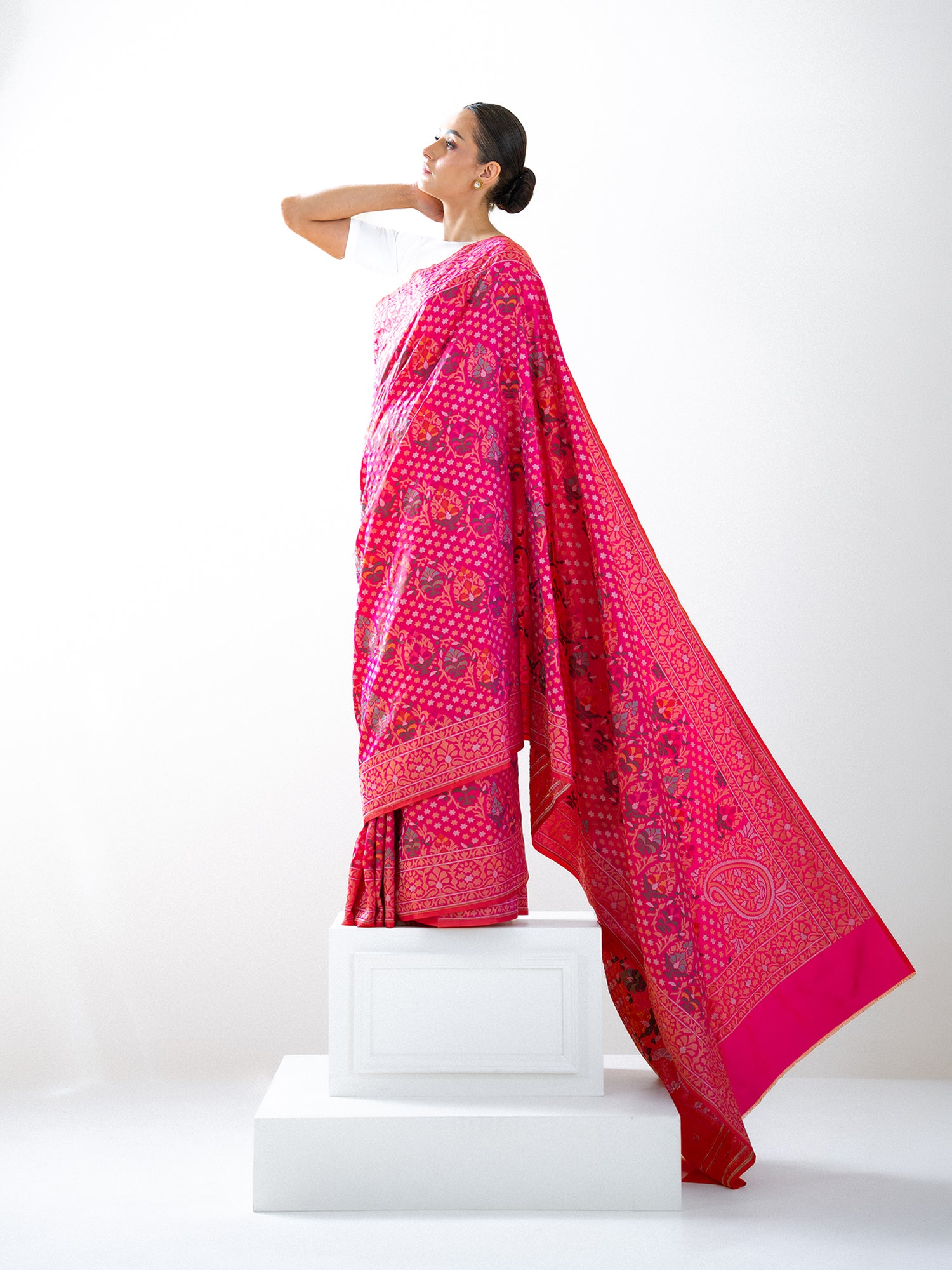
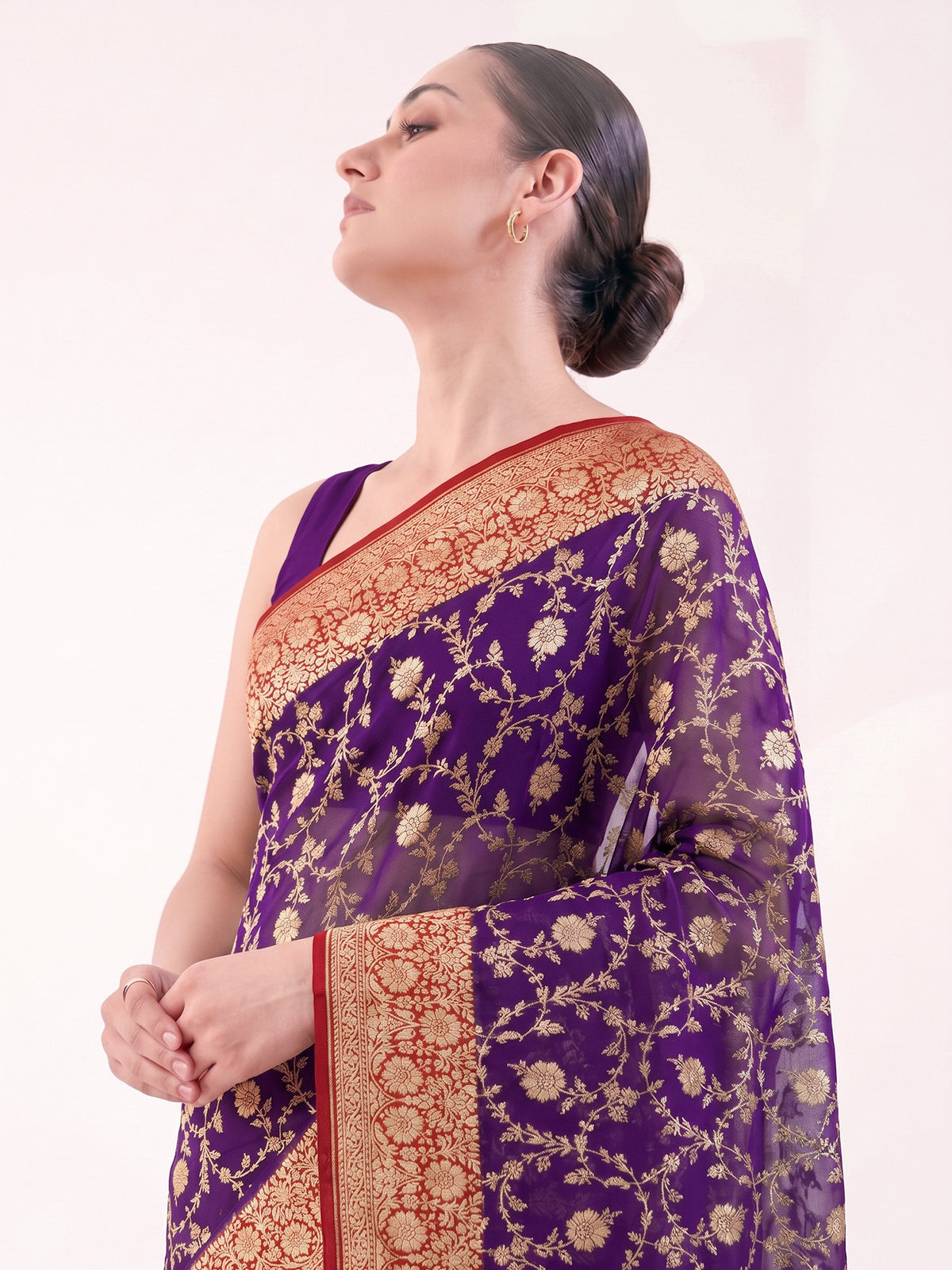
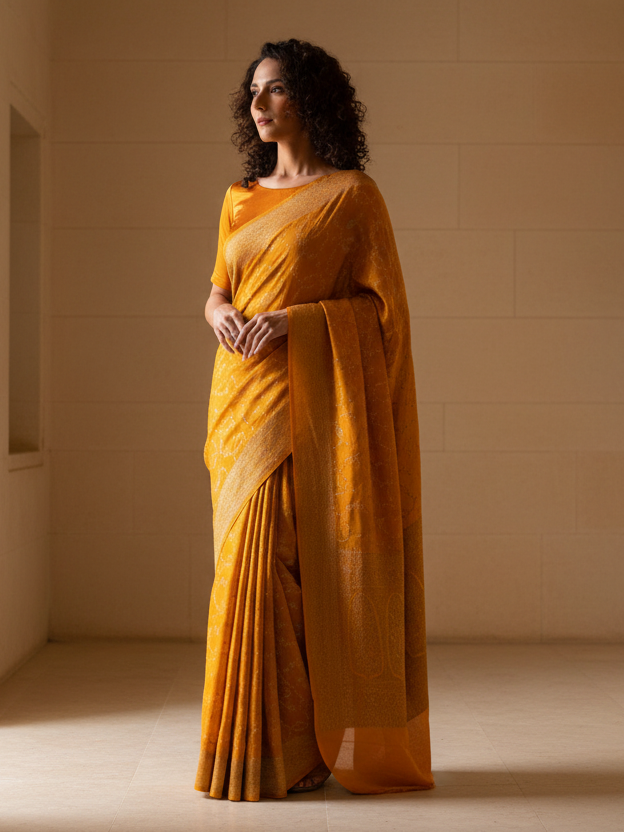
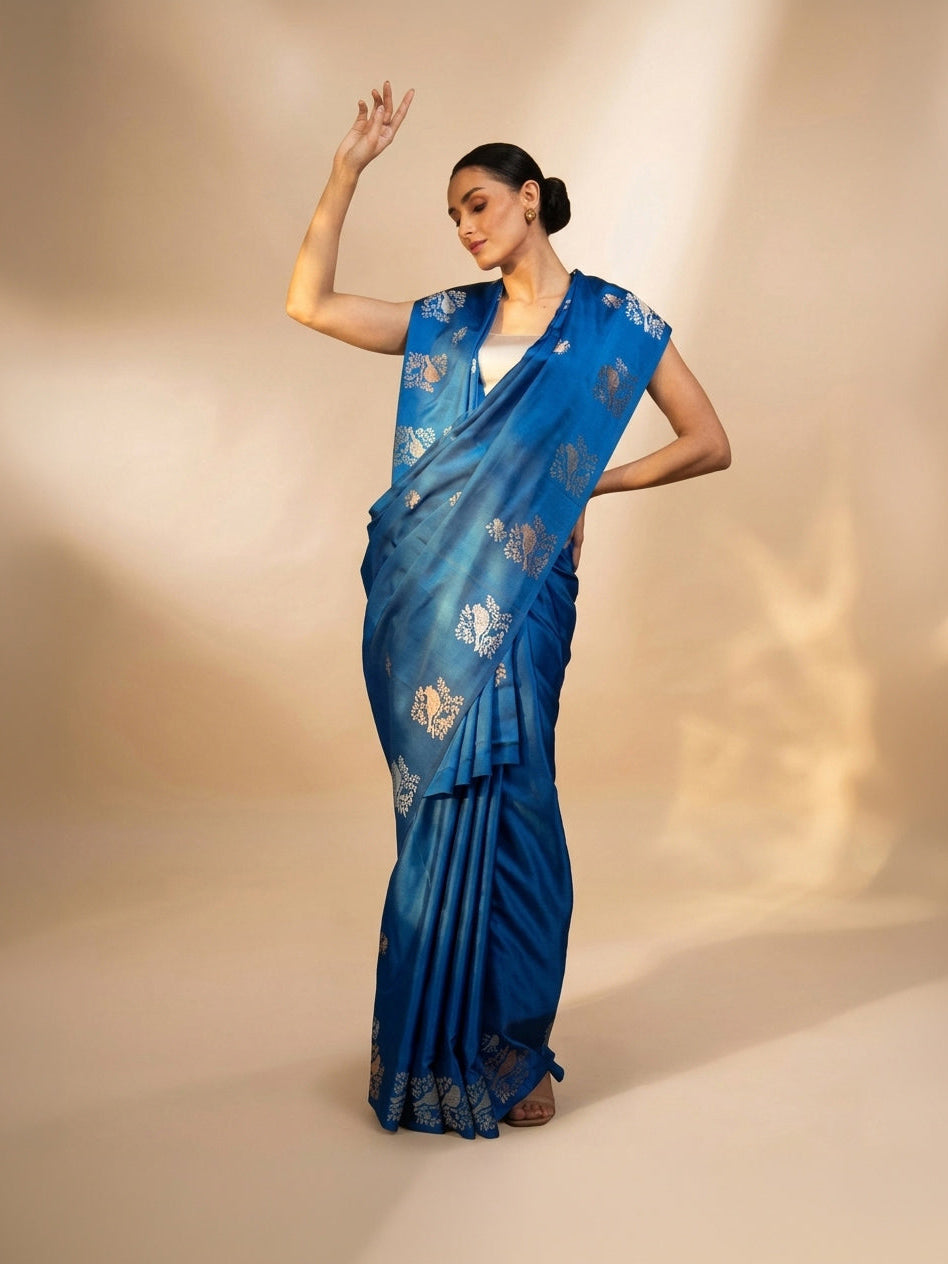
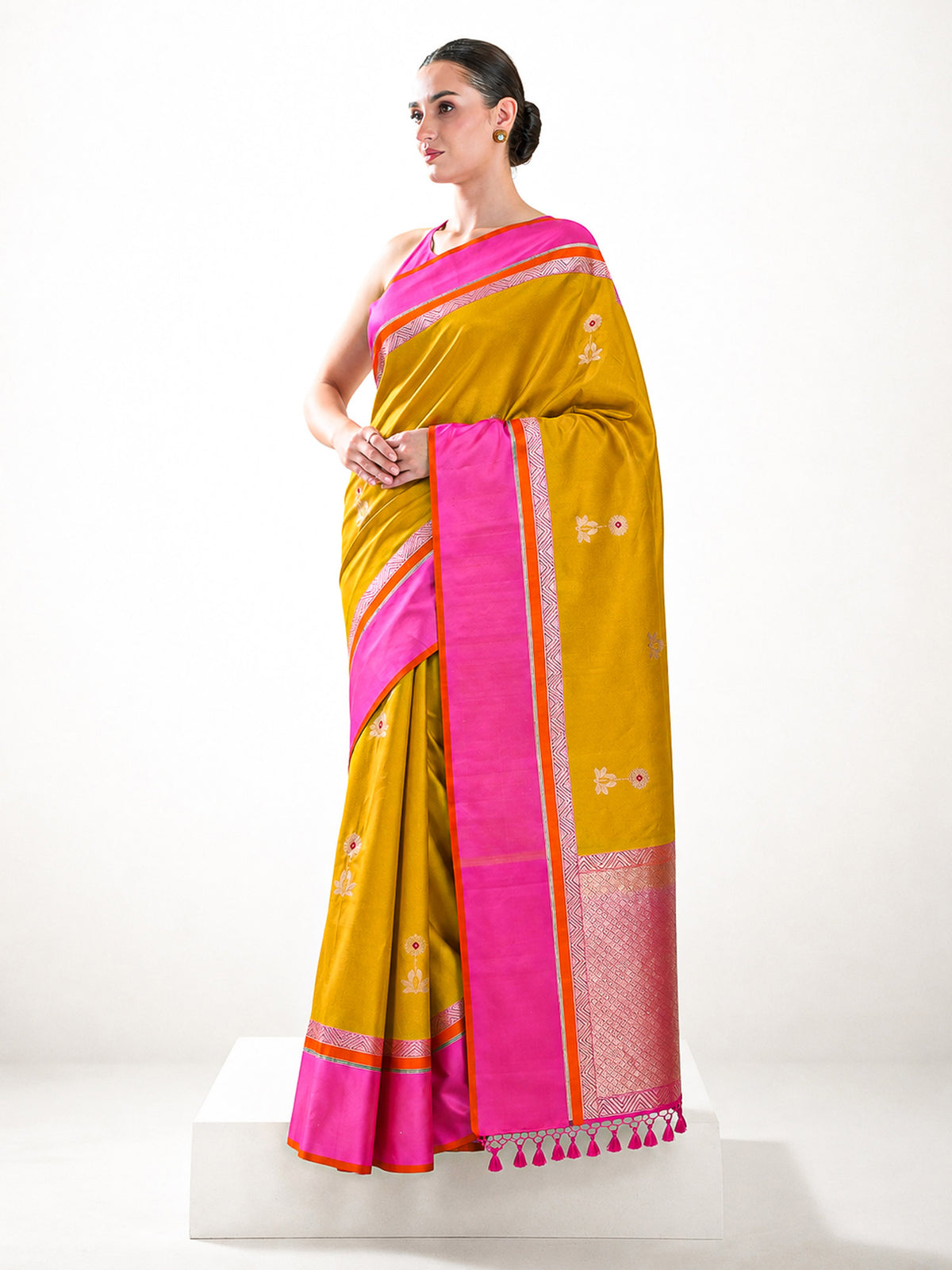

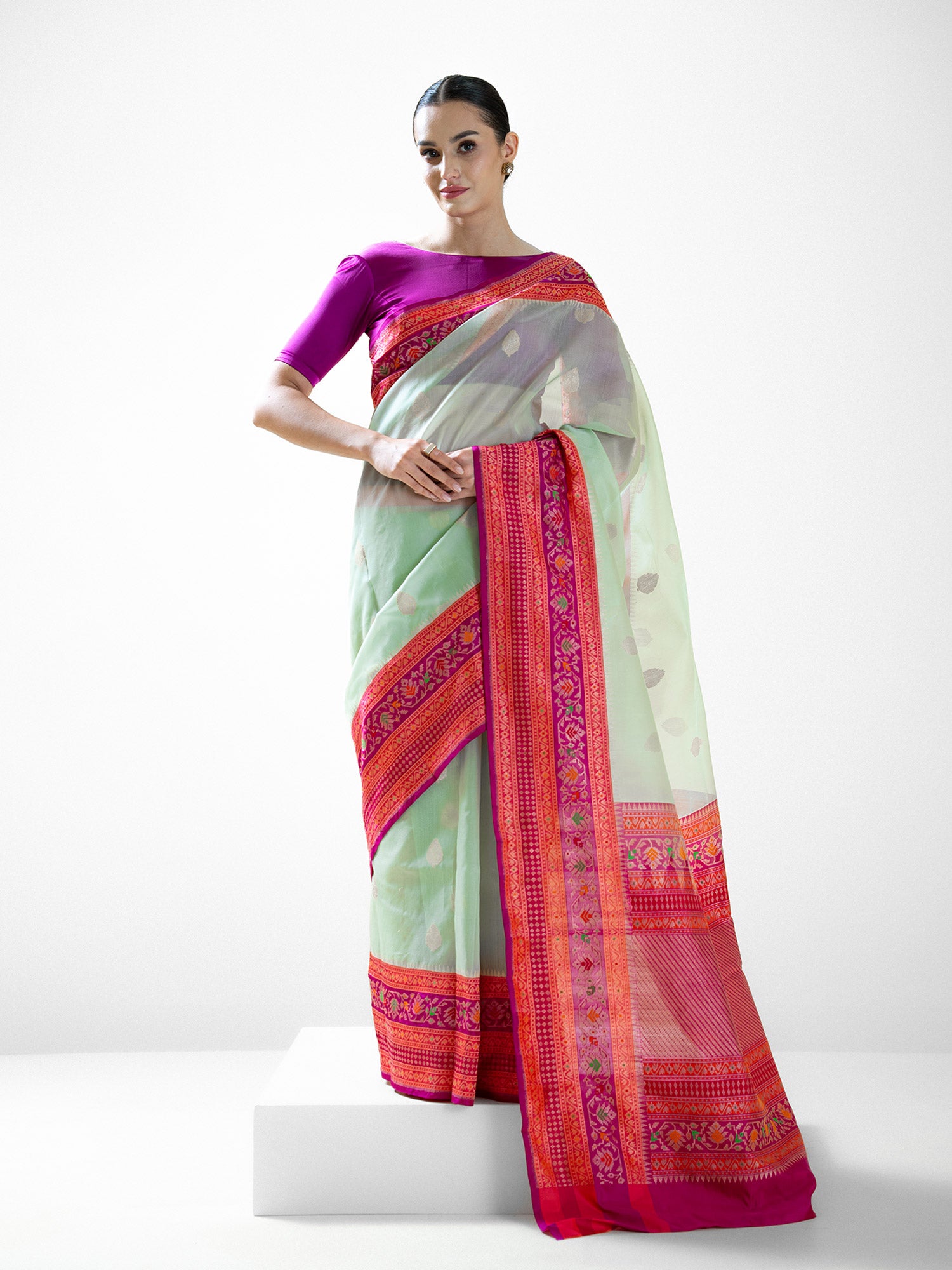
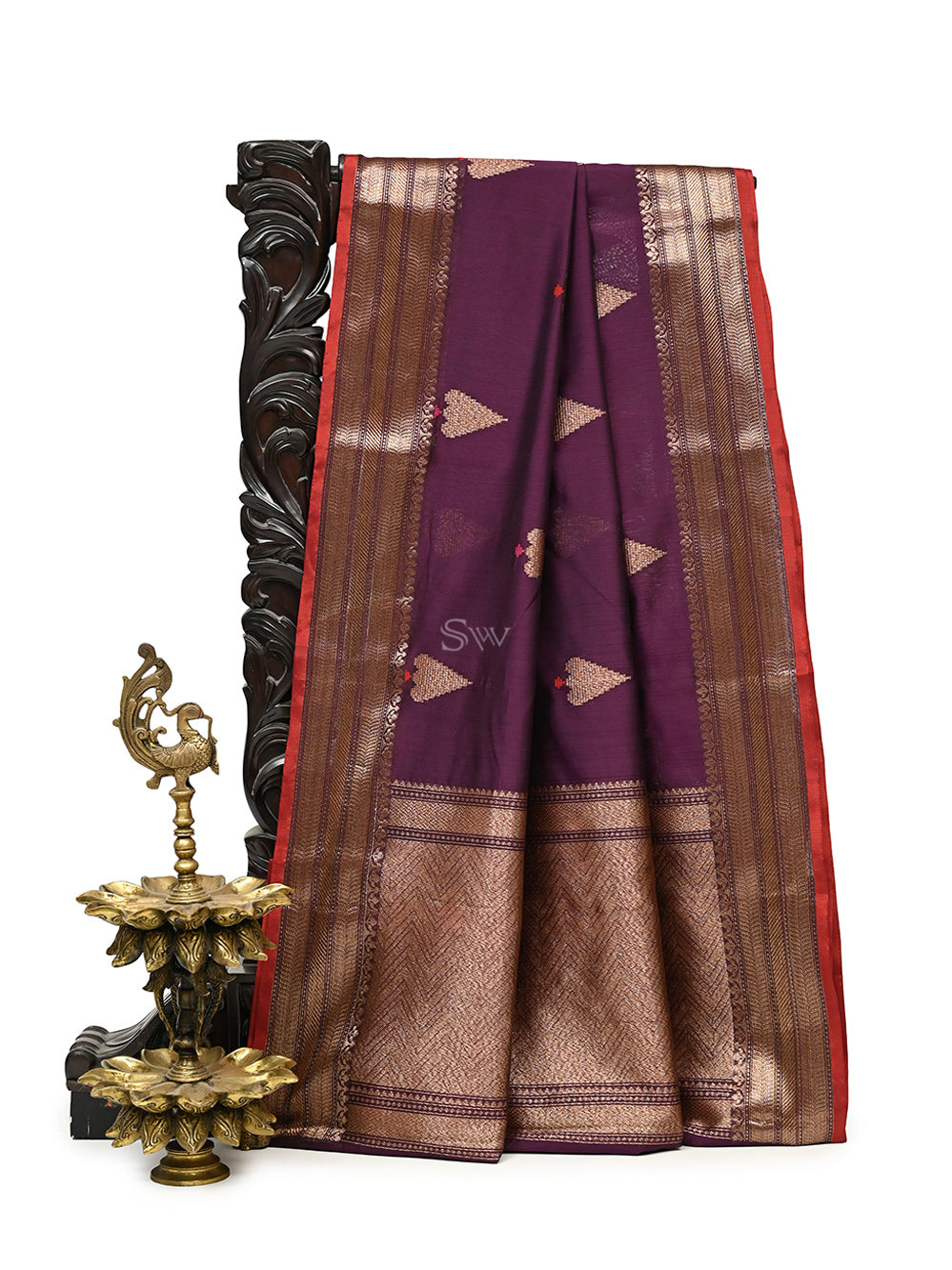


A Banarasi saree for wedding is not something you buy the way you buy other clothes. You don’t scroll through options, pick one that looks nice, and add to cart. Not for this. This is the saree that will be in every wedding photograph your family keeps for decades. The one your mother-in-law will notice before she notices anything else. The one your daughter might wear at her own wedding someday, if you choose well enough.
And that is the whole point of this guide — helping you choose well.
Whether you are a bride buying your own wedding saree, a mother shopping for her daughter, or a woman looking for the right Banarasi silk saree for wedding season — this guide covers every decision you need to make: which fabric, which weave, which colour, which price range, and how to make sure what you are buying is genuine. No fluff, no marketing talk — just the things that actually matter when you are spending ₹20,000 to ₹1,50,000 on a single saree.
Why a Banarasi Saree for Wedding? What Makes It the Default Choice
Indian weddings have no shortage of fabric options — Kanjivarams, Paithanis, Chanderis, Bandhani, designer lehengas. And yet, across North India, the Banarasi saree remains the undisputed first choice for brides and bridal families. There are real reasons for that, and they go beyond tradition.
A Banarasi saree for wedding works because of what the fabric actually does. The pure silk holds its shape through hours of sitting, standing, walking, and being photographed from every angle. The zari work catches light — not the flat, flashy way synthetic fabrics do, but with a warm, dimensional shimmer that looks as good in person as it does in photographs. The weight of the saree gives it a natural drape that stays put without constant adjusting. And the construction is durable enough that the same saree, if cared for properly, will look just as good in 30 years as it does today.
That last point matters more than people realise. A Banarasi silk saree for wedding is one of the few purchases in a woman’s life that genuinely appreciates in sentimental value over time. Every other outfit from the wedding will eventually feel dated. The Banarasi saree won’t.

Step 1: Choose Your Fabric — Not All Banarasi Silk Is the Same
This is where most first-time buyers get confused. “Banarasi” is a weaving tradition, not a single fabric. Varanasi’s weavers work with several different silks, and each produces a saree that feels, drapes, and weighs differently. Choosing the right fabric for your occasion is the first and most important decision.
Katan Silk — The Traditional Wedding Choice
Katan silk is the original Banarasi fabric — made from tightly twisted pure mulberry silk filaments. It is the heaviest, most structured, and most durable silk in the Banarasi family. Katan silk holds the densest zari work without distorting, which is why it has been the default fabric for bridal Banarasi sarees for centuries.
A Katan silk Banarasi saree for wedding weighs between 700g and 1,200g depending on the zari density. It has a smooth, lustrous surface with a natural body that holds pleats beautifully. If you are buying a saree for the main wedding ceremony — the phera, the nikaah, the core ritual — Katan silk is the strongest choice.
Khaddi Georgette — The Comfortable Alternative
Khaddi Georgette is for the woman who wants a genuine Banarasi saree without the weight of Katan silk. It is woven from finely twisted silk yarns that create a crinkled, lightweight texture. A Georgette Banarasi saree weighs 400–650g — almost half the weight of Katan — and drapes with a soft, fluid fall.
For mehndi nights, sangeet functions, haldi ceremonies, and post-wedding occasions, Georgette is an excellent choice. Some modern brides also choose Georgette for the wedding ceremony itself — especially for summer weddings or destination weddings where comfort is a priority.
Organza (Kora Silk) — The Summer Wedding Pick
Organza is the lightest Banarasi fabric — crisp, sheer, and airy. It does not cling to the body the way Katan or Georgette does; instead, it stands slightly away, creating volume and an ethereal silhouette. For outdoor weddings, beach destinations, or any ceremony where the temperature is a concern, Organza Banarasi sarees keep you cool while looking bridal.
Tissue Silk — The Evening Statement
Tissue sarees are woven with silk and metallic zari threads together, creating a fabric that literally shimmers. They are lighter than Katan but more structured than Georgette. A tissue Banarasi saree for wedding reception is a popular choice — the metallic sheen looks spectacular under evening lights and in flash photography.
Which Fabric for Which Occasion?
| Occasion | Best Fabric | Why |
|---|---|---|
| Wedding ceremony (phera, nikaah) | Katan Silk | Heaviest zari, structured drape, photographs regally |
| Reception | Katan Silk or Tissue | Rich look under evening lights |
| Haldi | Khaddi Georgette | Lightweight, comfortable, easy to drape |
| Mehndi / Sangeet | Khaddi Georgette or Organza | Light, fluid, allows movement and dancing |
| Engagement | Katan Silk (lighter designs) or Tissue | Elegant without being bridal-heavy |
| Post-wedding functions | Georgette or Organza | Comfortable for all-day wear, reusable |
Step 2: Understand the Weaving Techniques — This Is What Drives the Price
Two Banarasi sarees can use the same Katan silk, the same zari, and the same colour — but cost dramatically different amounts. The reason is almost always the weaving technique. Here is what you need to know.
Kadhua (Kadhwa) is the most premium technique. Each motif is woven individually by hand, with no loose floating threads on the reverse side. A Kadhua Banarasi saree for wedding takes 350–600 hours on the handloom and produces the most durable, heirloom-grade sarees. If budget allows, Kadhua is what you want for the main wedding saree.
Jangla / Jaal covers the entire body in a continuous, interlocking lattice of motifs. No blank space. This is the heaviest and most elaborate pattern in Banarasi weaving — the showstopper bridal saree that fills a room. Kadhua-woven Jangla is the most expensive combination: maximum design density plus maximum weaving effort.
Booti features small, individual motifs scattered across the body. Lighter, more affordable, and versatile. Booti Banarasi sarees are perfect for wedding guests, bridesmaids, the bride’s family, and festive occasions. They are also the best entry point for someone buying their first genuine Banarasi saree for wedding.
Tanchoi creates a satin-like surface with fine, intricate single-colour patterns. It has a subtle, luminous quality that works beautifully for evening receptions and cocktail events. Mid-range pricing, refined aesthetic.
Shikargah features elaborate hunting scenes and nature motifs in brocade — elephants, deer, peacocks. For women who want a Banarasi wedding saree that tells a story and starts conversations. These are collector’s pieces.
Brocade uses supplementary zari threads to create raised, three-dimensional patterns. Heavy brocade with gold zari on deep-coloured silk is the classic North Indian wedding look.
Rangkat creates horizontal colour bands with contrasting pallu. Contemporary, colour-blocked, popular among younger women. A Rangkat Banarasi saree for wedding mehndi or sangeet is a modern favourite.
From our experience: “The question we hear most often from brides is: ‘Kadhua or Cutwork?’ Here is the honest answer — if your budget allows Kadhua, always choose Kadhua. The motifs are sharper, the saree is more durable, and it holds its value better over decades. But if budget is a concern, a well-made Cutwork Banarasi is still a genuine handloom saree. It is still pure silk. It will still last years. The difference is in the longevity and the density of the weave — not in the authenticity.” — Sacred Weaves
Step 3: Pick Your Colour — It Says More Than You Think
Colour at an Indian wedding is never random. Every shade carries meaning, and different ceremonies call for different palettes.

For the Wedding Ceremony
Red is the unchallenged classic for North Indian brides. Red Banarasi saree for wedding represents prosperity, fertility, and the strength of marital bonds. It has been the default bridal colour for centuries, and it is not going anywhere.
Maroon and wine offer a deeper, more sophisticated take on the bridal red family. These are for brides who want tradition without the brightness of classic red — particularly popular for winter weddings and evening ceremonies.
Green is the traditional choice for Bengali brides and increasingly popular across communities. A green Banarasi saree for wedding symbolises new beginnings and fertility.
For Reception and Evening Events
Black Banarasi sarees have become a reception favourite — dramatic under evening lights, striking in photographs. A black Shikargah or Tanchoi Banarasi is a statement piece.
Purple and navy blue carry regal depth that looks magnificent under chandeliers and flash photography. Popular for the bride’s mother and sisters as well.
For Haldi, Mehndi, and Pre-Wedding
Yellow and orange for haldi — they mirror the warmth of the turmeric ceremony. Pink and magenta for mehndi. Bright, festive colours in lighter fabrics.
For Modern and Destination Brides
Peach, cream, and beige are the contemporary bride’s palette. These pastels photograph beautifully in natural daylight and work for intimate, outdoor, and destination weddings where a softer aesthetic is desired.
For the Bride’s Family and Guests
Blue, mustard, grey, brown, and gold — these are versatile shades that complement the bride without competing. A pure Banarasi saree for wedding guests in a jewel tone or neutral always looks appropriate.
Step 4: Set Your Budget — What You Get at Every Price Range
A genuine handloom Banarasi saree for wedding is an investment. Here is what your money buys at different levels.
| Budget | What You Get | Best For |
|---|---|---|
| ₹13,000 – ₹20,000 | Booti Katan silk or Georgette Banarasi, light zari, Cutwork weave | Wedding guest, festival wear, first Banarasi purchase |
| ₹20,000 – ₹40,000 | Meenakari, Tanchoi, medium-density zari, richer pallu work | Engagement, reception, trousseau pieces, bride’s family |
| ₹40,000 – ₹70,000 | Kadhua weave, Shikargah, heavy Meenakari Jaal, premium zari | Main wedding saree, premium trousseau |
| ₹70,000 – ₹1,50,000+ | Heavy Kadhua Jangla, real silver zari, all-over intricate work, 500-800+ hours on loom | Bridal showstopper, heirloom investment |
The biggest price driver is the weaving technique — a Kadhua saree with the same design as a Cutwork saree costs 2–3 times more because it takes 2–3 times longer to weave. The second factor is zari — tested zari (silver-copper-gold blend) is standard; real silver zari adds ₹5,000–₹15,000 depending on density.
If budget is a real concern, here is the honest advice: buy the best fabric you can afford with simpler designs, rather than cheaper fabric with elaborate designs. A pure Katan silk Booti at ₹18,000 will outlast and outshine a machine-made saree at ₹30,000 every single time.
Step 5: Verify Authenticity — Before You Pay
This is the step most buyers skip, and it is the one that matters most — especially when you are buying a Banarasi saree for wedding online.
The touch test. Pure Banarasi silk feels smooth, warm, and dense. Art silk feels cold, slippery, and unnaturally light. If you are buying in person, this is your first check.
The reverse side. On a genuine handwoven Banarasi saree, the weave pattern is visible on both sides of the fabric. Kadhua-woven motifs look nearly identical front and back. Machine-printed designs appear on one side only.

Silk Mark certification. This is the most reliable verification. The Silk Mark Organisation of India certifies sarees as 100% pure natural silk after laboratory testing. Every Banarasi saree for wedding at Sacred Weaves is Silk Mark certified — verifiable at silkmarkindia.com.
HSN Code on the invoice. Pure silk sarees are billed under HSN Code 5007. If the invoice shows a different code, the fabric classification is not pure silk.
Live video verification. If you are buying online, always request a video call before confirming a bridal order. At Sacred Weaves, our live video shopping lets you see the saree in natural light, examine the zari work, and confirm the exact colour — all in real time.
From our experience: “The number one complaint we hear from women who bought from other sellers is: ‘It looked different on the website.’ That is exactly why we offer video shopping — a 10-minute call in natural daylight solves a problem that no product photo can. For a bridal saree, never buy without seeing it live.” — Sacred Weaves
Step 6: Plan Your Trousseau — How Many Sarees Does a Bride Need?
A bridal trousseau is more than one saree. It is a wardrobe for the first year of married life — covering every occasion from the wedding day to the first Diwali at the in-laws.
A well-planned Banarasi wedding saree trousseau typically includes:
1 heavy saree for the wedding ceremony — Kadhua or Jangla Katan silk in red, maroon, or wine. This is the statement piece. Budget the most here — ₹50,000–₹1,50,000+ depending on your overall budget.
1 saree for the reception — Katan silk or Tissue in black, purple, navy, or deep green. Slightly lighter than the wedding saree but still rich enough for the evening. ₹30,000–₹60,000.
1 saree for the engagement — Tanchoi or Meenakari in pink, peach, or cream. Elegant without being bridal-heavy. ₹20,000–₹40,000.
2-3 lighter sarees for post-wedding occasions — Georgette, Organza, or Booti Katan for griha pravesh, first Karva Chauth, first Diwali, temple visits, and family gatherings. ₹15,000–₹25,000 each. These should cover different colour families so the trousseau is versatile — a green, a blue or mustard, and a neutral like beige or grey.
That is 5–6 sarees total. Some families add Banarasi dupattas and lehengas to the trousseau as well — matching pieces that extend the collection without adding full sarees.
Step 7: Place the Order — Timeline and Logistics
If your wedding is 3 months away, you are right on time. If it is 6 months away, even better. Here is the timeline that works.
| Stage | Time Needed |
|---|---|
| Research and shortlisting (this guide + browsing) | 1–2 weeks |
| Video call consultation (colour confirmation, shortlist finalization) | 1–2 days |
| Order confirmation and payment | 1 day |
| Blouse stitching + fall/pico + quality check | 1–2 weeks |
| Shipping (domestic: 3–5 days / international: 5–10 days) | 1–2 weeks |
| Buffer for local fitting and minor blouse adjustments | 1–2 weeks |
| Total | 6–8 weeks minimum |
For custom or made-to-order weaves — where the saree is woven from scratch based on your specifications — the timeline extends to 4–6 months minimum. Handloom weaving cannot be rushed. Start early, choose calmly, and give the artisan the time the craft deserves.
Where to Buy Original Banarasi Saree for Wedding Online
Finding a genuine Banarasi saree for marriage online takes a bit of diligence. The market has too many sellers labelling machine-made sarees as handloom. Here is what to look for in a trustworthy seller:
They should be a manufacturer or have direct relationships with weaving workshops in Varanasi — not a marketplace reseller. They should offer Silk Mark certification on every saree. They should show prices transparently, including any customization costs. They should offer live video shopping so you can verify the saree before buying. And they should ship with clear return and exchange policies.
At Sacred Weaves, every Banarasi saree for wedding is Silk Mark certified, GI tagged, and handwoven on pit looms in Varanasi. We ship worldwide with free delivery above INR 25000 order value and duties prepaid (DDP) — no surprise customs charges. We offer live video shopping, custom blouse stitching, and fall-pico-tassels service with every order.
Browse our complete Banarasi saree for wedding collection →


