
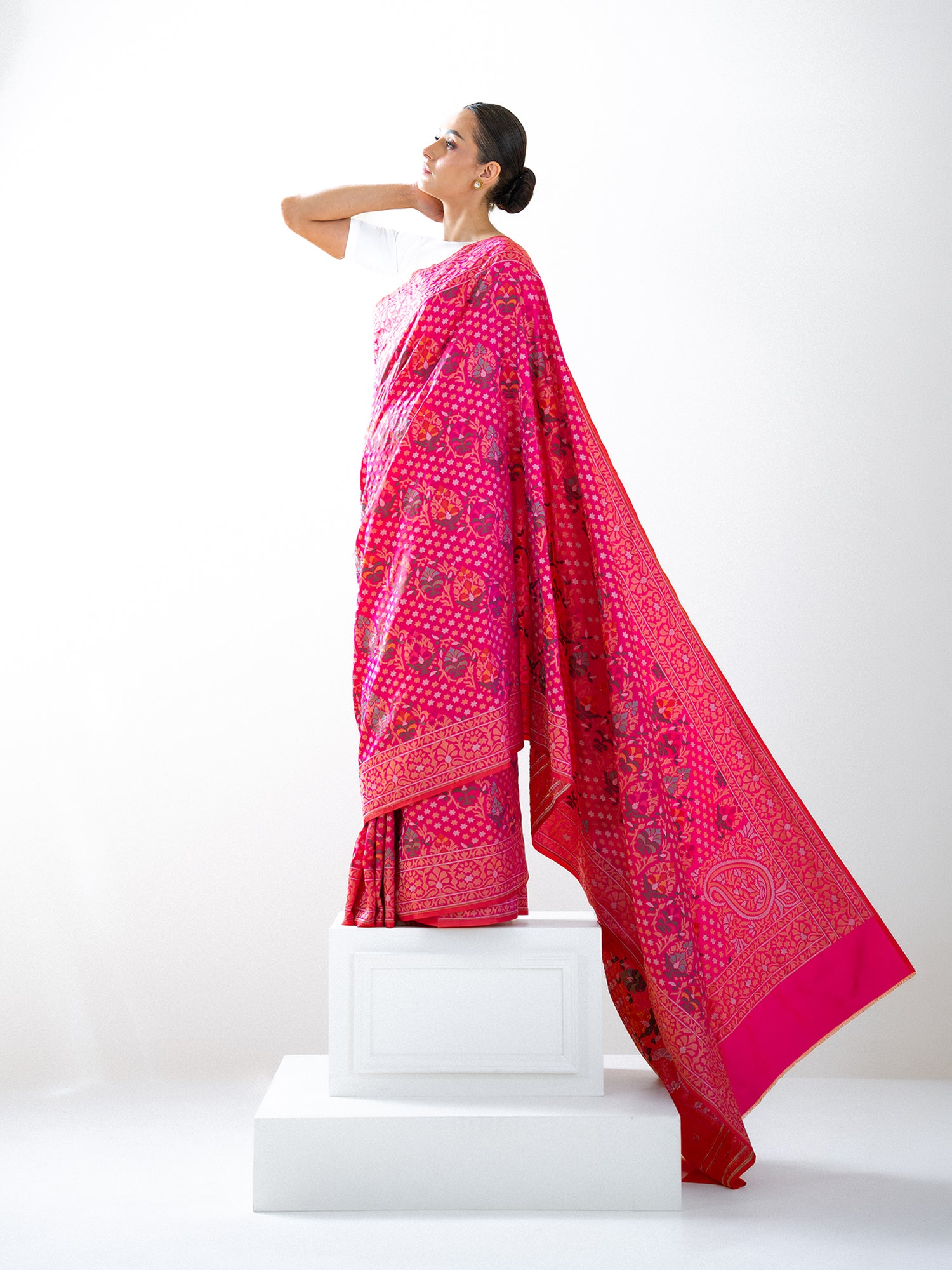
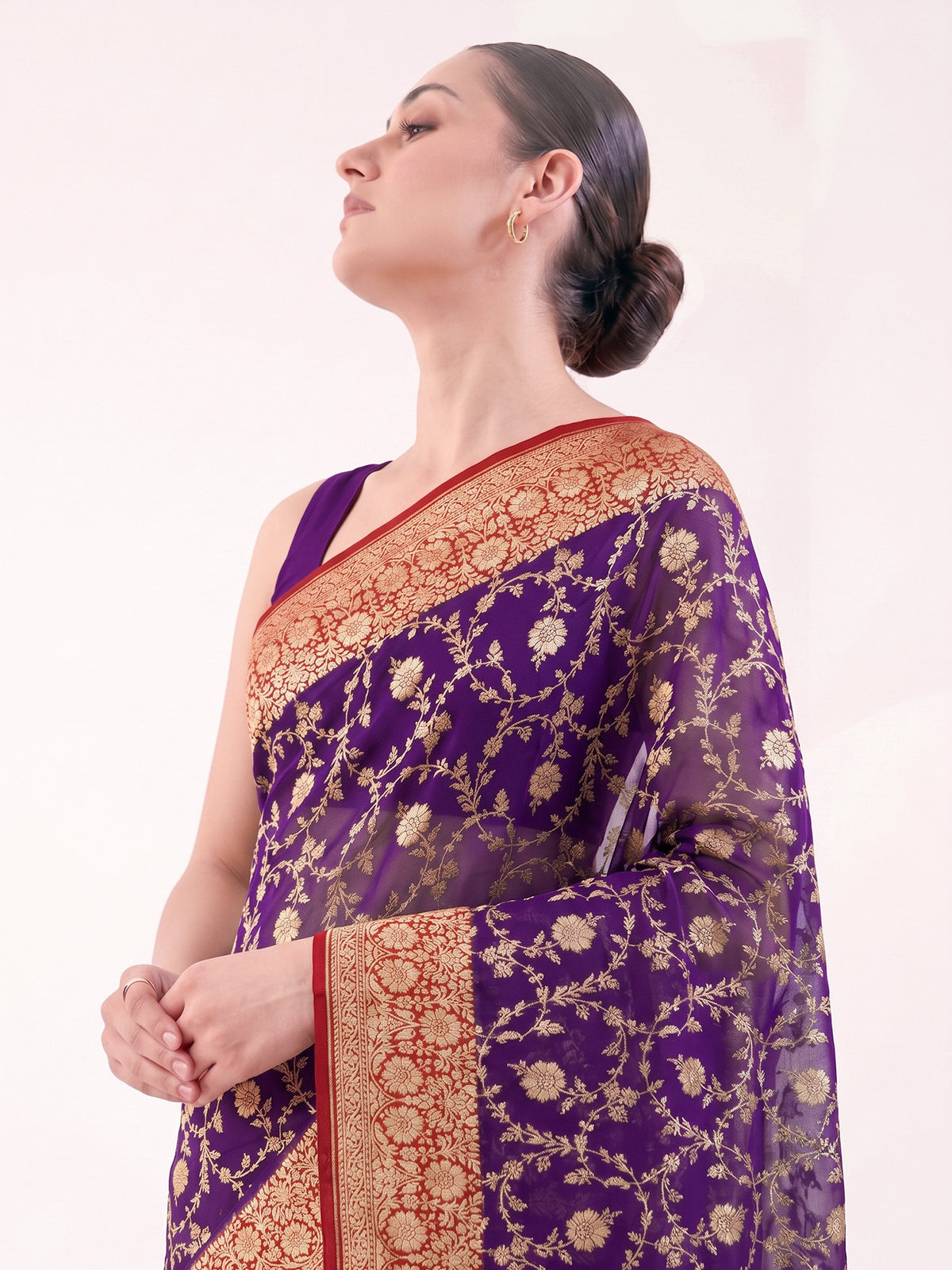
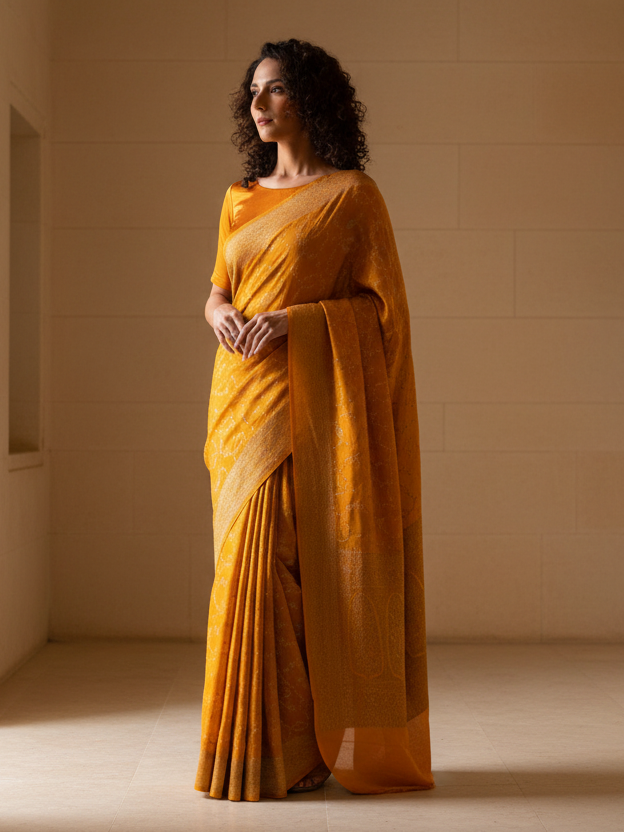
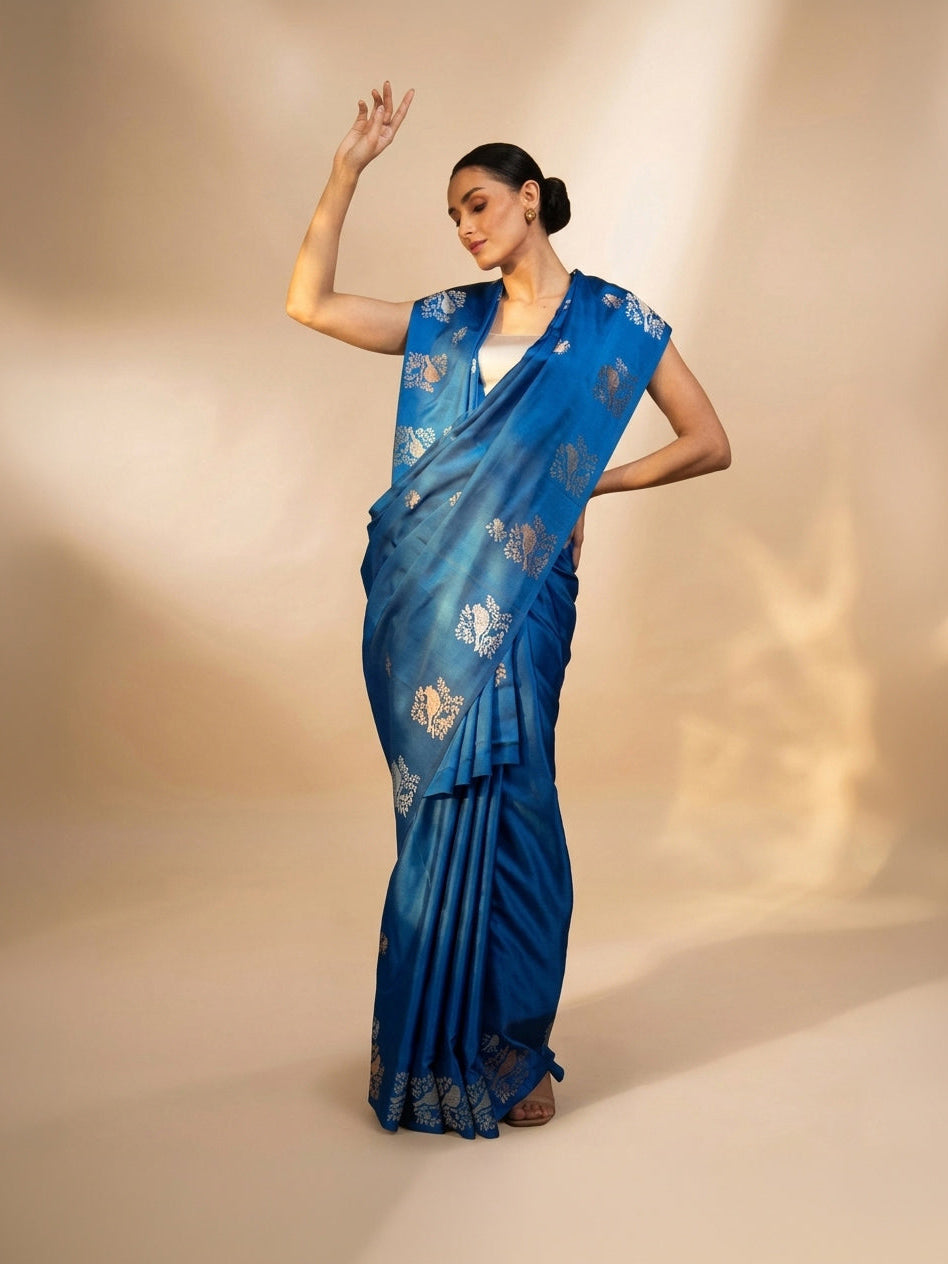
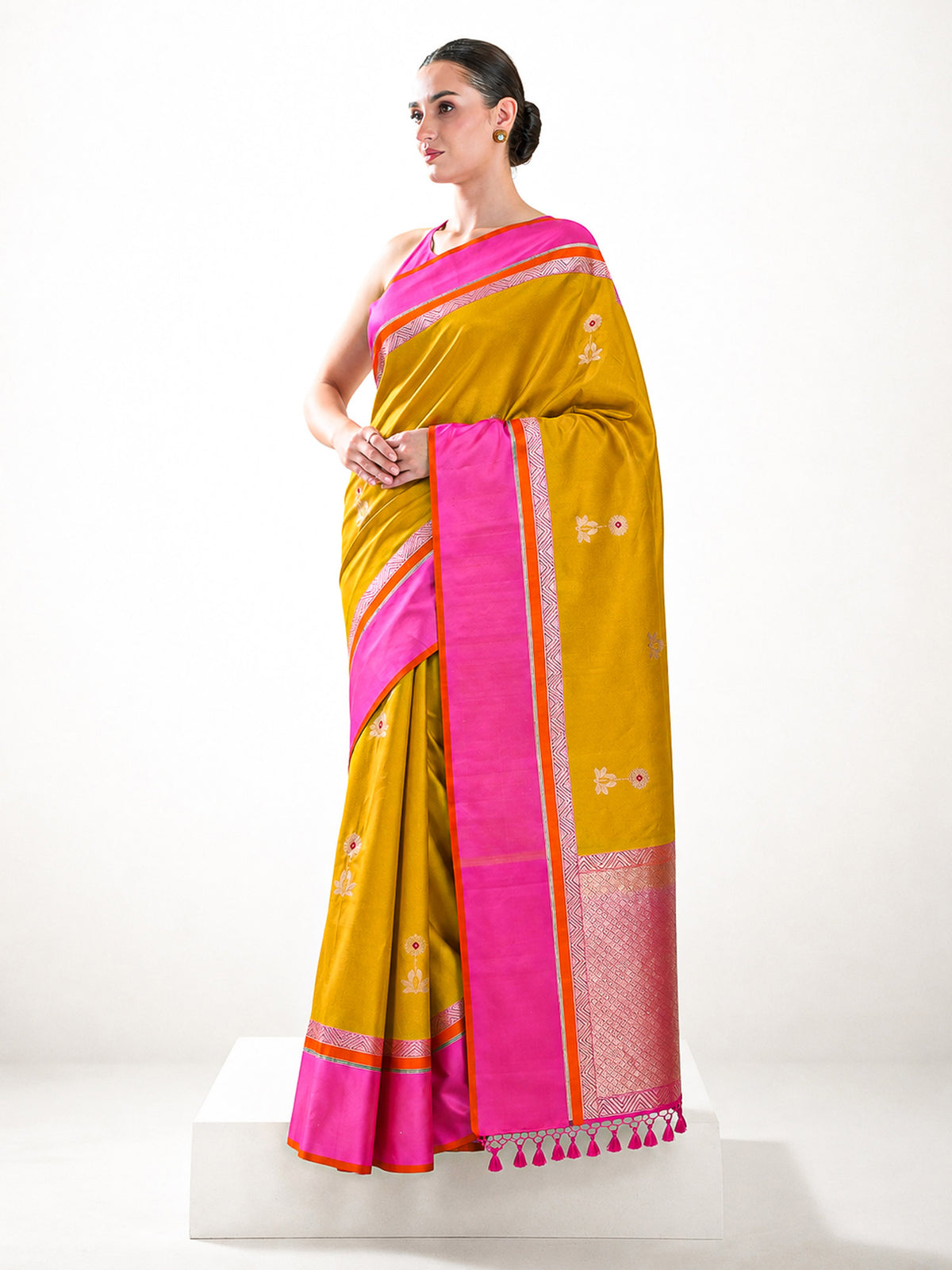

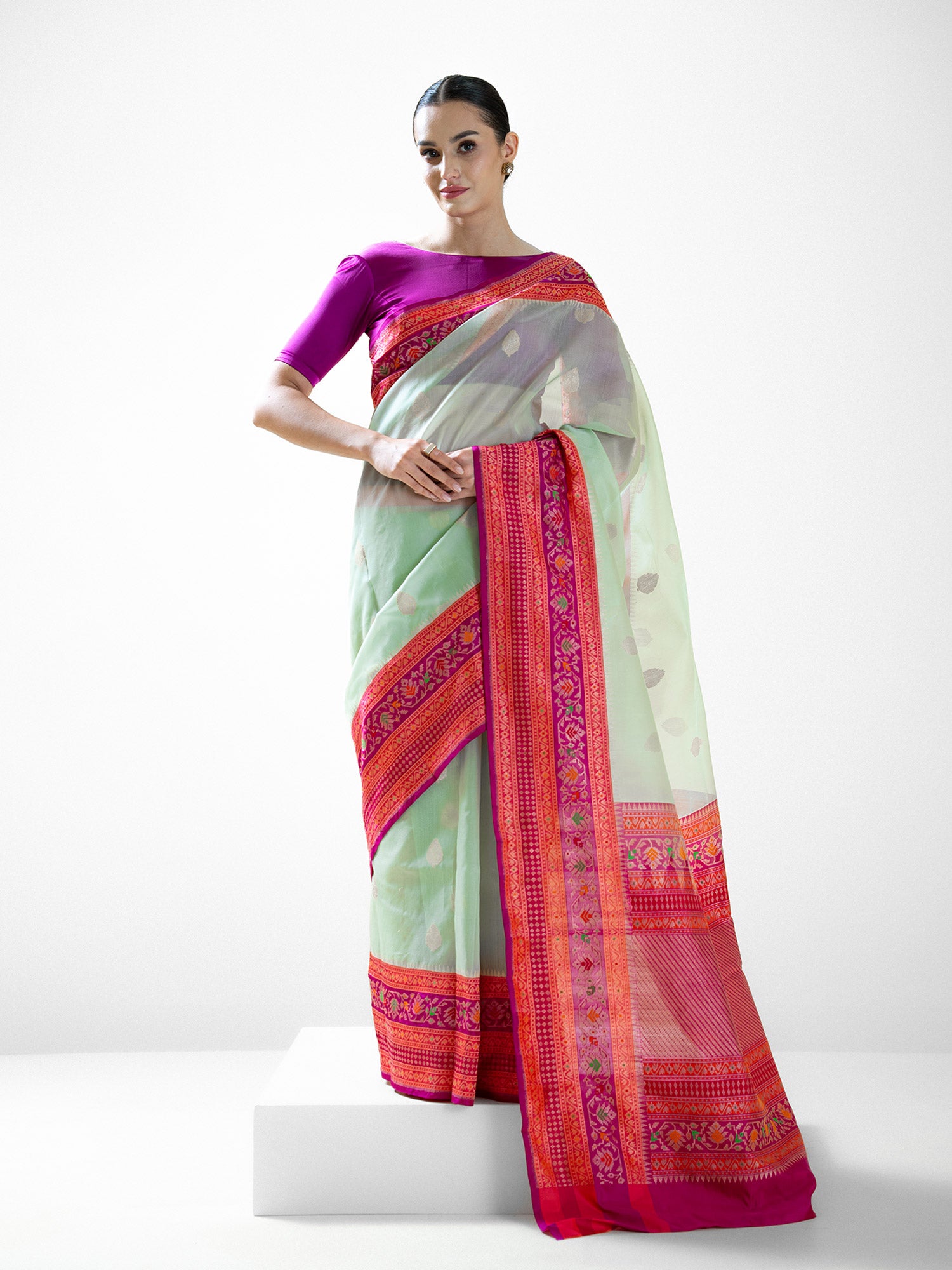
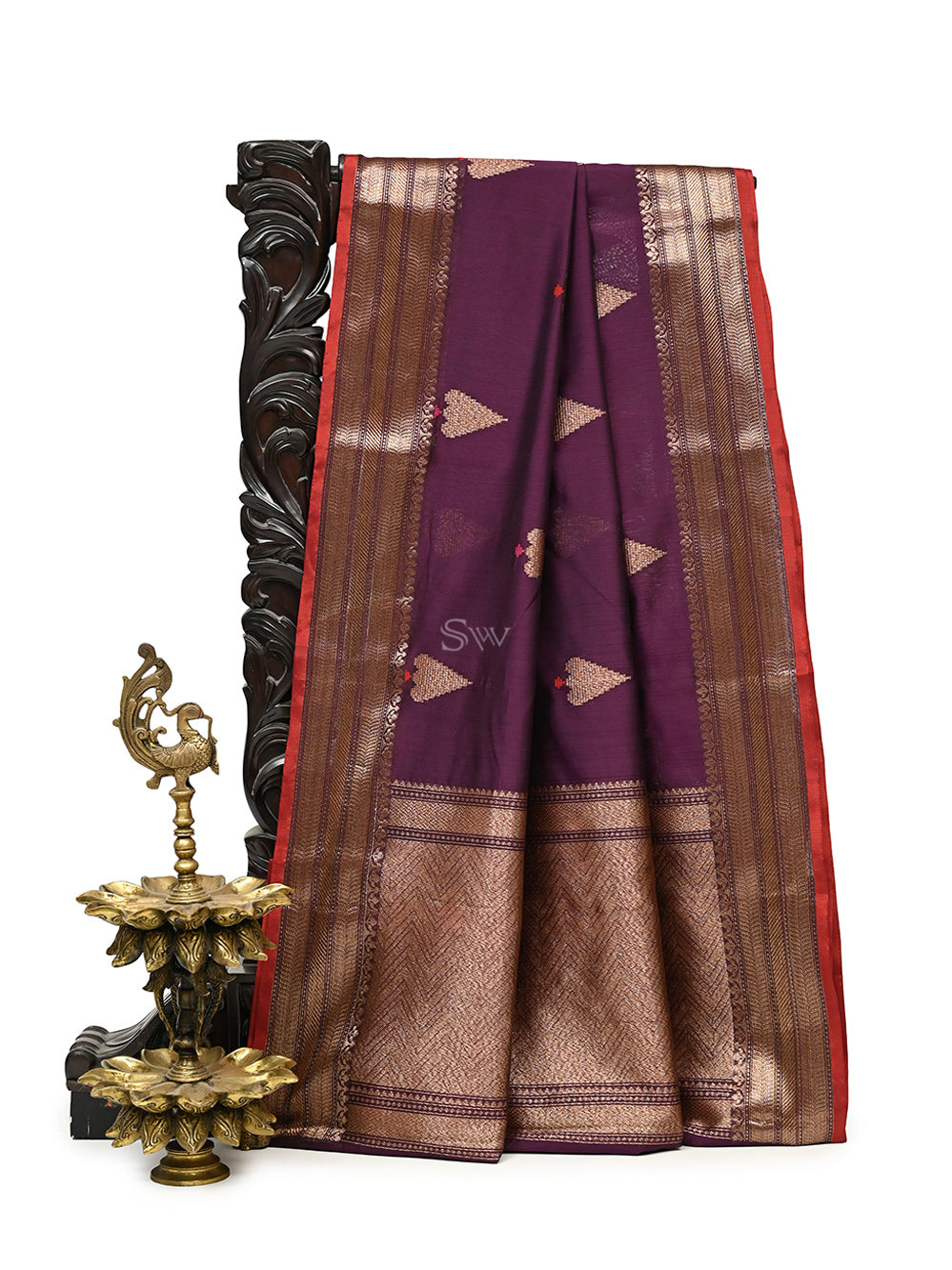


You have chosen the saree. The colour is right. The fabric feels perfect. The zari catches light exactly the way you imagined. Now comes the part that most women underestimate — how you style it. Because a Banarasi saree for wedding can either look like a million rupees or like you borrowed it from someone else, and the difference almost never comes down to the saree itself. It comes down to the blouse, the draping style, the jewellery, the hair, and the small details that turn a beautiful saree into a complete, polished look.
This guide is about those details. Whether you are a bride styling your bridal saree, a wedding guest putting together your look for someone else’s big day, or a newly married woman wearing her trousseau piece to the first family function — the principles are the same. A great Banarasi saree look for wedding is about balance. Heavy saree with delicate jewellery. Rich colours with clean draping. Traditional fabric with a blouse that has personality. Get the balance right and the saree does all the work for you.
If you are still deciding which Banarasi to buy, start with our complete buying guide for Banarasi saree for wedding — then come back here for the styling.
The Blouse Makes or Breaks the Look
This is not an exaggeration. You can take the most exquisite wedding Banarasi saree in the world and pair it with a poorly fitted blouse or a design that clashes with the saree’s character, and the entire look falls apart. The blouse is the frame — it holds everything together.
For heavy Kadhua or Jangla Banarasi sarees with dense zari work, the blouse should be relatively simple. A well-fitted blouse in a matching or contrasting colour with minimal embellishment lets the saree remain the star. Think raw silk, velvet, or dupion in a solid shade with clean lines. A deep back, interesting sleeve length, or a single statement element like a tassel dori or potli buttons adds personality without competing with the zari. The mistake most women make with heavy Banarasi sarees is pairing them with equally heavy embroidered blouses — the result is visual overload where the eye does not know where to rest.
For lighter Banarasi sarees — Booti Katan silk, Georgette, or Rangkat — the blouse can afford to be bolder. Sequin work, mirror work, or zardozi embroidery on the blouse adds the extra richness that a lighter saree body does not carry on its own. A contrast blouse works particularly well here — a green Banarasi saree with a deep maroon blouse, or a pink Banarasi with a navy raw silk blouse. The contrast creates visual interest that a matching blouse cannot.
Sleeve length matters more than people realise. Three-quarter sleeves are the most universally flattering and the most practical for wedding functions — long enough to look formal, short enough to eat, greet, and move comfortably. Puff sleeves are having a moment and work beautifully with lighter Banarasi sarees for a slightly retro, fashion-forward look. Full sleeves suit winter weddings and add a regal quality to heavy bridal sarees. Cap sleeves and sleeveless blouses work for receptions and evening events where the mood is more relaxed.
Sacred Weaves offers custom blouse stitching with every saree purchase — tailored to your measurements with multiple design options, so you do not have to hunt for a separate tailor.
How to Drape a Banarasi Saree for Wedding
The draping style changes the entire silhouette and mood of the saree. The same wedding Banarasi saree draped in two different styles can look like two completely different outfits.
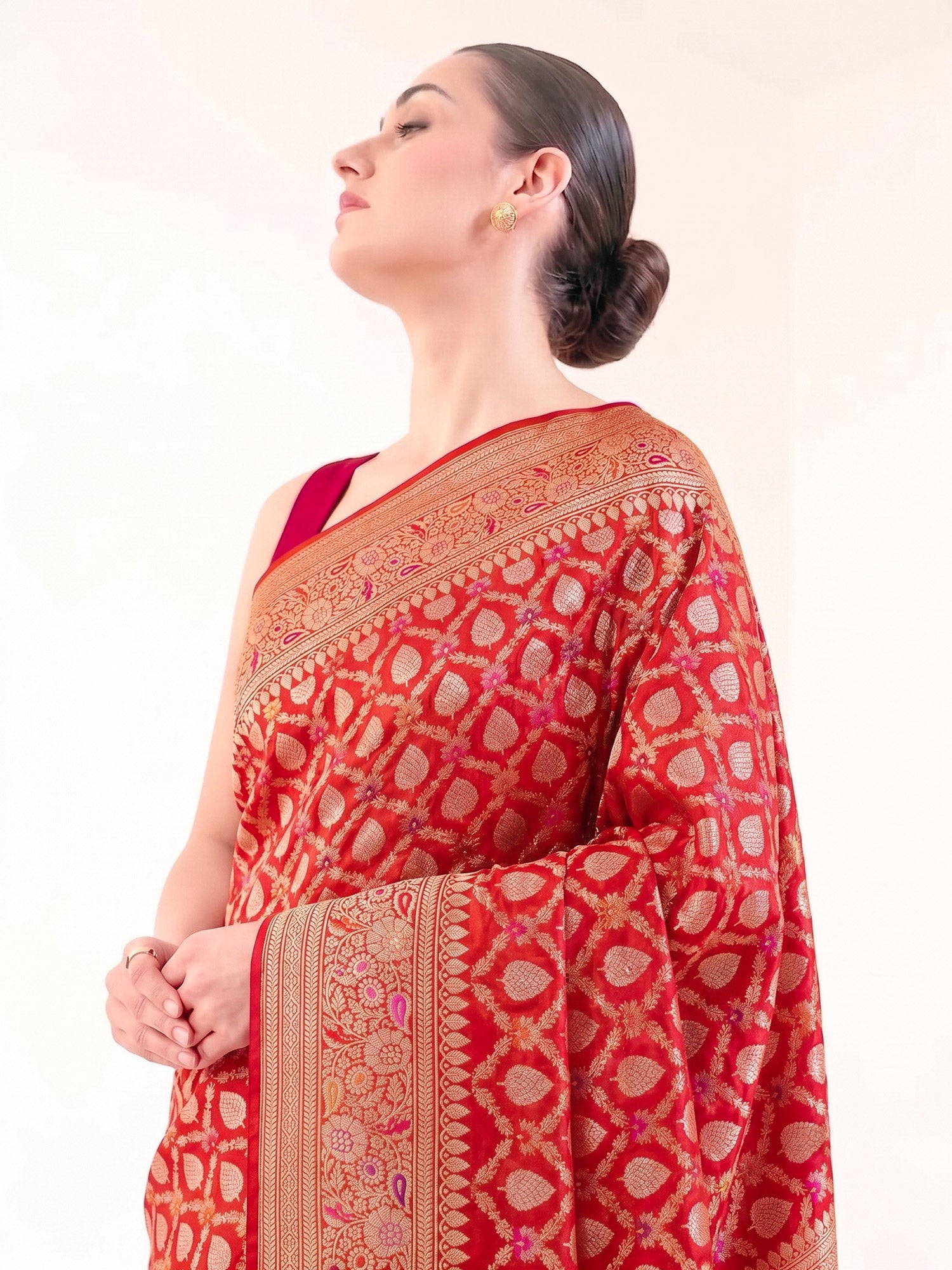
The classic Nivi drape is what most women default to — and for good reason. Pleats tucked into the front of the petticoat, pallu brought over the left shoulder, end hanging behind. It is clean, symmetrical, and shows off both the saree body and the pallu. For heavy Katan silk Banarasi sarees with rich Jangla or Shikargah work, the Nivi drape is the safest and most elegant choice — it lets the zari do the talking without any draping tricks distracting from the craftsmanship.
 |
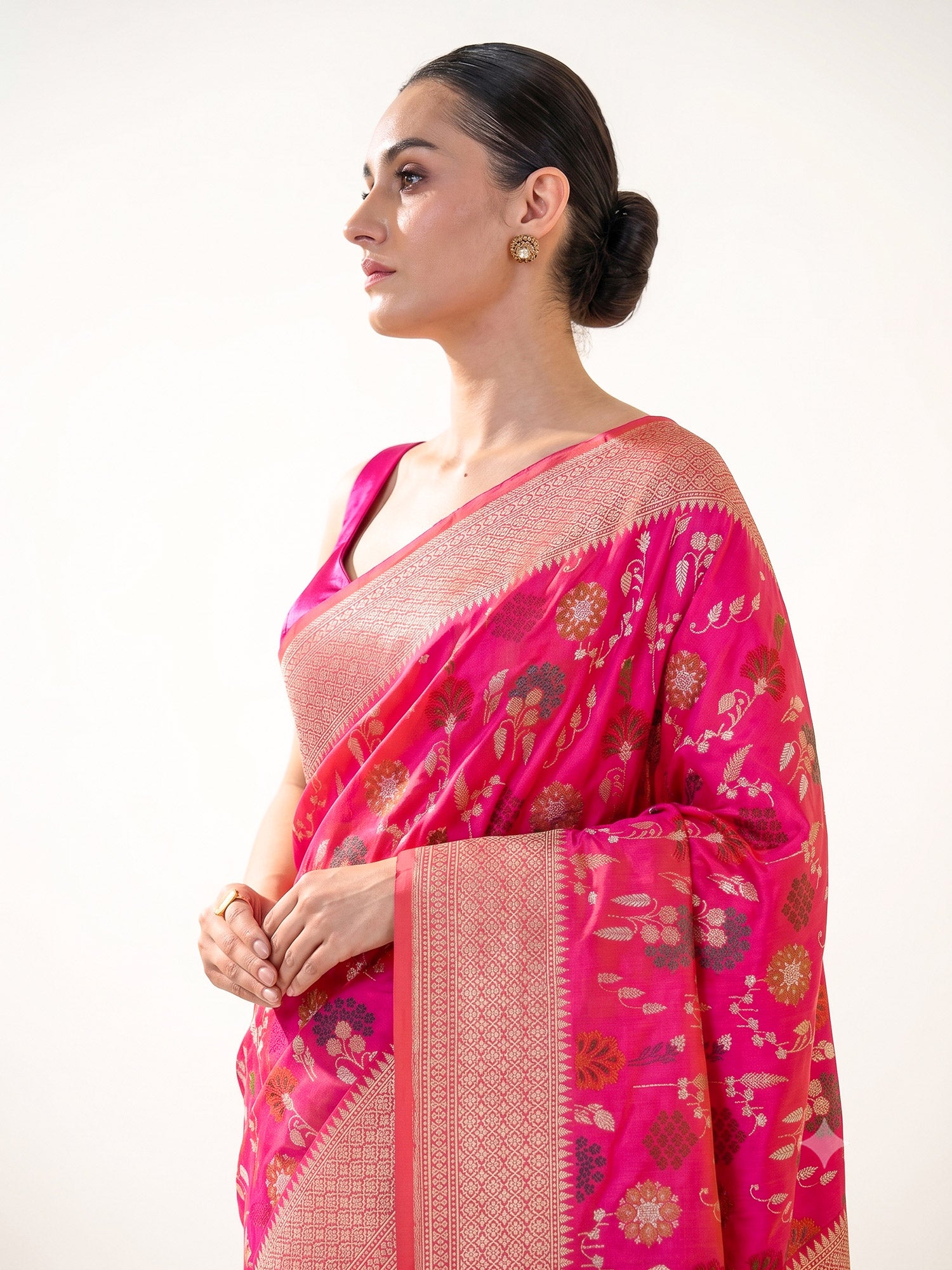 |
The seedha pallu drape — where the pallu falls over the right shoulder from front to back — is traditional in many communities, particularly in Gujarat, Rajasthan, and parts of UP. It gives the saree a completely different personality compared to the Nivi drape. The front of the body gets full visibility (no pallu covering it), which means the blouse and the saree body motifs are on full display. This works beautifully when your saree has elaborate body work and a blouse you want to show off.
The Bengali drape (without pleats at the front, pallu drawn from behind over the left shoulder) gives a fluid, artistic look that is traditional for Bengali weddings but has become fashionable across communities. It is slightly harder to manage than Nivi because there are no front pleats holding the fabric in place, but the result is a softer, more draped silhouette that looks stunning in photographs. If you are wearing your Banarasi for a Bengali wedding or want a more relaxed, contemporary look, this is worth trying.
One practical tip that professional drape artists swear by — pin your pallu. It does not matter how experienced you are with sarees. At a wedding, you will be hugging people, sitting down, standing up, eating, dancing, and being pulled into photographs for hours. Three to four small safety pins in the right places — one at the shoulder, one at the waist where the pallu starts, and one or two securing the pleats — make the difference between constant adjustments and worry-free confidence throughout the event.
For brides specifically, consider booking a professional saree draper for the wedding day. The investment is small (₹2,000 to ₹5,000 in most cities) and the peace of mind is enormous. A professional knows how to drape heavy Katan silk so the pleats fan perfectly, the pallu falls at exactly the right length, and the whole silhouette looks polished and secure for 6 to 8 hours of wear.
Jewellery That Works With Banarasi Sarees
Jewellery is where most women either perfect their Banarasi saree look for wedding or accidentally ruin it. The rule is simple: the heavier the saree, the more restrained the jewellery should be. And the lighter the saree, the more the jewellery can carry.
For a heavy bridal Banarasi saree in red, maroon, or wine with dense gold zari, the jewellery should echo the gold — not fight it. A kundan or polki choker necklace sits perfectly against the neckline of a Banarasi blouse. Long kundan raani haar (a layered multi-strand necklace reaching below the chest) adds grandeur for bridal looks. Gold jhumka earrings — substantial but not chandelier-sized — are the classic pairing. A maang tikka and a thin gold nose ring complete the traditional bridal Banarasi look without overpowering the saree.
For a reception Banarasi in black, purple, or navy blue, diamonds and uncut diamond (polki) jewellery work better than heavy gold. The cooler tones of the saree call for jewellery with sparkle and lightness rather than warmth and weight. A single-strand diamond necklace, statement drop earrings, and a cocktail ring can transform a dark Banarasi into a contemporary, high-fashion reception look.
For lighter Banarasi sarees worn to weddings as a guest — Tanchoi in cream, Booti in blue, Georgette in peach — the jewellery can be more playful. Layered temple jewellery, oxidised silver pieces, statement jhumkas, or contemporary geometric earrings all work because the saree is not competing for attention. This is where personal style gets to shine.
One thing to avoid across all Banarasi saree looks — mixing metal tones. If your saree has gold zari, keep the jewellery in gold tones. If it has silver zari (common in grey and white Banarasi sarees), keep the jewellery in silver or platinum tones. Mixing gold zari with silver jewellery — or vice versa — creates a visual disconnect that cheapens the entire look.
Hair and Makeup for Banarasi Saree Wedding Look
Hair and makeup complete the picture. The approach should follow the same principle as jewellery — complement the saree, do not compete with it.
For a classic bridal Banarasi saree look, a low bun with a gajra (jasmine garland) is timeless. It has been the default bridal hairstyle for generations and it works because it keeps the focus on the saree and jewellery rather than the hair. A neatly done bun with a centre parting, maang tikka, and fresh white mogra gajra against dark hair is one of the most photographed and most flattering looks in Indian bridal styling. If a plain bun feels too simple, adding a jewelled hair pin, small flowers, or a decorative juda cover elevates it without changing the silhouette.
For a more contemporary Banarasi saree look for wedding — particularly for receptions, sangeet, and younger brides — soft waves left partly open with one side pinned back offer a relaxed, modern feel. A side-swept braid with flowers works for mehndi and haldi functions where the mood is festive and informal. High ponytails with volume at the crown are gaining popularity for reception looks — they elongate the silhouette and work particularly well with high-neck or halter blouses.
Makeup follows the same logic. With a heavy red or magenta bridal Banarasi, keep the makeup classic — defined eyes with kajal, a neutral or warm-toned lip, and a glowing base. The saree and jewellery carry enough visual weight. With lighter pastel Banarasi sarees in peach, pink, or beige, the makeup can be slightly bolder — a statement red lip, a smoky eye, or a dewy highlighter adds the extra punch that the saree’s softness leaves room for.
Banarasi Saree Look by Wedding Function
Different functions demand different styling energy. Here is how to adjust your Banarasi saree look for each event.
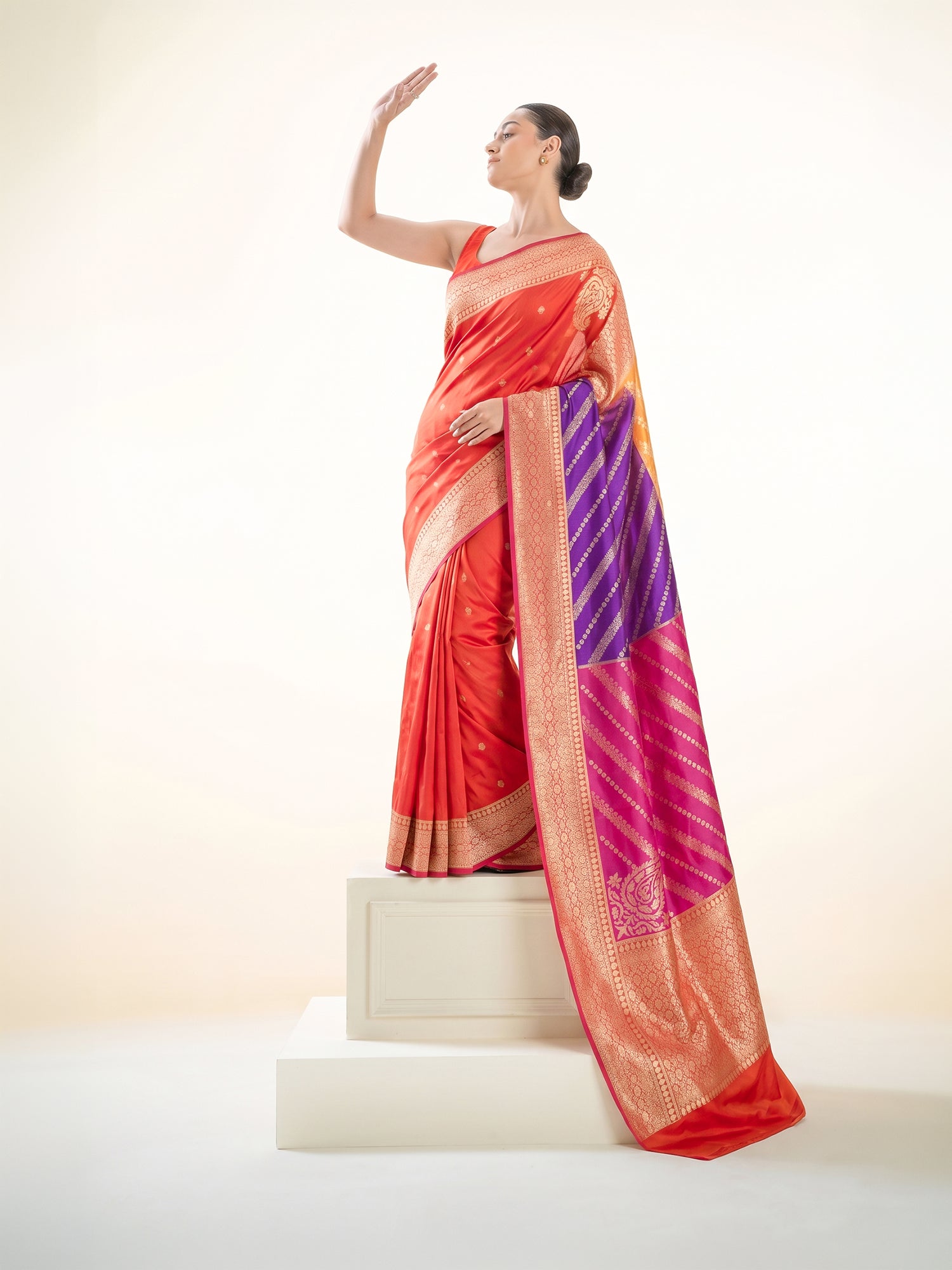
For the wedding ceremony, go all in. Heavy Katan silk in a traditional colour, Nivi or seedha pallu drape, full bridal jewellery, gajra bun, classic makeup. This is the one event where “too much” does not exist. The bride should look like the most richly dressed person in the room — that is what the guests expect, what the photographs demand, and what the Banarasi bridal saree was created for.
For the reception, dial back the traditional and dial up the contemporary. A dark Banarasi in black or purple with Shikargah or Tanchoi work, a statement blouse with an interesting back design, diamond or polki jewellery, soft waves or a high ponytail, and a bold lip. The reception is evening, it is cocktail-adjacent, and the look should reflect that.
For the engagement, find the middle ground. A mid-weight Banarasi in pink, cream, or gold with a contrast blouse. Elegant jewellery that says “bride-to-be” but not yet “bride.” Hair down or in a soft side braid. Natural, glowing makeup.
For haldi and mehndi, keep it light and cheerful. A Georgette or Rangkat Banarasi in yellow, orange, or mustard. A fun blouse — puff sleeves, a bright contrast, maybe a backless design. Flower jewellery (real or artificial) instead of gold. Open hair with flowers tucked in. Minimal makeup with glowing skin. These functions are about joy and ease, not formality.
For attending someone else’s wedding as a guest, the look should be polished but not bridal. A Booti or brocade Banarasi in blue, green, mustard, or wine with a statement blouse and medium jewellery. Avoid red, maroon, or magenta — those are the bride’s colours. A guest’s Banarasi saree look for wedding should say “I dressed up for you” without saying “I am trying to be you.”
Styling Mistakes to Avoid
Over the years, we have seen every styling mistake a Banarasi saree can suffer. Here are the ones that come up most often — and how to avoid them.
Matching everything too precisely. Your blouse, jewellery, bangles, clutch, and sandals do not all need to be the exact same shade of gold. Perfect matching looks artificial. Deliberate contrast — or a “close but not identical” approach — looks far more sophisticated. A maroon Banarasi with a deep emerald blouse and gold jewellery has more personality than maroon on maroon on maroon.
Over-accessorising a heavy saree. If your Banarasi has wall-to-wall Jangla zari work, you do not need a choker, a long necklace, chandelier earrings, a maang tikka, a nose ring, arm bands, and stacked bangles simultaneously. Pick two or three statement pieces and leave space for the saree to breathe. The zari is your biggest accessory — let it be visible.
Ignoring the petticoat. A petticoat that is too loose creates bunching at the waist. One that is too tight restricts movement and creates visible lines. For Katan silk Banarasi sarees, a cotton petticoat with a drawstring waist works best — it provides grip for the pleats and absorbs moisture. Satin petticoats look sleek but cause the saree to slip. Match the petticoat colour to the saree body — a red saree with a green petticoat peeking through at the hemline is a mistake you will only make once.
Not doing a trial drape. If you have never worn a Katan silk saree before, do not make your wedding day the first time. Drape it at home at least once — a week before the event is ideal. Walk around. Sit down. Get up. Reach for something overhead. You will immediately discover whether the pleats hold, whether the pallu length is right, and whether the blouse allows full range of movement. The fabric also softens with that first drape, making it slightly easier to handle on the day itself.
About Sacred Weaves
Sacred Weaves is a heritage Banarasi textile house rooted in Varanasi since 1913 — over a century of weaving tradition passed down across four generations. Every saree in our collection is handwoven on pit looms by skilled artisans, Silk Mark certified for 100% pure silk, and GI tagged to confirm authentic Varanasi origin. We ship worldwide with duties prepaid and offer live video shopping so you can see any saree in real time before buying. Whether you are a bride choosing your wedding saree or a guest looking for something genuine, our wedding collection covers every fabric, colour, and price range — with custom blouse stitching included.


