
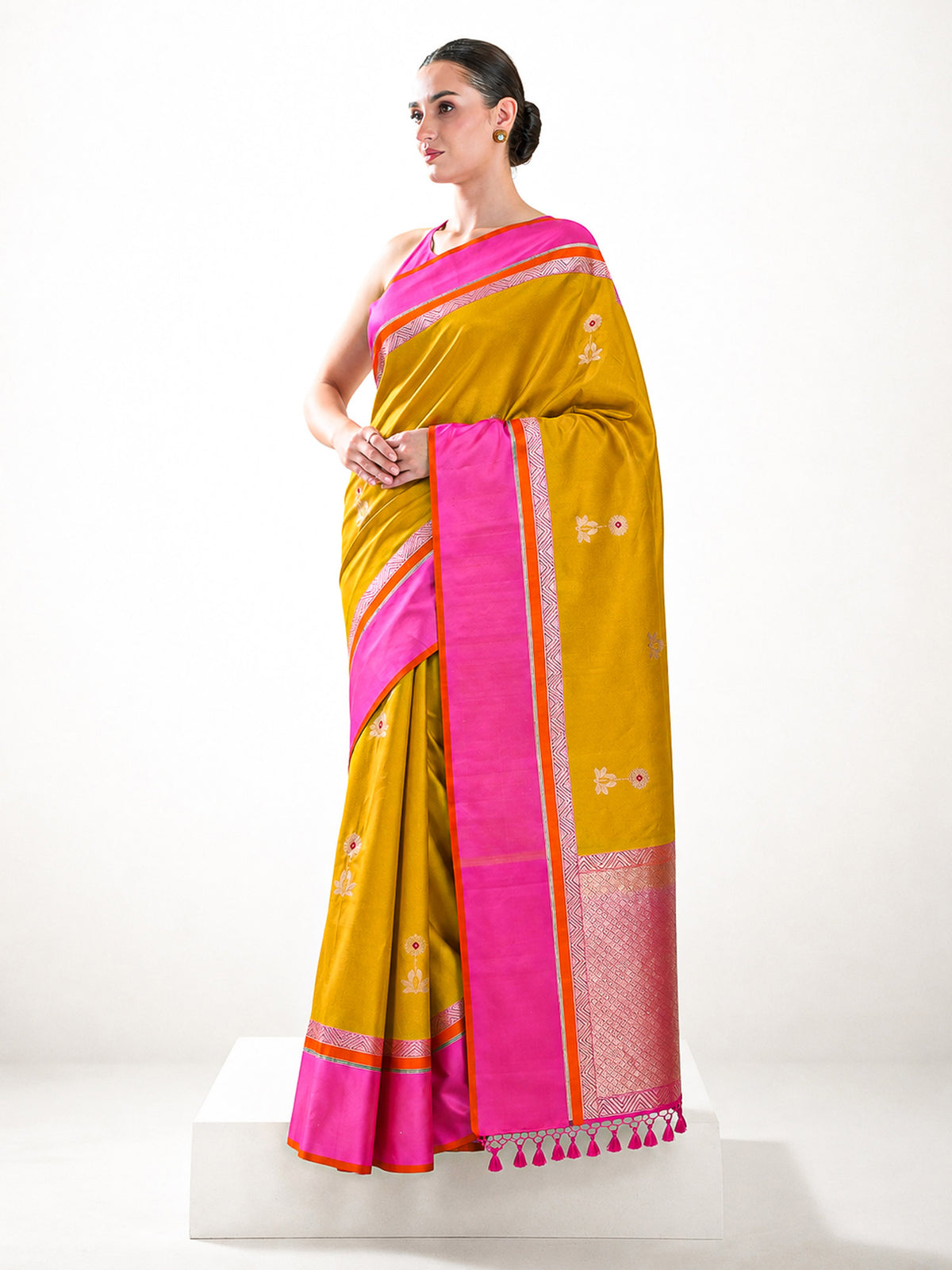

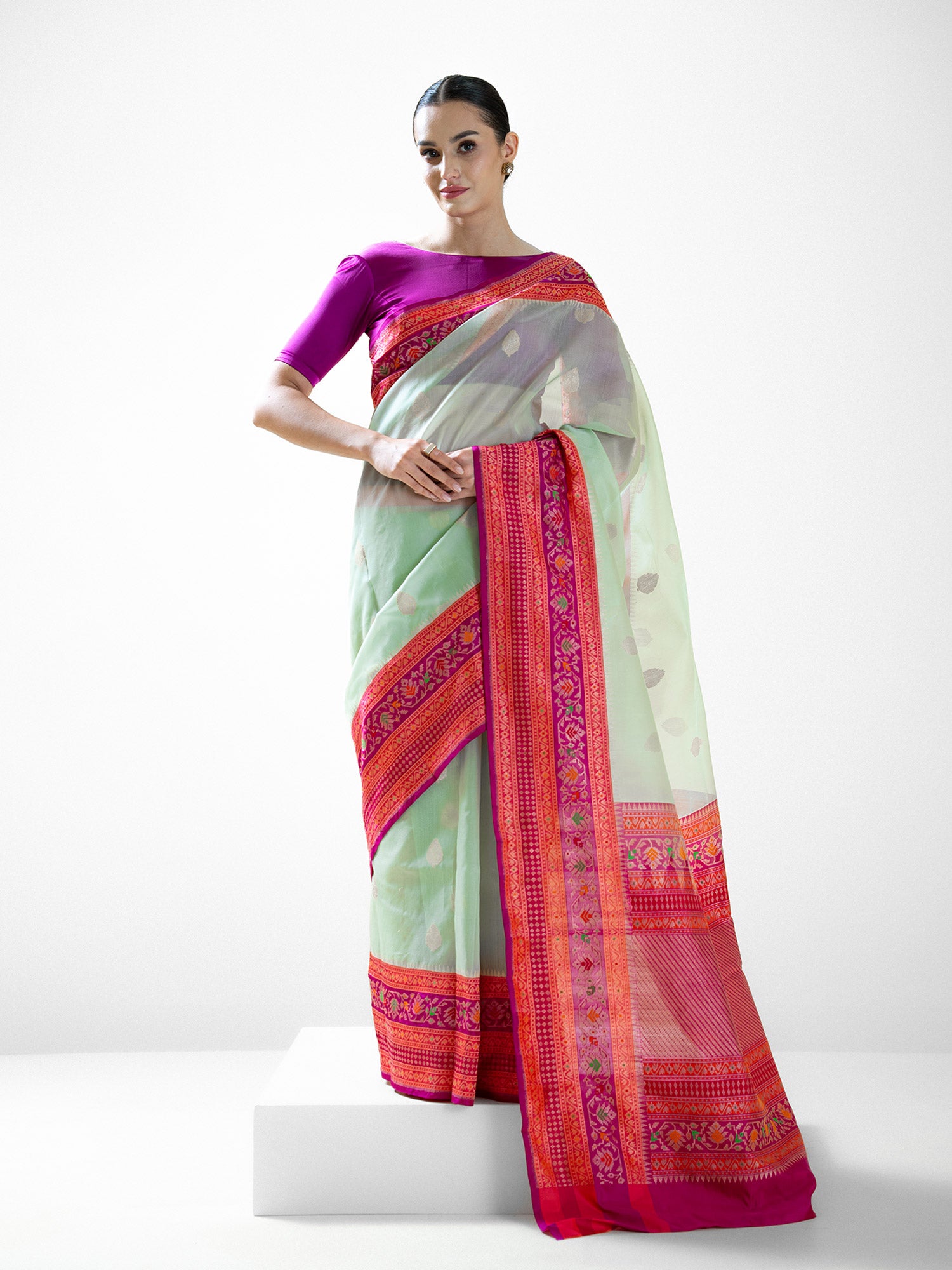
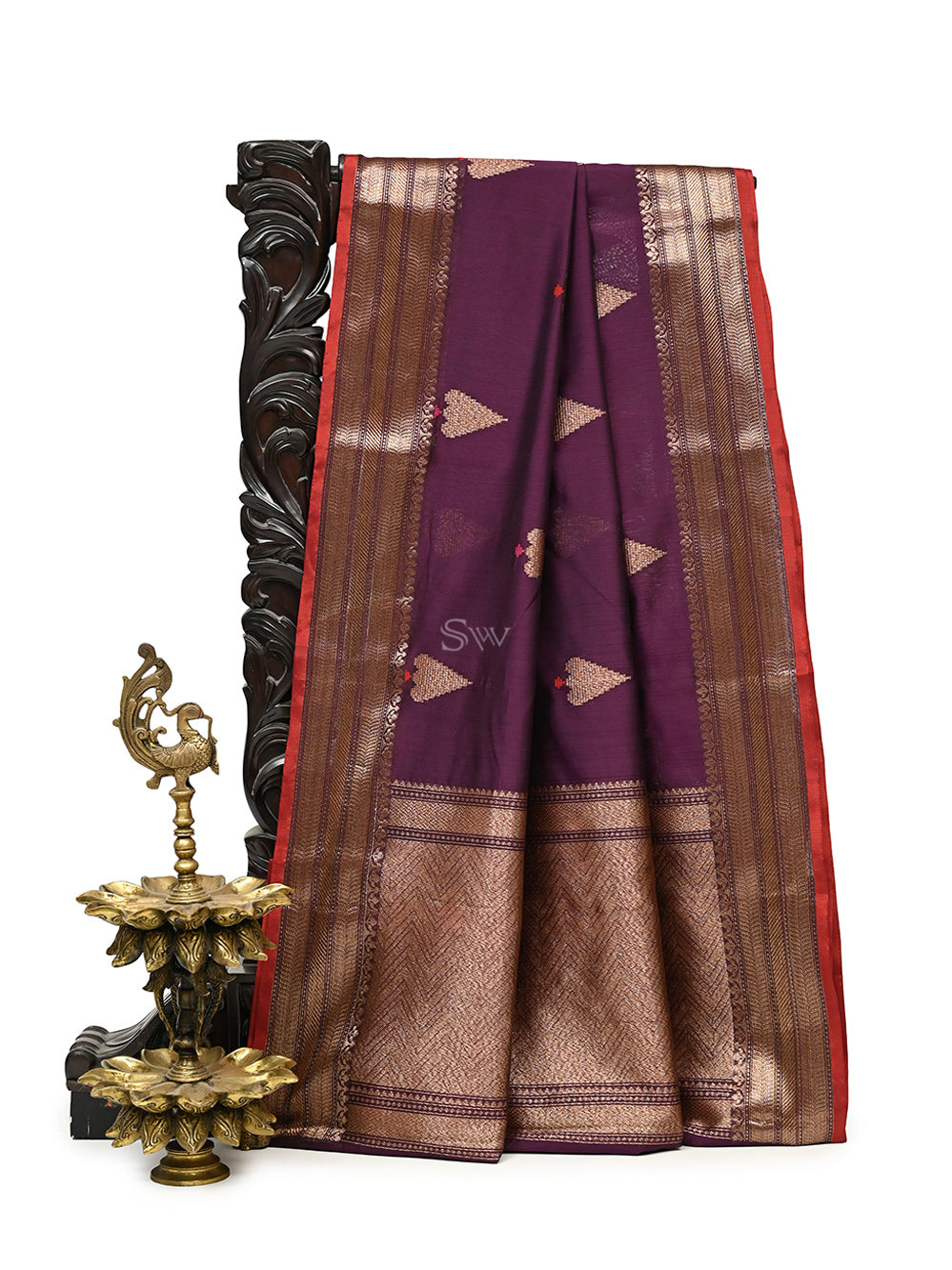


There is something special about dressing up on Ashtami. The morning begins with the anticipation of Pushpanjali, the sound of dhak fills the pandals, and by evening, families and friends are out celebrating together. Naturally, what you wear becomes part of those memories.
For many women, a saree remains the first choice for Ashtami—not simply because it is traditional, but because it can feel festive, graceful and deeply personal at the same time.
If you are planning your Ashtami saree look for 2026, you do not have to limit yourself to one colour or one idea of traditional dressing. The classic red-and-white saree will always have its place, but rich Banarasi silks, jewel tones, delicate Meenakari, luminous Tissue and lighter Georgette or Organza sarees can all create beautiful Ashtami looks.
The right choice depends on where you are going, how long you will be wearing the saree and, most importantly, the kind of look that feels like you.
What Makes an Ashtami Saree Look Special?
Ashtami is among the most significant days of Durga Puja celebrations, and dressing for the occasion often carries a little more ceremony than an everyday festive look.
For morning Anjali, women often lean towards traditional colours, graceful drapes and jewellery that feels festive without being overly elaborate. Evening pandal visits and gatherings allow more room for richer silks, zari, statement colours and contemporary styling.
That is why there is no single answer to what makes the best saree for Ashtami.
A beautiful Ashtami look is really about balance: tradition without looking costume-like, elegance without sacrificing comfort, and festive detailing that still allows the personality of the wearer to come through.
If you are searching for a Saree for Durga Pooja, think about the entire day rather than choosing purely from a photograph. Fabric, weight, drape, colour and the amount of zari can make a significant difference when you are wearing a saree for several hours.
Traditional Red and White Saree for a Classic Ashtami Look
 |
 |
Few combinations are as closely associated with Bengali festive dressing as red and white.
An ivory, cream or white saree finished with a red border creates a look that instantly feels festive while remaining refined. For Ashtami, you can take this familiar colour combination and give it greater richness through Banarasi weaving, subtle zari, woven bootis or a more decorative pallu.
The look does not have to be heavily embellished.
A handloom saree with restrained zari can be particularly beautiful for morning Anjali. Style it with a red blouse, traditional gold jewellery, a round red bindi and a neatly draped pallu for an elegant interpretation of the classic Bengali festive look.
For a slightly more contemporary approach, choose a sleeveless or elbow-length blouse with a clean neckline and let the saree itself remain the focus.
The charm of red and white lies in its simplicity. It photographs beautifully, feels connected to the occasion and can be styled differently every time it returns to your wardrobe.
A Red Banarasi Saree for a Rich Festive Look
If you want your Ashtami outfit to feel a little more celebratory, a red Banarasi saree is a natural choice.

Deep vermilion, sindoor red, ruby and slightly darker crimson tones work especially well with gold zari. A Katan silk Banarasi saree can bring structure and richness to the drape, making it suitable for evening celebrations, family gatherings or a more elaborate Ashtami appearance.
What makes red particularly useful is its versatility.
A heavily woven red Banarasi can be styled traditionally with gold jewellery and flowers in the hair, while a saree with smaller bootis or a lighter border can be paired with a contemporary blouse and minimal jewellery.
If you already wear red frequently during festive occasions, look beyond the obvious combinations. An antique-gold blouse, contrasting green blouse or even a tonal red blouse with interesting texture can completely change the finished look.
The idea is not simply to wear red because it is festive. Choose a shade and weave that you genuinely see yourself wearing again.
Maroon and Wine Sarees for Understated Elegance
Red is not the only way to create a traditional Ashtami mood.
Maroon and wine are beautiful alternatives for women who prefer deeper, more understated colours. Both shades work particularly well with zari and tend to transition effortlessly from daytime Puja to evening celebrations.
A wine-coloured Banarasi saree with woven bootis can feel sophisticated without being too formal. Maroon, meanwhile, gives you much of the richness associated with traditional red while creating a slightly more mature and subdued look.
These colours pair beautifully with antique gold jewellery, temple jewellery, kundan pieces or even a single statement necklace.
For an evening Durga Puja saree look, a deeper colour can also photograph beautifully under warm festive lighting.
Jewel-Toned Banarasi Sarees for a Contemporary Ashtami Look
Not every Ashtami saree needs to stay within the red-and-white palette.
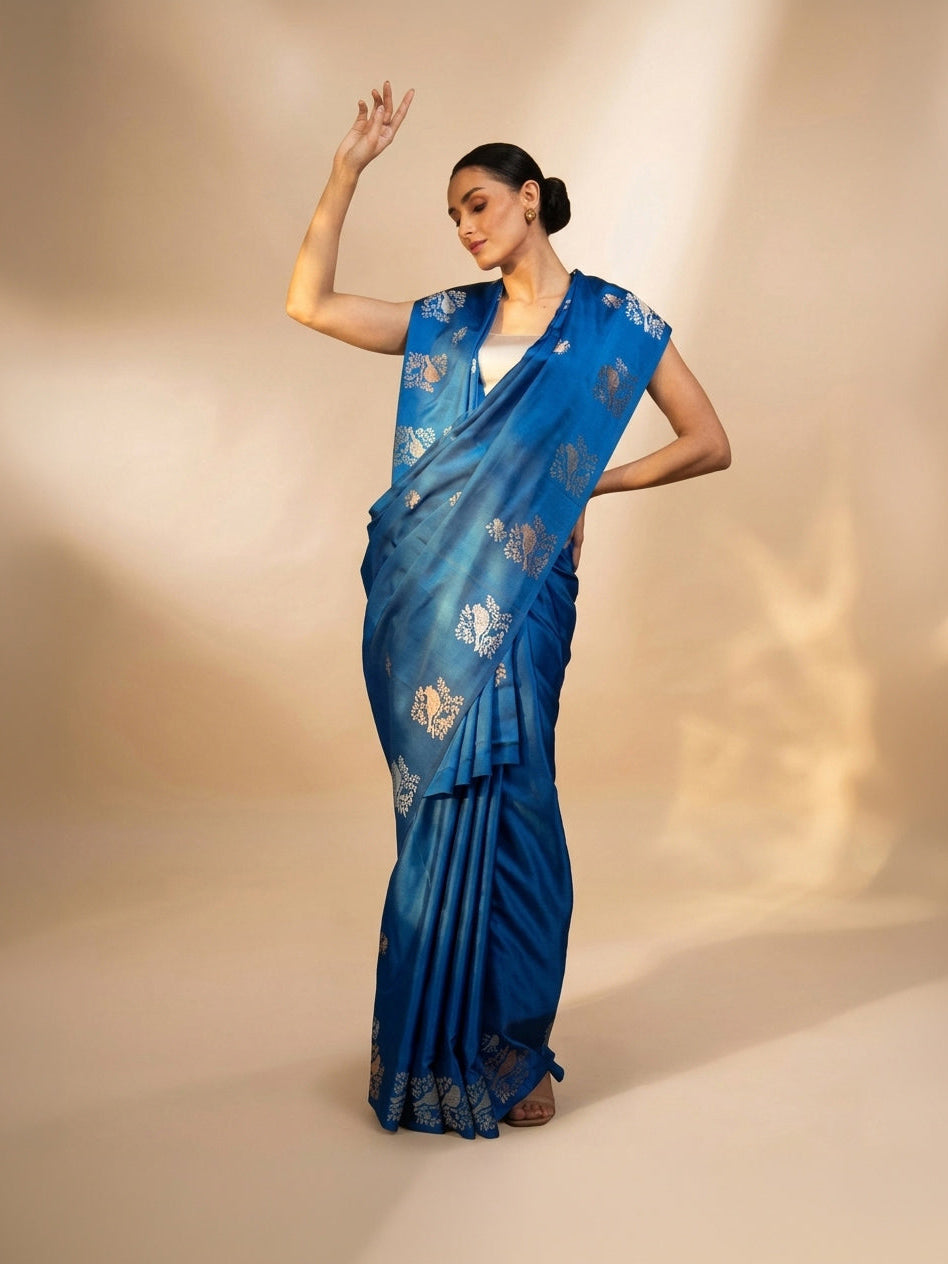
Emerald green, royal blue, purple, rani pink and other jewel tones can make a striking choice for women who want to respect the festive mood while wearing something less expected.

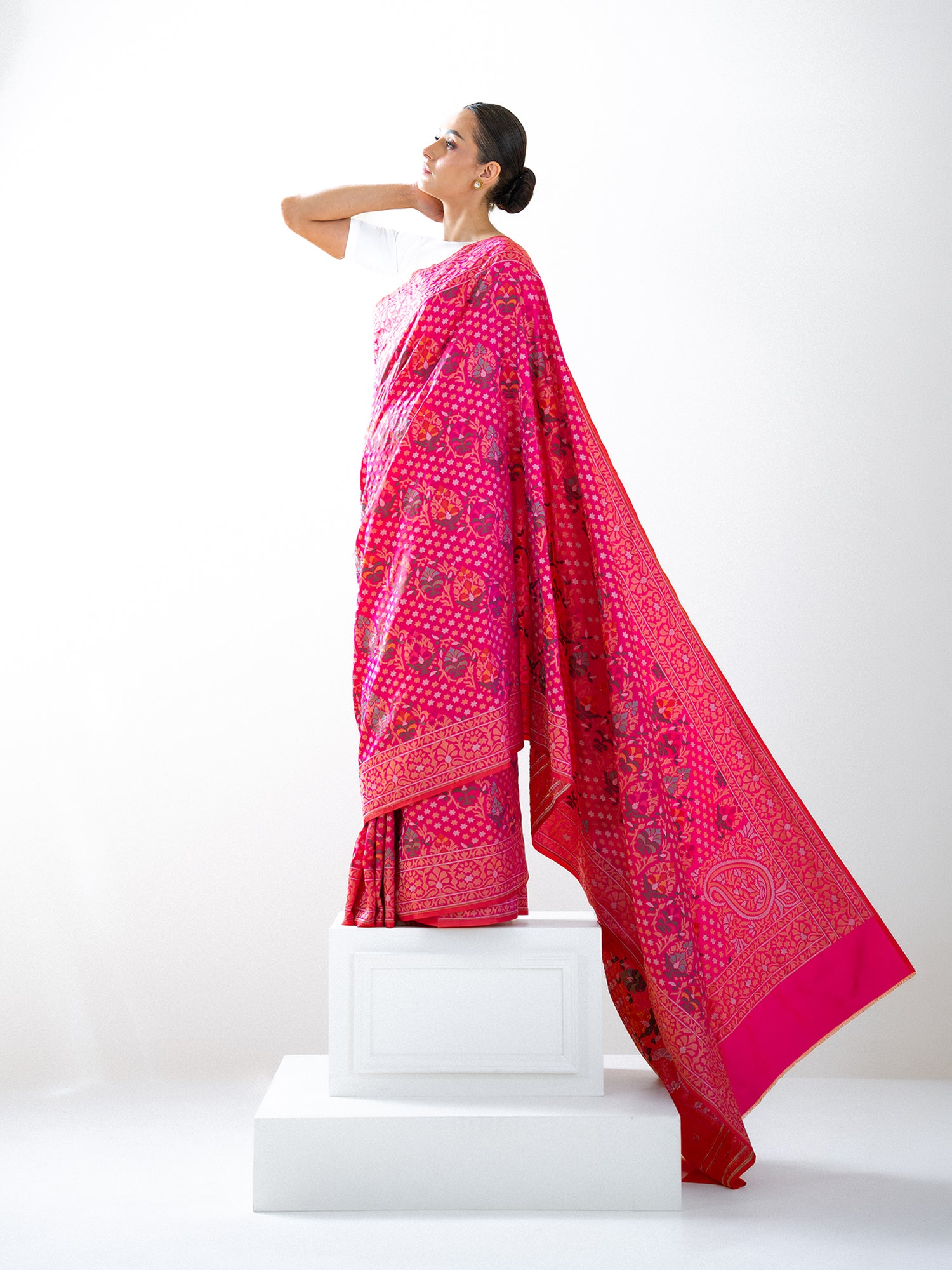
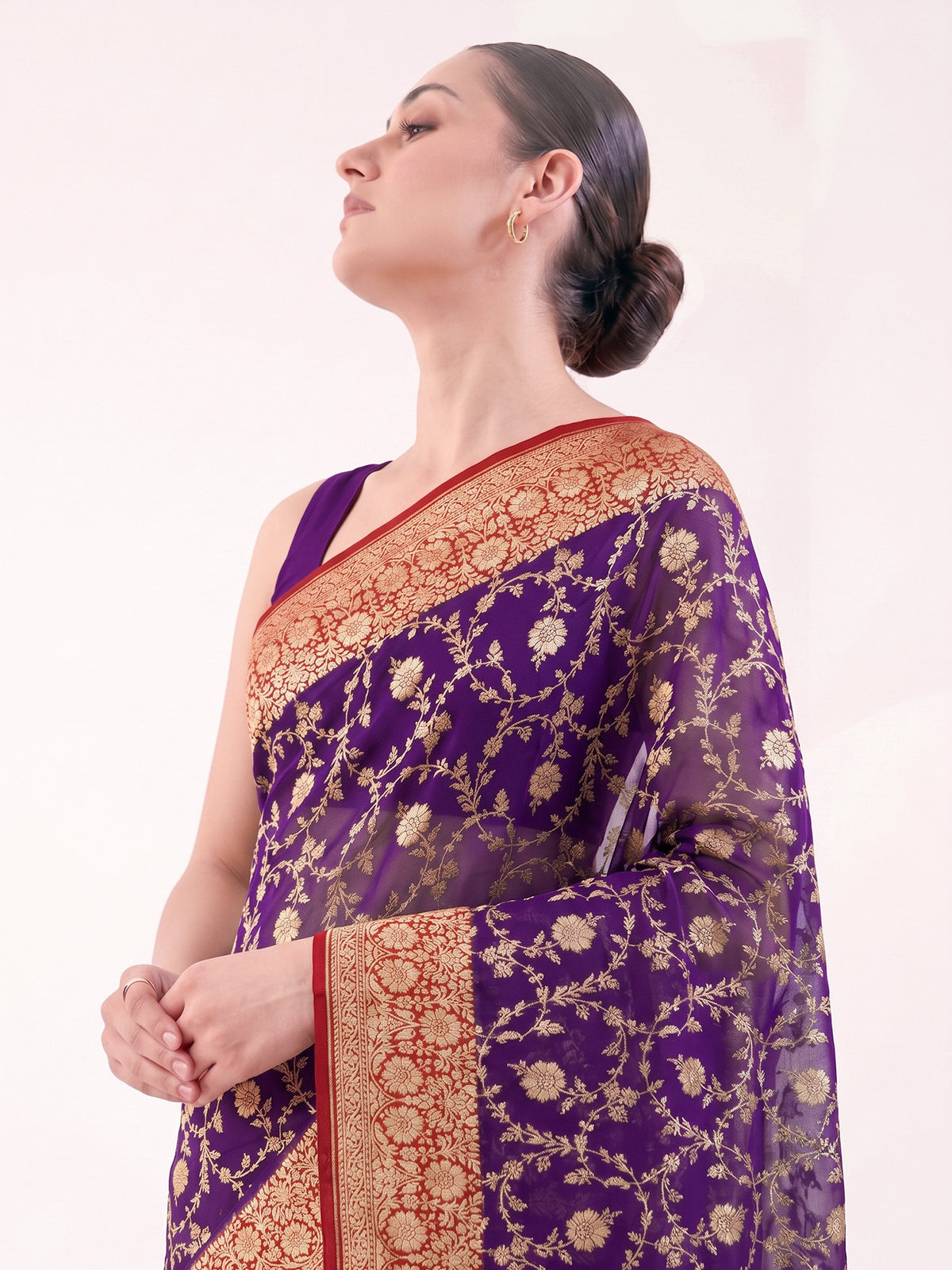
A purple Banarasi saree with zari, for instance, can feel regal without becoming bridal. Green looks particularly beautiful when paired with gold, while rani pink brings brightness and energy to a daytime celebration.
The advantage of choosing a jewel tone is that the saree can easily move beyond Durga Puja. The same piece can later work for a wedding, Diwali celebration, family function or festive dinner.
This is also where the weave matters.
A colour can look dramatically different in a plain silk, a delicate booti pattern, a full jaal or a Meenakari design. Instead of choosing by colour alone, look at how much of the surface is covered by weaving and zari.
Meenakari Banarasi Sarees for Colour and Detail
For someone who loves colour but does not necessarily want a very heavy saree, Meenakari offers an interesting middle ground.
Meenakari weaving introduces coloured details within woven motifs, adding depth to the saree without relying entirely on metallic zari. Floral motifs and multicoloured accents can make the saree feel especially festive while still retaining the character of traditional Banarasi craftsmanship.
For Ashtami, a Meenakari saree can work particularly well when you want the outfit itself to make a statement.
Keep the blouse relatively simple and pick one or two colours from the saree for your accessories rather than trying to match every shade.
It creates a more thoughtful, less coordinated-looking outfit.
Rangkat Sarees for a More Distinctive Durga Puja Look
If your style is more expressive, Rangkat can bring something very different to an Ashtami wardrobe.
Rather than presenting the saree as one uninterrupted colour, Rangkat designs use colour transitions or different coloured sections to create visual movement across the drape. When combined with Banarasi weaving, the effect can be rich, artistic and instantly noticeable.
It is a good choice for women who enjoy traditional textiles but do not necessarily want a conventional festive saree.
A Rangkat saree also needs less styling around it. When the colour composition is already strong, a well-fitted blouse, earrings and one statement accessory may be enough.
For evening pandal hopping, festive dinners or gatherings where you want a memorable Durga Puja saree look, this can be an especially interesting direction.
Tissue Sarees for an Elegant Festive Glow
Tissue sarees naturally catch the light, which gives them a distinctive place in festive dressing.
Gold, champagne, rose gold and other soft metallic tones can create a luminous Ashtami look without depending on very bold colours. Depending on the weave and styling, a Tissue Banarasi saree can feel traditional, glamorous or surprisingly contemporary.
Because the fabric itself has visual presence, styling works best when you allow some breathing space.
A blouse in the same tonal family can create a polished monochromatic appearance, while a contrasting deep red, maroon or green blouse can bring the look closer to traditional festive dressing.
Tissue is particularly attractive for evening events, where its surface interacts beautifully with light.
Khaddi Georgette and Lighter Banarasi Sarees for Pandal Hopping
An Ashtami outfit should look beautiful, but it also needs to survive Ashtami.
If your plans include morning Anjali, visiting relatives, walking through multiple pandals and spending most of the day outside, a very heavy saree may not be the most practical choice.

This is where lighter Banarasi fabrics become valuable.
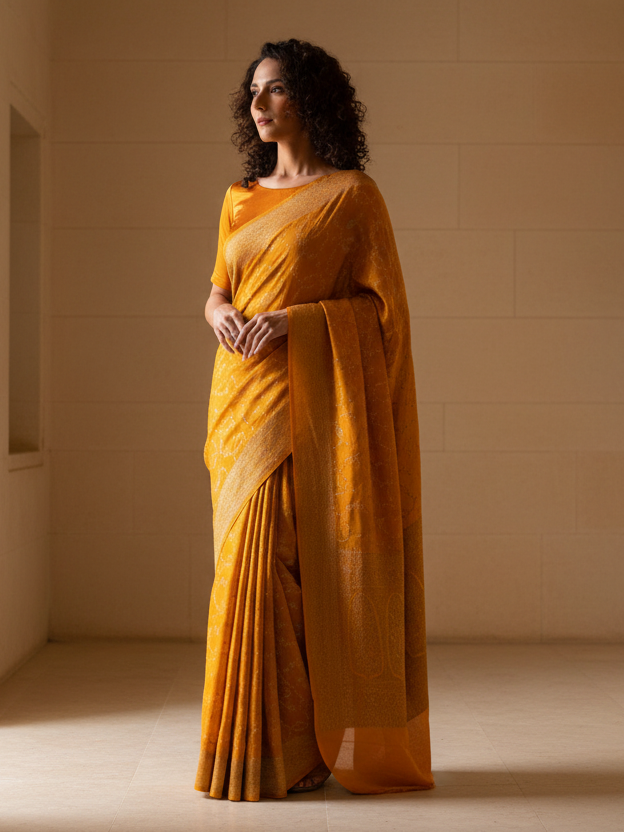
Khaddi Georgette has a fluid drape and can be easier to manage for longer periods. A delicately woven Organza, Cotton Silk or lighter silk saree can offer the same festive character with less weight.
You can still choose zari, Meenakari, bootis or an elegant border. The difference is simply in how the saree feels after several hours of wear.
Comfort is not separate from good styling. When you can move naturally in a saree, the entire look appears more effortless.
Organza Sarees for a Light, Modern Ashtami Style
Women who prefer a cleaner and more contemporary silhouette may enjoy an Organza Banarasi saree for Ashtami.
Its lightness gives the drape an airy quality, while woven Banarasi details can keep the outfit connected to traditional craftsmanship. Cream, blush pink, yellow, green and other softer shades can work beautifully for daytime Puja celebrations.
Because Organza tends to have its own structure, blouse fitting and petticoat choice become particularly important.
Instead of adding too many accessories, allow the texture of the saree to be visible. Statement earrings, a bindi and neatly styled hair may be all you need.
It is a particularly good option for younger wearers or anyone who loves sarees but does not want the weight of a more substantial silk.
How to Choose the Right Saree for Durga Pooja and Ashtami
Before choosing your saree, think about when and where you plan to wear it.
For morning Anjali, lighter colours, red-and-white combinations, smaller woven motifs and comfortable fabrics can feel appropriate and easy to carry. For evening pandal visits or dinners, deeper colours, Katan silk, richer zari, Meenakari, Rangkat or Tissue can create a stronger festive presence.
Your personal comfort with the fabric also matters.
Someone who regularly wears sarees may happily spend an entire day in a structured silk. Someone who wears them only occasionally may enjoy the celebration much more in Georgette, Organza or a lighter silk.
Also look closely at the scale of the design.
A saree covered in an elaborate jaal creates a very different impression from one decorated with small bootis. Neither is inherently better. The right choice depends on how festive you want the outfit to feel and how much jewellery you plan to add.
Most importantly, do not buy a saree only because it fits a seasonal trend.
A thoughtfully chosen saree for Durga Pooja should feel special on Ashtami but remain relevant long after the festival is over.
How to Style Your Ashtami Saree Without Overdoing It
Festive styling can easily become crowded when the saree, blouse, jewellery, makeup and accessories are all competing for attention.
Start with the saree.
If you have selected a heavily woven Banarasi with rich zari, keep the blouse and jewellery more restrained. If the saree itself is simpler, you have more freedom to experiment with a statement blouse, layered necklaces or larger earrings.
Gold jewellery remains a classic pairing with Banarasi sarees, but antique gold, kundan, pearls and traditional Bengali jewellery can all work depending on the saree.
For makeup, red or berry lips, a defined bindi and softly lined eyes can create a festive look without feeling excessive. Fresh flowers or a simple bun can complete a more traditional outfit, while open hair or a sleek low bun creates a contemporary finish.
The strongest outfits usually have one clear focal point.
Decide whether that focal point is going to be your saree, jewellery, blouse or styling—and allow everything else to support it.
Finding Your Ashtami Saree at Sacred Weaves
At Sacred Weaves, we see festive dressing as an opportunity to bring traditional Banarasi craftsmanship into wardrobes in ways that still feel personal and wearable.
For Ashtami and the wider Durga Puja celebrations, you can explore handloom Banarasi sarees across Katan silk, Khaddi Georgette, Tissue, Organza and other fabrics, along with weaving styles ranging from classic bootis and jaal to Meenakari and Rangkat.
Whether you are imagining yourself in traditional red, an ivory festive saree, wine, purple, green or something entirely different, begin with the fabric and look that you feel comfortable wearing.
Check our collections for Durga Pooja Edit to discover sarees curated for festive dressing and find a piece that feels right for your Ashtami celebrations.
A Saree You Will Remember Beyond Ashtami
The best Ashtami saree look in 2026 does not have to be the one everyone else is wearing.
It might be a traditional red-and-white saree that reminds you of Durga Puja celebrations from childhood. It could be a rich red Katan Banarasi you plan to keep for years. Or perhaps it is a lightweight Organza, Georgette or colourful Rangkat that feels much more like your own style.
Tradition becomes more meaningful when there is room to make it personal.
So when you choose your saree this Durga Puja, look beyond what is simply trending. Choose a colour you love, a fabric you will enjoy wearing and craftsmanship that gives the saree a life beyond a single occasion.
Because the most memorable Ashtami look is often the one in which you feel most like yourself.


