
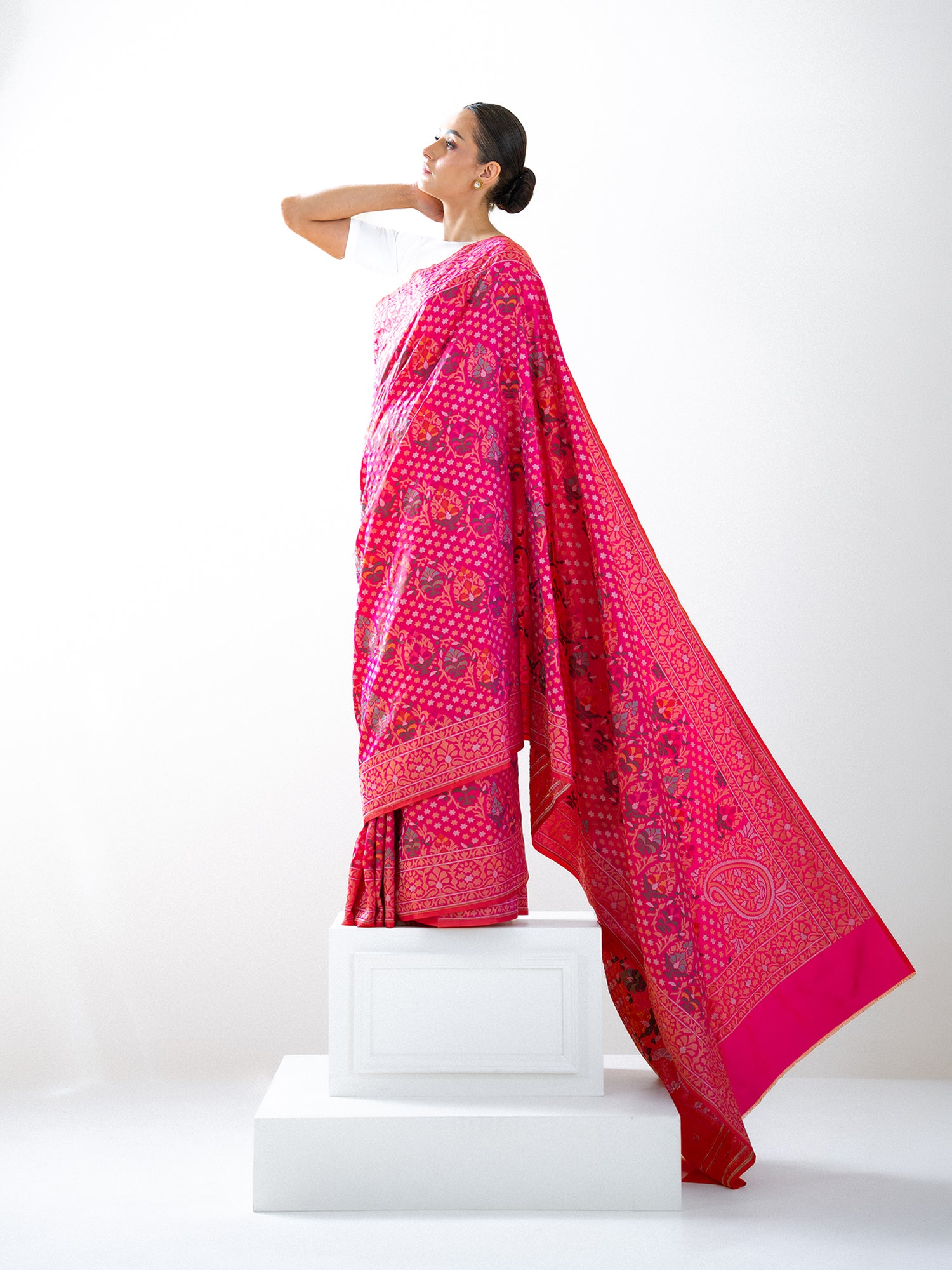
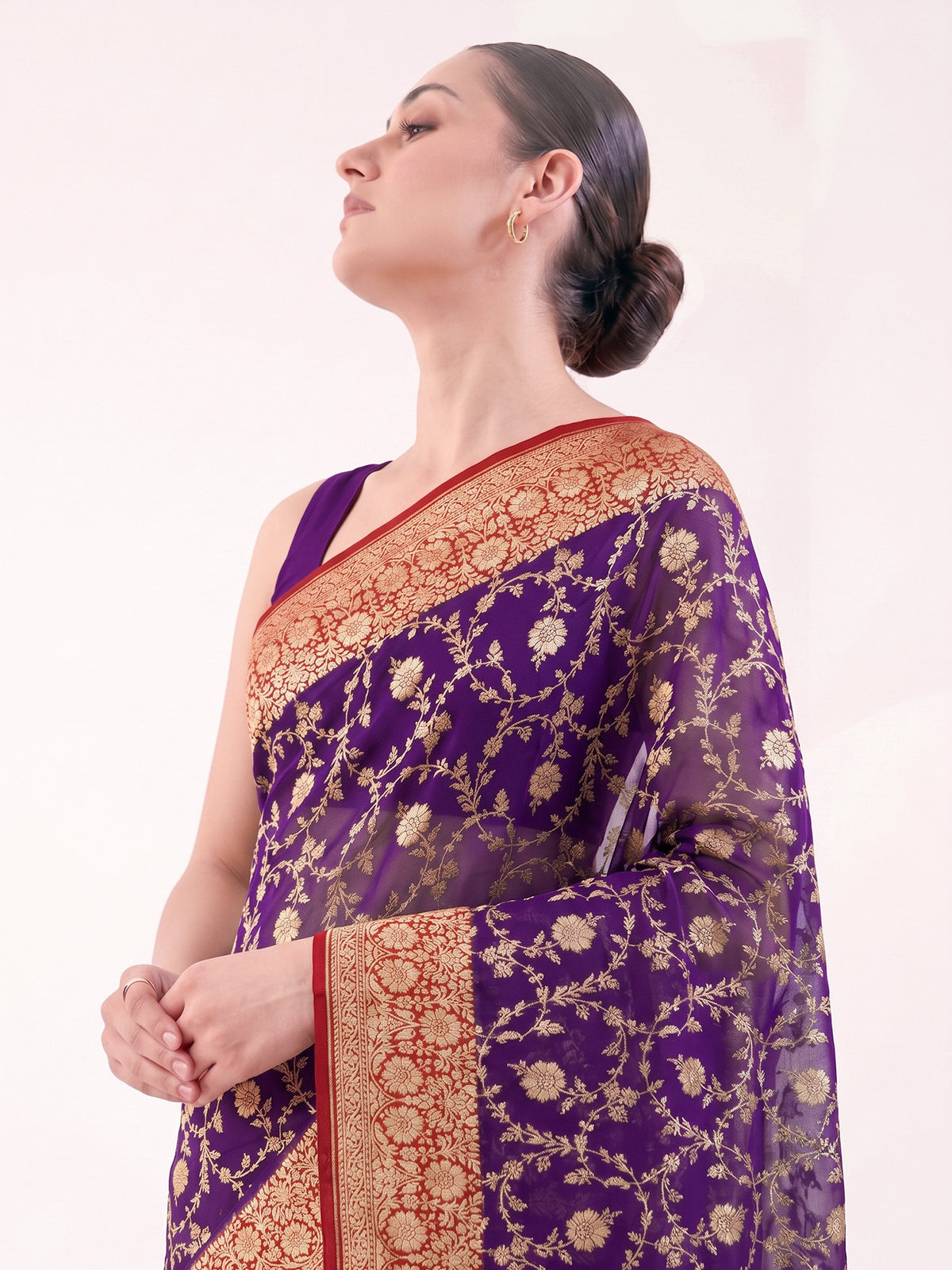
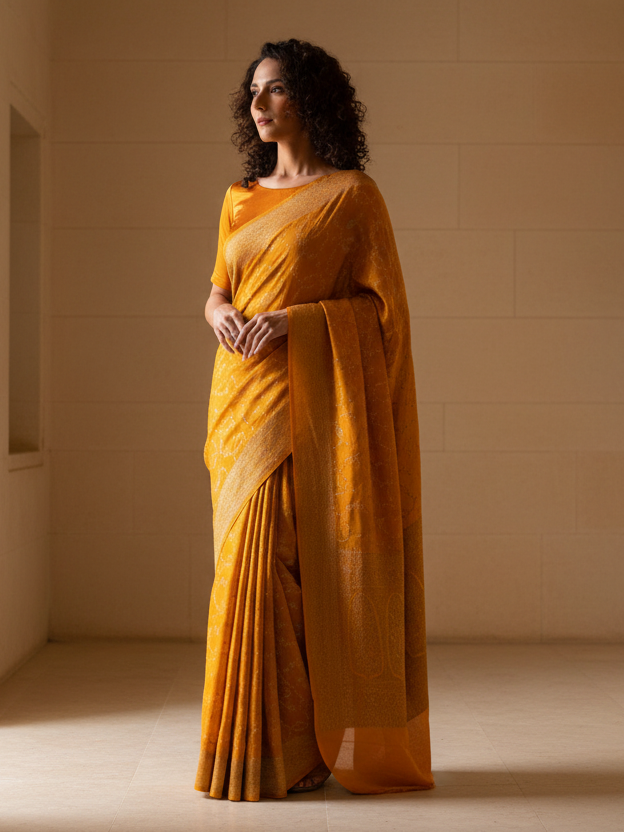
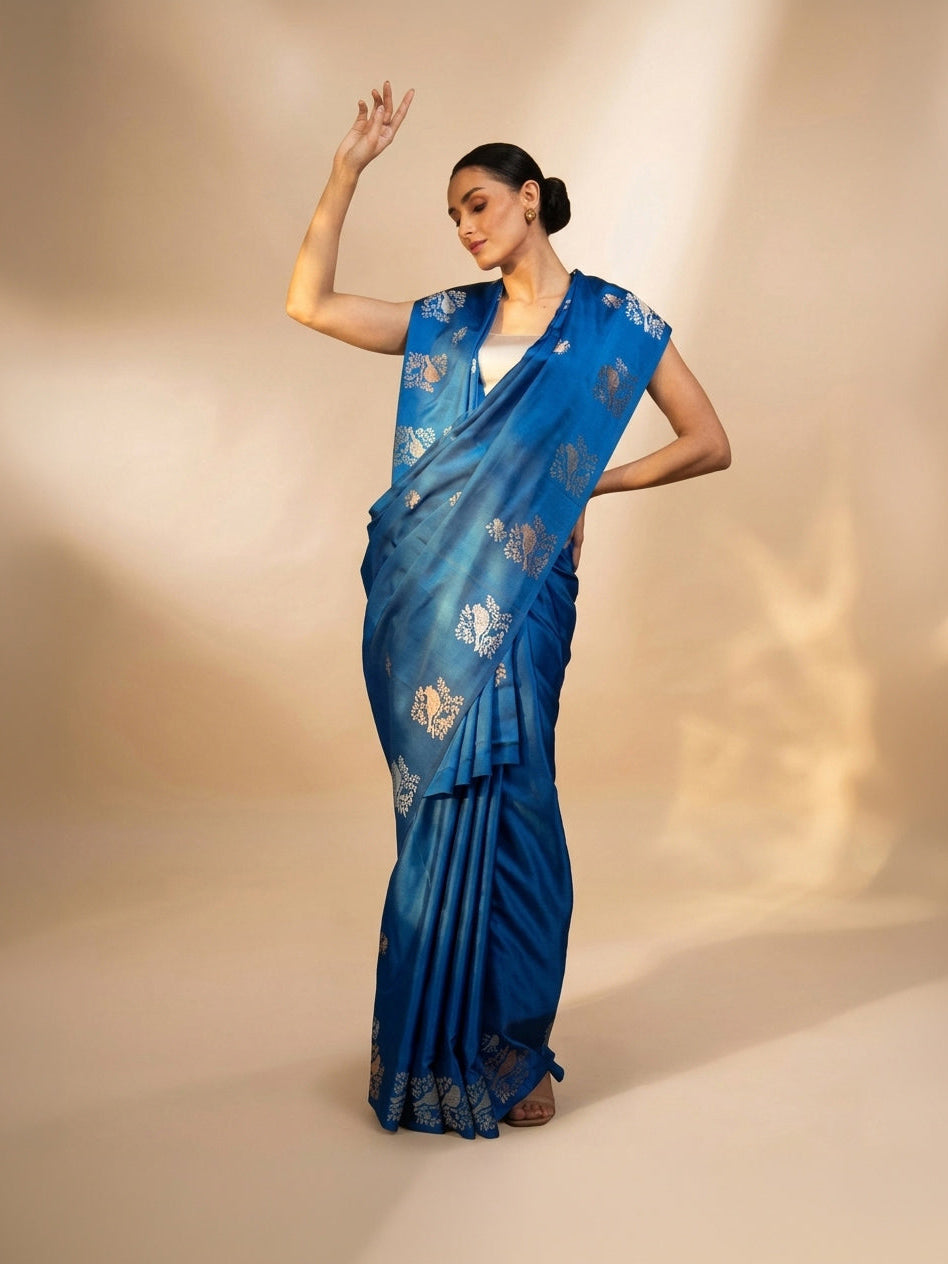
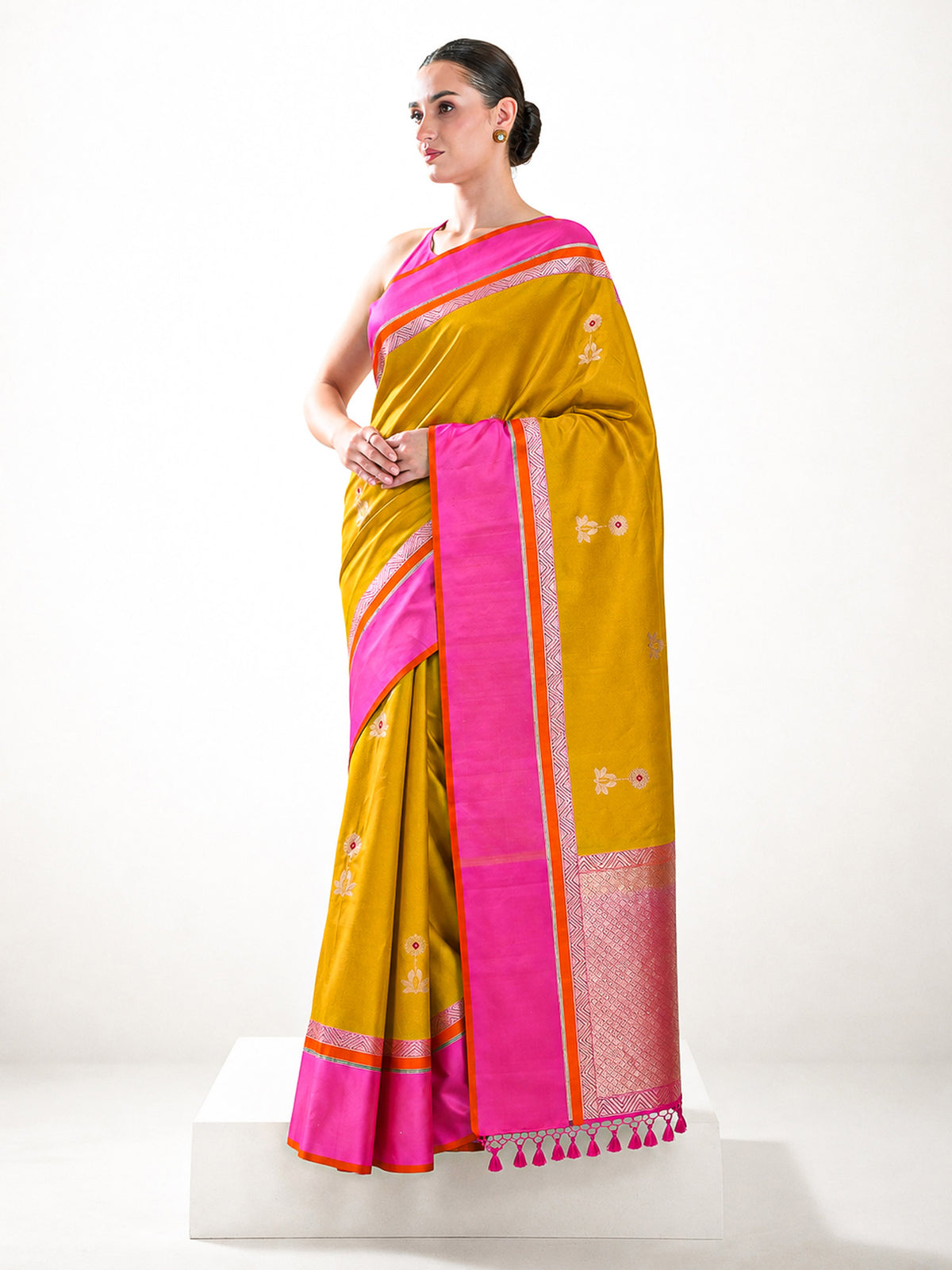

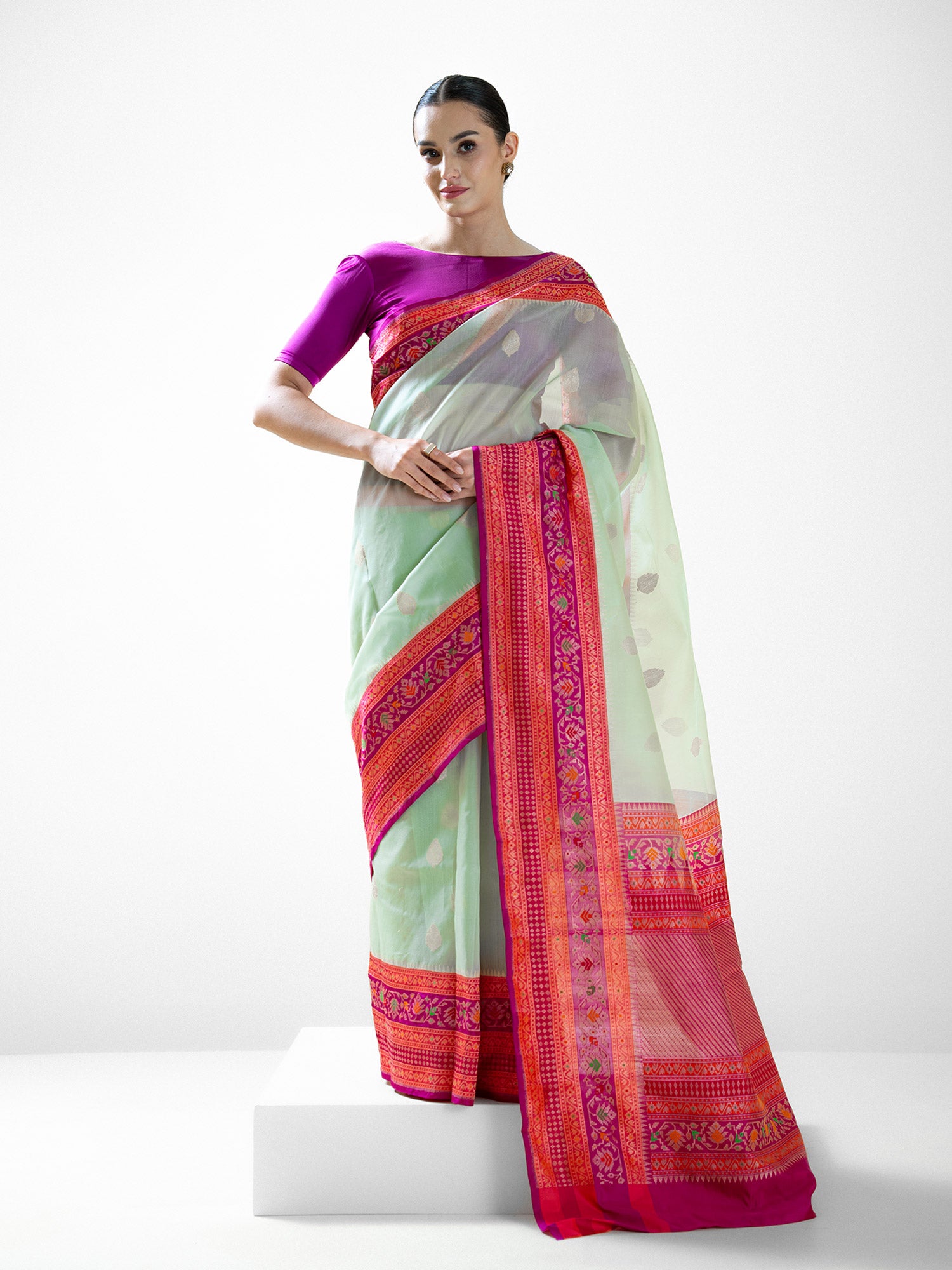
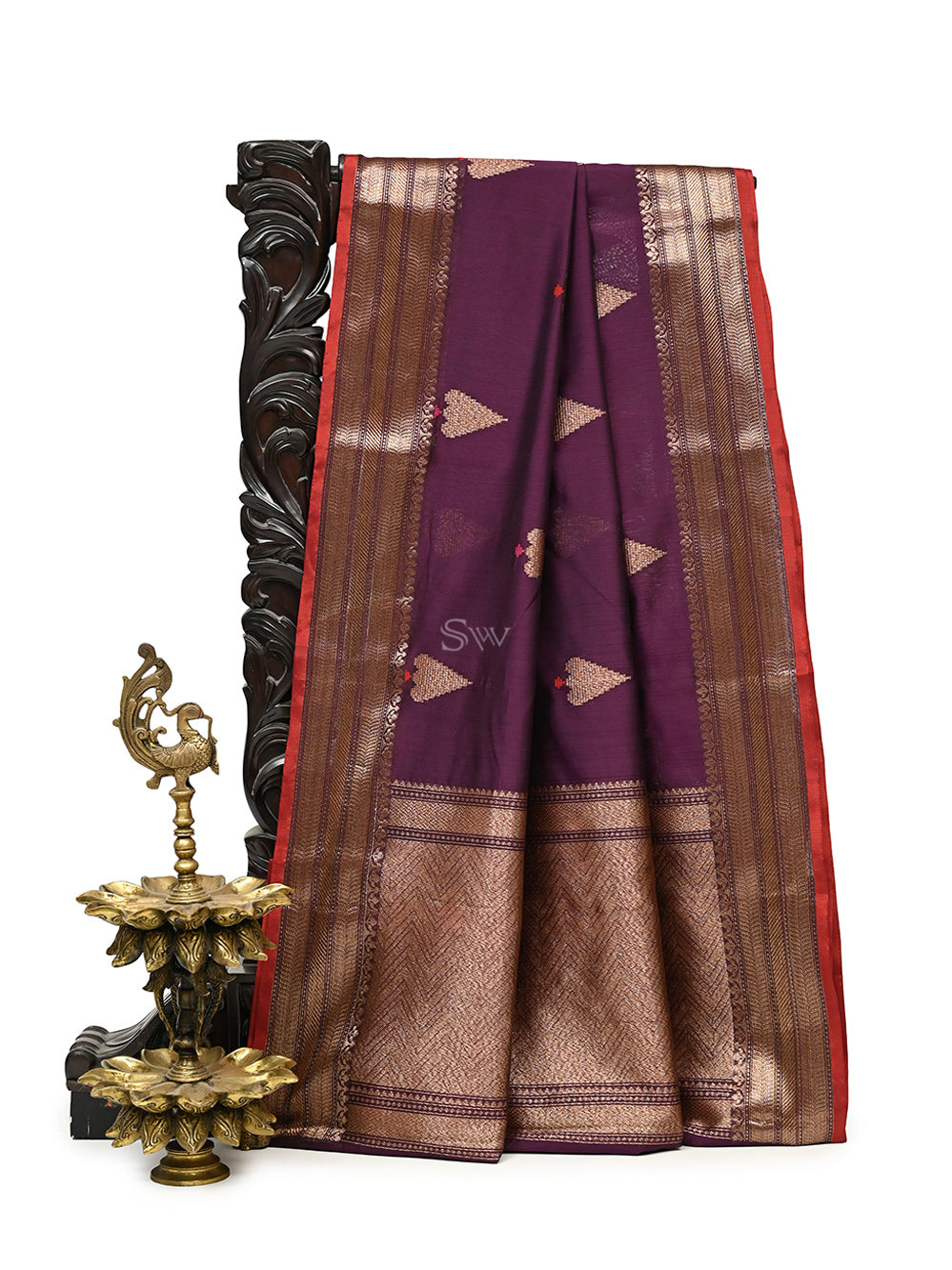


If you love the richness of a Banarasi saree but prefer something softer, more fluid and comfortable to carry for several hours, a Banarasi Soft Silk Saree can be an interesting choice.
But the term “soft silk” can also be confusing. Is Soft Silk a particular type of silk? Is it the same as Katan? Is every Soft Silk saree made from pure silk? And what exactly makes a Soft Silk saree “Banarasi”?
A Banarasi Soft Silk Saree is best understood as a Banarasi saree made in silk and chosen for its softer, more fluid drape. However, “soft silk” is not a single standardised traditional Banarasi weave name, and its meaning can vary between sellers. This is why buyers should look beyond the name and check the silk composition, place of weaving, weaving method and product details before buying.
At Sacred Weaves, for example, Banarasi Soft Silk refers specifically to pure-silk, handloom Banarasi sarees woven in Varanasi and selected for their softer fall and fluid drape.
What Does “Banarasi Soft Silk Saree” Actually Mean?
To understand the term properly, it helps to separate the words “Banarasi” and “Soft Silk”.
Banarasi refers to the textile tradition associated with Varanasi and its surrounding weaving region. Banaras Brocades and Sarees are also registered as a Geographical Indication in India.
“Soft silk”, on the other hand, is used much more broadly by the Indian saree market. Different sellers may use the term for sarees made with fine pure silk, lighter silk constructions, silk blends or simply fabrics that have a softer drape.
That means “Soft Silk” written in a product title does not automatically tell you whether a saree is pure silk or whether it is genuinely Banarasi.
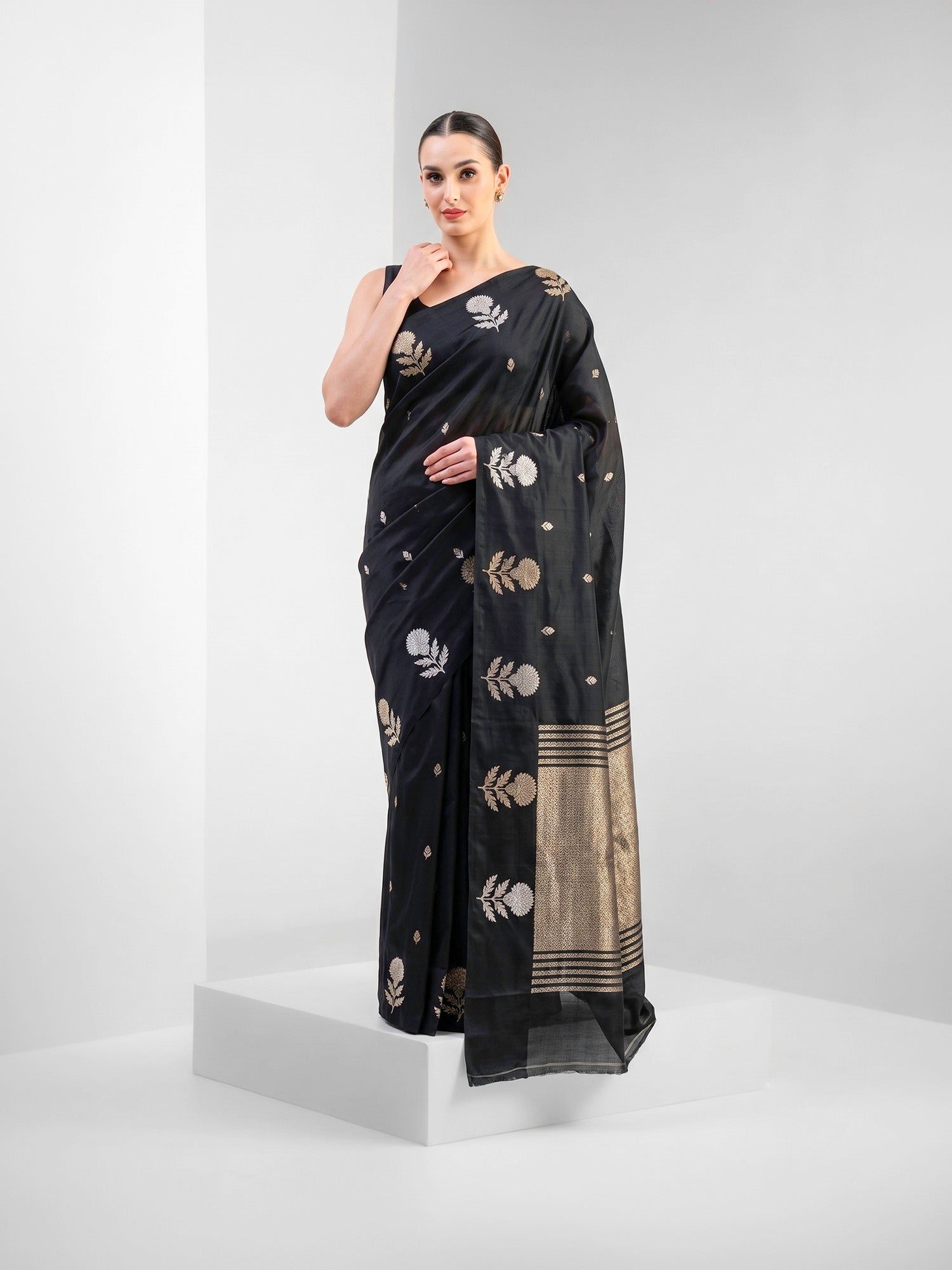
When the two terms are used together correctly, a Banarasi Soft Silk Saree should combine the character of Banarasi weaving with a silk fabric that feels comparatively softer and more fluid when draped.
It is therefore better to think of Soft Silk as describing the feel and drape of the saree, rather than treating it as another traditional Banarasi weave category such as Katan, Kadhwa or Jangla.
 |
 |
Why Are Banarasi Soft Silk Sarees Becoming Popular?
One of the biggest reasons women look for Soft Silk is comfort.
Traditional occasion sarees can sometimes feel more structured or substantial, which many women love for bridal and ceremonial dressing. But there are also occasions when you want the richness of silk without feeling that the saree is dominating your entire outfit.
A softer silk saree follows the body more naturally. It can feel easier to carry during a long wedding function, festive gathering, family celebration or evening event.
This makes Banarasi Soft Silk particularly appealing to women who appreciate traditional Indian textiles but prefer a lighter-looking, graceful and less rigid drape.
It can also be a useful middle ground when you want something richer than an everyday saree but do not necessarily want the heavily structured appearance associated with some traditional wedding silks.
What Are the Main Features of a Banarasi Soft Silk Saree?
The first feature you are likely to notice is the fall of the fabric.
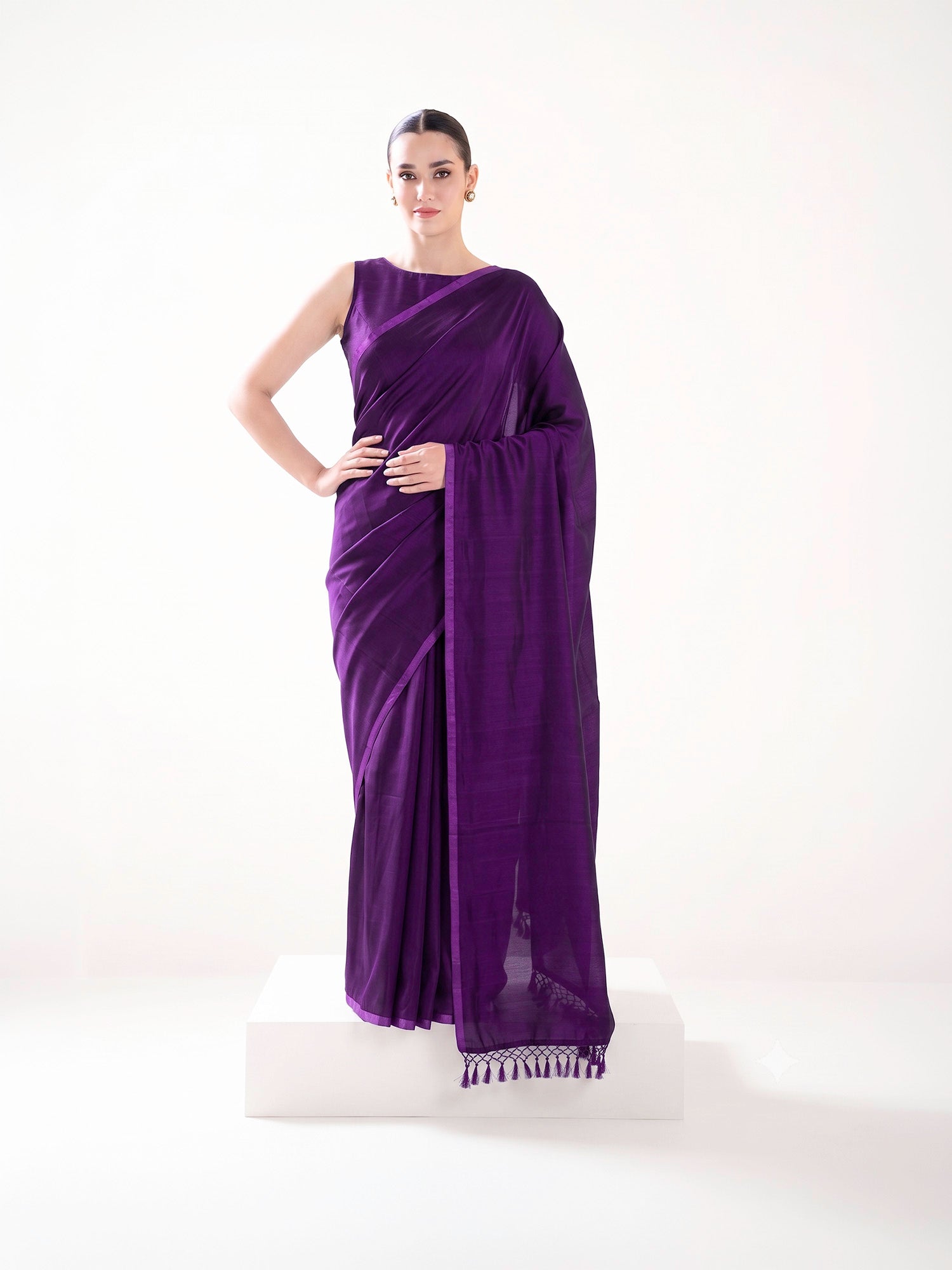
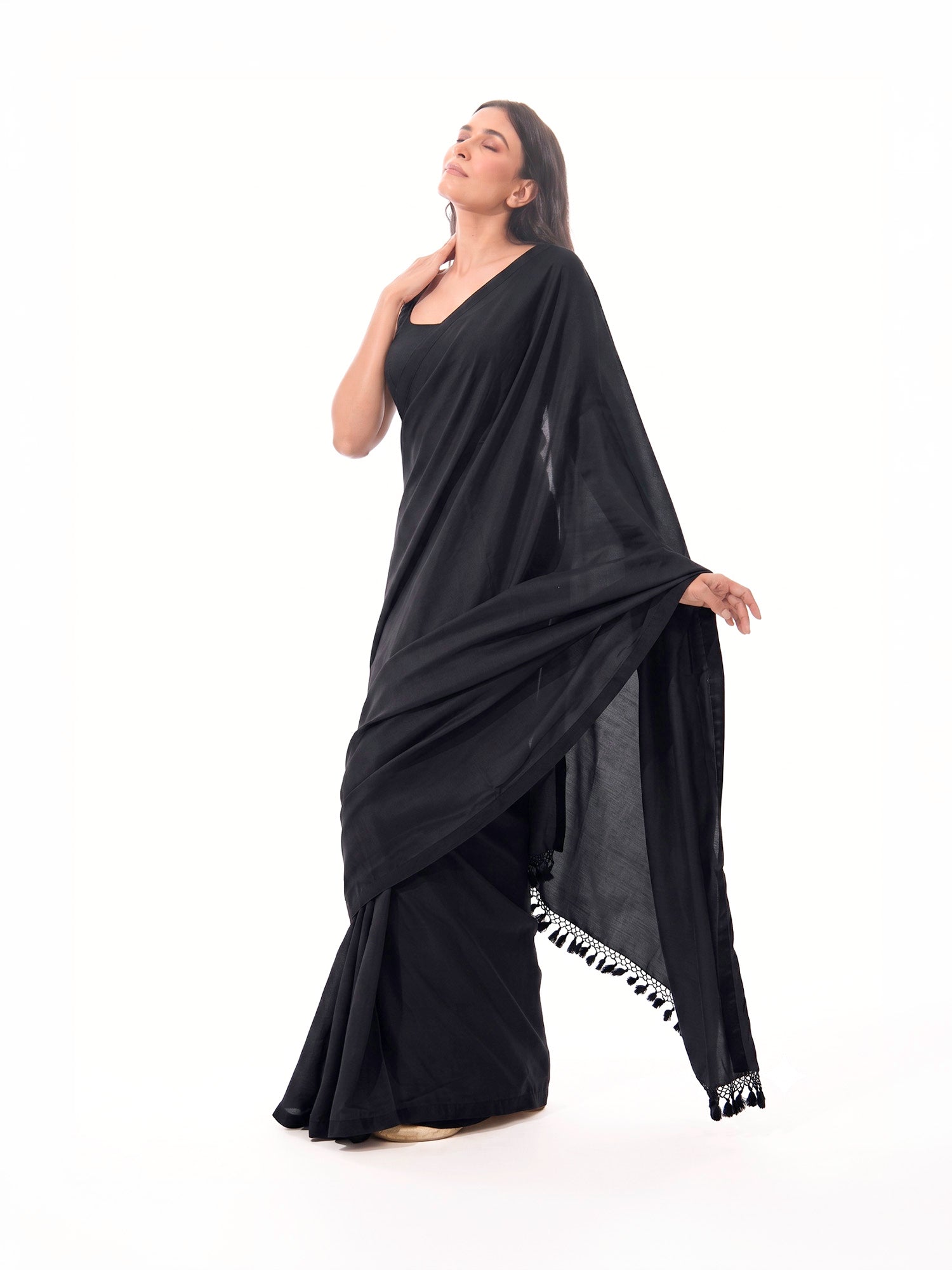
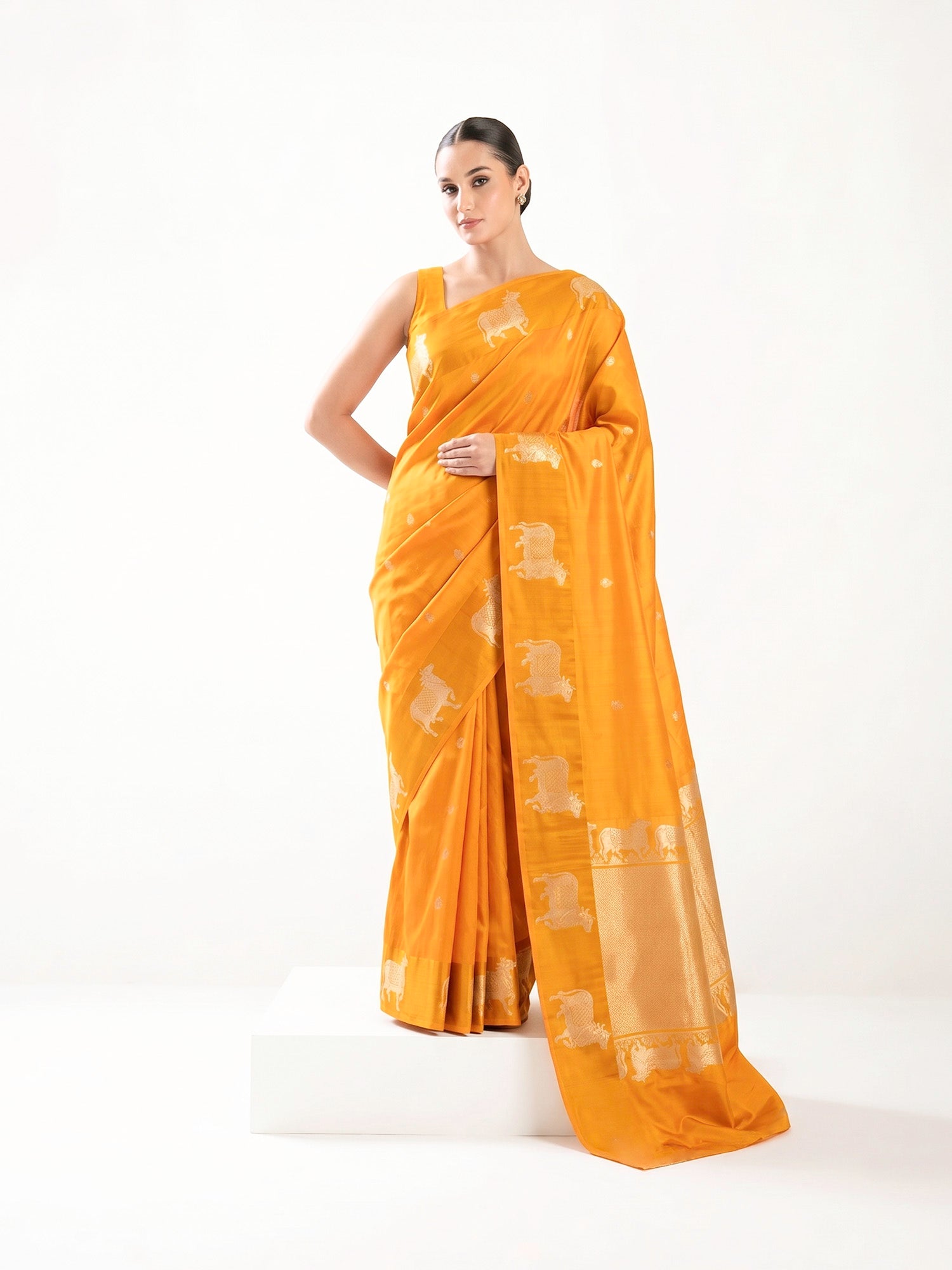
A well-chosen Soft Silk saree tends to fall closer to the body rather than creating a very stiff silhouette. The pleats can appear fluid, while the pallu can fall naturally from the shoulder.
Pure silk also has a distinctive depth of colour and natural lustre. When combined with Banarasi zari, woven Buti, floral motifs or a decorative pallu, the result can still look festive and luxurious even when the overall saree feels comparatively easy to wear.
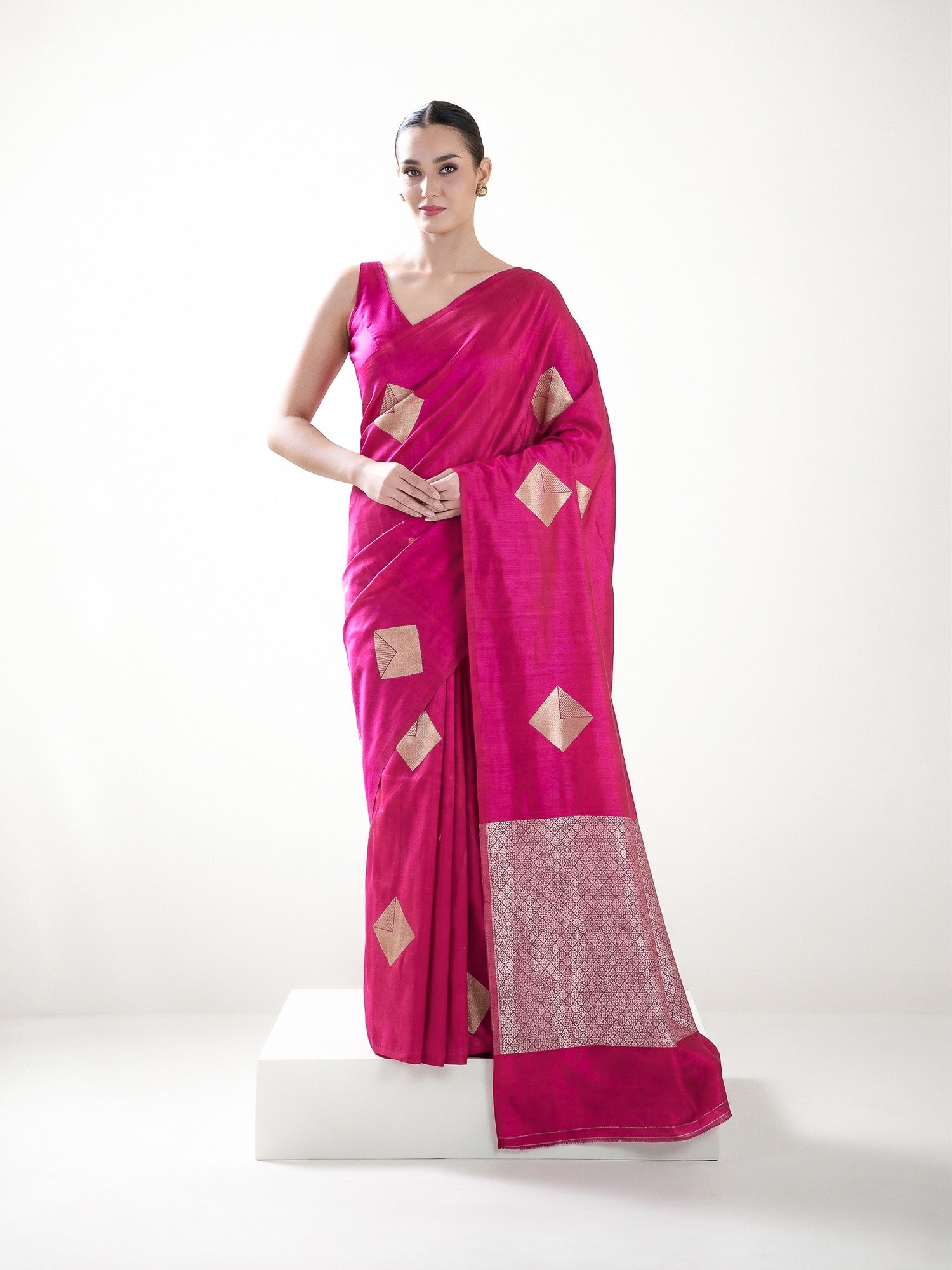
Design also plays an important role. A Soft Silk saree with small Booti motifs and restrained zari can look elegant and understated, while a saree with richer zari work, larger motifs and an elaborate pallu can create a much more festive appearance.
This is why two Banarasi Soft Silk sarees can feel very different even when both belong to the same broad fabric category.
Is Banarasi Soft Silk Made From Pure Silk?
Not necessarily.
This is one of the most important things to understand before shopping.
Because “soft silk” is used inconsistently across the saree market, the term alone should never be treated as proof of pure silk. Some sellers use Soft Silk for pure silk sarees, while others may use the term for blended or synthetic compositions. Different retailers currently describe the category differently, which shows why the product specification matters more than the label itself.
If you specifically want a pure Banarasi Soft Silk Saree, check whether the seller clearly declares it.
 |
 |
At Sacred Weaves, the sarees in its Banarasi Soft Silk range are described as pure silk, handloom woven in Varanasi. The collection is also Silk Mark certified and provided with a certificate of authenticity.
This distinction matters because a woman searching for “Soft Silk” may be looking primarily for comfort, while another buyer may be looking specifically for pure silk and authentic Banarasi craftsmanship.
The two requirements are not automatically the same.
Banarasi Soft Silk vs Katan Silk: What Is the Difference?
This is one of the most common comparisons a buyer may make while choosing a Banarasi saree.
At Sacred Weaves, Soft Silk and Katan are treated as separate categories rather than different names for the same fabric. Its Soft Silk range is selected for a softer and more fluid fall, whereas Katan offers a comparatively more structured character.
| Feature | Banarasi Soft Silk | Banarasi Katan Silk |
|---|---|---|
| Overall feel | Softer and more fluid | More structured |
| Drape | Falls naturally around the body | Holds the saree's shape more prominently |
| Look | Can appear lighter and effortless | Classic, formal Banarasi appearance |
| Comfort preference | Good for women wanting an easier drape | Good for women who enjoy a more defined silk structure |
| Occasion | Weddings, festivals, receptions and celebrations | Weddings, bridal wear, traditional functions and festive occasions |
Neither is automatically “better”. The right choice depends on how you like your saree to feel when worn.
If you love crisp pleats and a more defined traditional silhouette, you may prefer Katan. If you want a saree that feels softer and falls more naturally, Soft Silk may suit your preference better.
Are Banarasi Soft Silk Sarees Lightweight?
Soft Silk sarees are generally chosen because of their softer and easier fall, but soft does not always mean extremely lightweight.
The final weight of a Banarasi saree depends on much more than the base silk. Zari, border width, motif density, pallu work and the overall amount of weaving can all change how substantial a saree feels.
For example, a Soft Silk saree with scattered Booti and a relatively simple border may feel easier to carry than one with extensive zari work and dense woven motifs.
So if weight is particularly important to you, don't shop by the words “Soft Silk” alone. Ask for the actual saree to be shown or enquire about the density of the weaving and zari.
Are Banarasi Soft Silk Sarees Good for Weddings?
Yes, particularly for women who want a festive Banarasi look without choosing an overly structured saree.
A Banarasi Soft Silk Saree can work beautifully for wedding guests, sisters of the bride or groom, mothers, pre-wedding ceremonies, receptions, festive dinners and other family celebrations.
The important thing is to choose the design according to the occasion.
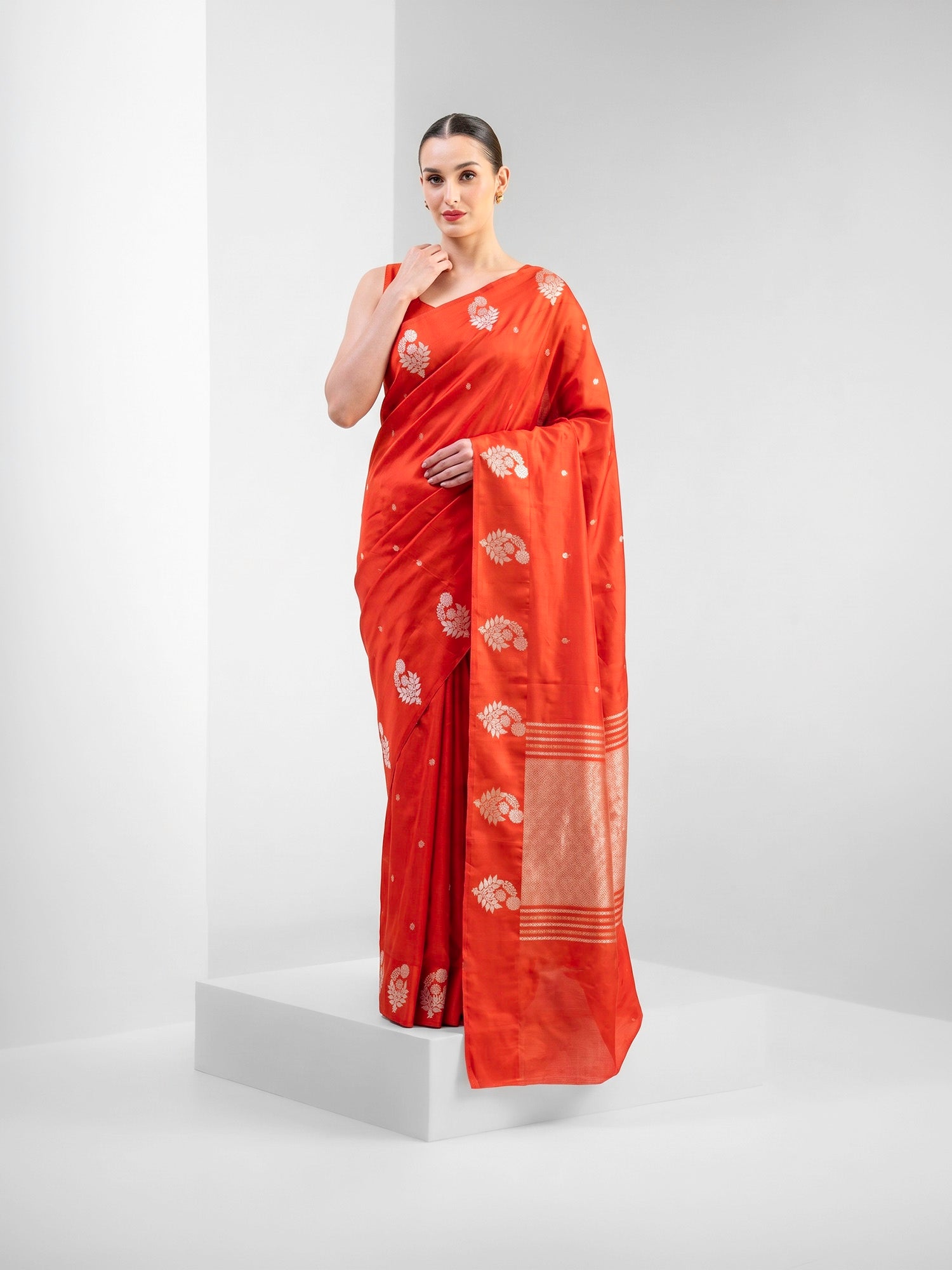
A rich jewel-toned saree with noticeable zari and a detailed pallu can create a stronger wedding look. Softer shades with delicate Booti or relatively minimal zari can work well for daytime ceremonies, intimate weddings and festive gatherings.
For the bride herself, the choice depends considerably on personal style. A bride looking for a grand, traditional and highly structured Banarasi appearance may naturally gravitate towards other Banarasi silk options. A bride who prioritises fluidity and comfort may explore richer Soft Silk designs with appropriately festive zari and weaving.
There is no rule that a wedding saree must feel heavy to look luxurious.
What Colours Work Well in Banarasi Soft Silk?
Colour can completely change the personality of a Soft Silk saree.
Traditional reds, maroons, deep greens, rani pinks and rich purples create a more classic Indian wedding character. Royal blue, bottle green, dark orange and mustard can also look particularly striking when paired with zari.
Women looking for something more contemporary may prefer coral, lighter pinks, turquoise, lime tones or other fresh colours, depending on the occasion.
The important consideration is how the zari and motifs appear against the base colour. The same Booti pattern can look subtle on one shade and much richer on another.
Instead of choosing only according to a trending colour, look at the saree as a complete composition: base colour, zari tone, motifs, border and pallu.
Banarasi Soft Silk Saree Price: Why Does It Vary So Much?
There is no single standard Banarasi Soft Silk Saree price.
You may find products online using the words “Banarasi Soft Silk” at dramatically different price points. The difference may come from the material itself, but it can also reflect how and where the saree was made.
For a genuine saree, price can be influenced by the purity and quality of the silk, handloom or machine production, the complexity of the weaving, the type and quantity of zari, the size and intricacy of motifs, the pallu and border construction, and the amount of skilled labour involved.
A relatively plain pure-silk handloom saree and a saree covered with complex woven motifs should not necessarily cost the same simply because both are labelled Soft Silk.
This is also why very low prices deserve closer inspection when you are specifically looking for pure silk and handloom Banarasi craftsmanship.
Price should not be your only authenticity test, but it should make sense when considered together with the material, weaving and workmanship being offered.
At Sacred Weaves, current prices are shown individually with each saree in the collection so shoppers can compare the designs, weaving and detailing rather than relying on one general Soft Silk price.
How to Choose a Banarasi Soft Silk Saree Online
 |
 |
Buying a saree online becomes much easier when you know what information to look for.
Start with the fabric description. If you want pure silk, make sure the seller explicitly states it rather than assuming that “silk” or “soft silk” automatically means 100% pure silk.
Next, check where the saree is woven and whether the seller clearly identifies it as handloom or powerloom. For a premium Banarasi saree, transparency about origin and production is particularly valuable.
Then look carefully at the design.
If you prefer an understated look, smaller woven motifs, lighter zari and simpler borders may suit you. For weddings and larger celebrations, richer Boota, more prominent zari, elaborate pallus and stronger colour combinations can provide more visual presence.
Think about your own wearing habits as well.
If you usually avoid sarees because you find them difficult to manage, a softer fall may be more important to you than heavy ornamentation. If you love strong pleats and a formal silhouette, you may want to compare Soft Silk with Katan before deciding.
Most importantly, don't buy only because a product title contains the keywords you searched for.
A good saree purchase should tell you what the saree is made from, where it comes from and what kind of workmanship you are paying for.
How Can You Check the Quality Before Buying?
There are many traditional “tests” for silk circulating online, but home tests are not always the safest or most reliable way to judge an expensive saree.
Instead, use product transparency as your first filter.
Look for clear fabric composition, detailed photographs, close-up images of the weaving, information about the production method, seller credibility and recognised silk certification where applicable.
If you're buying online and cannot judge the actual colour or fall from photographs, ask whether the seller can show you the saree over video.
This is particularly useful with silk because colour, lustre and zari can look different under studio lighting than they do while the fabric is moving naturally.
Sacred Weaves offers Live Video Shopping, allowing customers to view details such as the actual colour, drape, zari and weaving remotely before ordering.
How to Style a Banarasi Soft Silk Saree
The beauty of a softer Banarasi silk is that it doesn't need excessive styling to make an impression.
For a wedding, a contrasting silk blouse, traditional gold jewellery, jhumkas or a statement necklace can create a richer appearance. If the saree already has considerable zari, keeping the blouse relatively clean can allow the weaving to remain the focus.
For a daytime celebration, you can choose a lighter blouse, smaller jewellery pieces and a softer makeup palette.
Because the saree itself falls more fluidly, pay attention to the petticoat as well. A well-fitted petticoat helps the pleats sit neatly and supports the overall drape without adding unnecessary bulk.
The best styling approach is usually to decide what you want people to notice first: the silk, the weaving, the colour or the jewellery.
How Should You Care for a Pure Silk Banarasi Saree?
Pure silk Banarasi sarees deserve careful storage even when the fabric feels soft and easy to wear.
Avoid keeping the saree folded in exactly the same position for very long periods. Refolding it occasionally can reduce prolonged stress along the same crease lines.
Store it in a breathable cotton or muslin covering rather than trapping it in plastic for long-term storage.
Keep the saree away from moisture, perfume and direct exposure to harsh sunlight while stored. For cleaning, professional dry cleaning is generally the safer option for an expensive silk saree, particularly when zari is involved.
Proper care is not just about preserving the silk. It also helps protect the woven design, zari and shape of the saree over time.
Buy Banarasi Soft Silk Sarees Online from Sacred Weaves
For women who want the beauty of pure Banarasi silk with a softer, more fluid character, Sacred Weaves offers a dedicated Banarasi Soft Silk Saree collection featuring handloom sarees woven in Varanasi.
The collection includes plain silk sarees as well as designs featuring Booti, floral motifs and zari detailing across traditional and contemporary colours.
According to Sacred Weaves, every Soft Silk saree in the collection is made using pure silk, is Silk Mark certified and comes with a certificate of authenticity. Buyers can also use Live Video Shopping to see the actual saree before placing an order.
Rather than treating “Soft Silk” as a guarantee on its own, this approach gives shoppers clearer information about the fibre, origin and craftsmanship of what they are buying.
If comfort is one of your priorities but you still want the character of Banarasi weaving, explore the Banarasi Soft Silk Saree collection from Sacred Weaves and compare the colours, motifs, zari and level of detailing according to the occasion you are shopping for.
Final Thoughts
A Banarasi Soft Silk Saree is a good option for women who love Banarasi textiles but prefer a saree with a softer, more fluid drape.
The most important thing to remember is that “Soft Silk” is not a universal guarantee of pure silk or Banarasi origin. Its meaning varies across the Indian saree market.
Before buying, look beyond the product name. Check the fibre composition, origin, weaving method, zari, craftsmanship and seller's transparency.
When those details are clear, a well-made Banarasi Soft Silk Saree can offer something many women are specifically looking for today: the richness of Banarasi craftsmanship in a saree that feels graceful, comfortable and easier to carry through an entire celebration.


