
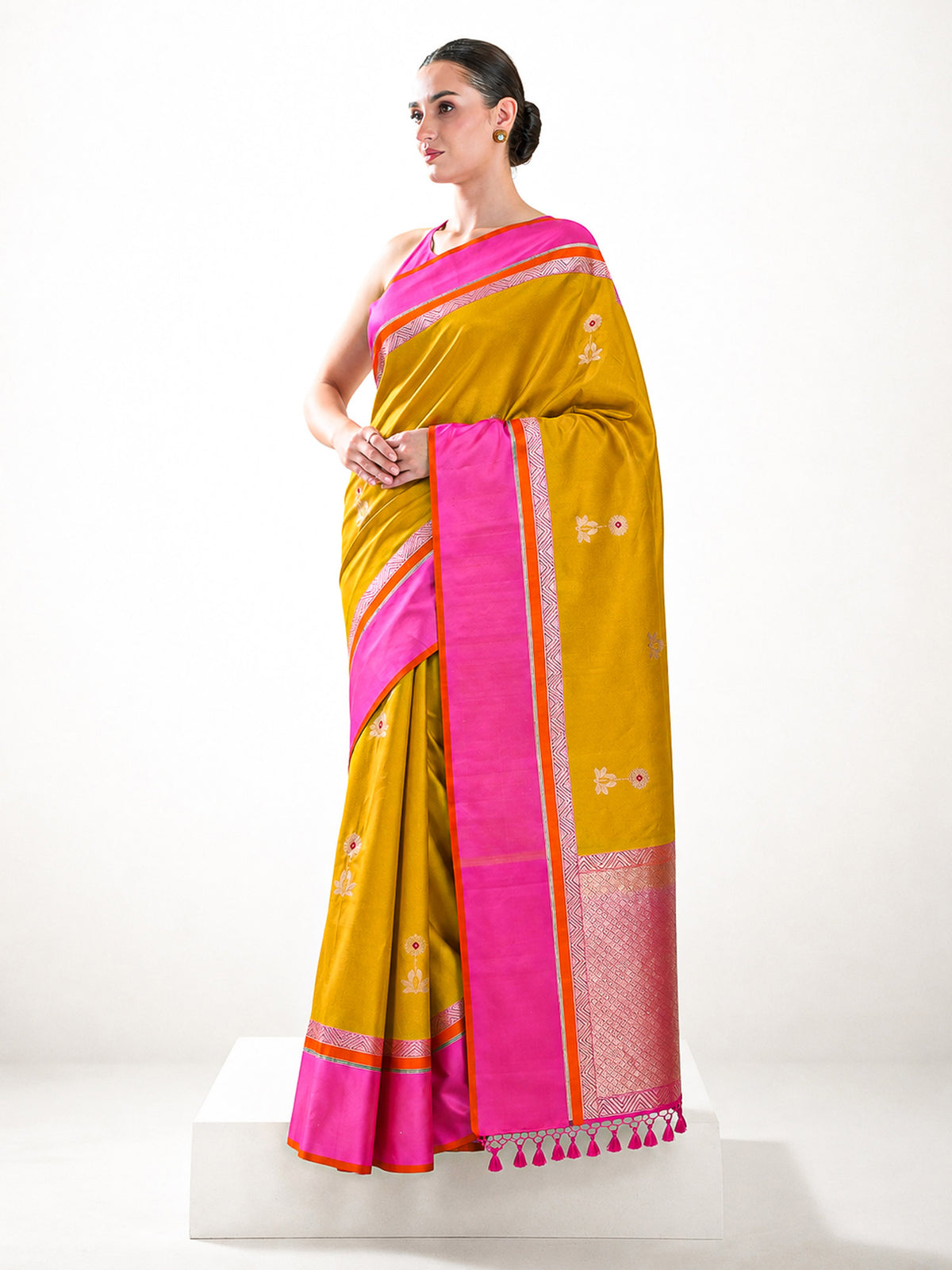

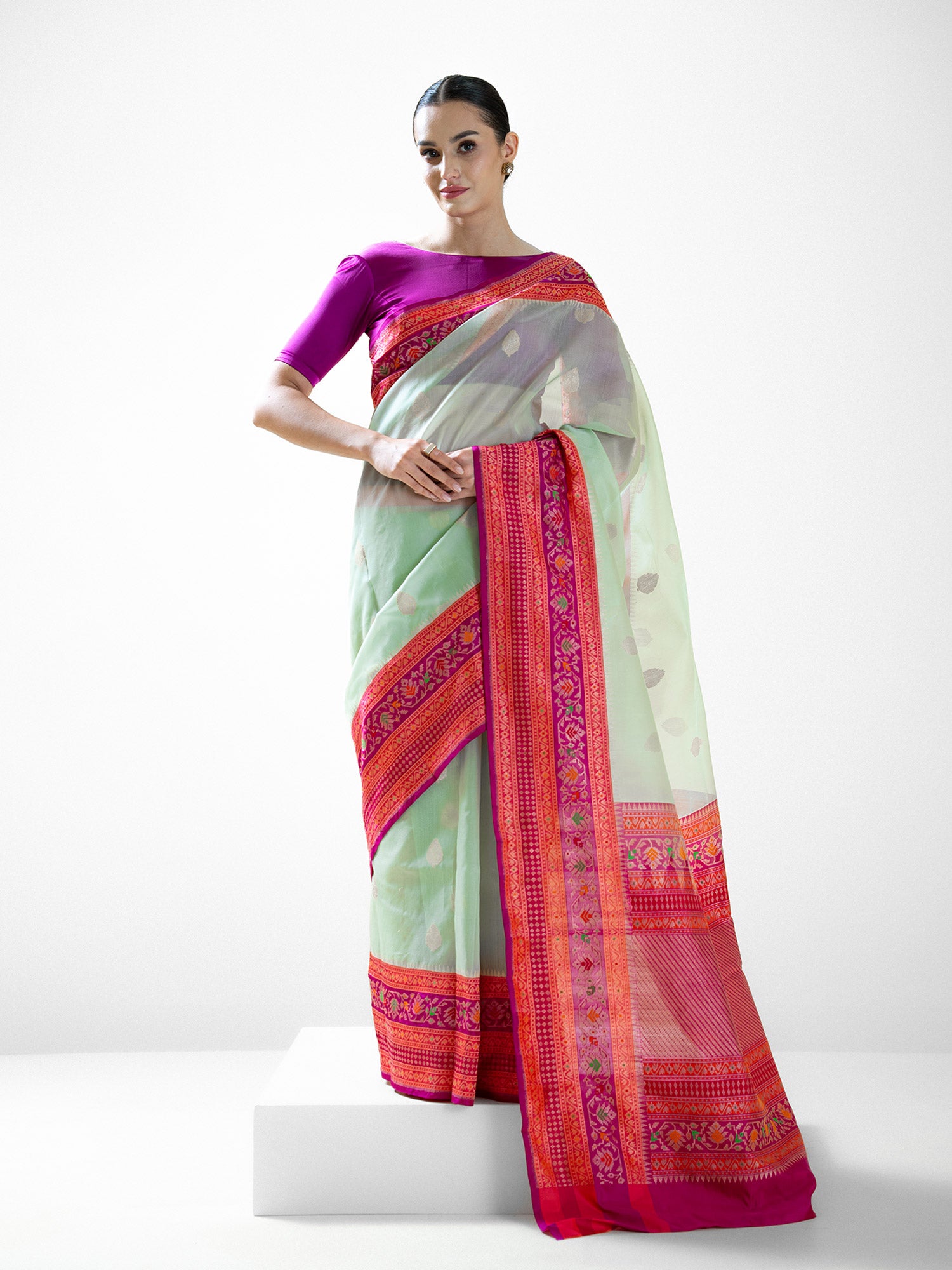
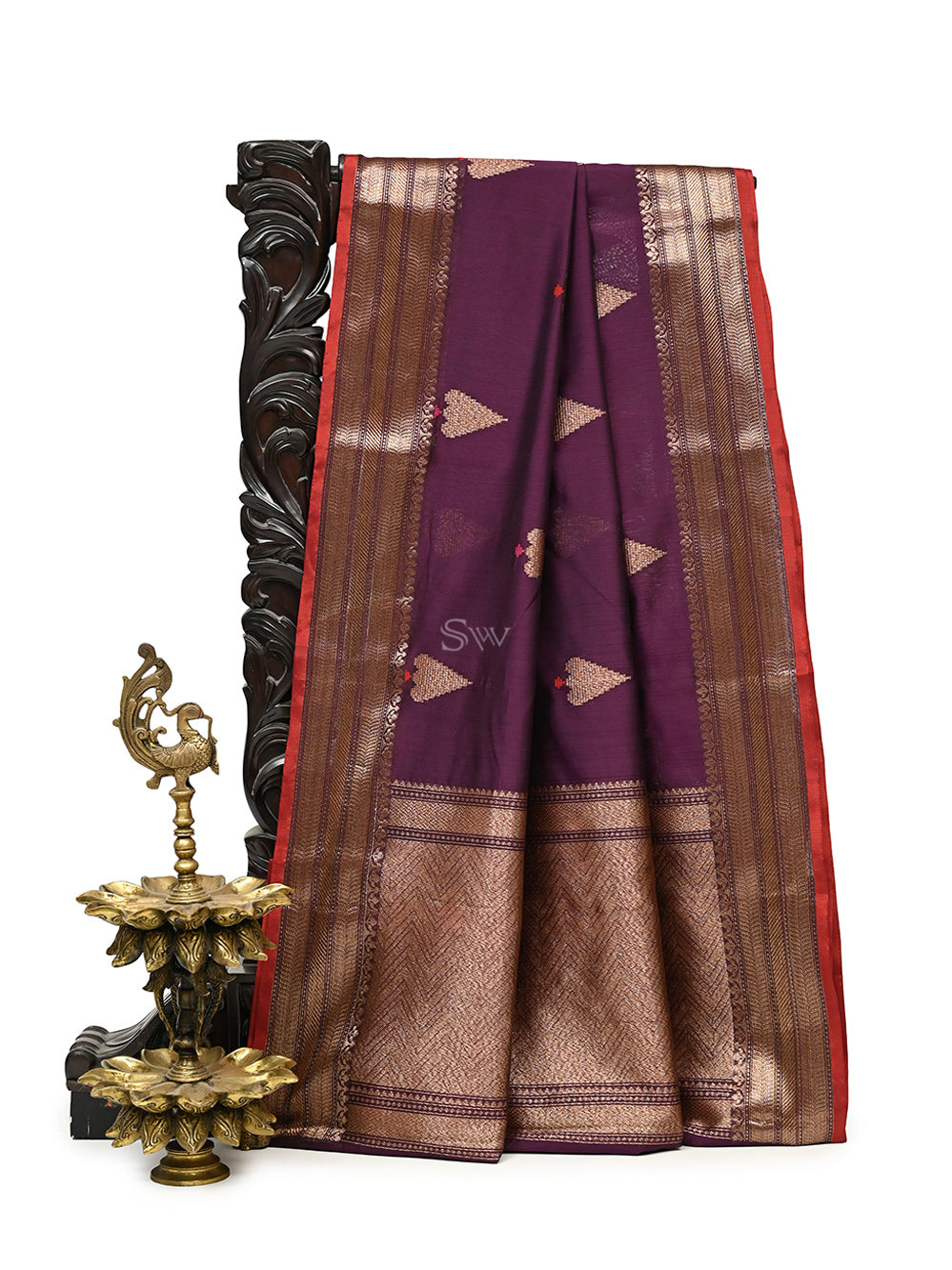


There is a moment in every Indian wedding — just before the bride walks in — when the room holds its breath. Everything about that moment depends on what the bride is wearing. And more often than not, across North India and increasingly across the country, what the bride is wearing is a Banarasi bridal saree.
It is not a coincidence. A bridal Banarasi saree does something that no other fabric does at that scale — it commands attention without trying. The pure silk catches every light source in the room. The handwoven zari shimmers with a warmth that no embroidery or machine finish can replicate. The structured drape of Katan silk holds its shape through hours of rituals, photographs, and celebrations. And the weight of the saree — the actual physical weight of pure silk and real metal thread — gives the bride a presence that lighter fabrics simply cannot match.
This guide is for three people: the bride choosing her own saree, the mother or family member shopping on the bride’s behalf, and anyone building a bridal trousseau that needs to last through an entire first year of married life. We will cover fabrics, weaving techniques, colours by ceremony, how to plan the trousseau, what the bride’s family should wear, and how to make sure everything you buy is genuine. If you want the complete buying process from start to finish, read our Banarasi saree for wedding buying guide alongside this one.

What Makes a Banarasi Bridal Saree Different From a Regular Banarasi?
Every Banarasi saree is handwoven pure silk. But a bridal Banarasi saree sits at the top of the craft — it is the most elaborate, the most time-intensive, and the most precious piece a weaver produces. The difference is not in the silk quality (that remains the same across all price points) but in three things that elevate a saree from “beautiful Banarasi” to “bridal centrepiece.”
The first is weaving technique. Bridal Banarasi sarees are almost always woven in the Kadhua (Kadhwa) technique — the most labour-intensive method where each motif is woven individually by hand without loose floating threads on the reverse. This produces the sharpest, most durable motifs and a saree that looks clean and detailed on both sides of the fabric. A Kadhua bridal saree takes 400 to 800 hours on the handloom — that is 3 to 6 months of an artisan’s working life dedicated to a single piece.
The second is zari density. A regular Banarasi Booti saree might have zari covering 20 to 30 percent of the body. A bridal Banarasi silk saree in Jangla or heavy Meenakari Jaal has zari covering 60 to 100 percent of the body — wall-to-wall metallic thread interlaced with coloured resham silk. The zari in a bridal saree can weigh 400 to 500 grams on its own, which is why these sarees feel substantially heavier (900g to 1,300g total) than everyday Banarasi pieces.
The third is the pallu. On a bridal Banarasi saree, the pallu is not just a decorative end piece — it is often the visual centrepiece of the entire saree. Heavy Kadhua pallus with Meenakari work, Shikargah motifs, or intricate Jangla lattice can take as long to weave as the entire body of a simpler saree. When the pallu is draped over the bride’s shoulder, it is the most photographed part of the outfit — and on a genuine bridal piece, it shows.
Banarasi Bridal Saree by Fabric: Which Silk for Which Bride?
The fabric you choose sets the foundation for everything else — the weight, the drape, the comfort, and the overall look of the bridal Banarasi saree.
Katan silk is the traditional and most popular choice for the bridal saree. It is woven from tightly twisted pure mulberry silk filaments, producing a smooth, structured fabric that holds the heaviest zari work and creates the regal, formal drape that bridal sarees are known for. If you are buying one saree for the main wedding ceremony — the phera, the nikaah, the saat phere — Katan silk is the safest and most time-tested choice. The structured body holds pleats through hours of sitting and standing, the surface photographs beautifully from every angle, and the durability means this saree will be wearable decades later.
Khaddi Georgette is for the bride who prioritises comfort without sacrificing authenticity. It weighs roughly half of what Katan silk weighs (400 to 650g versus 700 to 1,200g) and drapes with a soft, crinkled flow rather than a structured hold. Georgette Banarasi bridal sarees are gaining popularity for summer weddings, destination weddings, and brides who know they will be on their feet for 8 to 10 hours and want a saree that moves with them rather than holding them in place. The zari work on Georgette is lighter than on Katan — which is actually an advantage in terms of comfort.
Tissue Banarasi sarees are woven with silk and metallic zari threads blended into the base fabric, creating a saree that literally shimmers across its entire surface. Tissue is particularly popular for reception sarees — the metallic sheen catches evening light and flash photography in a way that plain silk cannot. A gold tissue bridal Banarasi looks like liquid metal under chandeliers.
Organza is the lightest Banarasi fabric — crisp, sheer, and airy. It is not the traditional choice for the main ceremony, but for pre-wedding functions like mehndi and sangeet, an organza Banarasi in a bright colour offers an ethereal, dreamy look that heavier silks cannot achieve.
From our experience: “About 70 percent of our bridal orders are Katan silk — it remains the overwhelming favourite for the ceremony saree. But we have seen a clear shift in the last 3 to 4 years toward lighter fabrics for the second and third trousseau sarees. Brides are choosing Georgette and Tissue for receptions and post-wedding events because they have already experienced the weight of their ceremony saree and want something more relaxed for everything after.” — Sacred Weaves
Banarasi Bridal Saree Colours by Ceremony
Colour at a wedding is never just aesthetics — it carries cultural weight, family expectations, and personal meaning. Here is how to choose the right colour for each wedding function.

The Main Wedding Ceremony
Red is the undisputed classic for the bridal ceremony saree across most of North India. A red Banarasi bridal saree with gold Kadhua zari is the image that comes to mind when anyone pictures an Indian bride. Red represents prosperity, fertility, and the strength of the marital bond. It is the colour that mothers expect, grandmothers approve of, and photographers pray for.
Maroon and wine offer the same warmth as red but with deeper, more mature sophistication. These shades have become the go-to for brides who want tradition without the brightness of classic vermillion red. Wine Banarasi bridal sarees are especially popular for winter weddings and evening ceremonies where the deeper shade looks richer under warm lighting.
Green is the traditional bridal colour for Bengali weddings — the “shubho drishti” saree is almost always green with a red border. Beyond Bengali traditions, green is gaining popularity as a bridal colour across communities because it photographs beautifully against gold zari, represents new beginnings, and stands out dramatically in a sea of red-wearing wedding guests.
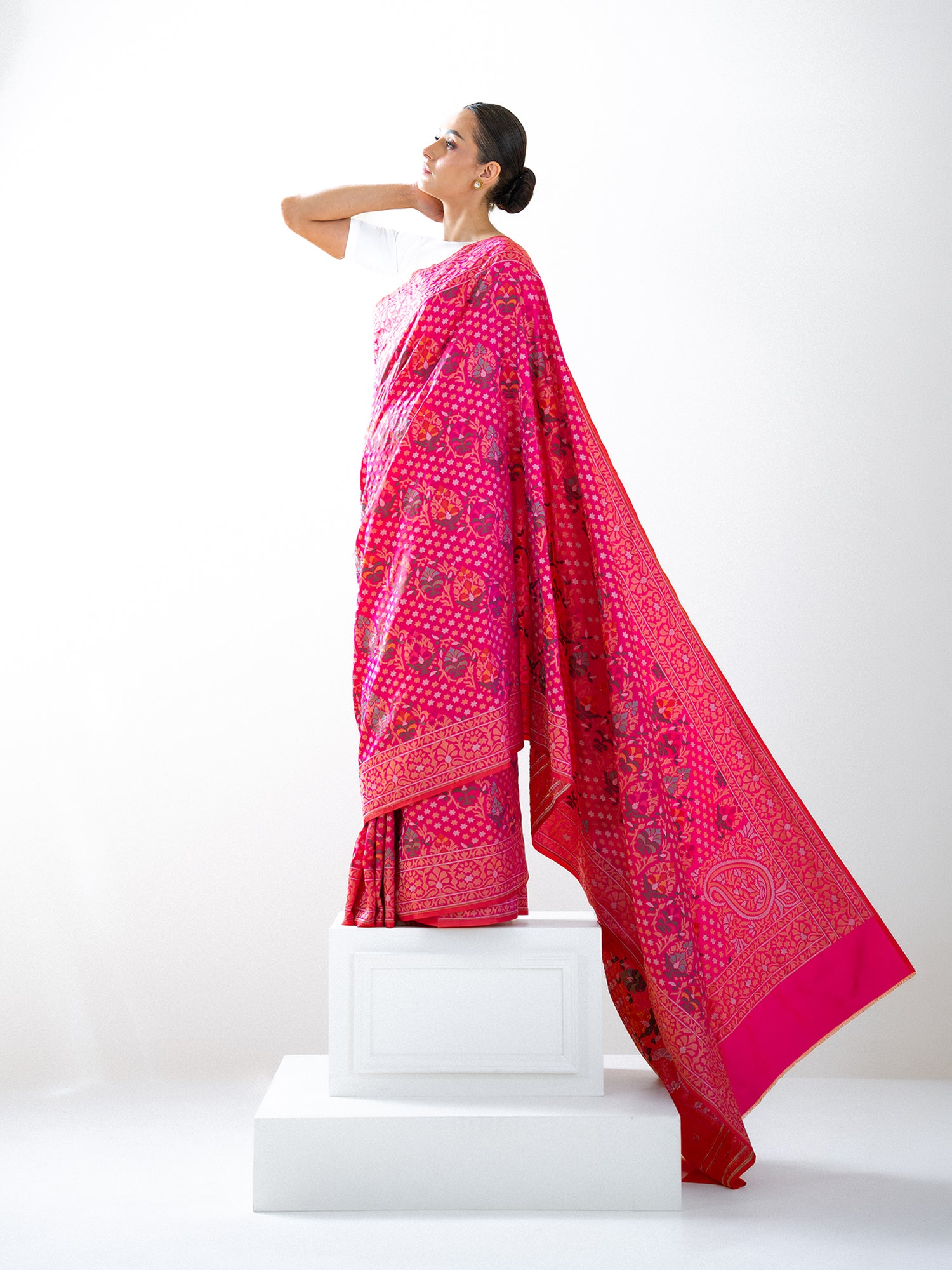
Magenta and pink are the modern bride’s territory. From hot magenta Kadhua Jangla sarees that carry all the impact of red in a more contemporary shade, to soft blush pink Banarasi bridal sarees that are redefining what Indian bridal wear looks like — these colours are for the bride who wants to write her own rules while staying rooted in handloom tradition.
The Reception
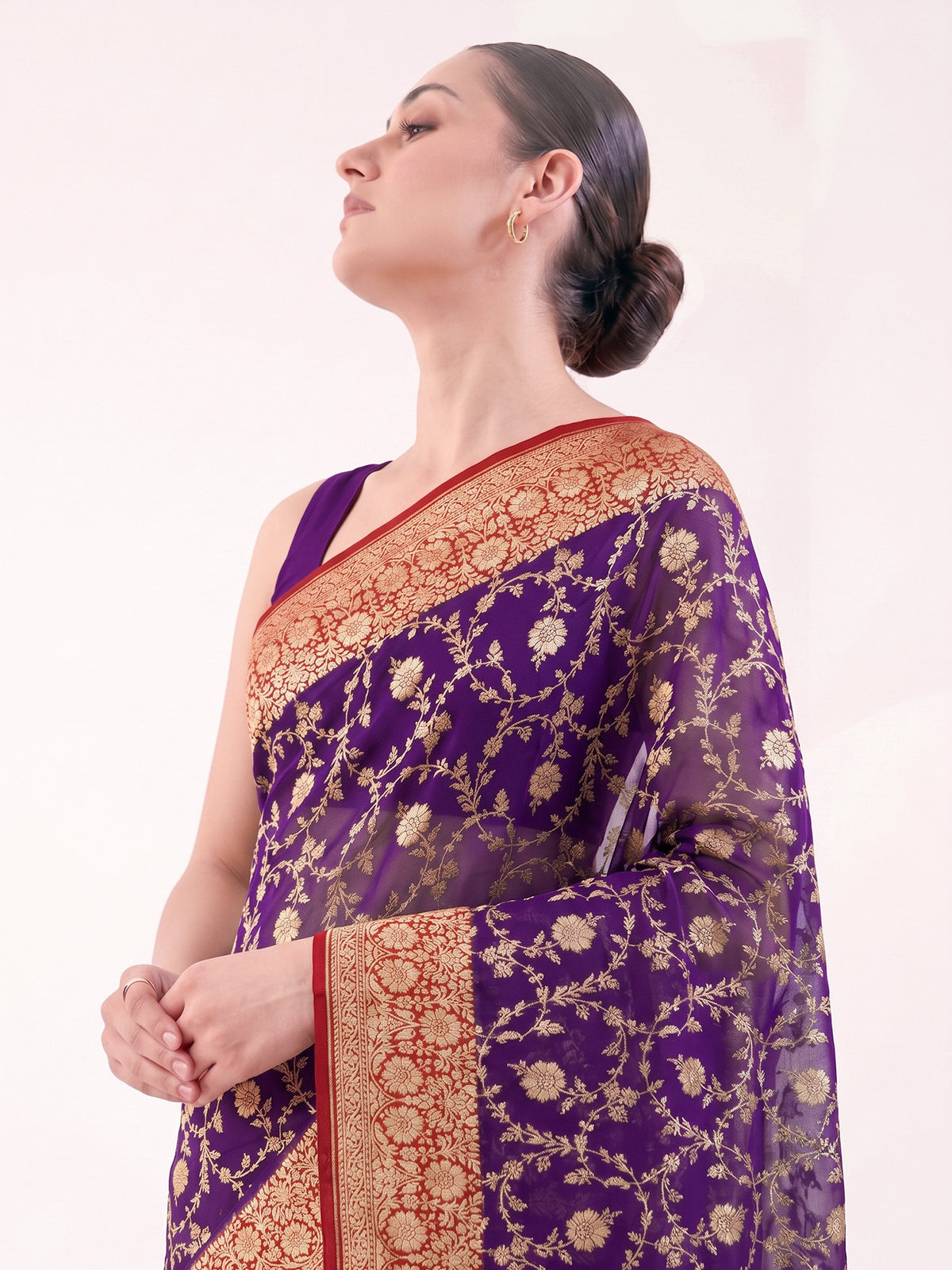
Black Banarasi bridal sarees have become a reception phenomenon in recent years. A black Katan silk with gold Shikargah brocade under evening lighting is one of the most dramatic looks in Indian fashion. Purple, navy blue, and deep bottle green serve the same purpose — rich, regal colours that own the room without competing with the ceremony’s traditional palette.
The Engagement
Peach, cream, and soft pink are popular engagement choices. The idea is elegance without full bridal weight — a Tanchoi or Meenakari Banarasi in a pastel shade signals that this is a bride-to-be, not yet the bride. Save the heavy Kadhua red for the wedding day.
Haldi and Mehndi
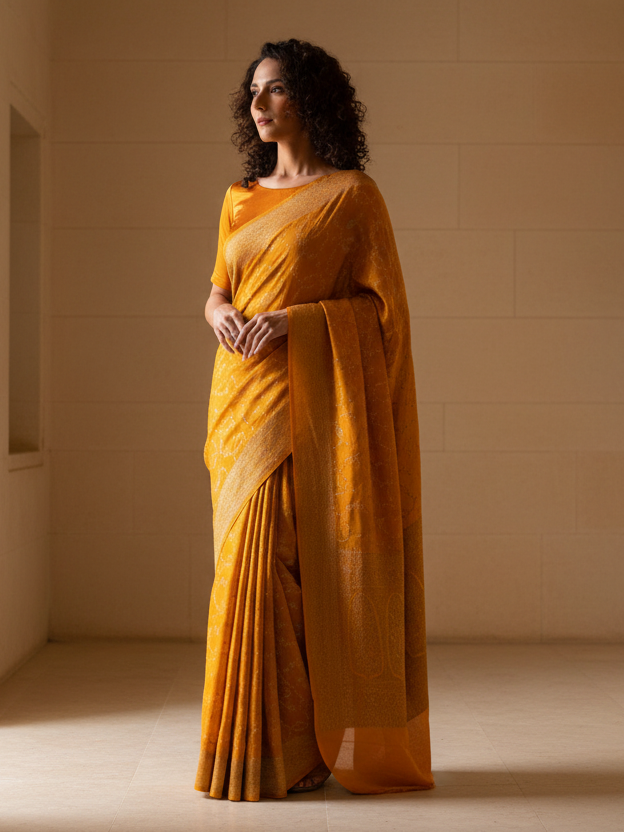
Yellow and orange for haldi. Bright pink, mustard, and multicolour Rangkat for mehndi. These are joyful, festive functions — the saree should match that energy. Choose lighter fabrics here. A Georgette or light Booti Katan silk in a cheerful colour is perfect.
Banarasi Bridal Saree Designs: Choosing the Right Pattern
The weaving pattern determines the visual impact and the weight of the saree. For bridal wear, certain patterns carry more gravitas than others.
Jangla (Jaal) is the quintessential bridal pattern — an all-over lattice that covers the entire saree body with interlocking motifs. When a Jangla is woven in Kadhua technique with heavy Meenakari, it is the most visually commanding Banarasi saree in existence. These are the sarees that elicit audible reactions when the bride enters. The trade-off is weight (1,000 to 1,300g) and price (₹60,000 to ₹1,50,000+), but for the once-in-a-lifetime ceremony saree, most families consider it a worthy investment.
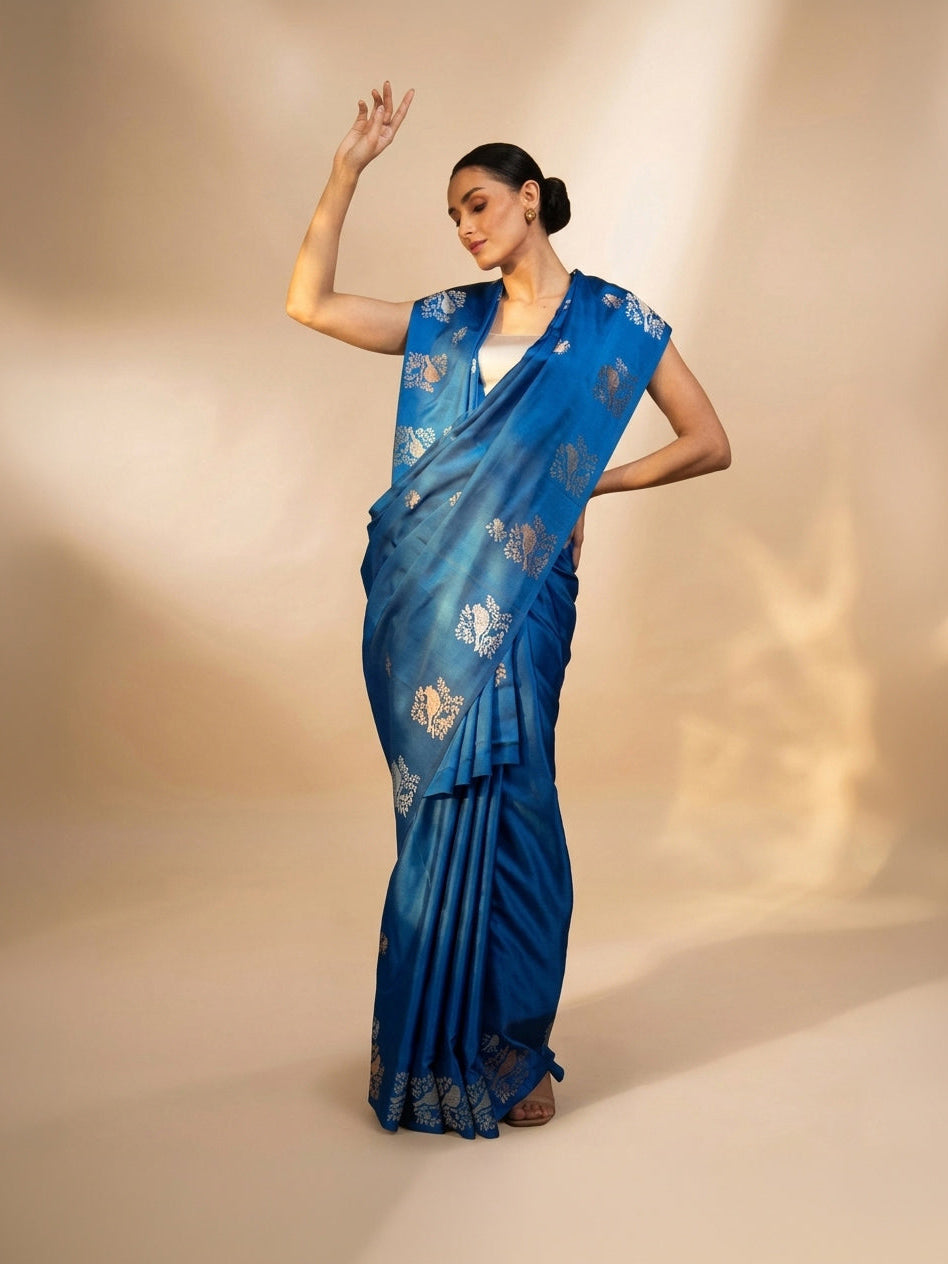
Shikargah sarees feature narrative motifs — elephants, deer, peacocks, palanquins, and garden scenes woven in brocade. These are for the bride who wants her saree to tell a story. A Shikargah Banarasi bridal saree is a conversation starter at every event for years to come.
Tanchoi offers a different kind of luxury — understated, satin-smooth, with fine patterns that reveal themselves gradually as light shifts across the surface. A Tanchoi bridal Banarasi in deep purple or wine is the choice of the bride who believes elegance whispers rather than shouts.
Brocade with heavy raised zari creates the classic three-dimensional texture that Banarasi sarees are known for. Gold brocade on red Katan silk is the template that North Indian bridal fashion has been built on for centuries.
Booti — lighter, more spaced-out motifs — is not typically the choice for the main bridal saree but is perfect for the bride’s trousseau pieces, the bride’s sisters, and wedding guests who want genuine Banarasi at an accessible price.

Banarasi Saree for the Bride’s Family
A wedding is not just the bride’s event — and every woman in the family wants to look her best. Choosing the right Banarasi saree for the bride’s family is about complementing the bride without competing.
The bride’s mother carries a unique responsibility — she is the most photographed woman after the bride herself. A navy blue or deep purple Tanchoi Katan silk in the ₹30,000 to ₹50,000 range makes a regal statement without overshadowing the bride. Black Shikargah or brown brocade are equally strong choices. The key is to avoid the bride’s exact colour — if the bride is wearing red, the mother should not wear red. Complement, don’t match.
The bride’s sisters and close cousins are the supporting cast — and they know it. Blue, turquoise, mustard, and wine are colours that stand out in group photographs while staying distinct from the bridal palette. Georgette or Booti Katan silk in the ₹15,000 to ₹30,000 range offers genuine Banarasi quality at a practical price for younger women.
The groom’s family — particularly the groom’s mother — often wants to match the formality of the bride’s family without identical styling. A beige or grey Banarasi with rich brocade or Meenakari work communicates elegance and status without any colour overlap.
Planning the Banarasi Bridal Trousseau
A trousseau is not just about the wedding day — it is a wardrobe for the first year of married life. Every occasion from griha pravesh to the first Diwali at the in-laws needs a saree, and the trousseau is how the bride’s family ensures she is prepared.
A well-planned Banarasi bridal trousseau typically includes five to seven sarees covering different occasions, colours, and formality levels.
The first and most important is the ceremony saree — heavy Kadhua Katan silk in the bride’s chosen colour with maximum zari work. This is where the largest portion of the trousseau budget goes, typically ₹50,000 to ₹1,50,000.
The second is the reception saree — rich but slightly lighter than the ceremony piece. Katan silk or Tissue in a contrasting colour. Black, purple, or deep green work beautifully. Budget ₹30,000 to ₹60,000.
The third is the engagement saree — if the engagement and wedding are separate events. Tanchoi or Meenakari in pink, peach, or cream. ₹20,000 to ₹40,000.
The remaining three to four pieces are for post-wedding life — griha pravesh, first Karva Chauth, first Diwali, temple visits, and family gatherings. These should be lighter Banarasi sarees in different colour families. Georgette, Booti Katan, or Rangkat in green, blue, mustard, and a neutral like beige or grey. Budget ₹13,000 to ₹25,000 each.
Some families also add Banarasi dupattas and a Banarasi lehenga to the trousseau — matching accessories that extend the collection without adding full sarees.
For detailed pricing at every level, read our Banarasi saree for wedding with price guide
The Banarasi Dulhan Saree: What Makes It an Heirloom
The word “dulhan” means bride, and a Banarasi dulhan saree is not just bridal wear — it is a family heirloom in the making. The combination of pure silk, real metal zari, and handloom construction creates a textile that does not degrade the way machine-made or synthetic fabrics do. A well-maintained Banarasi bridal saree from the 1980s or 1990s is not just wearable today — it is often more beautiful than new, because the silk has softened with age and the zari has developed a warm, antique patina.
This is why the tradition of passing a Banarasi dulhan saree from mother to daughter exists. It is not sentimentality — it is practical. The saree genuinely holds its quality across decades. When you invest ₹50,000 or ₹1,00,000 in a bridal Banarasi, you are not paying for a single-use outfit. You are paying for a piece of textile art that your daughter might wear at her own wedding, that your granddaughter might frame on a wall, and that carries the story of your family’s celebrations woven into every thread.
How to Buy Banarasi Bridal Saree Online With Confidence
Buying a bridal saree online requires more care than any other online purchase you will make. Here is the process that works.
Start with authentication. Ask about Silk Mark certification before you browse designs. If a seller cannot provide Silk Mark on their bridal sarees, move on.
Request a live video call before confirming any bridal order. See the saree in natural daylight — not studio lighting, not product photography. Watch how the fabric falls. Examine the reverse side. Compare the actual colour with what you see on your screen. For a saree you will wear on the most photographed day of your life, a 30-minute video call eliminates every uncertainty that product images leave behind.
Send your blouse measurements early. Add one inch to every measurement for breathing room. If you have a blouse that fits well, courier it as a reference piece — we will match the fit and return the original with your saree. Our blouse stitching service includes multiple design options tailored to your measurements.
Give yourself time. Minimum 8 to 10 weeks for a ready-stock bridal saree. 4 to 6 months for a custom or made-to-order weave. The brides who are happiest with their sarees are always the ones who started early — not because anything went wrong, but because they had time to explore, compare, and choose without pressure.
At Sacred Weaves, every bridal Banarasi saree ships with express worldwide delivery and duties prepaid (DDP). The price you see is the price you pay — no customs surprises, no hidden charges. We have shipped bridal sarees to brides in the USA, UK, Canada, UAE, Australia, and Singapore. The process works. Browse our Wedding Banarasi Sarees Collection


