



Durga Puja dressing has always had room for both tradition and personal style.
One day may call for a light saree that can take you comfortably through hours of pandal hopping. Another may feel right for rich silk, zari, jewellery and a more elaborate festive look. And while the classic red-and-white saree remains closely associated with Puja celebrations, it is far from the only way to dress for the festival.
In 2026, festive saree styling is increasingly moving between heritage and versatility. Traditional handloom weaves continue to hold their place, while Organza, Tissue, jewel tones, pastels, contemporary blouse pairings and lighter drapes are giving women more ways to make festive sarees feel personal. Current festive fashion coverage also reflects this mix of classic Indian textiles and modern styling rather than one rigid "Puja look."
For anyone looking for a Saree for Durga Puja, Banarasi sarees fit naturally into this space. From Katan silk and colourful Meenakari to Rangkat, Tissue, Organza and lighter Georgette, there is no single Banarasi look you have to follow.
Here are some of the Banarasi saree directions worth exploring for Durga Puja 2026.
Why Banarasi Sarees Work So Well for Durga Puja
A Banarasi saree does something particularly useful for festive dressing: it can feel traditional without requiring excessive styling.
The richness can come from the silk itself, the depth of colour, a woven border, scattered bootis, an elaborate jaal or carefully used zari. Depending on the fabric and weaving style, the same Banarasi tradition can produce anything from an understated daytime saree to a statement piece for a festive evening.
That versatility matters during Durga Puja.
A woman attending morning Pushpanjali may want something completely different from what she would choose for Navami evening. Someone spending hours visiting pandals may prioritise movement and comfort, while another may be dressing for a family gathering or formal Puja celebration.
Rather than asking, "Which Banarasi saree is best for Durga Puja?", it is more useful to ask:
Which fabric, colour and weave suit the way I am celebrating?
1. Red Banarasi Sarees: A Festive Classic That Still Works
 |
 |
Red does not need much explanation during the festive season.
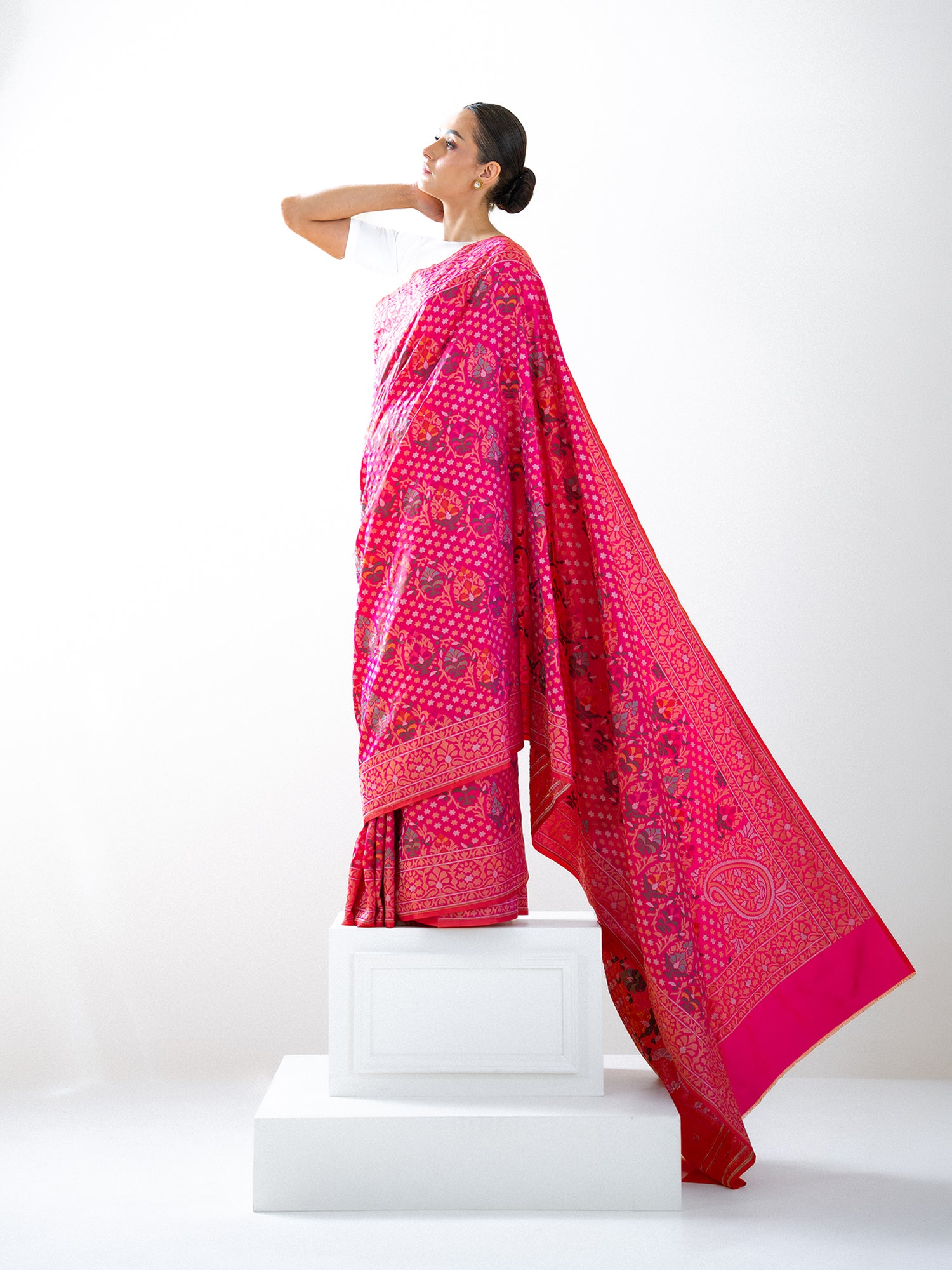
From bright sindoor red to deeper crimson and ruby tones, red Banarasi sarees naturally complement gold zari and traditional jewellery. They are particularly useful for women who want a saree that feels festive immediately, without depending on elaborate accessories.
For 2026, consider moving beyond the assumption that a festive red saree needs to be covered in heavy zari.
A red Katan silk saree with smaller bootis can feel elegant and wearable. A red Meenakari saree can introduce additional colour through the motifs. A red saree with a woven jaal creates a richer statement for evening celebrations.
If the saree is already elaborate, keep the blouse relatively clean. A tonal red blouse, antique gold blouse or even a contrasting deep green can change the mood without competing with the weave.
For Durga Puja, red remains less of a passing trend and more of a colour you can reinterpret each year.
2. Jewel-Toned Katan Silk for Evening Puja Looks
Deep, saturated colours are especially effective in Banarasi silk.
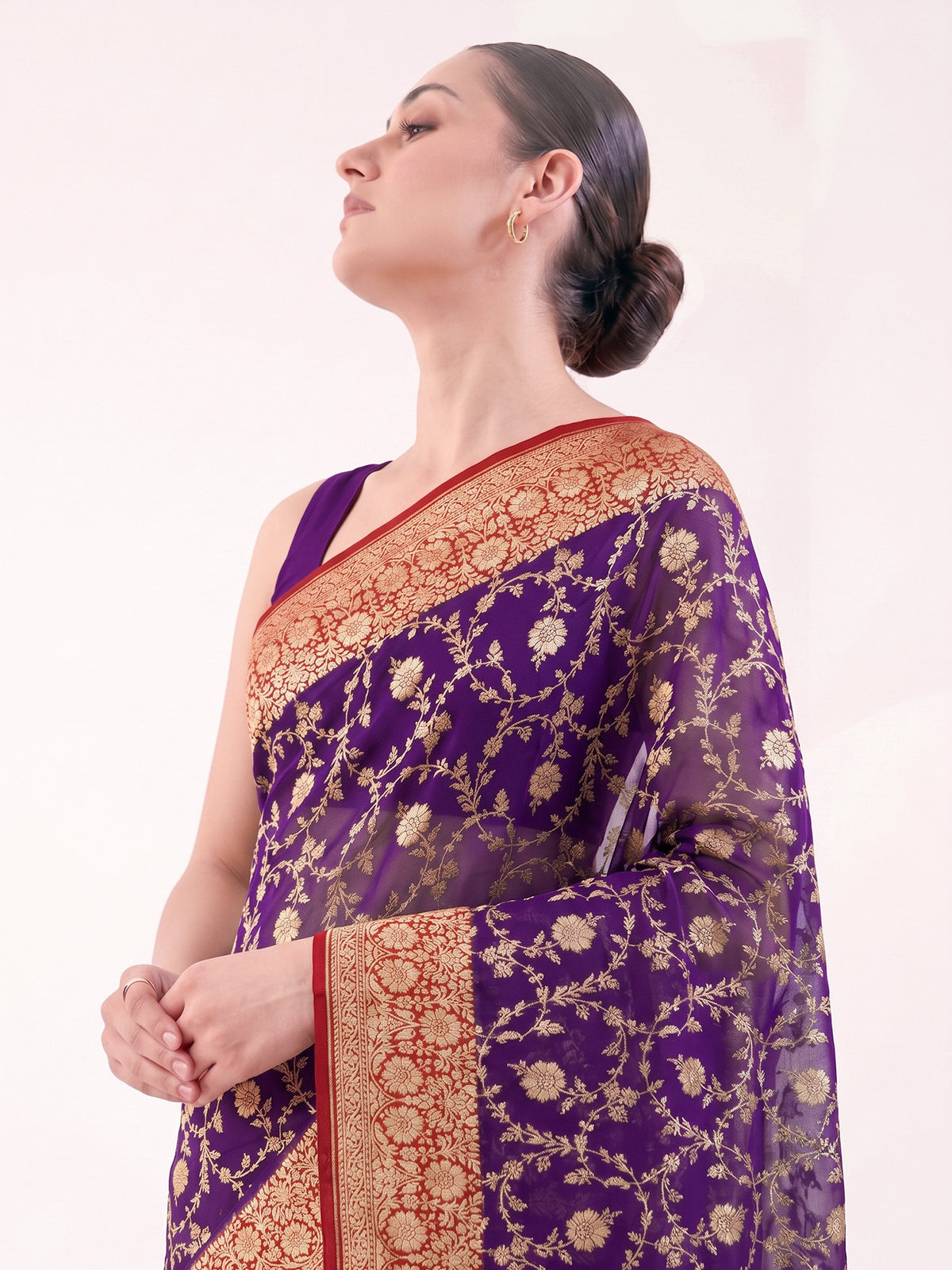
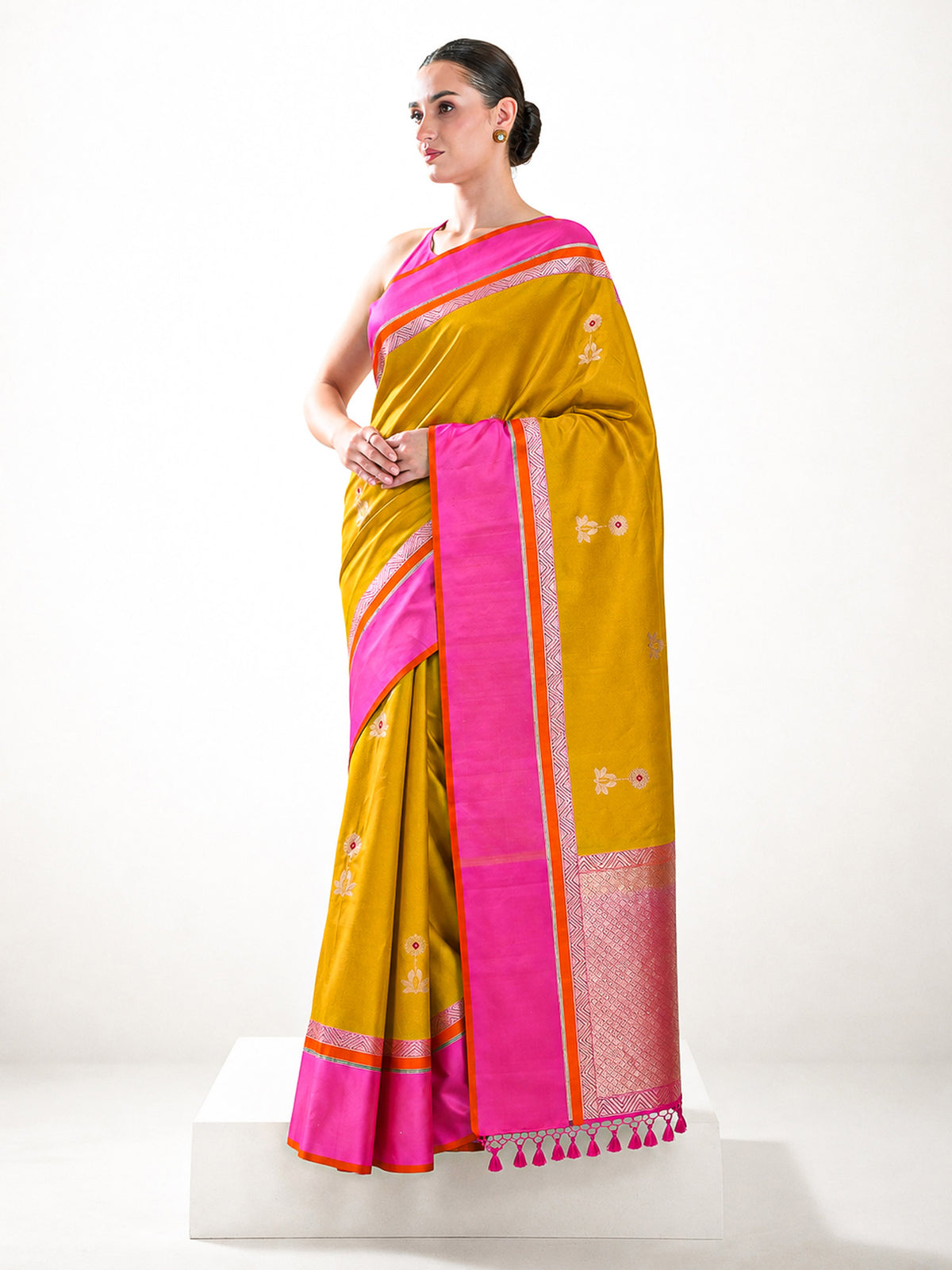
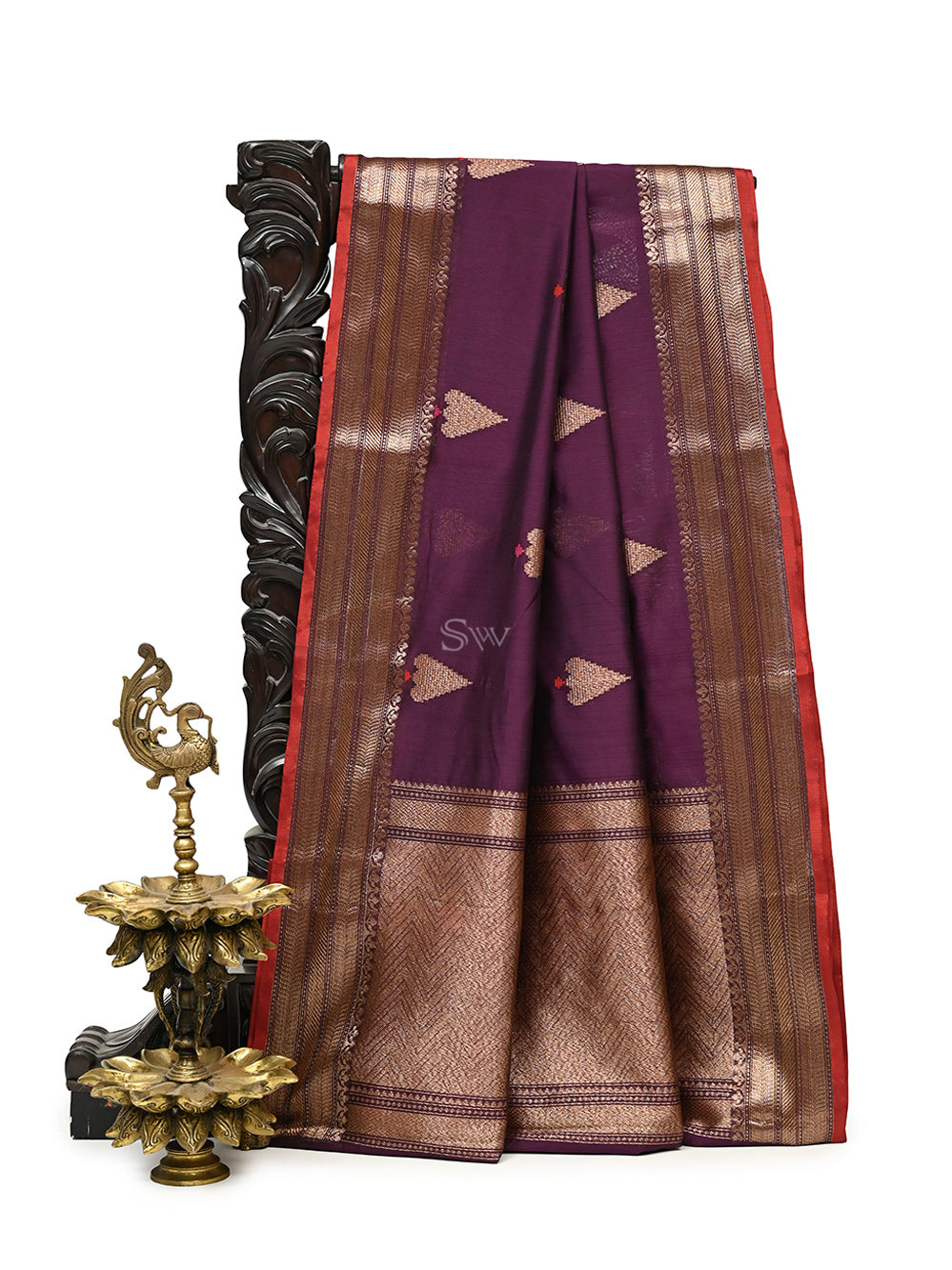
Think emerald green, purple, royal blue, wine, dark pink or rich maroon.
These shades give Katan silk depth and allow zari to stand out without necessarily making the saree look bridal. Current festive fashion coverage continues to highlight jewel tones alongside traditional reds and ivory shades for 2026.
Katan silk works particularly well when you want structure and a more substantial festive drape.
A jewel-toned Katan saree can be worn for Ashtami evening, Navami celebrations, festive dinners or family gatherings. You can also reuse it for weddings and other Indian celebrations, making it more versatile than a saree purchased only for one Puja look.
If you prefer understated styling, choose a saree with scattered bootis rather than a dense jaal. If you want a stronger statement, look at brocade, larger motifs or more elaborate pallus.
The colour may catch your eye first, but the density of the weaving will ultimately decide how formal the saree feels.
3. Pastel Banarasi Sarees for a Softer Festive Look
 |
 |
Not every festive saree needs to be deep red, maroon or green.
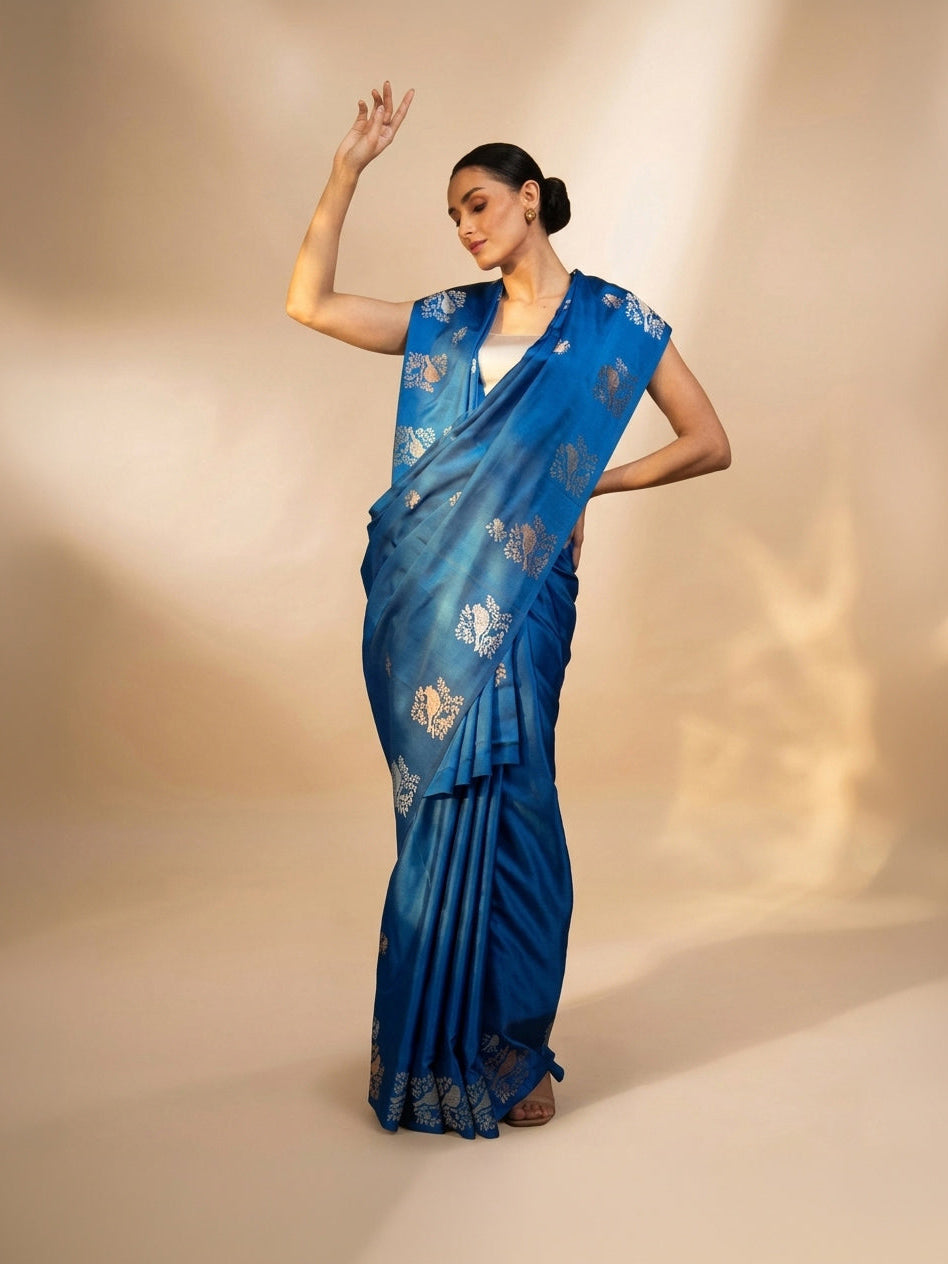
Pastel pink, powder blue, soft peach, pista green, beige, lavender and muted gold can bring a gentler mood to Durga Puja dressing.
Pastel and contemporary colour palettes are also visible in Sacred Weaves' current Banarasi arrivals, alongside more traditional jewel tones and motifs.
Pastels work especially well for daytime celebrations because they allow the craftsmanship to remain visible without making the outfit feel visually heavy.
A pastel Katan saree with zari bootis can still feel traditional. Organza in a softer colour gives the look more lightness. A pastel Tissue saree introduces luminosity without depending on a bold base colour.
You can keep the blouse tonal for a polished look or use a contrasting jewel tone to give the outfit more definition.
For women who usually avoid heavily traditional styling, pastel Banarasi sarees can be an easy entry into festive handloom dressing.
4. Meenakari Banarasi Sarees for Colourful Puja Dressing
Durga Puja is full of colour, which makes Meenakari particularly relevant.
In Banarasi weaving, Meenakari introduces coloured silk details within woven motifs alongside zari. This allows floral and other motifs to carry several colours instead of relying entirely on gold or silver. Sacred Weaves' Meenakari collection, for example, includes multicoloured Resham work across different Banarasi fabrics.
The result can feel festive without being monotonous.
A red saree can include green and pink details. A beige or ivory saree can become more lively through coloured floral motifs. A deep blue or purple saree can gain contrast without needing a heavily embroidered blouse.
For styling, avoid trying to match every colour in the saree.
Choose one supporting shade from the Meenakari work for your blouse or accessories, and allow the remaining colours to stay within the weave.
This usually creates a much more considered outfit.
5. Rangkat Banarasi Sarees for a Statement Puja Look
For women who want something less predictable, Rangkat deserves attention.
Rangkat is a weaving style built around the interplay of multiple colours within one saree rather than a separate fabric category. Sacred Weaves currently offers Rangkat across fabrics including Katan Silk, Georgette, Organza and Tissue.
That makes it particularly interesting for festive dressing.
Instead of depending on one colour throughout the saree, Rangkat creates visual movement through contrasting or harmonious colour sections. Depending on the palette, the result can be subtle or dramatic.
A multi-coloured Rangkat Katan saree can work beautifully for Navami evening or a large Puja gathering. A lighter Rangkat Organza or Georgette can give you the same colour-led effect with less weight.
The saree already carries a lot of visual interest, so styling can remain relatively minimal.
A simple blouse, statement earrings and restrained jewellery are usually enough.
For a Saree for Durga Puja that feels rooted in Banarasi craftsmanship but visually different from the expected festive saree, Rangkat can be one of the most interesting choices.
6. Tissue Banarasi Sarees for a Luminous Festive Look
Tissue is made for light.
Its metallic surface gives the saree a natural shimmer, making it particularly effective for evening celebrations, indoor gatherings and festive photographs.
Current 2026 festive styling coverage also identifies Tissue as one of the prominent fabrics for celebrations where a luminous finish is desired.
Banarasi Tissue can appear in gold, silver, pastel and deeper coloured versions, with options ranging from relatively minimal surfaces to brocade and Rangkat designs.
Sacred Weaves describes its Banarasi Tissue sarees as handloom silk constructions using silk with zari to create their characteristic metallic effect.
For Durga Puja, Tissue works best when you allow the fabric itself to be the statement.
Pair a gold-toned Tissue saree with a deep red, wine or green blouse for a stronger festive contrast.
Alternatively, keep everything tonal with beige, champagne or pastel shades for a more contemporary appearance.
Jewellery can then be simpler because the saree already reflects light and carries visual richness.
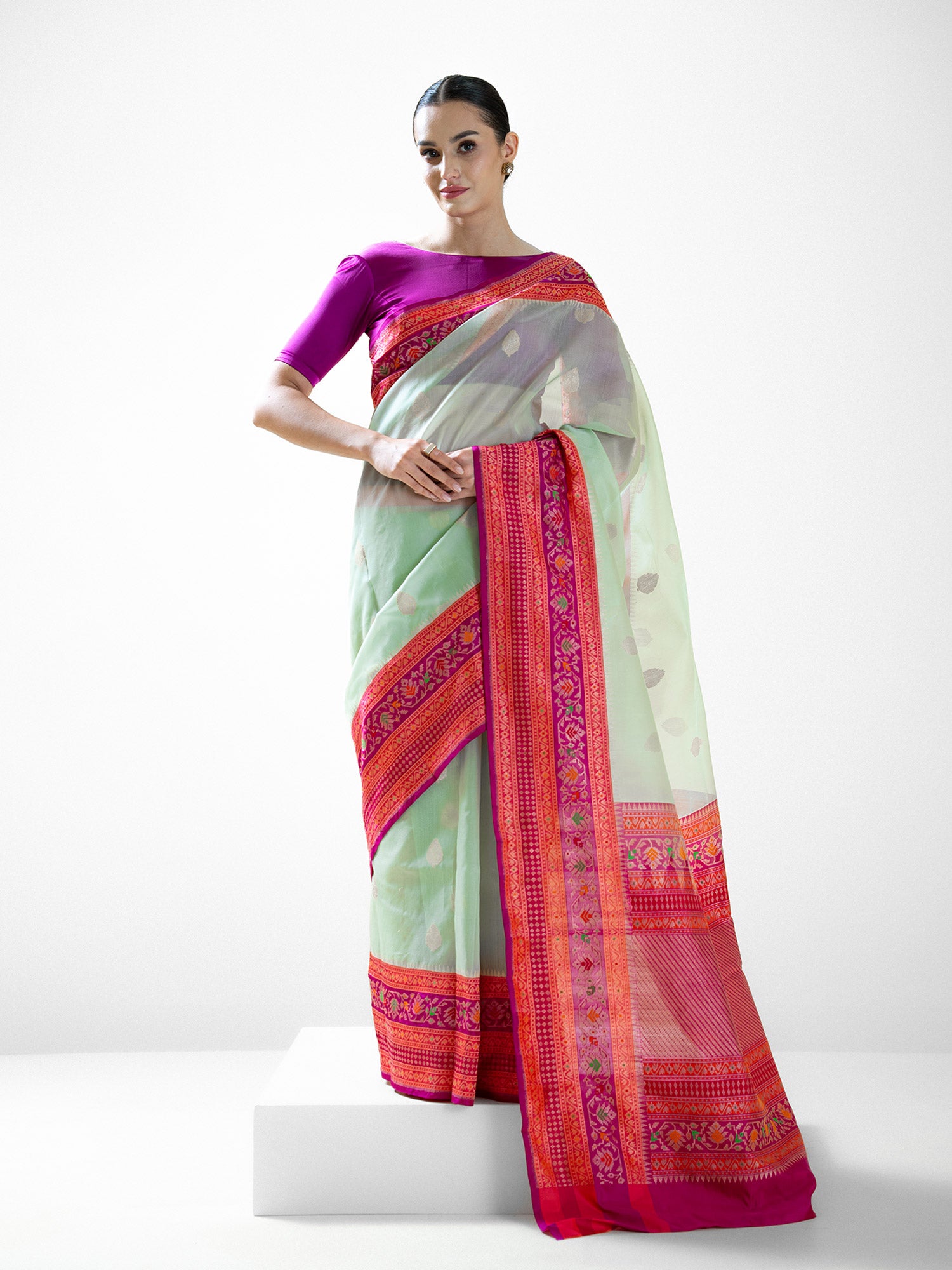
7. Organza Banarasi Sarees for Lightweight Festive Styling
Organza continues to be visible across 2026 festive saree styling because of its combination of lightness, structure and contemporary appeal.
For Durga Puja, that makes practical sense.
A woman planning several pandal visits may not want to manage a heavier silk saree for hours. Organza provides a lighter alternative while still allowing woven Banarasi motifs, zari, bootis or Meenakari detailing to give the saree a festive character.
The fabric's crispness also gives the drape a more defined silhouette.
Colours such as pastel pink, aqua, yellow, green, wine and ivory work particularly well if you prefer a fresh daytime look. Sacred Weaves' current listings similarly include Organza Banarasi sarees across bright and pastel colour options.
Because Organza already has volume, a fitted blouse often works better than something overly elaborate.
Finish with earrings, a bindi and a clean drape rather than adding several competing accessories.
8. Khaddi Georgette for Long Days of Pandal Hopping

|

|
Festive outfits should not make you count the hours until you can change out of them.
If your Durga Puja plans involve walking, crowds, travelling between pandals and wearing the saree from afternoon into the evening, a softer and more fluid fabric can make a real difference.
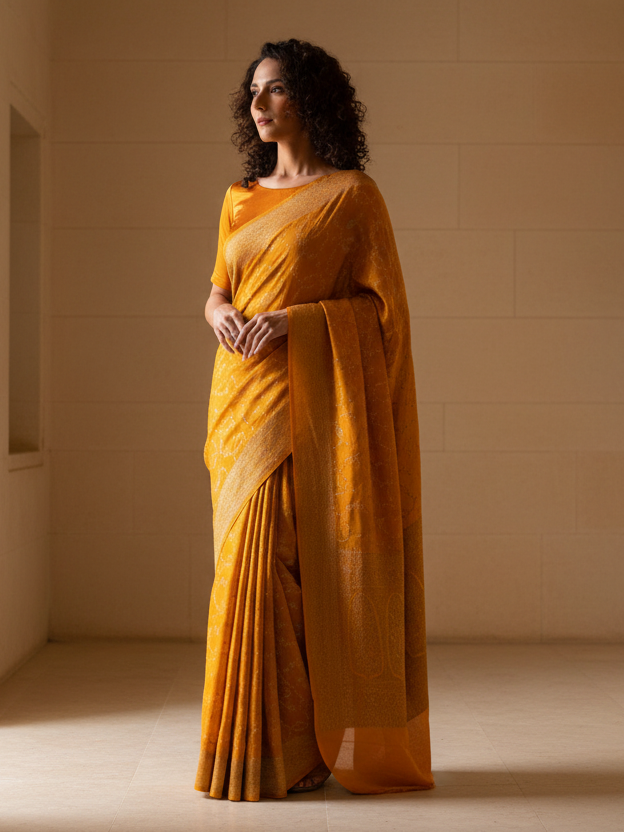
Khaddi Georgette Banarasi sarees combine a more fluid drape with traditional Banarasi surface detailing.
They can carry bootis, Meenakari, zari or jaal work while generally feeling easier to move in than a more structured silk.
This makes Georgette particularly useful for women who love the look of Banarasi weaving but prefer a softer saree on the body.
Pair it with comfortable footwear, secure the pleats properly and avoid excessively heavy jewellery if the day involves a lot of walking.
A good festive outfit should work in the real celebration, not only in photographs.
9. Booti Sarees for Quiet Elegance
More design does not automatically mean more festive.
A Banarasi saree with small woven bootis across the body can sometimes look more sophisticated than an extremely dense pattern.
Booti sarees work especially well for women who want the fabric and colour to remain visible.
A red Katan saree with gold bootis, an ivory saree with Meenakari bootis or a jewel-toned silk with small zari motifs can all feel festive without being overly formal.
This style is also easier to reuse.
Change the blouse and jewellery, and the same saree can move from Durga Puja to a wedding, family celebration, Diwali dinner or formal occasion.
For anyone buying their first premium Banarasi saree, a well-balanced booti design is often more versatile than an extremely occasion-specific piece.
10. Jaal and Brocade Sarees When You Want a Grander Look
Some occasions call for more.
A full jaal or richly woven brocade saree brings much greater visual density to the drape. These styles can be especially effective for Ashtami or Navami evening celebrations, larger gatherings and occasions where you want the saree itself to become the focus of the outfit.
The key is balance.
If the saree has elaborate weaving across most of the body, a simpler blouse and restrained jewellery can help the craftsmanship stand out.
If both your saree and blouse are heavily detailed, the outfit can quickly become visually crowded.
This is also where fabric matters.
A richly woven Katan silk will feel more substantial than the same general design direction interpreted in Organza or Georgette.
Choose according to how long you will wear the saree and how formal you want the finished look to feel.
Click here for to EXPLORE MORE
How to Plan Your Banarasi Sarees From Shashti to Dashami
You do not need a strict colour rule for every day of Durga Puja.
A more useful approach is to let the sarees gradually move with your plans.
For Shashti and Saptami, lighter Organza, Georgette, pastel Banarasi sarees or simpler booti designs can work beautifully for daytime celebrations and early pandal visits.
For Ashtami, you may want greater festive depth: red, maroon, jewel-toned Katan silk, Meenakari or a classic red-and-white direction.
For Navami, this is a natural moment for something more expressive—Rangkat, Tissue, rich jewel tones or an elaborate jaal can all work well.
And for Dashami, red, white, ivory and gold combinations continue to offer an elegant connection with traditional festive dressing.
Think of this as inspiration rather than a dress code.
The best Puja wardrobe is one that works for your own plans.
Banarasi Saree Colours Worth Exploring in 2026
There is no single "colour of the year" that everyone needs to wear for Durga Puja.
The current festive landscape is broad enough to include traditional reds alongside jewel tones, pastels, black, ivory and metallic finishes.
If you prefer traditional colours, consider:
red, maroon, sindoor, ivory, white and gold.
For richer evening looks:
emerald, royal blue, wine, purple and rani pink.
For softer daytime styling:
pastel pink, lavender, pista, beige, aqua and peach.
For something more contemporary:
black, metallic Tissue, unusual Rangkat combinations or monochromatic tonal dressing.
Rather than choosing a colour because it has been labelled "trending," consider how it looks against the weave, zari and your own wardrobe.
A colour you love wearing will remain useful long after the festival ends.
How to Style a Banarasi Saree for Durga Puja in 2026
The strongest festive styling often comes from simplifying rather than adding.
If your saree is richly woven, you do not need a heavily embroidered blouse, multiple necklaces, large earrings and a statement hairstyle all at once.
Choose a focal point.
A traditional Banarasi saree can be made more contemporary with a sleeveless blouse, clean neckline or tonal styling.
A pastel or Organza saree can be made more festive through a contrasting blouse and gold jewellery.
A simpler booti saree can carry statement earrings or a more decorative blouse.
And a Rangkat or Meenakari saree often works best when the styling allows its colours to remain visible.
Current festive fashion coverage similarly shows traditional sarees being updated through blouse silhouettes, jewellery and draping rather than abandoning the saree's traditional character.
The same saree can therefore feel completely different depending on how you style it.
Choosing a Saree for Durga Puja: Fabric Before Fashion
Before deciding which trend you like most, consider the fabric.
If you want a traditional, substantial silk drape, Katan silk is a strong option.
If you prefer fluid movement, look towards Khaddi Georgette.
For a lighter, structured appearance, consider Organza.
If you want luminosity and metallic character, Tissue offers something very different.
Then look at the weave.
Booti is generally quieter. Jaal creates more surface richness. Meenakari introduces coloured woven detail. Rangkat creates a colour-led statement.
Understanding these distinctions makes shopping far easier than starting with the broad question, "Which saree is trending?"
Trends can guide you towards ideas.
Fabric and craftsmanship determine whether you will actually enjoy wearing the saree.
Explore Festive Banarasi Sarees at Sacred Weaves
At Sacred Weaves, the Durga Puja season is an opportunity to explore how traditional Banarasi weaving can work across very different festive styles.
The current collection includes Katan silk, Organza, Tissue, Georgette, Meenakari and Rangkat options, alongside classic booti and jaal designs and both contemporary and traditional colour palettes. Sacred Weaves' latest-arrivals pages also highlight pastels, jewel tones, lightweight weaves and traditional Banarasi motifs as part of its current offering.
So if you are looking for a Saree for Durga Puja, begin with the way you want to feel during the celebration.
Do you want something rich and traditional?
Something colourful?
Something lightweight enough for pandal hopping?
Or a saree that makes a stronger statement for an evening gathering?
Once you know that, choosing the fabric, colour and weave becomes much easier.
Explore the Sacred Weaves Durga Puja Edit for handwoven Banarasi sarees selected for festive dressing and celebrations.
Choose the Trend That Still Feels Like You
The most interesting thing about Banarasi sarees in 2026 is not that one particular fabric or colour has replaced everything else.
It is the opposite.
Traditional red Katan silk can exist alongside pastel Organza. A classic booti saree can share the same festive wardrobe as a bold Rangkat. Rich zari can sit beside colourful Meenakari, while Tissue offers an entirely different way to create festive impact.
That variety gives you more freedom.
Your Saree for Durga Puja does not need to look like everyone else's. It should suit your plans, your comfort and the way you naturally like to dress.
Trends are useful for discovering something new.
A thoughtfully chosen Banarasi saree, however, should still feel beautiful when the trend has passed.


