

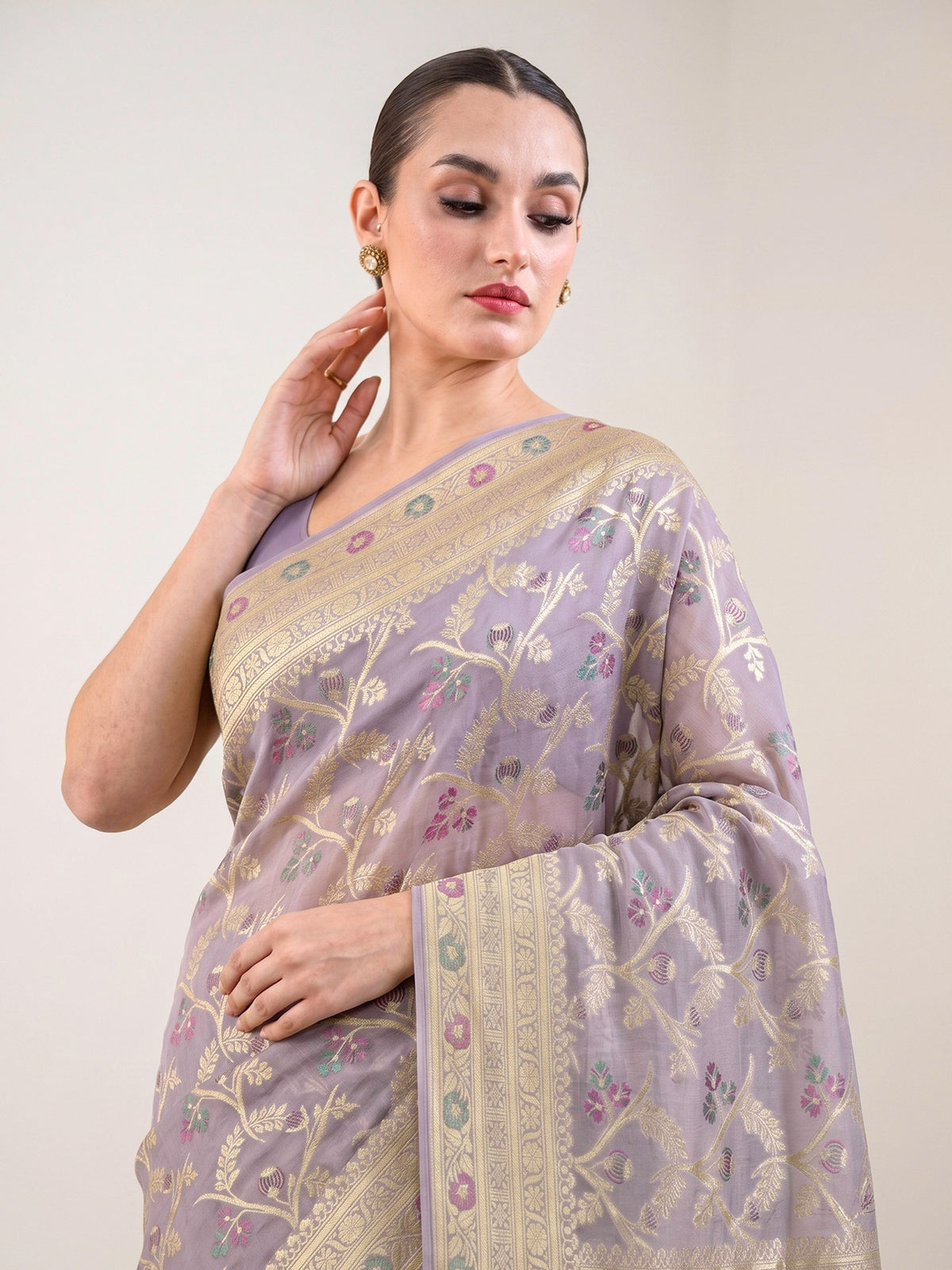
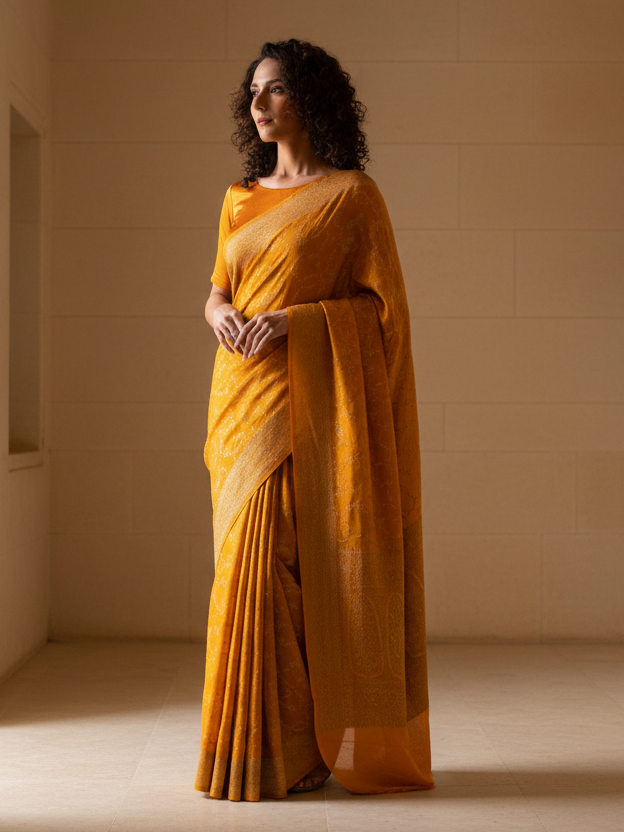
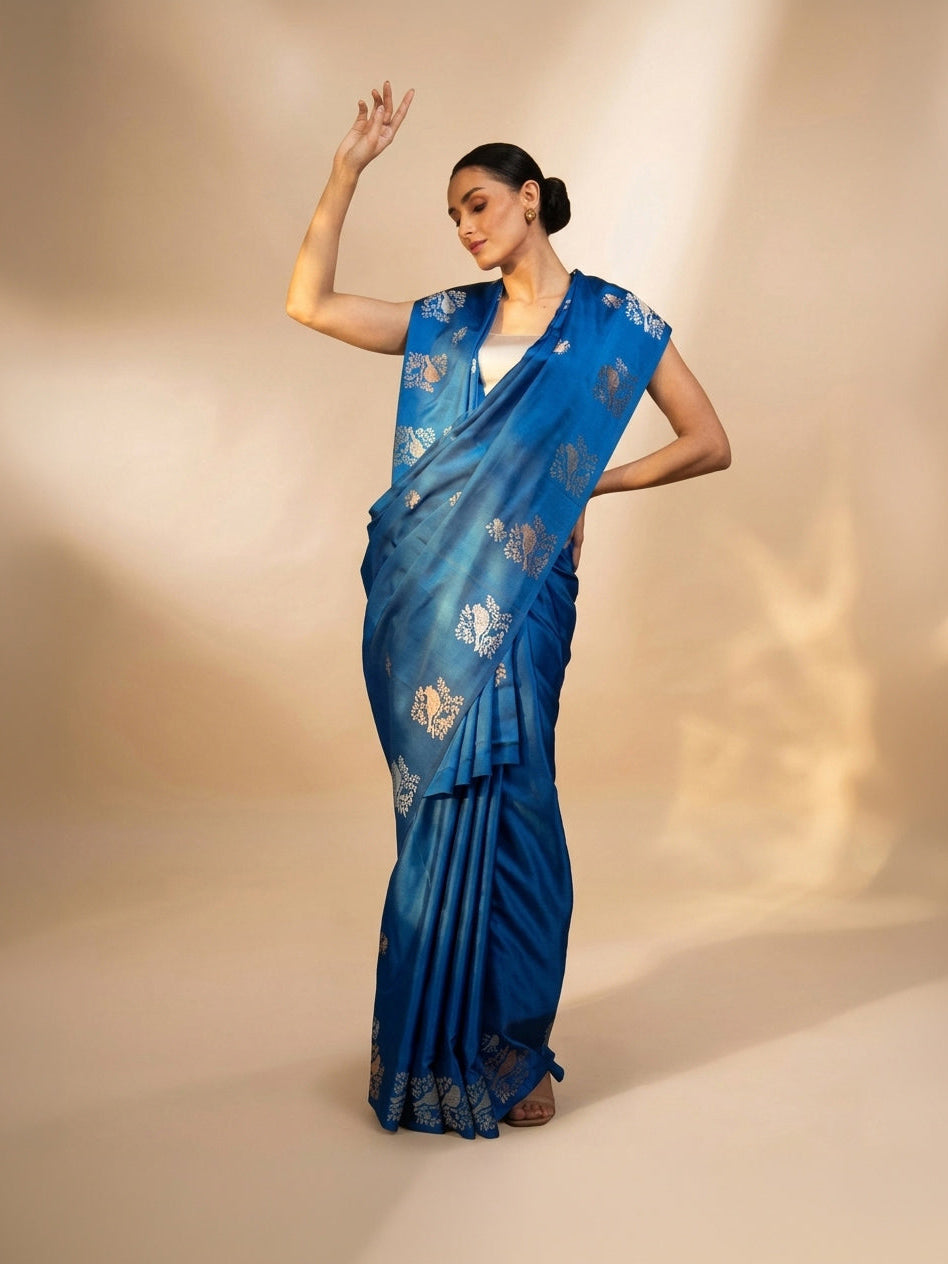
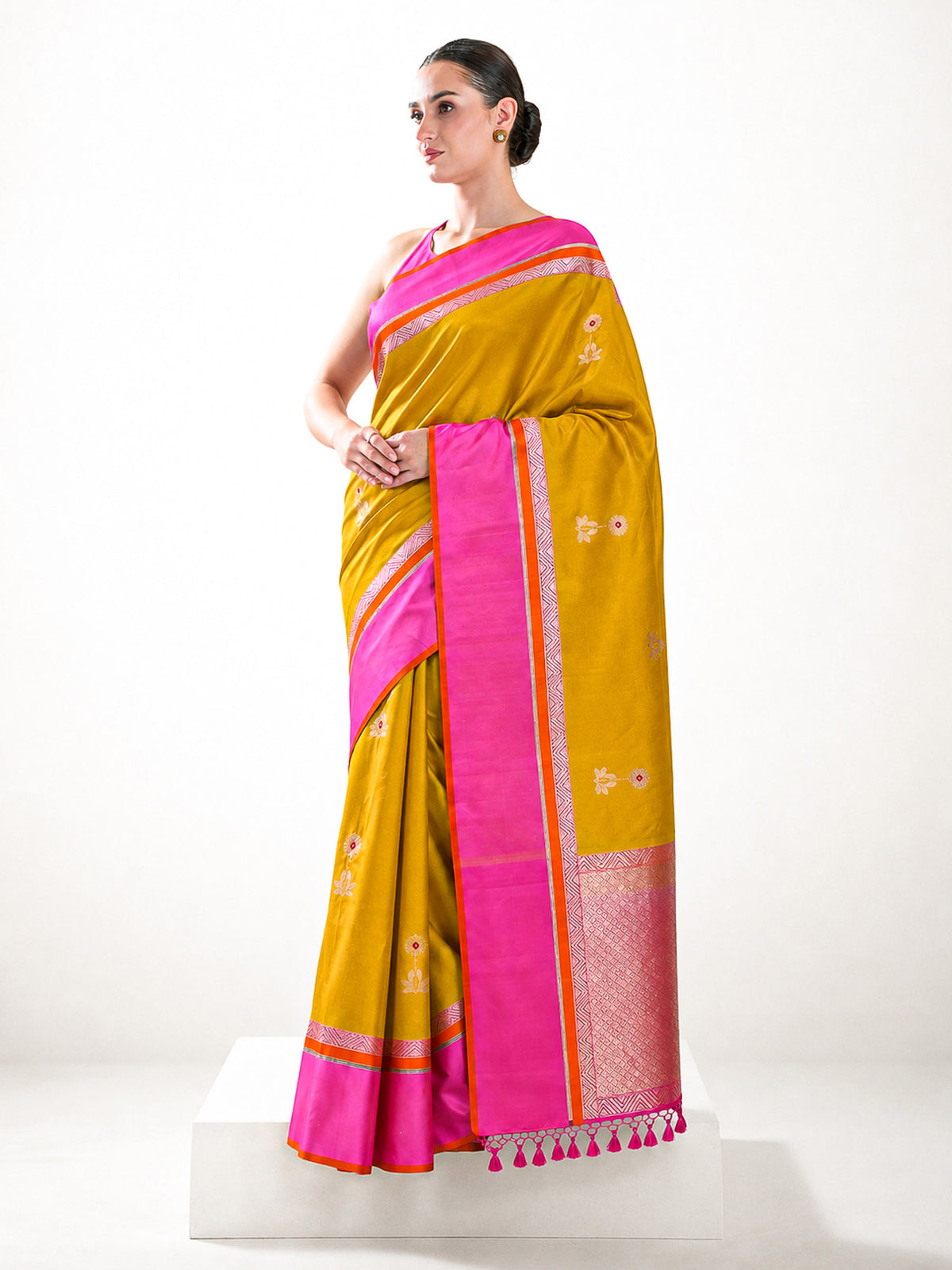

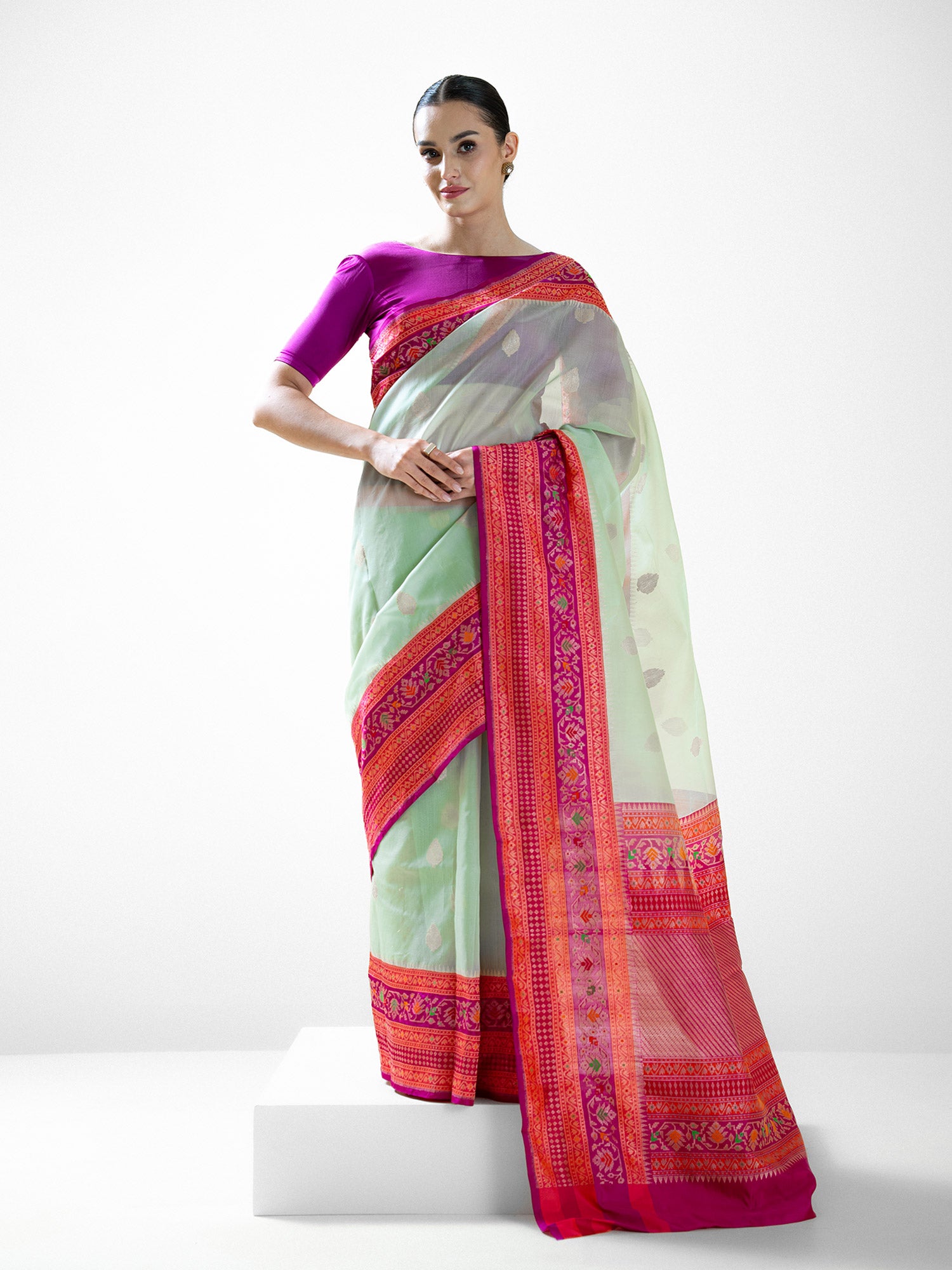
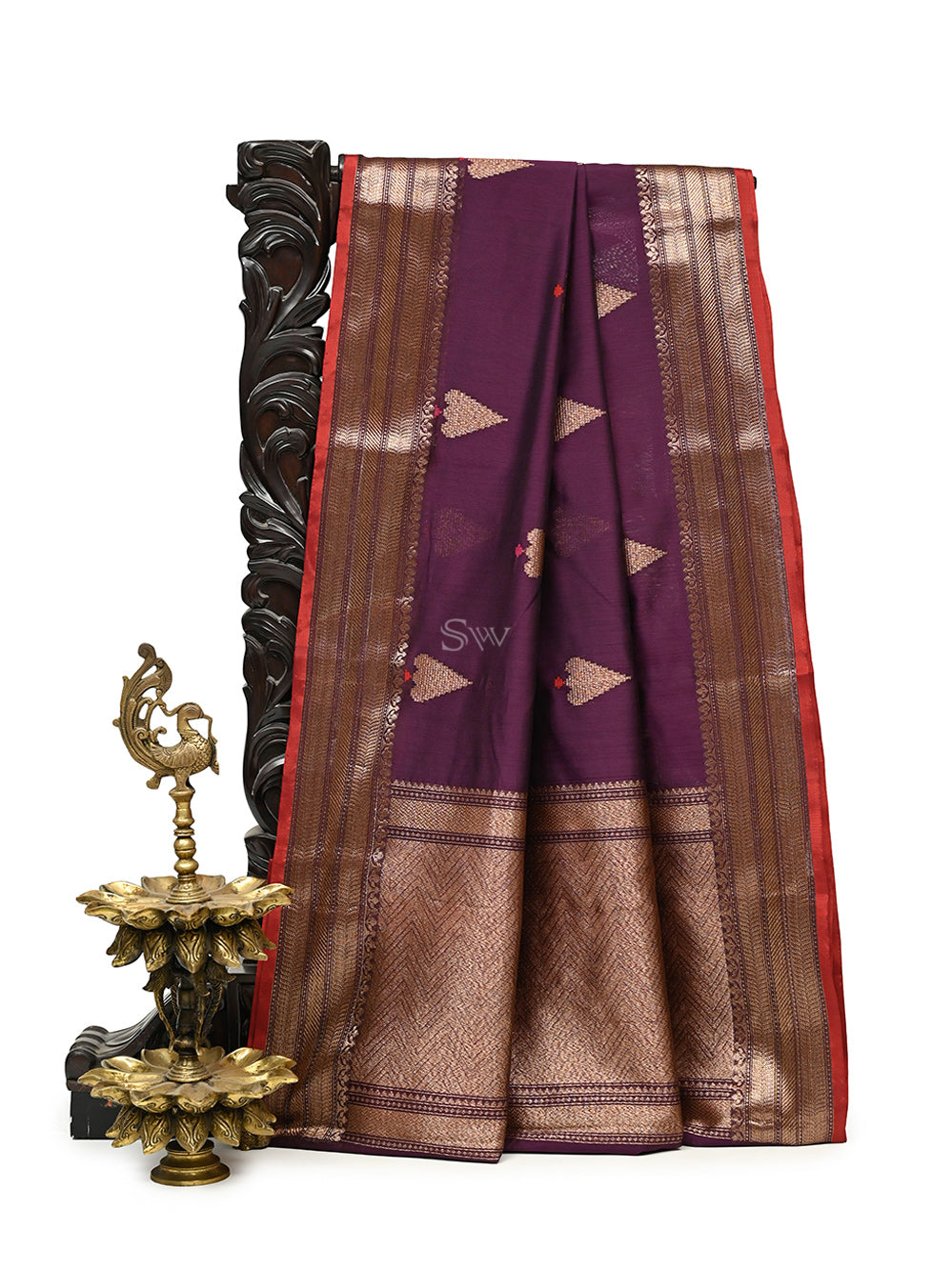


A handloom Banarasi saree can cost ₹15,000, ₹40,000 or even more than ₹1 lakh. To someone comparing sarees online, the difference may seem surprising, especially when two sarees have similar colours, designs and zari patterns.
So, why are handloom Banarasi sarees so expensive?
The answer lies in their production costs. A genuine handwoven Banarasi saree requires silk or other yarns, zari, design preparation, loom setup, skilled weaving, finishing and quality inspection. The more intricate the design and weaving technique, the greater the labour and time required to produce it.
However, not every handloom Banarasi saree is exceptionally expensive. Simple designs can be relatively affordable, while elaborate Kadhwa weaving, premium silk and real zari can increase the price considerably.
Let's understand where the money actually goes.
What Determines the Price of a Handloom Banarasi Saree?
The cost of a handloom Banarasi saree is influenced by several stages of production.
| Cost component | What you are paying for | How it affects the price |
|---|---|---|
| Silk yarn | Quality, quantity, preparation and dyeing | Higher-quality or more expensive yarn increases material costs |
| Zari | Metallic yarn used for decorative weaving | Composition and quantity can significantly change the cost |
| Design preparation | Artwork, pattern development and loom instructions | Intricate or new designs require additional preparation |
| Loom setup | Preparing warp threads and arranging the loom | Adds labour before weaving begins |
| Weaving labour | Skilled artisans working on a handloom | More working hours increase labour costs |
| Weaving technique | Methods such as Kadhwa or Cutwork | Complex techniques require additional time and skill |
| Finishing | Cutting loose threads, checking and preparing the saree | Adds labour after weaving |
| Business costs | Transport, inventory, packaging, retail operations and margins | Contributes to the final selling price |
There is no single manufacturing-cost formula that applies to every Banarasi saree. Each design may require a different combination of materials and labour.
1. Pure Silk Is a Major Raw Material Cost

Red Sona Roopa Meenakari Jaal Katan Silk Handloom Banarasi Saree
The foundation of a silk Banarasi saree is its yarn.
Pure Katan Silk, for example, is made from twisted silk yarns and is valued for its strength, texture and ability to support detailed Banarasi weaving.
The amount and quality of silk used depend on the fabric construction. A densely woven Katan Silk saree may require different quantities and specifications of silk from a lightweight Georgette or Organza saree.
Silk yarn also goes through preparation processes before it reaches the loom. Depending on the production arrangement, these can include twisting, dyeing, winding and warp preparation.
Each step adds material or labour costs.
Does pure silk automatically make a Banarasi saree expensive?
Not necessarily. A pure silk saree with simple motifs and limited zari work may cost less than another pure silk saree featuring complex weaving.
Buyers can explore pure Katan Silk Banarasi sarees to understand how design and weaving details influence pricing within the same fabric category.
2. Zari Quality and Quantity Can Change the Price Significantly
Zari is another important cost component, particularly in traditional Banarasi sarees.
It is the metallic-looking yarn used to create borders, floral motifs, elaborate pallus and richly woven patterns.
However, not every zari thread has the same composition.
Some zari uses metallic-coated or metallised materials, while other varieties contain silver or other metals. Genuine precious-metal zari can be considerably more expensive than imitation varieties.
The amount of zari matters as well.
Consider two Banarasi sarees made from similar silk:
-
The first has a narrow zari border and a few scattered Booti motifs.
-
The second has an elaborate pallu, broad borders and dense zari designs covering most of the body.
The second saree may require more zari, additional weaving work and greater production time.
This is why a heavily decorated Banarasi saree can command a substantially higher price, even when both sarees use the same base fabric.
Importantly, gold-coloured zari does not automatically mean real gold zari. Buyers should ask the seller about the actual metallic yarn composition.
3. Handloom Weaving Requires Skilled Labour and Time

Off White Jaal Meenakari Moonga Tussar Silk Handloom Banarasi Saree
One of the biggest differences between handloom and powerloom production is how the fabric is woven.
In traditional handloom weaving, the artisan operates the loom and controls the weaving process manually. Mechanical patterning arrangements, such as Jacquard mechanisms, may assist with creating designs, but the loom is still powered by the weaver.
The artisan must maintain proper yarn tension, monitor the fabric and manage the weaving process as the saree develops.
Unlike an industrial powerloom, a handloom depends heavily on the weaver's working time and skill.
How long does it take to weave a Banarasi saree?
There is no fixed timeframe.
A relatively simple handwoven Banarasi saree may be completed in several days, while more elaborate pieces can require weeks or months.
The time depends on:
-
Complexity and density of the motifs
-
Number of colours and extra-weft threads
-
Weaving technique
-
Loom setup requirements
-
Skill and production arrangements
Government handloom publications describe production periods ranging from days for simpler weaving to several months for elaborate Banarasi pieces.
The important point is that weaving time varies significantly. It would be misleading to claim that every handloom Banarasi saree takes several months to produce.
Why does weaving time matter to the customer?
A weaver who spends a month producing an intricate saree cannot use that same loom time to weave several other pieces.
That working time must be accounted for in the production cost.
However, a high retail price does not necessarily mean the artisan receives a proportionately high wage. Actual artisan earnings depend on the payment arrangements between weavers, manufacturers, traders and retailers.
4. Kadhwa Weaving Costs More Because Each Motif Requires Additional Work

Two Banarasi sarees may display similar floral motifs but use completely different weaving methods.
This can create a substantial price difference.
In traditional Kadhwa or Kadhua weaving, individual motifs are developed separately using additional weft threads.
The weaver must manage the decorative threads carefully while creating each motif. This makes Kadhwa labour-intensive, especially when the saree features numerous small motifs or detailed patterns.
In comparison, Cutwork Banarasi weaving generally uses a different arrangement of supplementary weft threads, with unwanted floats trimmed after weaving.
Cutwork can be more economical to produce than a comparable intricate Kadhwa design because of differences in the weaving process.
For example, a saree with fifty individually woven motifs may require significantly more handling than a simpler design using a faster method.
The exact cost difference depends on the pattern, loom setup and production technique. It cannot be calculated using a universal price multiplier.
If you want to understand the technique itself, read our detailed guide to Kadhwa weaving in Banarasi Katan Silk sarees.
5. Design Complexity Matters More Than How Heavy a Saree Looks

Black Jaal Katan Silk Handloom Banarasi Saree
A common assumption is that a heavier Banarasi saree must be more expensive.
That is not always true.
The amount of effort required to weave a pattern is often more important than its apparent weight.
For example, a saree featuring a simple repeated Booti design may be comparatively straightforward to weave.
A saree featuring complex Shikargah motifs, detailed floral arrangements, multiple colours or elaborate border transitions may require considerably more planning and labour.
This is particularly relevant to densely patterned Jaal and Jangla designs.
An intricate pattern may require additional work during design development, card punching or other loom-pattern preparation, and weaving.
However, Jaal, Jangla, Shikargah and Booti describe design arrangements or motifs rather than a universal ranking of weaving costs. Their prices depend on how those patterns are actually produced.
A finely executed, lightweight saree can therefore cost more than a heavier saree with a simpler construction.
6. Loom Preparation and Finishing Also Add to Production Costs
Weaving is only one part of saree production.
Before weaving begins, yarns must be prepared, the warp arranged and the loom set up for the design.
Traditional Banarasi weaving may involve several specialists working at different stages, including yarn preparation, dyeing, design development and finishing.
After the saree comes off the loom, the fabric may require:
-
Removal of unwanted loose threads
-
Inspection of weaving defects
-
Finishing and pressing
-
Measurement and quality checks
-
Folding and packaging
These activities require labour and time, although their contribution to the total cost varies from one saree to another.
For highly intricate designs produced in small quantities, the cost of preparation may be spread across fewer finished pieces.
How Is the Final Selling Price of a Handloom Banarasi Saree Calculated?
To understand Banarasi saree pricing, it helps to separate manufacturing costs from the final retail price.
Manufacturing cost includes:
Silk and zari + yarn preparation + design and loom setup + weaving labour + finishing and quality checks.
Retail selling price also needs to account for:
Manufacturing cost + logistics + inventory and operating expenses + applicable taxes + seller margin.
This is a simplified framework, not a verified cost sheet for a particular saree.
The percentage contributed by each component changes depending on the fabric, design and business model.
For example, material costs may represent a substantial portion of a relatively simple pure silk saree, while skilled weaving time may be a major cost driver for an intricate Kadhwa design.
Without access to an actual manufacturer's costing records, it would be inaccurate to assign fixed percentages to silk, zari and artisan labour.
Why Can Two Pure Silk Banarasi Sarees Have Such Different Prices?
Imagine two sarees made using pure Katan Silk.
The first has a simple woven border, scattered Booti motifs and relatively limited zari.
The second features individually woven Kadhwa motifs, a richly detailed pallu, multiple colours and extensive metallic yarn work.
Although both use pure silk, the second can be substantially more expensive because it may require more design preparation, additional material and considerably more weaving time.
This explains why the phrase pure silk Banarasi saree is not sufficient to determine a saree's price.
The design and manufacturing details matter just as much.
Is an Expensive Banarasi Saree Always Better Quality?
No. A higher price does not automatically guarantee better silk, more skilled weaving or greater authenticity.
Some sarees are expensive because they use premium materials and exceptionally complex techniques. Others may carry higher retail margins or pricing associated with exclusivity.
Similarly, a simpler handwoven Banarasi saree can still offer excellent craftsmanship and pure silk quality.
The best way to assess value is to understand what you are paying for.
Before buying an expensive Banarasi saree, ask:
-
Is it genuinely handwoven or produced on a powerloom?
-
Is the fabric pure silk, a silk blend or another material?
-
What type of zari is used?
-
Which weaving technique has been used?
-
What makes this particular design more labour-intensive?
-
Is appropriate documentation or certification available?
A Silk Mark label can provide assurance about genuine silk content, but it does not by itself certify the saree's handloom origin or the purity of its zari.
How to Buy a Handloom Banarasi Saree That Is Worth Its Price
If you are buying a Banarasi saree for a wedding, celebration or personal collection, focus on the quality and details that matter to you.
You do not necessarily need to buy the most expensive saree.
A pure Katan Silk saree with a modest border and well-executed motifs can be a sensible purchase if you prefer a classic design.
If your priority is intricate craftsmanship, a Kadhwa saree with detailed motifs may justify a higher budget.
For buyers seeking an exceptional traditional piece, Sacred Weaves also offers a Vintage Banaras collection featuring premium Banarasi designs.
When shopping online, examine product photographs carefully and request a closer view of the pallu, border and reverse side of the weave.
Sacred Weaves also provides live video shopping, allowing customers to view sarees and discuss their fabric and weaving details before purchasing.
Final Thoughts
Handloom Banarasi sarees can be expensive because their prices reflect much more than the visible fabric.
Pure silk, zari, design preparation, skilled weaving, loom time and finishing all contribute to the production cost. Intricate designs may require weeks or months of work, making them considerably more expensive than simpler handwoven sarees.
However, the most expensive saree is not automatically the best purchase.
A worthwhile Banarasi saree is one whose material quality, weaving workmanship and design justify its price for your needs.
Explore handwoven Banarasi Katan Silk sarees at Sacred Weaves to compare different designs, weaving styles and price points.


