
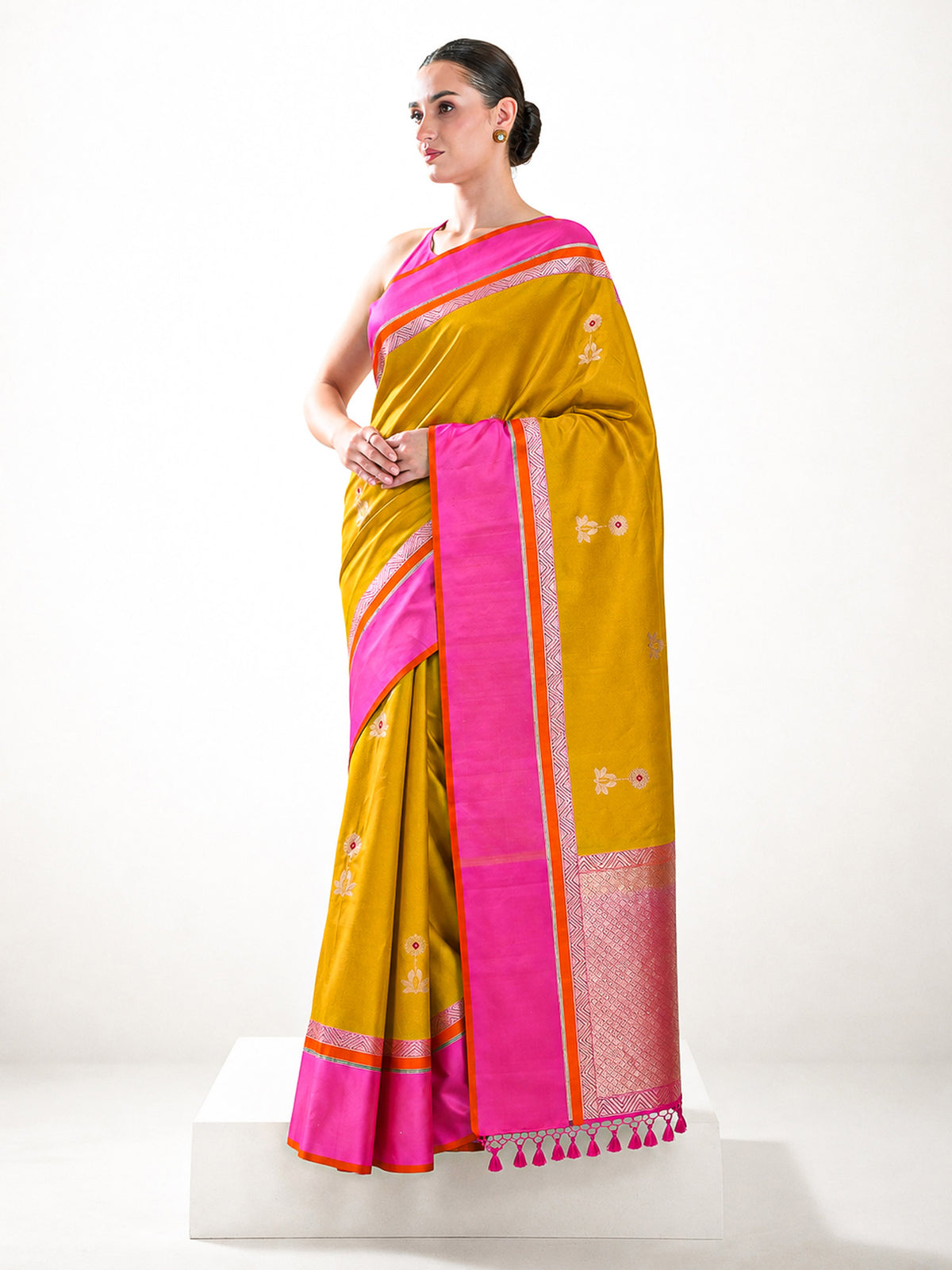

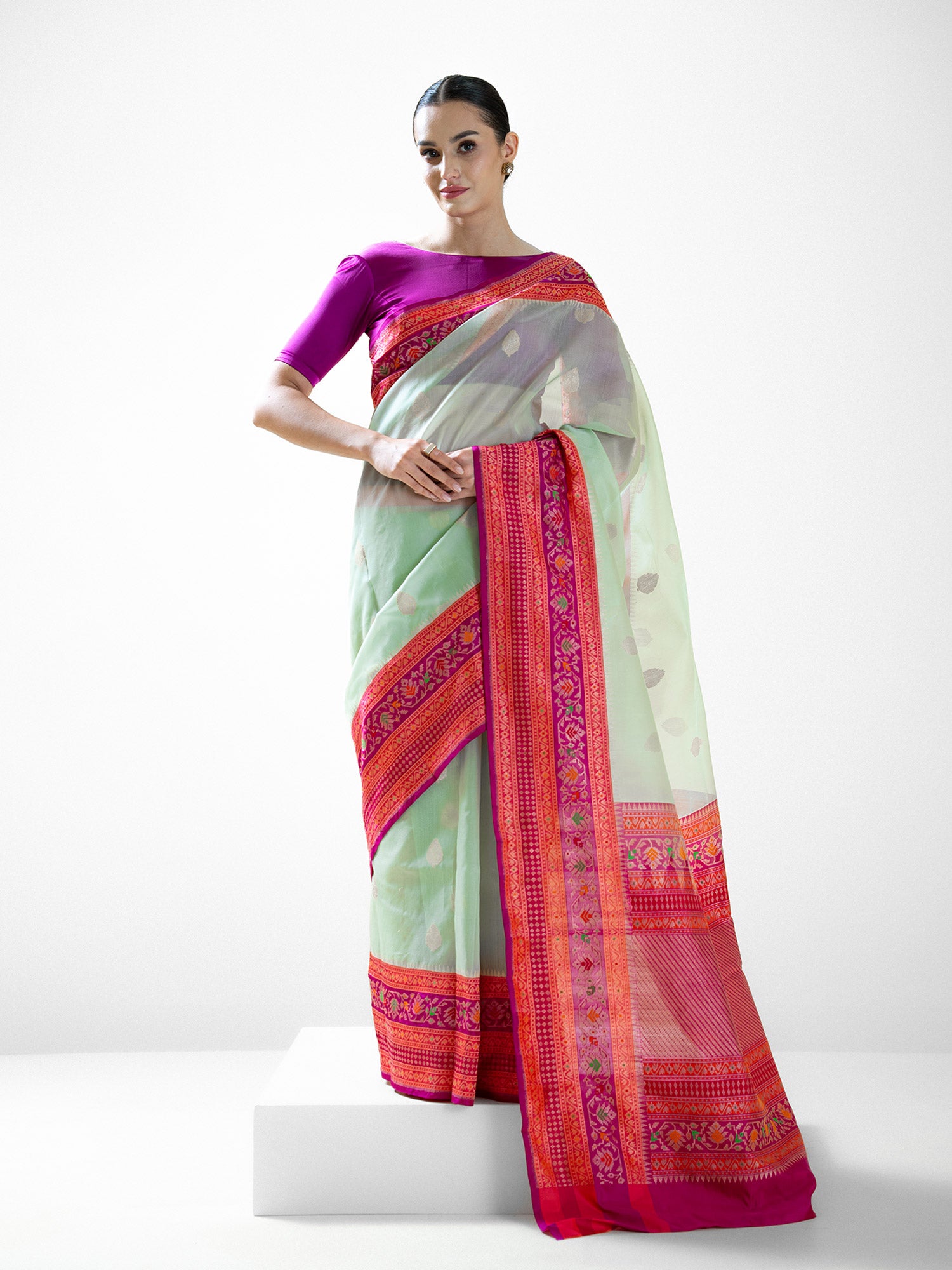
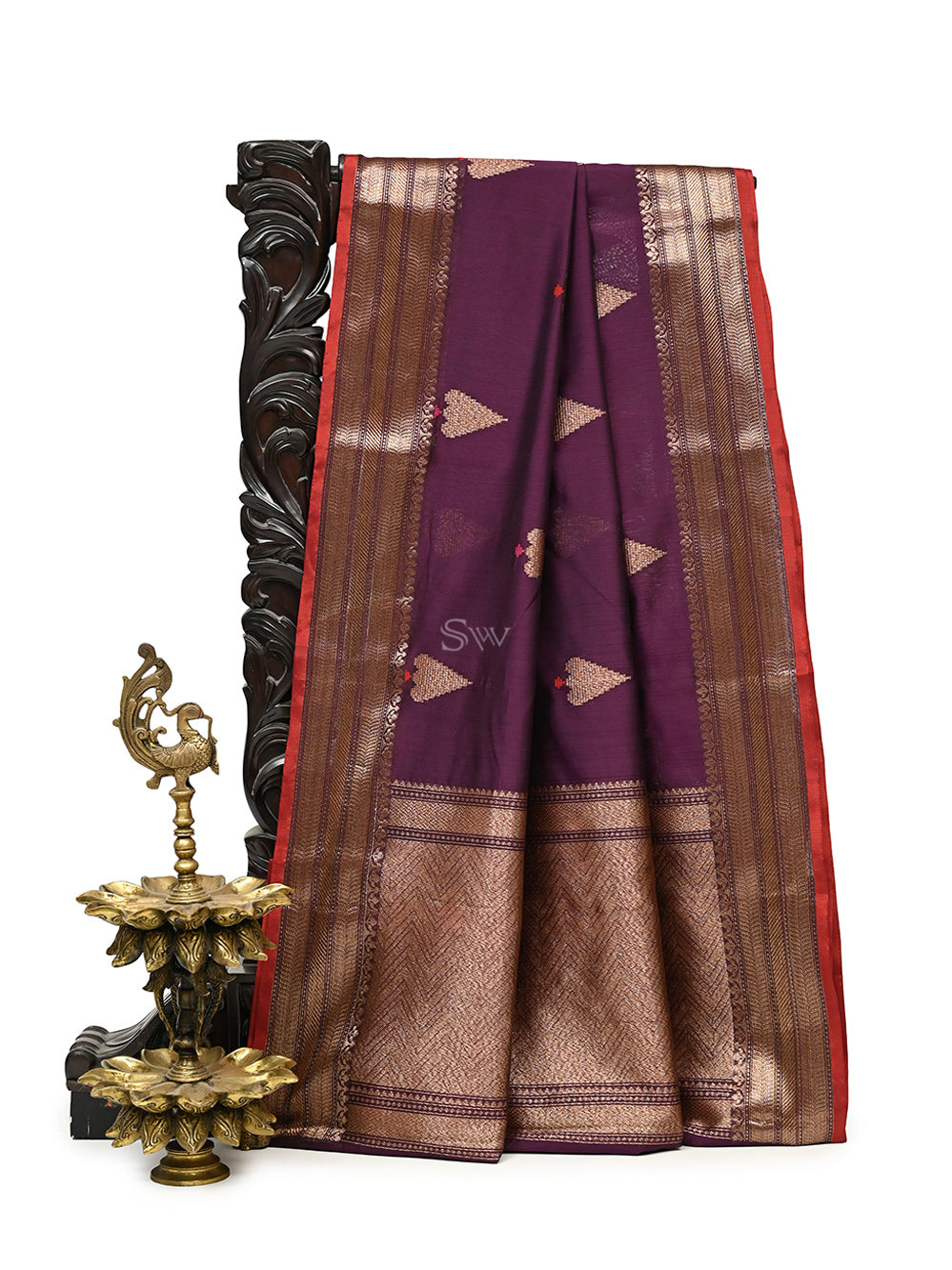


A Banarasi saree does not always have to be woven entirely in pure silk to carry the beauty of Banaras weaving.
For women looking for a saree that feels lighter, comfortable and easier to wear while still featuring traditional woven motifs, Banarasi Cotton Silk Sarees offer an interesting alternative.
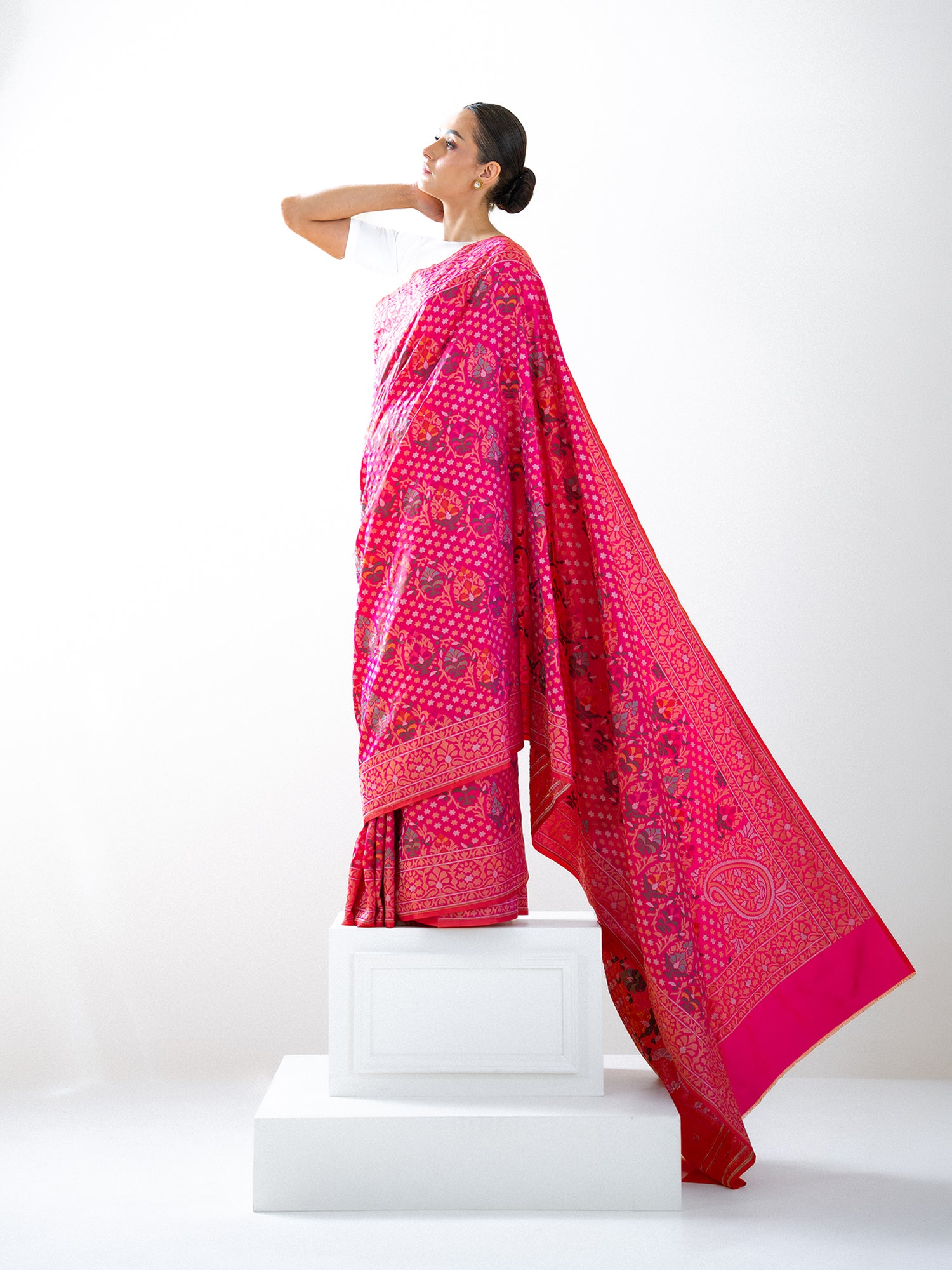
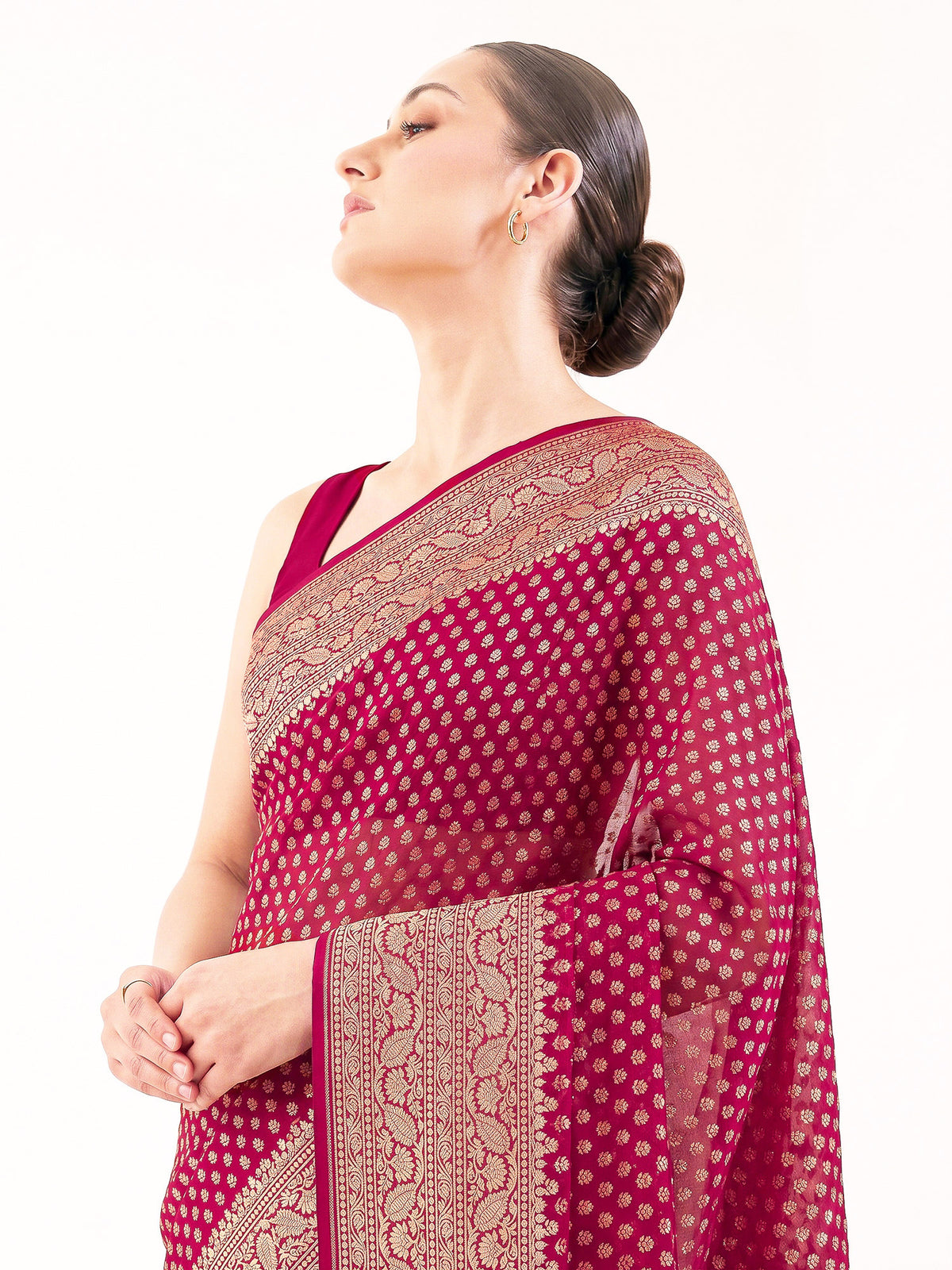
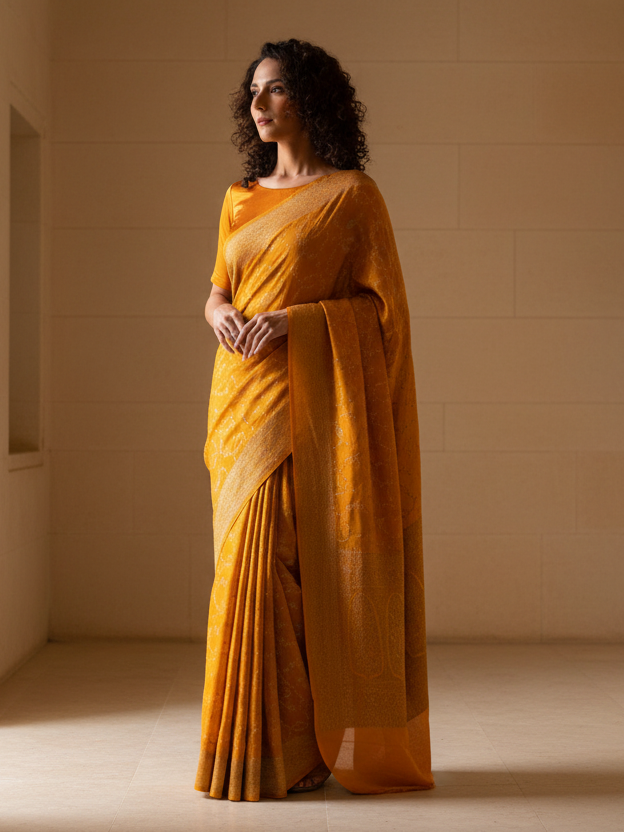
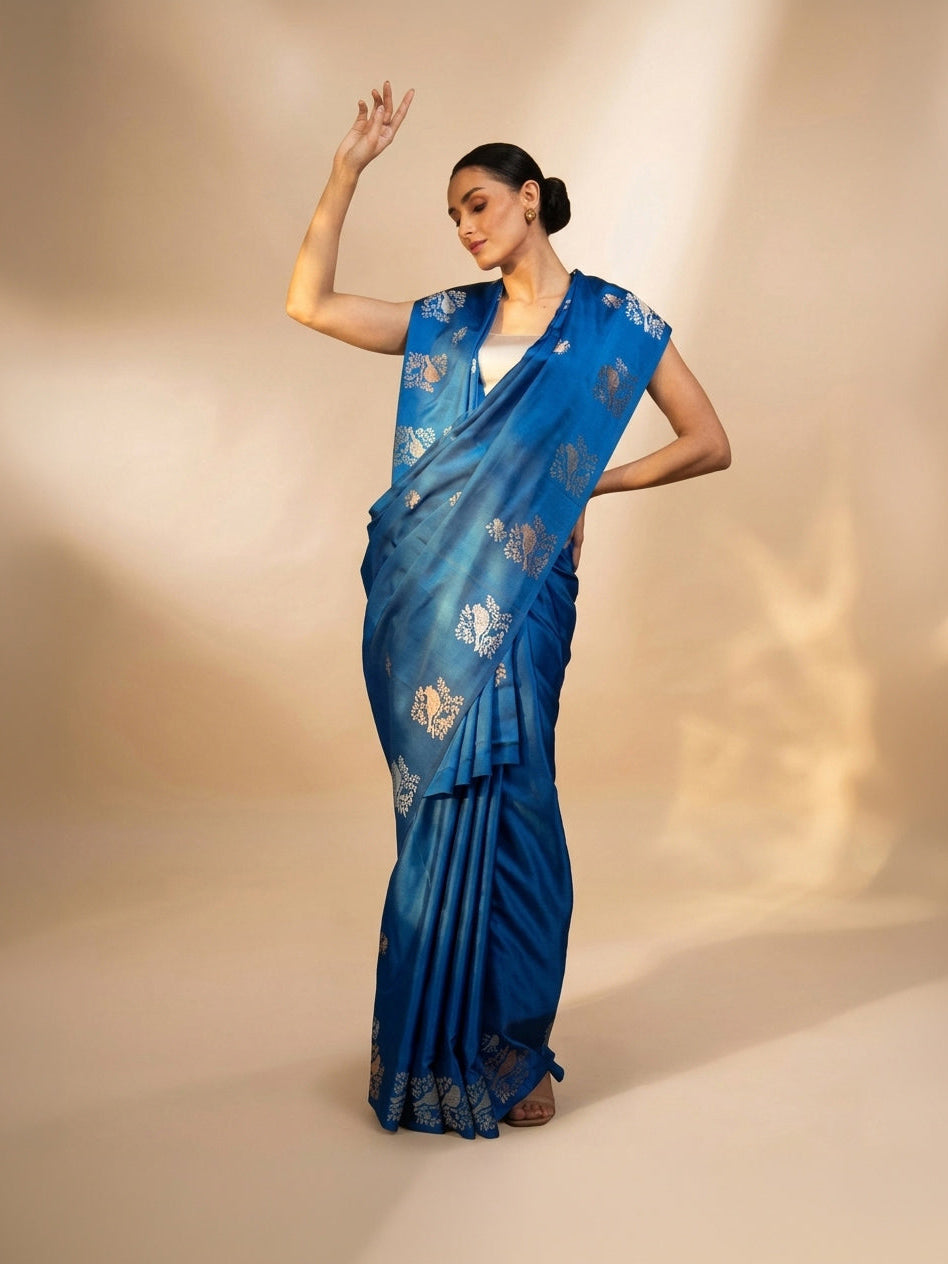
A Banarasi Cotton Silk Saree is made using Cotton Silk fabric—a combination of cotton and silk fibres—along with Banarasi weaving and design traditions. Depending on the saree, you may find Booti, Jaal, zari or colourful Meenakari detailing woven into the fabric.
The presence of cotton changes the character of the saree compared with a pure silk Banarasi. It generally feels less formal and more approachable, while the silk component adds smoothness, lustre and a more graceful drape than ordinary cotton.
The exact fibre composition, however, can vary. “Cotton Silk” should therefore be treated as a fabric category rather than an indication of one fixed cotton-to-silk ratio.
What Is Cotton Silk?
Cotton Silk is broadly a fabric that combines cotton and silk fibres.
The idea is fairly straightforward: cotton contributes comfort, body and a relatively natural feel, while silk contributes smoothness, lustre and drape.
This gives Cotton Silk its own personality.
It does not behave exactly like pure cotton, and it should not be confused with 100% pure silk.
When woven into a saree, Cotton Silk can provide a useful middle ground for women who want something more occasion-friendly than an everyday cotton saree but do not necessarily need the richness or structure of a full pure-silk saree.
This is also why you should always check the individual fabric specification rather than assuming that every Cotton Silk saree contains the same percentage of cotton and silk.
What Makes a Cotton Silk Saree Banarasi?
|
|
|


The fabric is only one part of the saree.
What gives a Banarasi Cotton Silk Saree its distinctive character is the weaving and design language associated with Banaras.
Sacred Weaves' Banarasi Cotton Silk Sarees are handloom sarees woven in Varanasi and currently include designs featuring Booti, fuller Jaal patterns and Meenakari detailing.
This distinction is useful.
You are not simply buying a plain Cotton Silk fabric. You are choosing Cotton Silk as the base for woven Banarasi design.
Depending on the piece, the saree may be quiet and understated or significantly more decorative.
What Does a Banarasi Cotton Silk Saree Feel Like?
The first difference many women notice is wearability.
Compared with richer pure-silk Banarasi sarees, Cotton Silk can feel more relaxed and easier to incorporate into occasions where you want traditional dressing without creating a very formal look.
The cotton component gives the fabric some body, while silk helps soften the appearance and adds a gentle sheen.
The exact drape depends on the construction of the individual saree. A relatively simple Booti saree and a densely woven Jaal saree will not feel identical even if both are Cotton Silk.
Zari and the amount of woven work also affect the weight and fall.
So rather than asking only, “Is Cotton Silk lightweight?”, a better question is:
“How heavily is this particular saree woven?”
That will usually tell you more about how comfortable it will be for a long occasion.
Booti, Jaal or Meenakari: Which Design Should You Choose?
|
|
Pink Orange Meenakari Jaal Cotton Silk Handloom Banarasi Saree |


One of the strengths of Cotton Silk is that Banarasi woven designs can change its character considerably.
Booti for an Understated Look
Booti designs usually leave more open space across the body of the saree.
If you want something that can move easily between festivals, family events, pujas and smaller celebrations, a Booti Cotton Silk saree is a versatile choice.
The result can feel distinctly Banarasi without appearing excessively ornate.
Jaal for a Richer Appearance
Jaal creates a fuller woven surface.
Because more of the body participates in the design, a Jaal Cotton Silk saree generally has stronger visual presence than a sparse Booti pattern.
It is worth considering for occasions where you want the saree itself to make more of a statement.
Meenakari for Added Colour
Meenakari introduces coloured accents within woven motifs.
This can make Cotton Silk particularly interesting because the additional colours create richness without relying only on zari.
If this type of detailing appeals to you, explore Sacred Weaves' Meenakari Banarasi Sarees to understand how coloured woven details are used across different Banarasi fabrics. Sacred Weaves' Cotton Silk collection currently includes both Meenakari Booti and Meenakari Jaal designs.
When Should You Wear a Banarasi Cotton Silk Saree?
Banarasi Cotton Silk works particularly well when an occasion calls for traditional dressing but not necessarily bridal-level grandeur.
Good occasions include:
-
festive gatherings,
-
family functions,
-
pujas,
-
engagements,
-
daytime celebrations,
-
cultural events,
-
and smaller wedding-related functions.
For a daytime occasion, a cream, pastel, light green or muted shade with Booti work can create an elegant appearance without looking overdressed.
For a more festive event, deeper colours, Meenakari or a fuller Jaal pattern can give the saree much greater presence.
This versatility is one reason Cotton Silk can be a useful category for women who prefer sarees that are not restricted to one major occasion.
Is Banarasi Cotton Silk Good for Summer?
Cotton Silk can be worth considering when you want traditional occasion wear in warmer weather, particularly if the saree has relatively open weaving and restrained zari.
But fabric name alone does not determine comfort.
A densely woven saree with extensive Jaal work can naturally feel more substantial than a simpler design.
For summer events, look at:
fabric density, amount of zari, motif coverage, blouse fabric and the expected length of the function.
If lightweight Banarasi sarees are your priority, you can also compare Cotton Silk with Chanderi, Organza and Georgette. Sacred Weaves' existing guide to Banarasi sarees for the summer season covers several lighter fabric options.
Banarasi Cotton Silk vs Pure Silk: What Should Buyers Understand?
|
|
|


This distinction is important.
Cotton Silk is not the same as pure silk.
If a saree contains both cotton and silk, it should be represented as Cotton Silk rather than being marketed as 100% pure silk.
That does not make Cotton Silk a lesser choice. It simply makes it a different fabric suited to a different requirement.
A woman shopping for an heirloom wedding saree may specifically want the richness and material value of pure silk.
A woman looking for an elegant handloom saree for festivals, family occasions and repeat wear may prefer Cotton Silk.
For shoppers specifically seeking pure silk, Sacred Weaves' Banarasi Katan Silk Sarees are positioned separately as pure-silk handloom sarees.
Keeping the categories clearly separated helps you buy according to what you actually want instead of assuming that every Banarasi saree must use the same fibre.
How Much Does a Banarasi Cotton Silk Saree Cost?
There is no single standard Banarasi Cotton Silk Saree price.
Even within one fabric category, the amount of weaving can vary considerably.
Important price factors include:
weaving complexity, motif density, zari work, Meenakari detailing, Jaal versus simpler Booti work and the labour involved in producing the saree.
This can explain why two Cotton Silk sarees that appear similar at first glance may sit at very different price points.
On Sacred Weaves' current collection page, prices are displayed individually with each product, making it possible to compare simpler designs with more elaborate Cotton Silk sarees directly.
Instead of judging a saree simply as “expensive” or “cheap,” compare the amount and complexity of handloom work being offered.
How to Choose a Banarasi Cotton Silk Saree Online
The best way to shop Cotton Silk online is to move beyond the main model photograph.
First, read the fabric description.
Make sure the saree is clearly described as Cotton Silk if that is what you intend to buy. Do not assume it is pure silk because the word “silk” appears in the name.
Second, zoom into the motifs.
Small Bootis create a very different look from a full Jaal. Decide whether you want versatility or a more statement-making design.
Third, examine the zari and Meenakari.
The amount of zari will influence how formal the saree appears, while coloured Meenakari can give the design more depth and visual interest.
Fourth, look at the border and pallu separately.
These areas become particularly important once the saree is draped, and they can change how festive the complete outfit feels.
Finally, consider the occasion before choosing a colour.
A saree that fits naturally into several occasions will often prove more useful than one selected only because the colour is currently trending.
Cotton Silk or Chanderi: Which Lighter Banarasi Saree Should You Explore?
If you are browsing lighter Banarasi options, you may come across both Cotton Silk and Banarasi Chanderi Silk Sarees.
They should not automatically be treated as interchangeable.
Cotton Silk gives you the characteristics created by the combination of cotton and silk, while the Banarasi Chanderi collection is positioned around a lighter, refined fabric character with Banarasi woven detailing.
The better choice depends on the drape you prefer, the occasion and the actual design.
This is a comparison worth making at product level rather than assuming that “lightweight” means every saree will behave in the same way.
Buy Banarasi Cotton Silk Sarees Online from Sacred Weaves
Sacred Weaves has a dedicated Banarasi Cotton Silk Sarees collection featuring handloom sarees woven in Varanasi across Booti, Jaal and Meenakari designs.
Importantly, the collection is presented specifically as Cotton Silk, allowing buyers to distinguish it from the brand's separate pure-silk collections. Sacred Weaves also provides a certificate of authenticity with its Cotton Silk sarees and offers Live Video Shopping for customers who want to see the actual colour, fabric and weaving before ordering.
When comparing sarees, look beyond colour and consider:
fabric + motif + zari + weaving density + occasion.
That combination will tell you much more about whether a saree suits you than the product title alone.
If you would like to explore other fabrics and weaving styles, browse Sacred Weaves' wider range of Banarasi sarees online.
Final Thoughts
A Banarasi Cotton Silk Saree is best suited to women who want the artistry of Banarasi weaving in a fabric that feels more approachable for festive occasions, family celebrations and repeat wear.
Its appeal lies in balance.
Cotton brings its own character to the fabric, silk adds lustre and drape, and Banarasi weaving transforms that base through Booti, Jaal, zari and Meenakari.
The most important buying advice is simple: know what fabric you are purchasing.
Cotton Silk should be valued for what it is rather than compared only by whether it contains less silk than a pure-silk saree.
Choose the right design, weaving density and colour for the way you actually plan to wear it, and a Banarasi Cotton Silk saree can become one of the more versatile pieces in your Indian wardrobe.


