
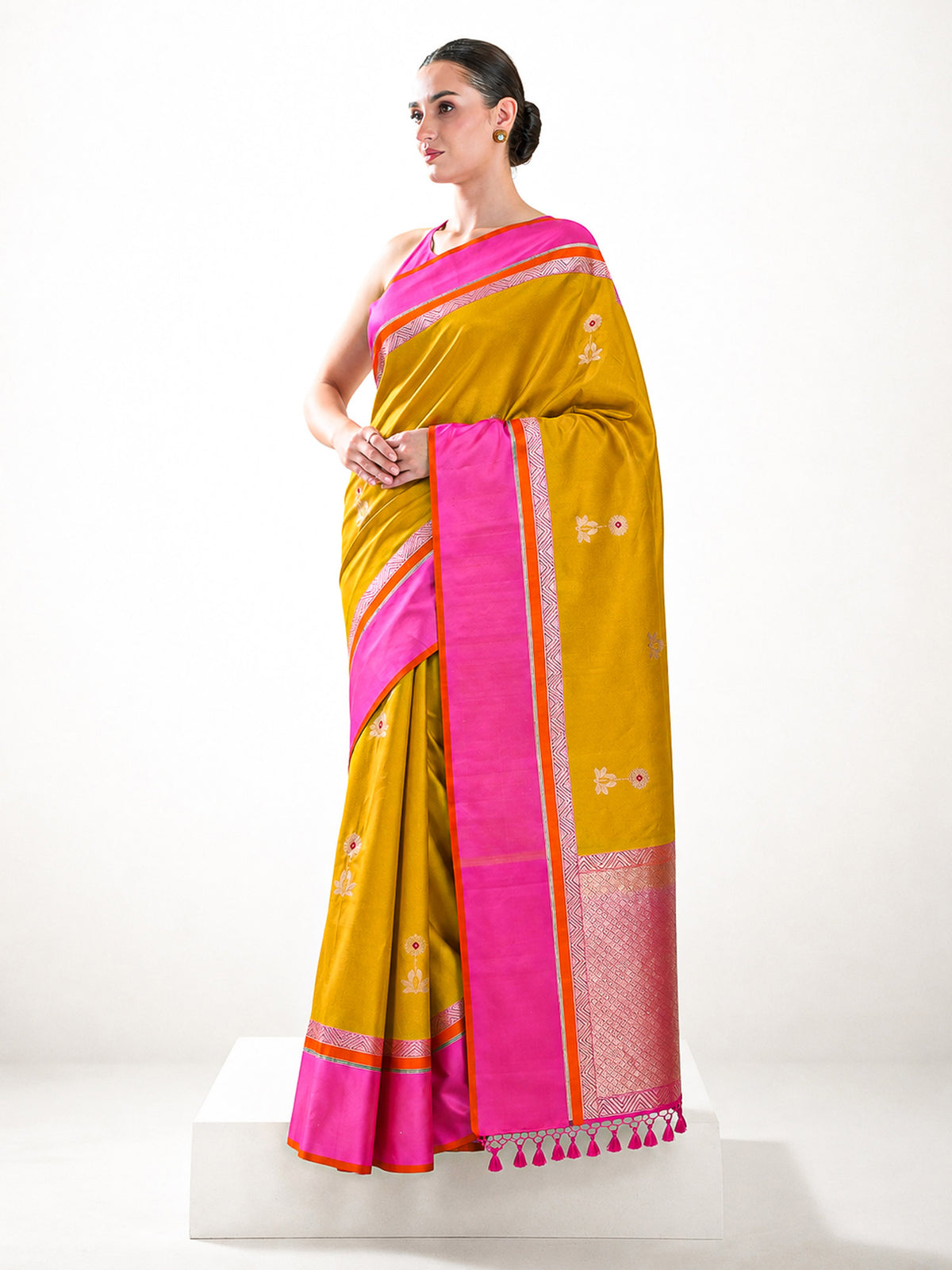

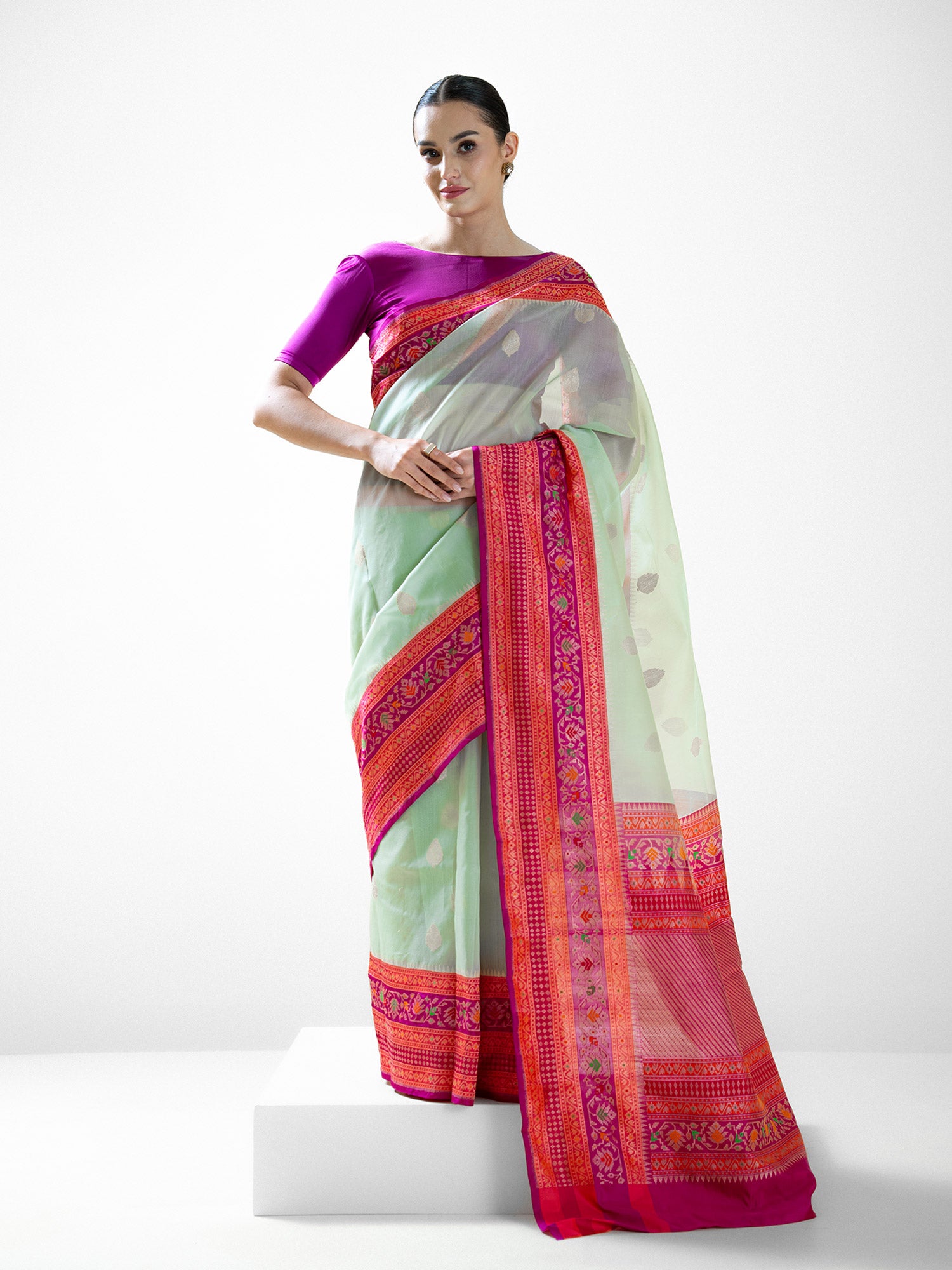
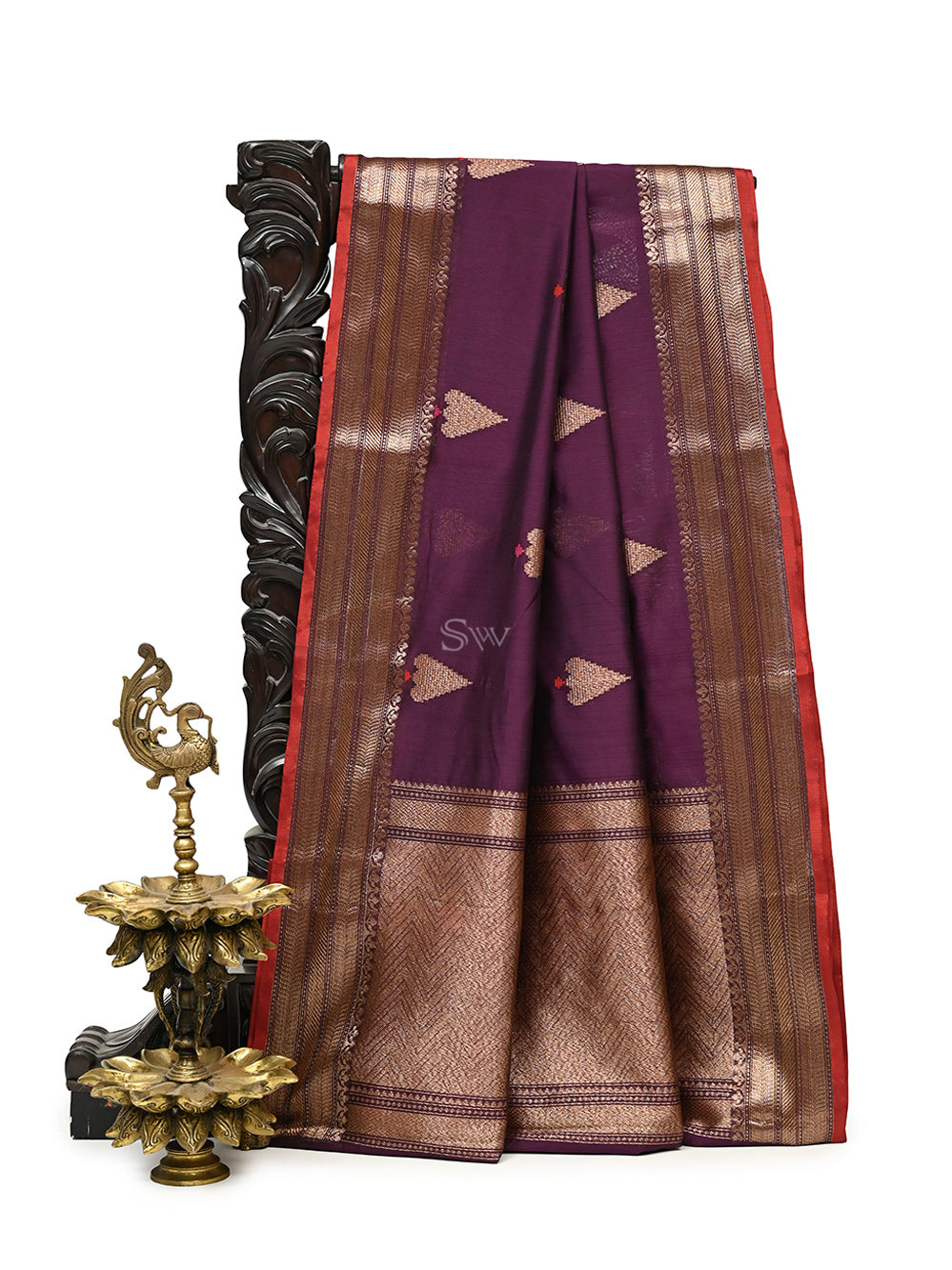


If you love the craftsmanship of a Banarasi saree but prefer a drape that feels lighter and less substantial than traditional Katan silk, Banarasi Chanderi Silk Sarees are worth exploring.
In simple terms, a Banarasi Chanderi Silk Saree brings together the light, refined character associated with Chanderi-type fabrics and the decorative vocabulary of Banaras weaving—such as woven Booti, zari borders and traditional motifs. The result is a saree that can look festive and distinctly Indian without necessarily having the heavier appearance associated with some traditional Banarasi silks.
There is, however, an important distinction that informed buyers should understand: traditional Chanderi Sarees are a recognised textile tradition associated with Chanderi in Madhya Pradesh, while Banarasi Chanderi is a term used in the Banarasi saree market for sarees woven and styled within the Banaras textile tradition. The exact fibre composition can also differ from one saree to another, so it is always worth checking the individual product description before buying.
|
|


What Does Banarasi Chanderi Silk Saree Mean?
The easiest way to understand the category is to look at the two textile ideas separately.
Chanderi is traditionally associated with fine, lightweight fabrics and a delicate visual character. Banarasi sarees, on the other hand, are known for a wide vocabulary of woven motifs, zari work, borders, pallus and techniques developed within the weaving traditions of Varanasi.
A Banarasi Chanderi Silk Saree combines these qualities in a saree intended to feel relatively light while still carrying recognisable Banarasi design elements.
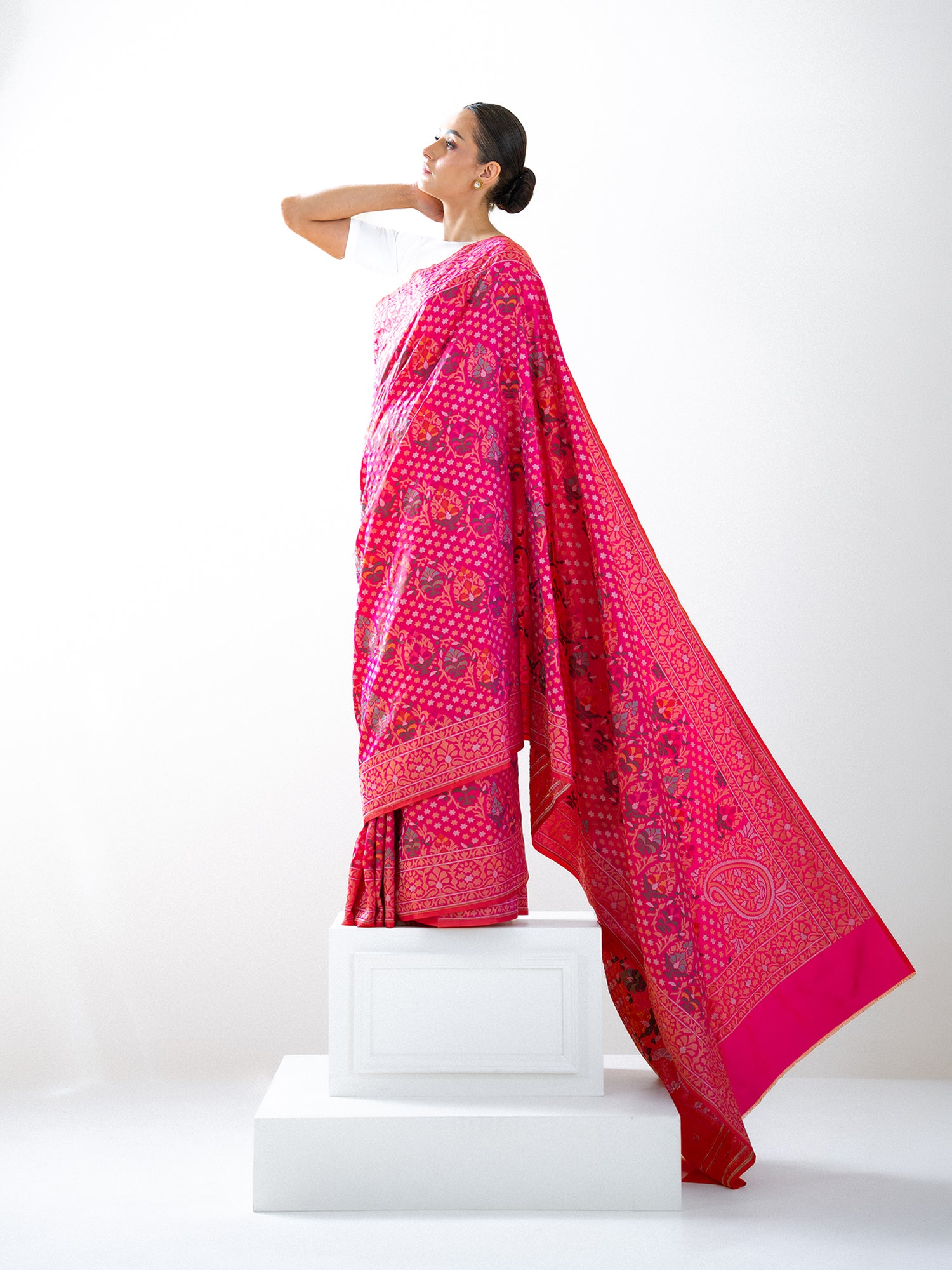
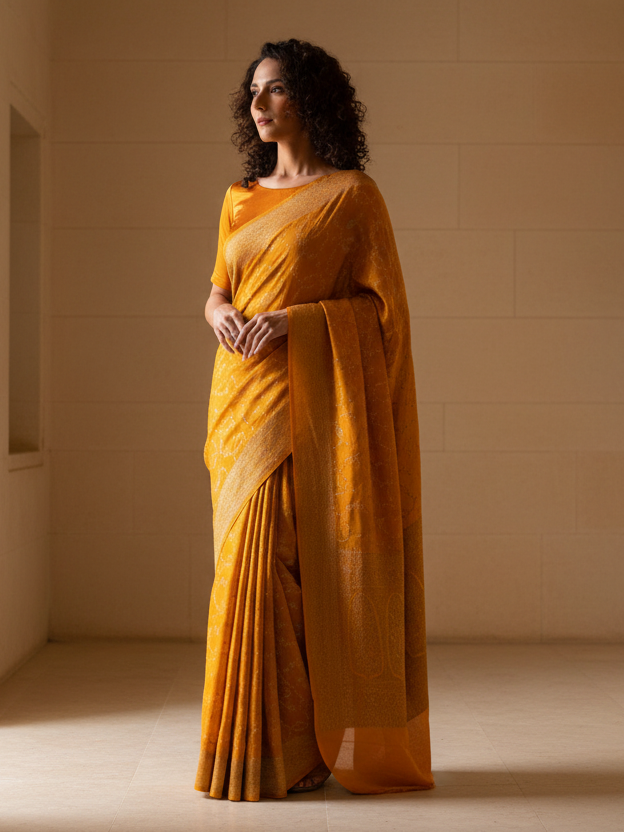
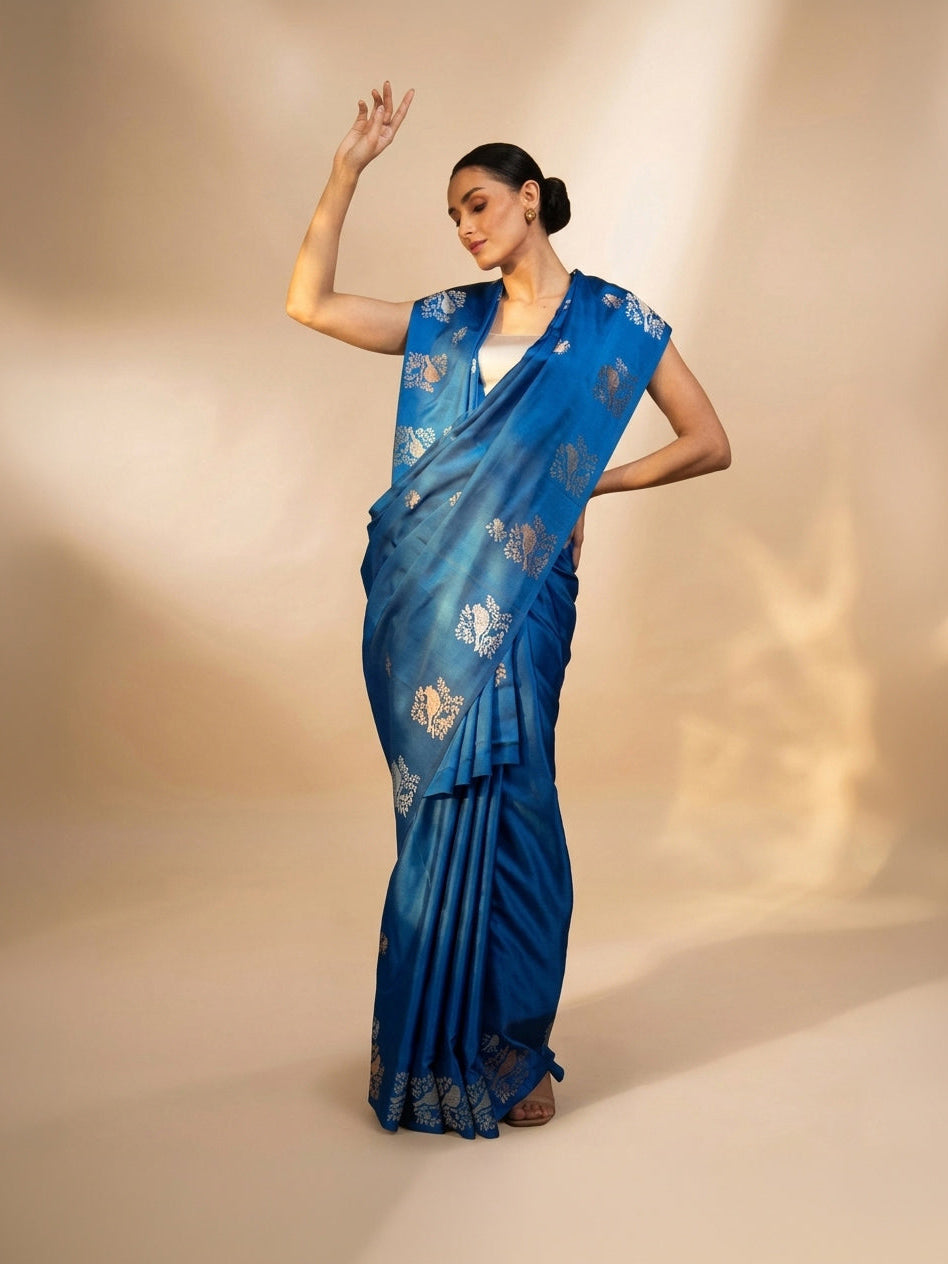
At Sacred Weaves, the Banarasi Chanderi Silk Sarees collection includes handloom Banarasi sarees with colours and woven motifs suited to women who want something elegant, wearable and less visually heavy than some richer Banarasi silk options.
It is important not to assume that every saree sold under the words “Chanderi Silk” has exactly the same fibre composition. Always read the fabric specification provided for the individual saree.
Is Banarasi Chanderi the Same as a Traditional Chanderi Saree?
Not exactly.
Traditional Chanderi Sarees have a distinct geographical and weaving identity associated with Chanderi in Madhya Pradesh. In fact, Chanderi Sarees are registered as a Geographical Indication for Madhya Pradesh.
A Banarasi Chanderi Saree, however, is positioned within the Banarasi weaving and design ecosystem.
This distinction matters because terms such as Chanderi, Banarasi, Katan, Organza and Georgette are sometimes used loosely in online saree listings. For a serious saree buyer, the product description should tell you more than the product title alone.
When shopping for Banarasi Chanderi Silk Sarees online, look for clear information about:
-
where the saree has been woven,
-
its exact fibre composition,
-
whether it is handloom or powerloom,
-
the type of woven motifs or zari work,
-
and what is included with the saree.
Clear textile information is far more useful than relying on a category name without context.
What Does a Banarasi Chanderi Silk Saree Feel Like?
The appeal of this category comes largely from its lighter, refined character.
A Banarasi Chanderi saree does not usually aim for the substantial, structured presence that many women associate with classic Katan silk. Instead, it offers a comparatively lighter drape that can feel comfortable across daytime events, festive occasions and functions where you expect to wear the saree for several hours.
Visually, the fabric allows woven motifs and zari to stand out without necessarily covering the entire saree with heavy ornamentation.
This balance is one reason the category appeals to women who want Banarasi craftsmanship but prefer a more understated look.
If your priority is specifically an airy or lightweight Banarasi saree, you may also find it useful to compare Chanderi with Banarasi Organza Sarees and Khaddi Georgette Banarasi Sarees, as each creates a very different drape.
What Makes Banarasi Chanderi Silk Sarees Different?
The real character of a Banarasi Chanderi saree comes from the relationship between the fabric and the woven design.
1. A Lighter Visual Appearance
Many buyers want a Banarasi saree but do not necessarily want an elaborate bridal or heavily brocaded look.
Banarasi Chanderi can provide that middle ground.
The saree can carry traditional woven details while leaving enough open space for the colour and texture of the base fabric to remain visible.
2. Woven Booti and Banarasi Motifs
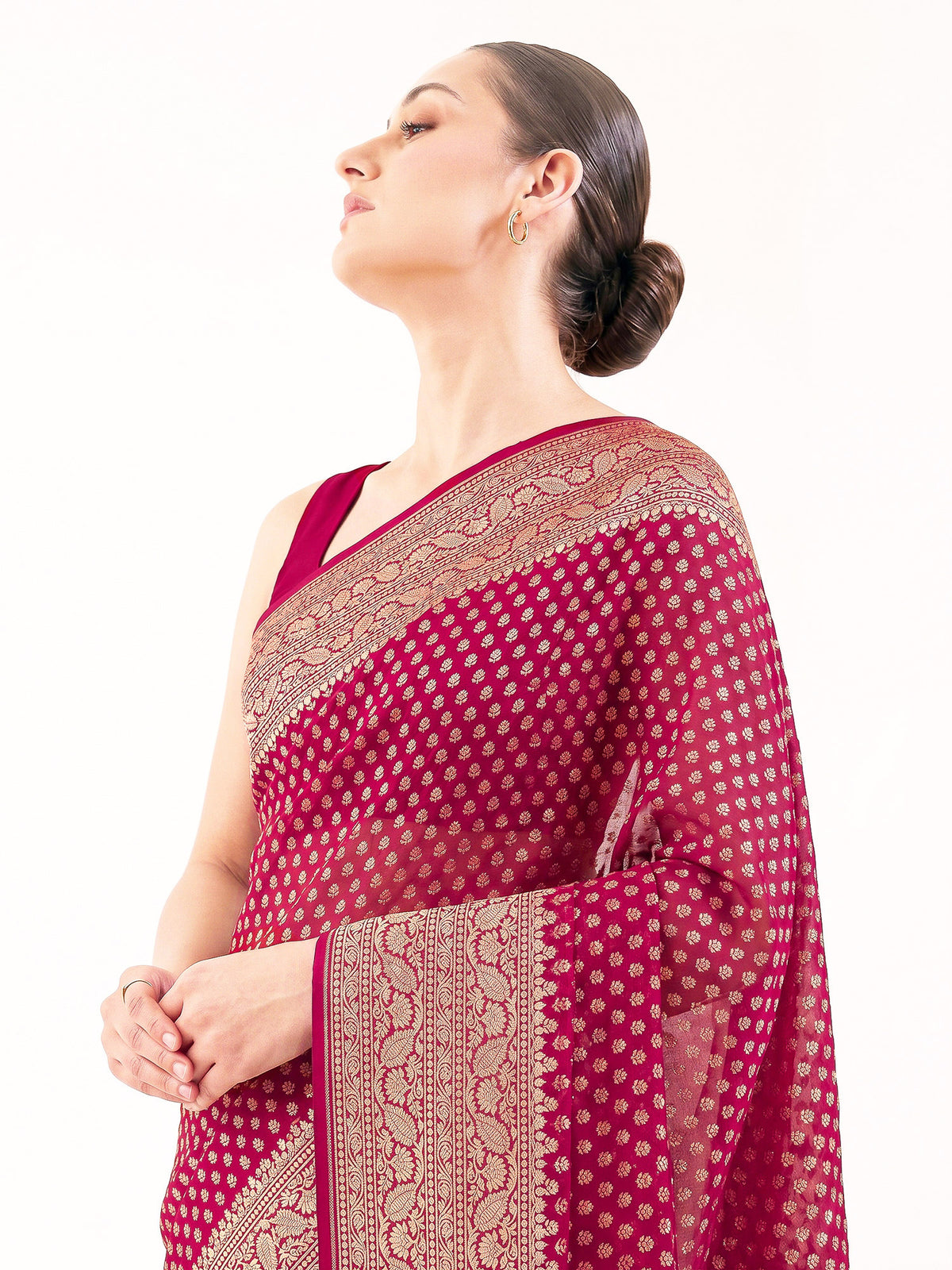
Booti is particularly well suited to this category.
Small woven motifs distributed across the body add enough detail to make the saree festive without making the surface appear excessively dense.
Depending on the individual design, zari borders, pallus and other woven elements can add further richness.
3. Easy Transition Between Occasions
One of the practical strengths of Banarasi Chanderi Silk Sarees is that they do not have to be reserved only for weddings.
The same saree can often move comfortably between a family wedding, puja, festival, festive lunch, engagement or formal gathering depending on how it is styled.
That makes it particularly useful for women who prefer sarees they can wear more than once.
Banarasi Chanderi vs Katan Silk: How Are They Different?
|
|
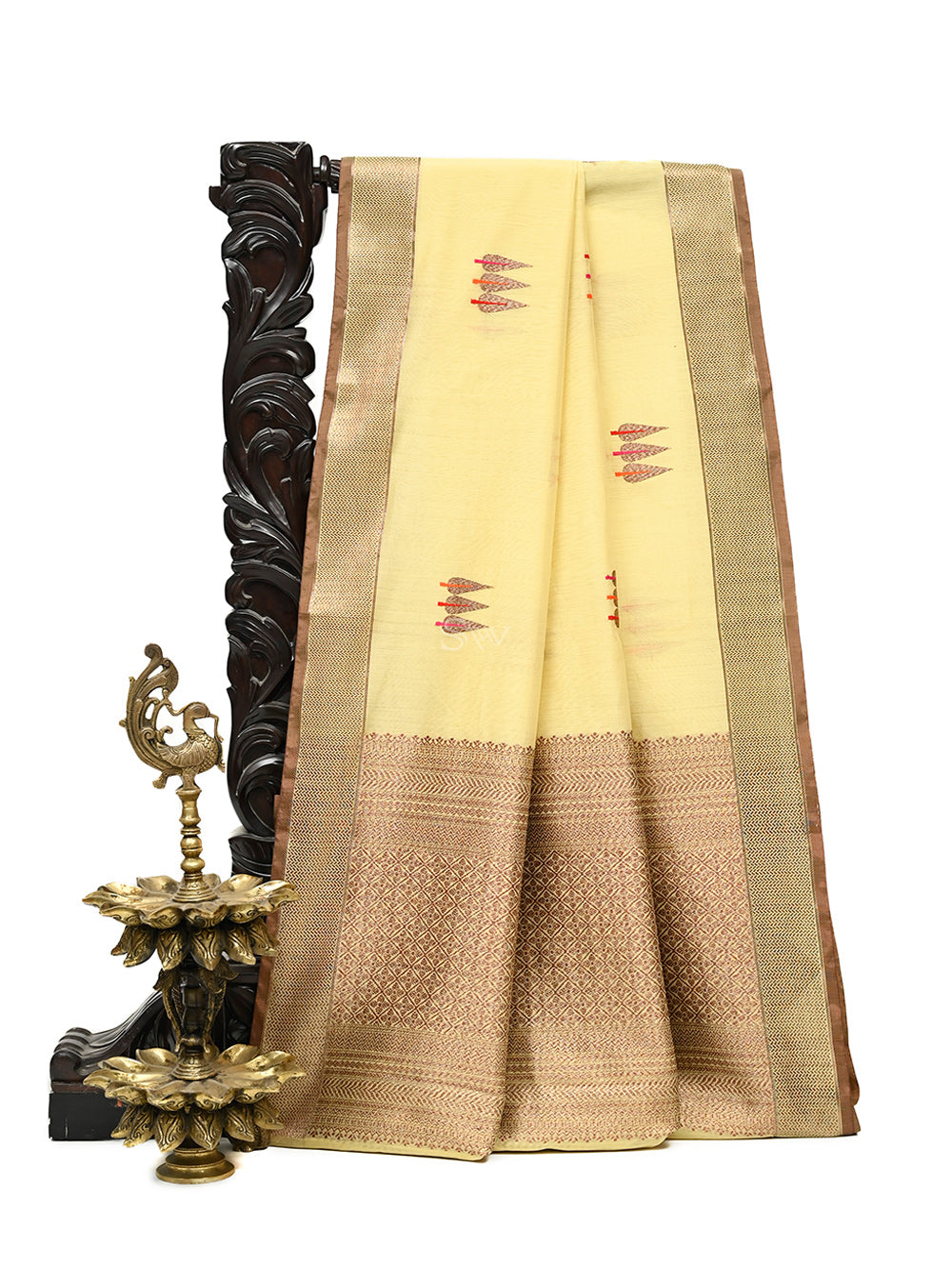
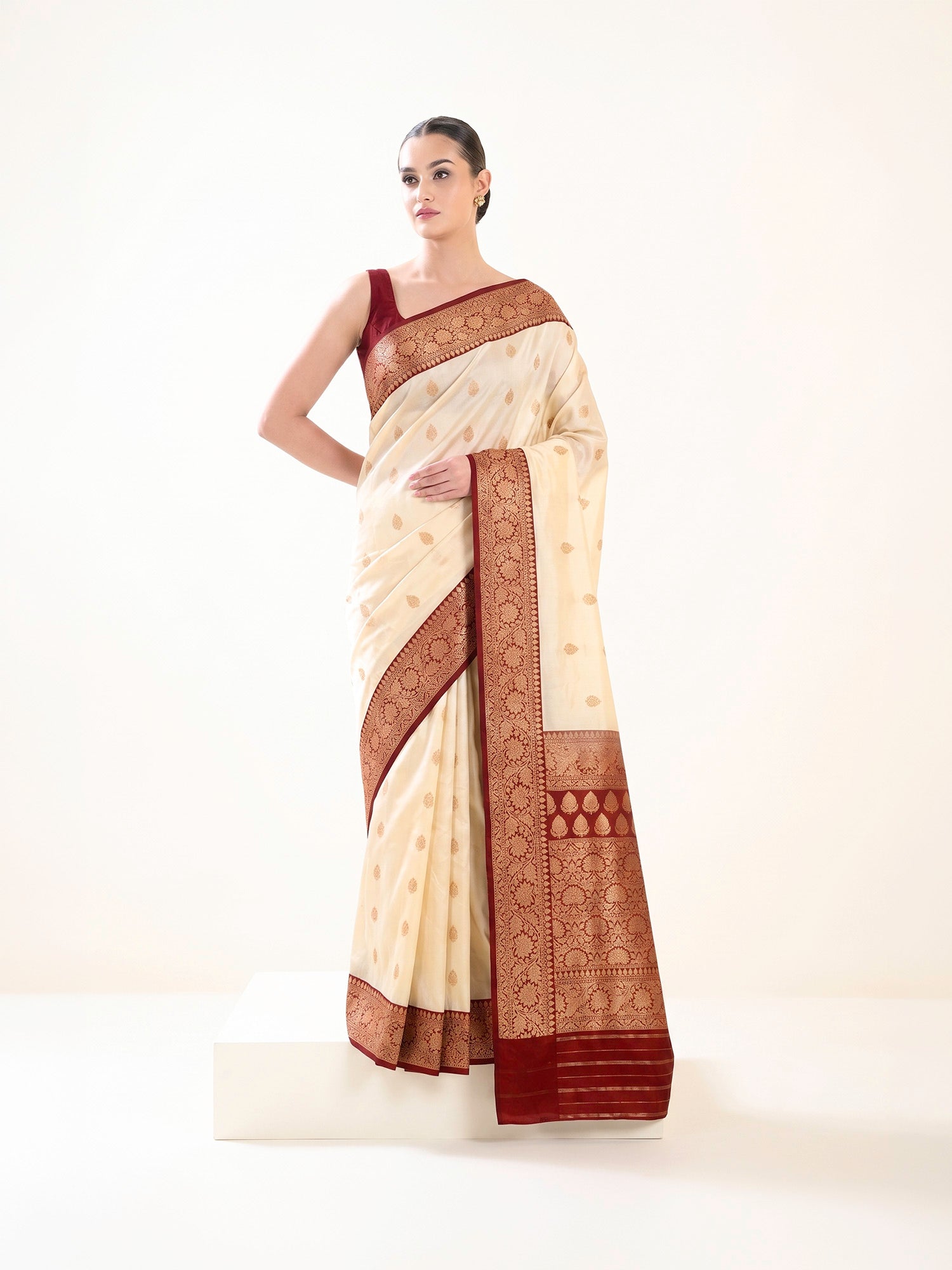
A woman shopping for a Banarasi saree may naturally compare Chanderi with Katan.
The biggest difference is usually the overall character of the drape.
Banarasi Katan Silk Sarees are associated with a richer and more structured silk presence. Katan works beautifully when you want the saree itself to make a strong traditional statement, particularly for weddings, bridal wear and important ceremonies.
Banarasi Chanderi generally sits at the lighter end of the wardrobe.
If your preference is:
Traditional, structured and richer: explore Katan.
Light, refined and comparatively understated: explore Banarasi Chanderi.
Neither category is better than the other. They solve different wardrobe requirements.
This comparison is especially useful when building a wedding trousseau because you may want both: a richer Katan for an important ceremony and a lighter Banarasi Chanderi for smaller celebrations.
Banarasi Chanderi vs Organza and Georgette
Not all lightweight Banarasi sarees behave in the same way.
Banarasi Chanderi
Choose it when you want a light, traditional-looking saree with an understated surface and woven Banarasi detailing.
Banarasi Organza
Organza has a more sheer and crisp structure. It tends to hold its shape and can create greater volume around the body.
Women who like a light saree that still has a defined silhouette may prefer Organza.
Khaddi Georgette
Georgette falls much more fluidly. It has a softer movement and tends to follow the body more closely.
Women who prioritise flow and ease of draping may prefer Georgette.
Understanding these differences is more useful than simply searching for the “lightest Banarasi saree,” because the way a saree falls on the body matters just as much as its weight.
Sacred Weaves has also covered several lightweight options in its guide to Banarasi sarees for the summer season.
When Can You Wear a Banarasi Chanderi Silk Saree?
A good Banarasi Chanderi saree is surprisingly versatile.
For a daytime wedding, choose a fresh or pastel colour with delicate Booti and restrained zari.
For a festival or puja, traditional reds, pinks, greens, mustard or deeper jewel tones can create a more celebratory look without requiring a heavily woven saree.
For an engagement or family celebration, a stronger colour combined with a zari border and statement blouse can make the saree look considerably richer.
For a formal daytime event, simpler motifs and quieter colours can make the same category look elegant rather than overtly festive.
Women who prefer minimal jewellery may also find Banarasi Chanderi particularly easy to style because the woven details provide enough visual interest on their own.
How Should You Choose the Right Banarasi Chanderi Saree?
Start with your occasion rather than your favourite colour.
For a larger celebration, look for stronger zari, a more defined pallu or more prominent motifs.
For daytime or semi-formal wear, a simpler Booti pattern may be easier to repeat across different occasions.
Next, look at the motif scale.
Small, widely spaced Bootis create a cleaner and quieter look. More detailed motifs and stronger borders make the saree feel increasingly festive.
Then consider colour.
Pastels and lighter shades can work particularly well for daytime occasions, while wine, navy, bottle green, purple, red and richer pinks can transition easily into evening celebrations.
Finally, study the fabric details.
The words “Chanderi Silk” should not replace proper product information. Check the fibre composition and weaving description on the individual product page before making your decision.
How to Buy Banarasi Chanderi Silk Sarees Online
Online saree shopping works best when the website allows you to evaluate more than a front-facing photograph.
Zoom into the body of the saree and inspect the motif. Look separately at the border and pallu. Check how much zari is present and whether the saree has the level of richness you need.
Also compare similar colours across different designs.
A red Booti saree and a red saree with a denser woven surface can create completely different looks despite belonging to the same colour family.
If silk purity is important for the particular saree you are considering, understand what certification applies to that specific product. Sacred Weaves has a separate guide explaining what Silk Mark Certification means and what buyers should check when purchasing silk.
For expensive or occasion-specific purchases, Live Video Shopping can also be useful because colour, texture, zari and the actual fall of a saree are easier to judge while the fabric is moving than from a still image.
Explore Banarasi Chanderi Silk Sarees at Sacred Weaves
Sacred Weaves brings the Banarasi textile tradition online for women who may not be able to visit Varanasi in person.
Its dedicated Banarasi Chanderi Silk Saree collection includes handloom sarees in a range of colours and woven designs, including classic Booti styles suitable for festive, wedding and occasion dressing.
When exploring the collection, do not look only at colour.
Compare the motif, border, zari, pallu, fabric composition and overall density of the design. These details will tell you far more about how the saree will look and feel when worn.
If you prefer something more structured and traditional, compare the collection with Banarasi Katan. If you want greater crispness and transparency, look at Organza. And if a softer, more fluid fall is the priority, Khaddi Georgette may be worth considering.
This is ultimately the advantage of understanding Banarasi fabrics before you buy: you can choose a saree for the way you actually want to wear it, rather than choosing only by its name.


