
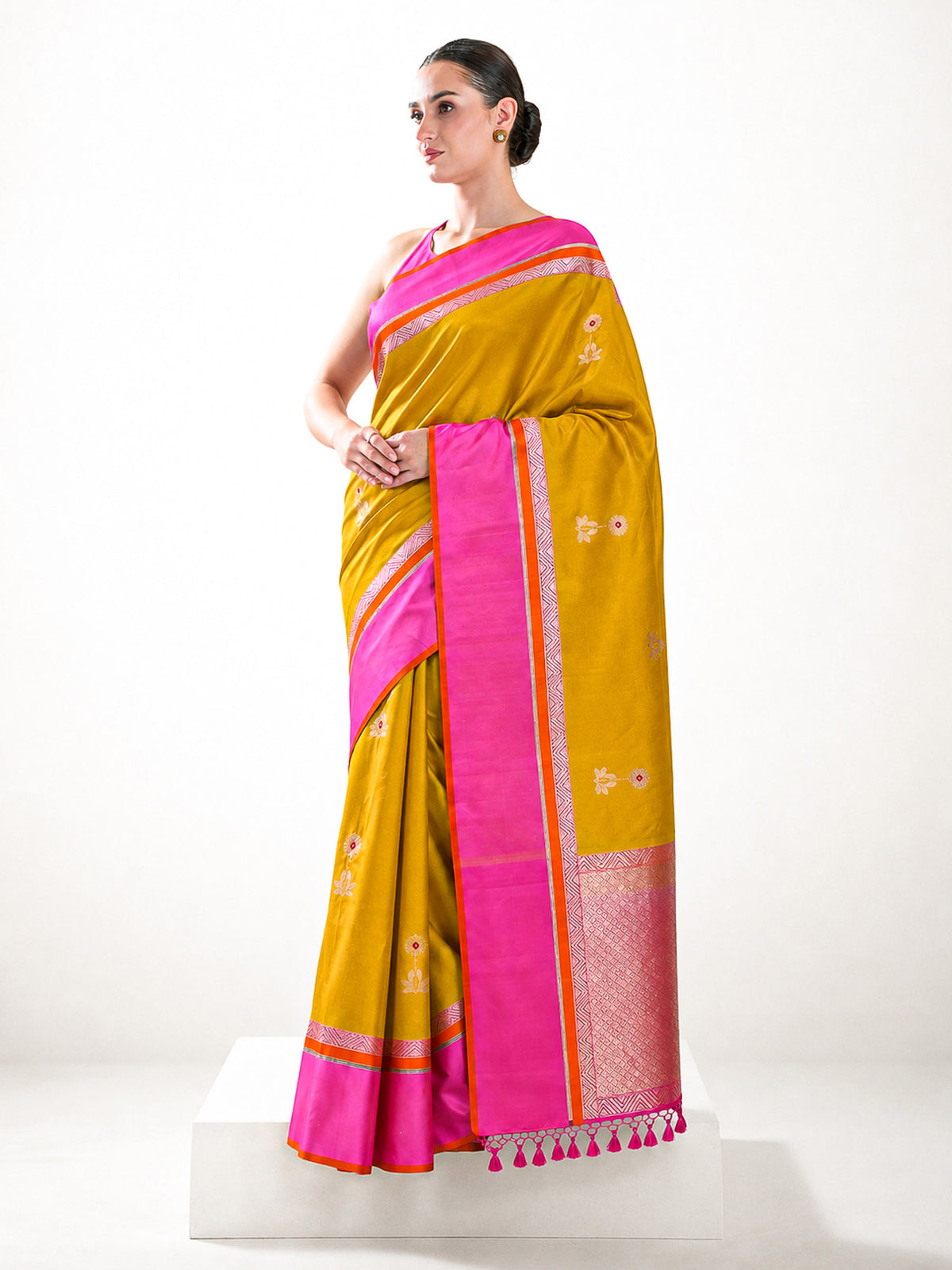
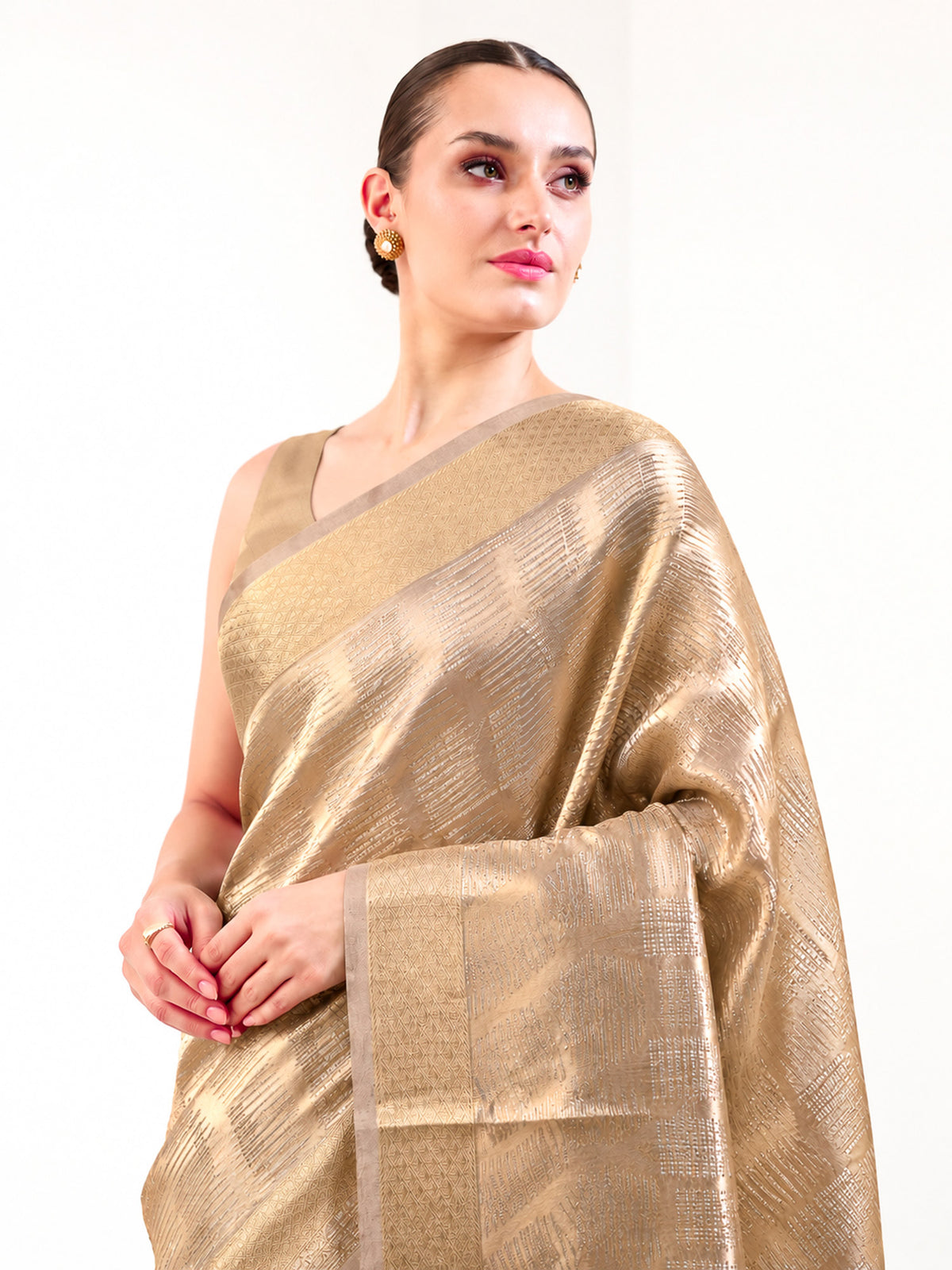
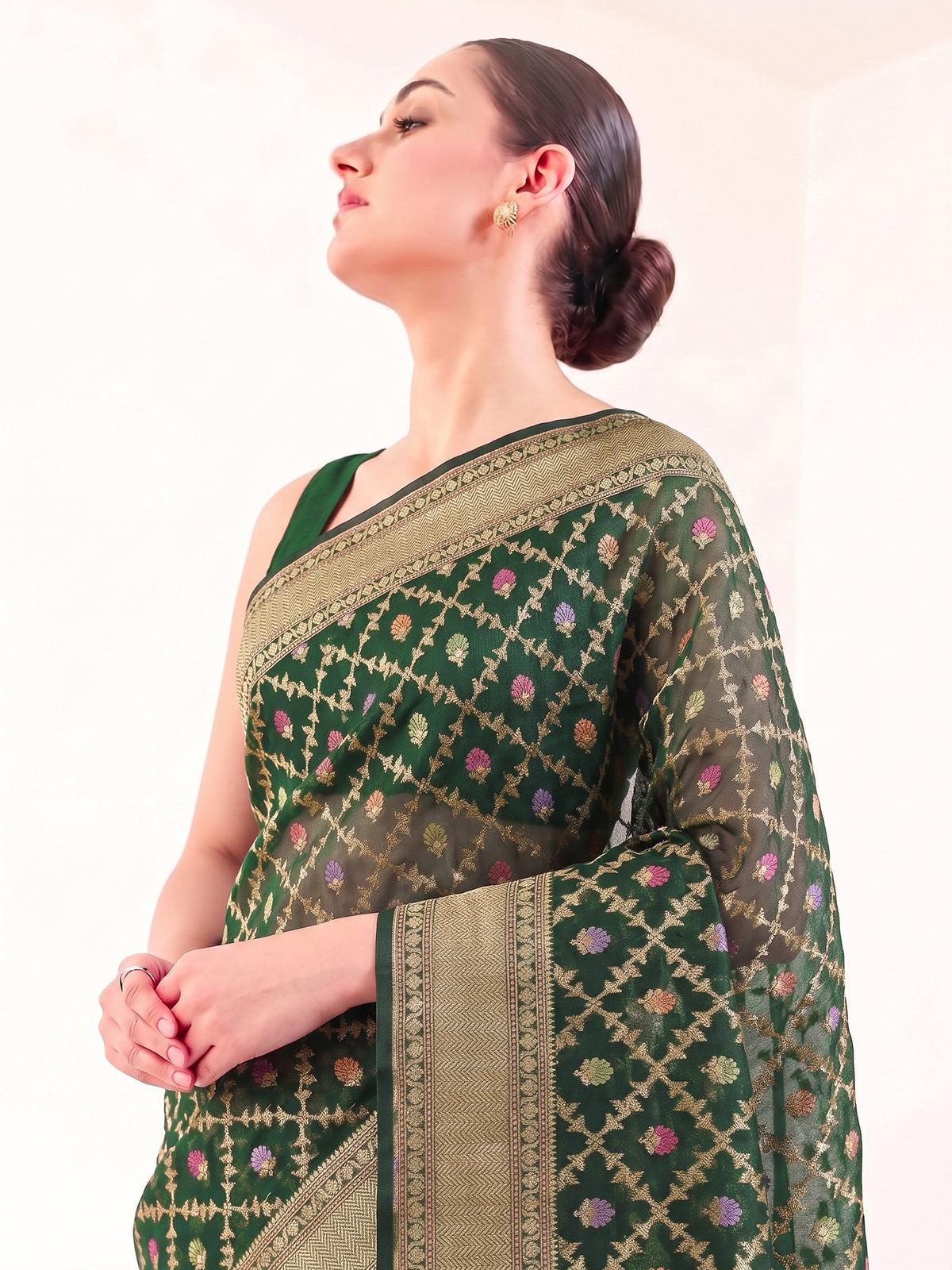
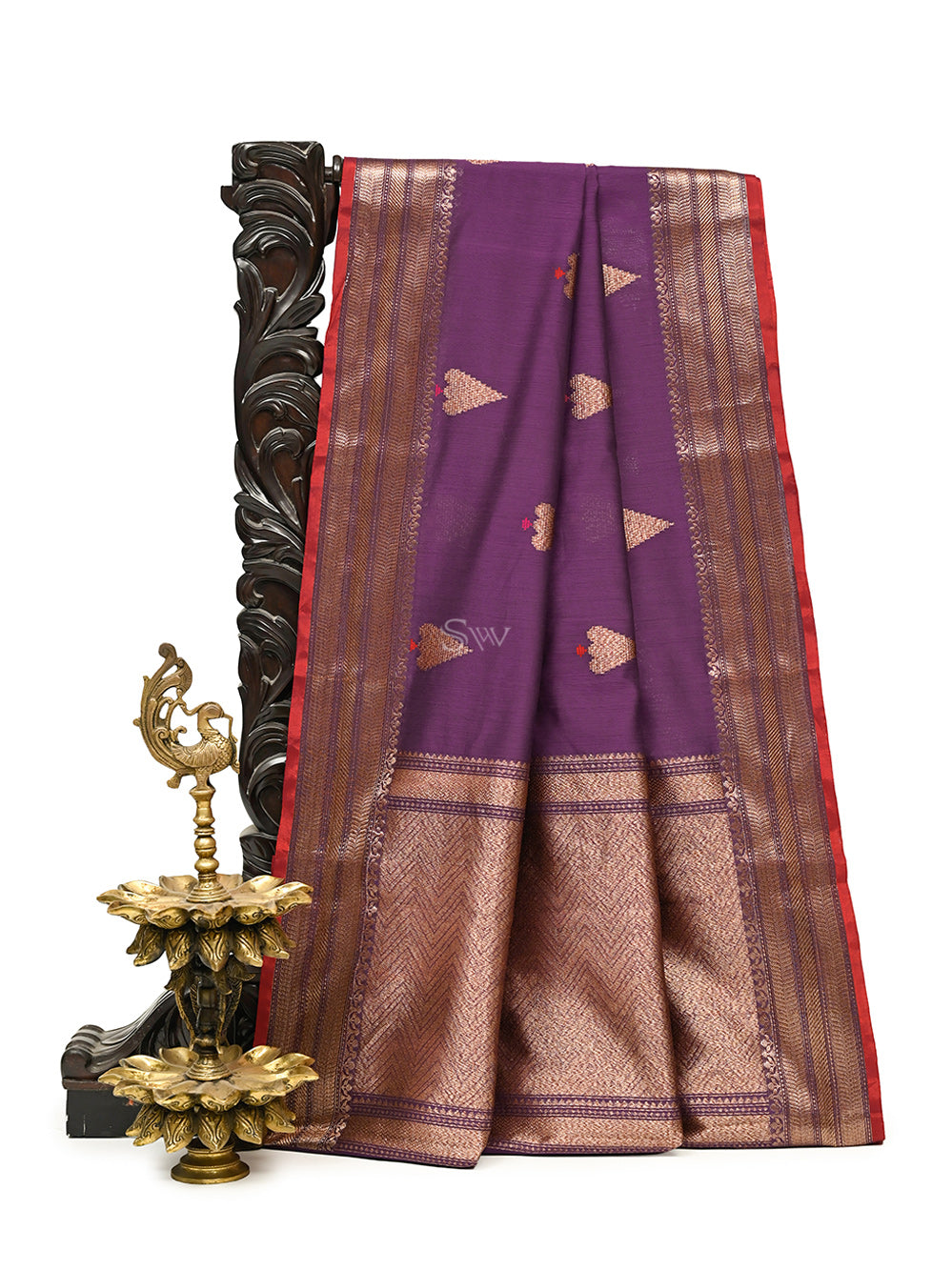


What Is Kora Silk? Kora vs Organza in Banarasi Sarees Explained
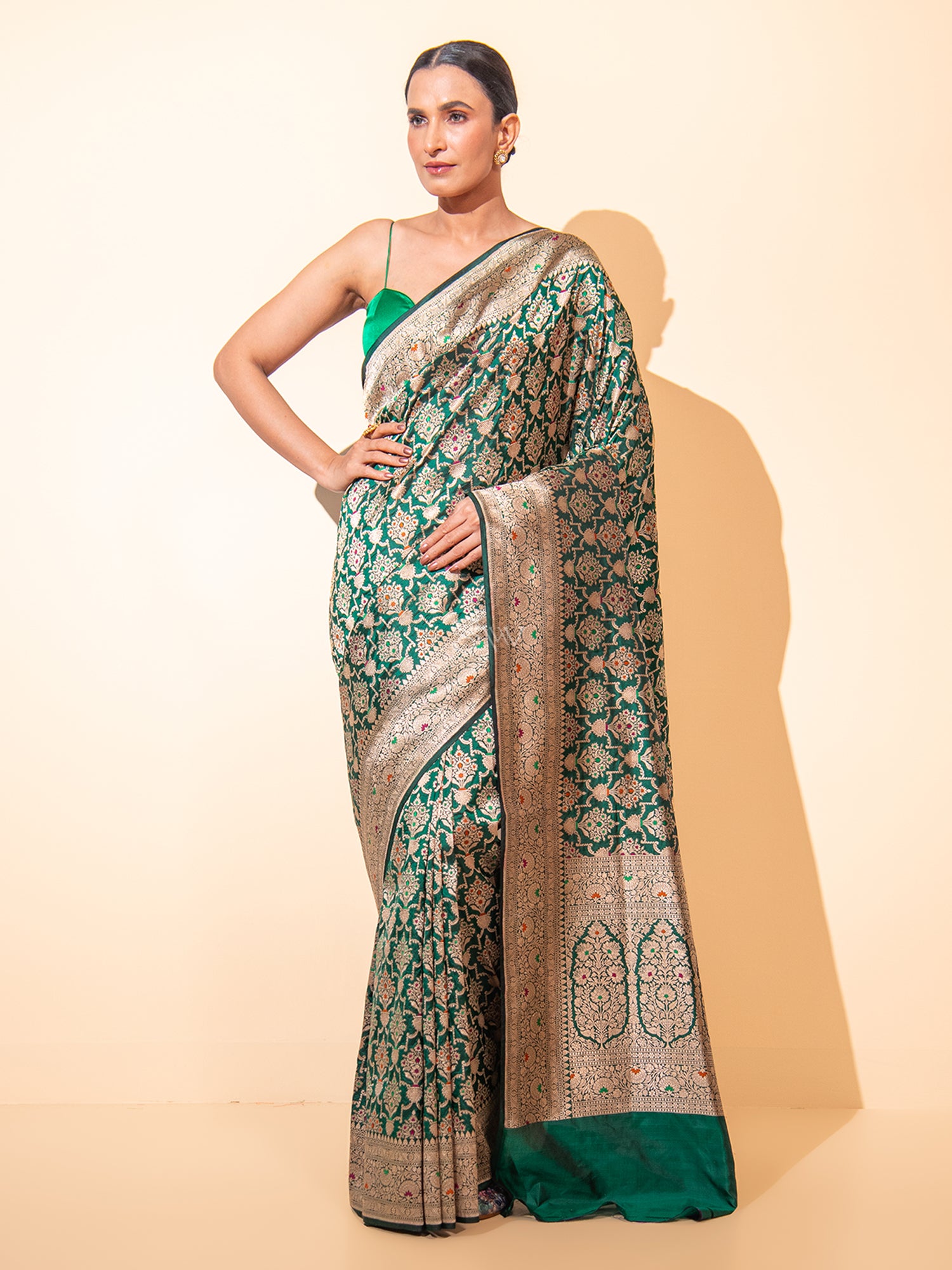
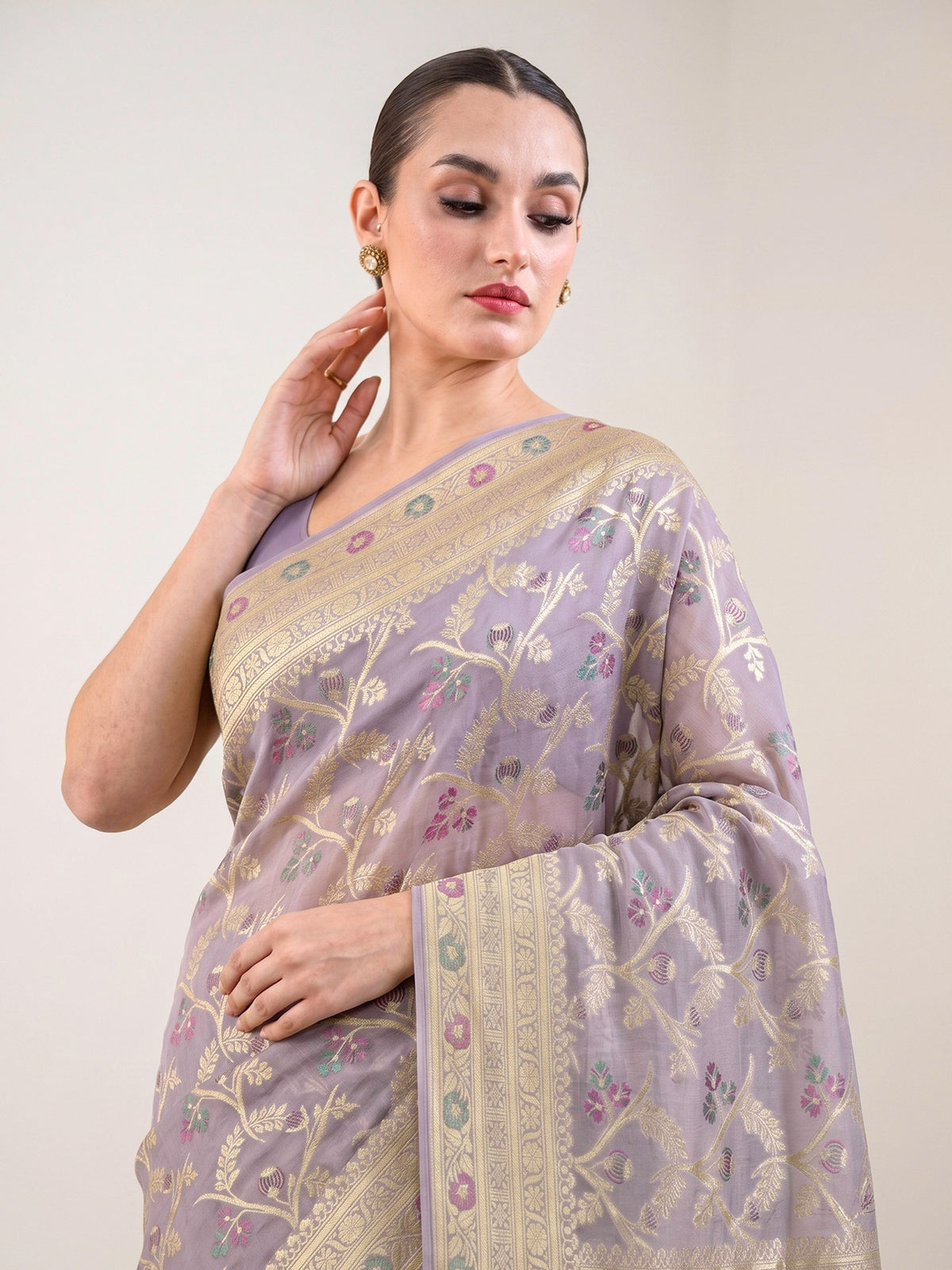
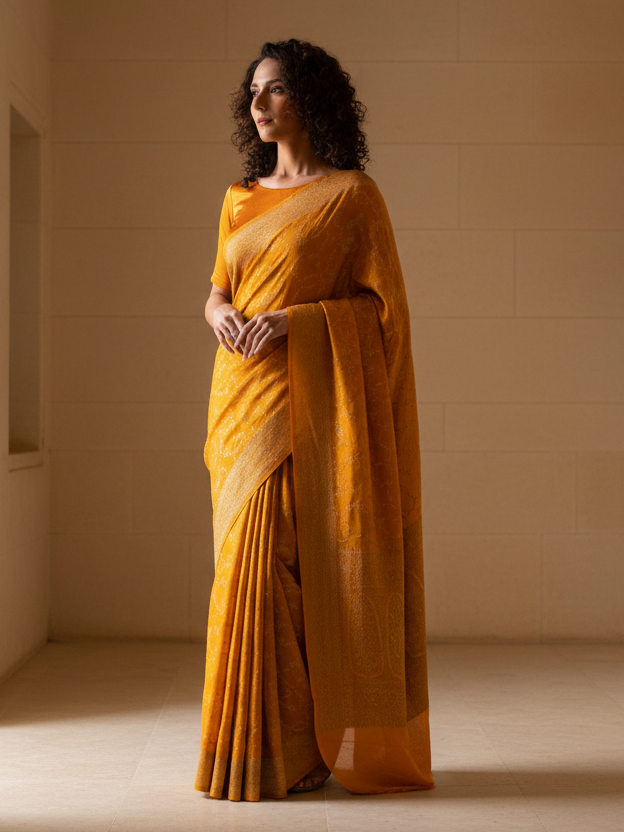
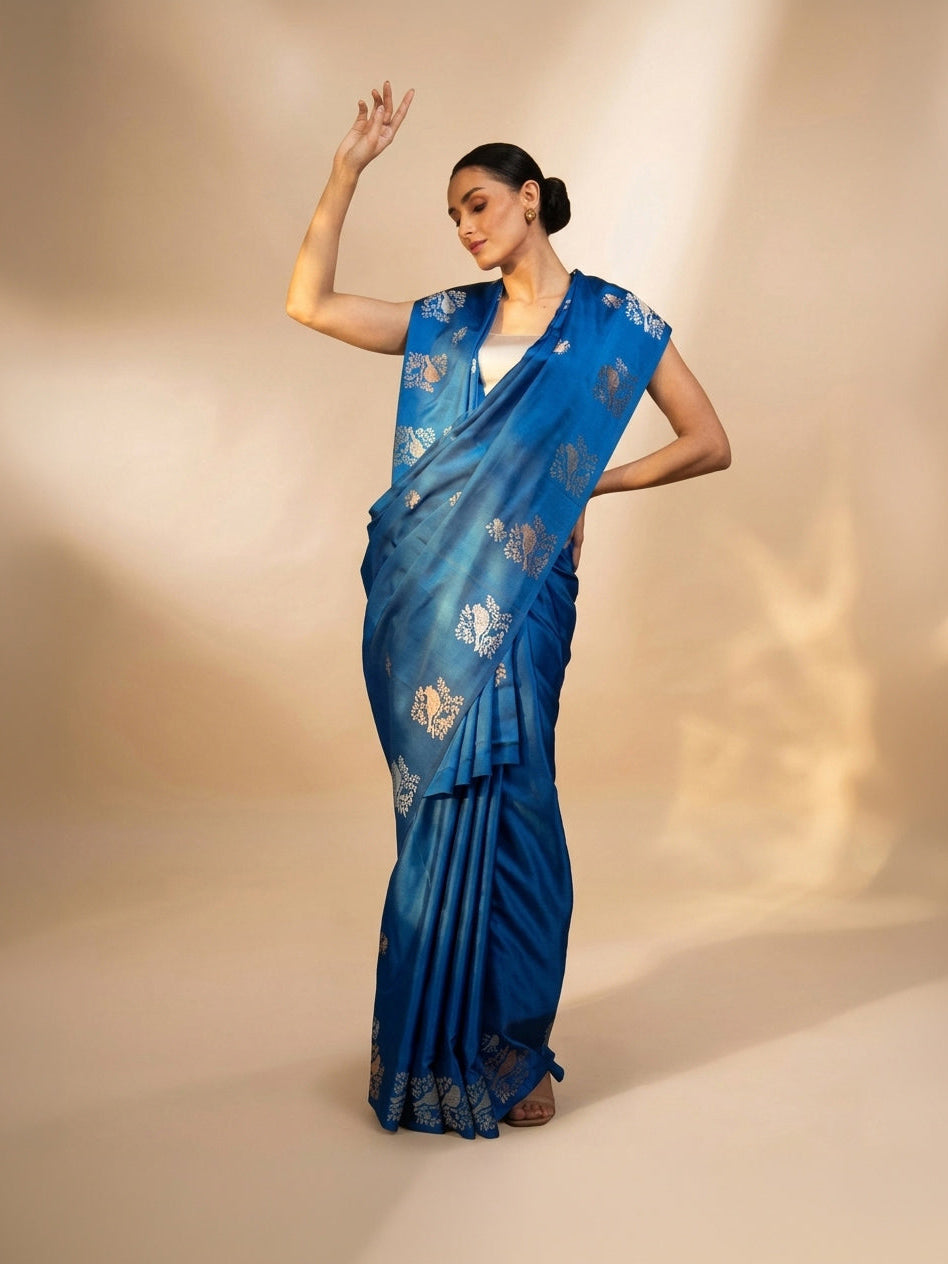
When shopping for Banarasi sarees, you may come across names such as Kora Silk, Kora Organza and Organza Silk. They often describe sarees that look remarkably similar: lightweight, slightly transparent fabrics with a crisp texture and delicate zari designs.
But is Kora Silk the same as Organza, or are they different fabrics?
In Banarasi weaving, Kora Silk and Silk Organza are closely related terms and are frequently used interchangeably. Traditionally, Kora refers to silk in a relatively raw or minimally processed state, while Organza describes a sheer, lightweight fabric with a crisp, structured weave.
The distinction matters because the name alone does not tell you whether a saree is made from pure silk, synthetic fibres or a blend.
What Is Kora Silk?
Kora Silk is a term commonly used in the Indian textile industry for lightweight, crisp silk fabric. The word Kora is associated with raw or relatively untreated fabric.
Silk contains a natural protein called sericin, which surrounds the silk fibres. During processing, some or most of this natural gum may be removed through a process called degumming.
In certain traditional Kora silk constructions, retaining some natural gum contributes to the fabric's characteristic crispness and firmness.
However, not every saree sold as Kora Silk is manufactured using exactly the same silk-processing method. The terminology can vary among weavers and sellers.
In Banarasi sarees, Kora is most commonly associated with a fine, sheer silk ground that can carry woven zari borders, floral motifs and decorative pallus.
This combination creates a saree that looks delicate but retains enough structure to display traditional Banarasi patterns.
What Is Organza Silk?
Organza is a lightweight, sheer fabric traditionally woven using fine, highly twisted silk yarns in a plain-weave construction.
Its distinguishing characteristics include:
-
A transparent or translucent appearance
-
A crisp, slightly firm texture
-
A lightweight yet structured drape
-
A subtle lustre in pure silk varieties
-
The ability to hold shape rather than cling closely to the body
Unlike softer fabrics such as Crepe Silk or Khaddi Georgette, Organza tends to stand slightly away from the body.
This makes it particularly suitable for sarees with graceful, structured pleats and decorative Banarasi borders.
Today, Organza can also be manufactured using polyester, nylon or other synthetic fibres. Therefore, the word Organza describes a type of fabric construction, not a guarantee of pure silk content.
For examples of traditional woven designs, explore the Banarasi Organza Silk Saree collection at Sacred Weaves.
Kora Silk vs Organza: What Is the Actual Difference?
The main difference is in how the terms are used.
Kora traditionally refers to a condition or preparation of silk, whereas Organza refers to the fabric's sheer, crisp construction.
In practice, a Banarasi saree described as Kora Silk may also be described as Kora Organza or Silk Organza.
| Feature | Kora Silk | Organza |
|---|---|---|
| Meaning | Traditionally associated with relatively raw or minimally processed silk | A sheer, crisp fabric construction |
| Fibre | Refers to silk when accurately labelled | Can be pure silk, synthetic or blended |
| Texture | Usually crisp and slightly firm | Crisp, fine and structured |
| Transparency | Commonly sheer in Banarasi Kora sarees | Characteristically sheer |
| Drape | Light with a structured fall | Light with a structured fall |
| Banarasi usage | Often used for Kora Organza sarees | Often used interchangeably with Kora Silk |
| Main buying consideration | Confirm silk content and construction | Confirm whether it is silk or synthetic Organza |
The important takeaway: Kora Silk and Silk Organza are not always two separate types of Banarasi sarees. In many cases, they refer to essentially the same fabric family.
A meaningful comparison requires examining the actual yarn, weave and finishing rather than assuming a difference based on the product name.
Why Is Kora Organza Popular in Banarasi Sarees?
 Cream Jaal Organza Handloom Banarasi Saree
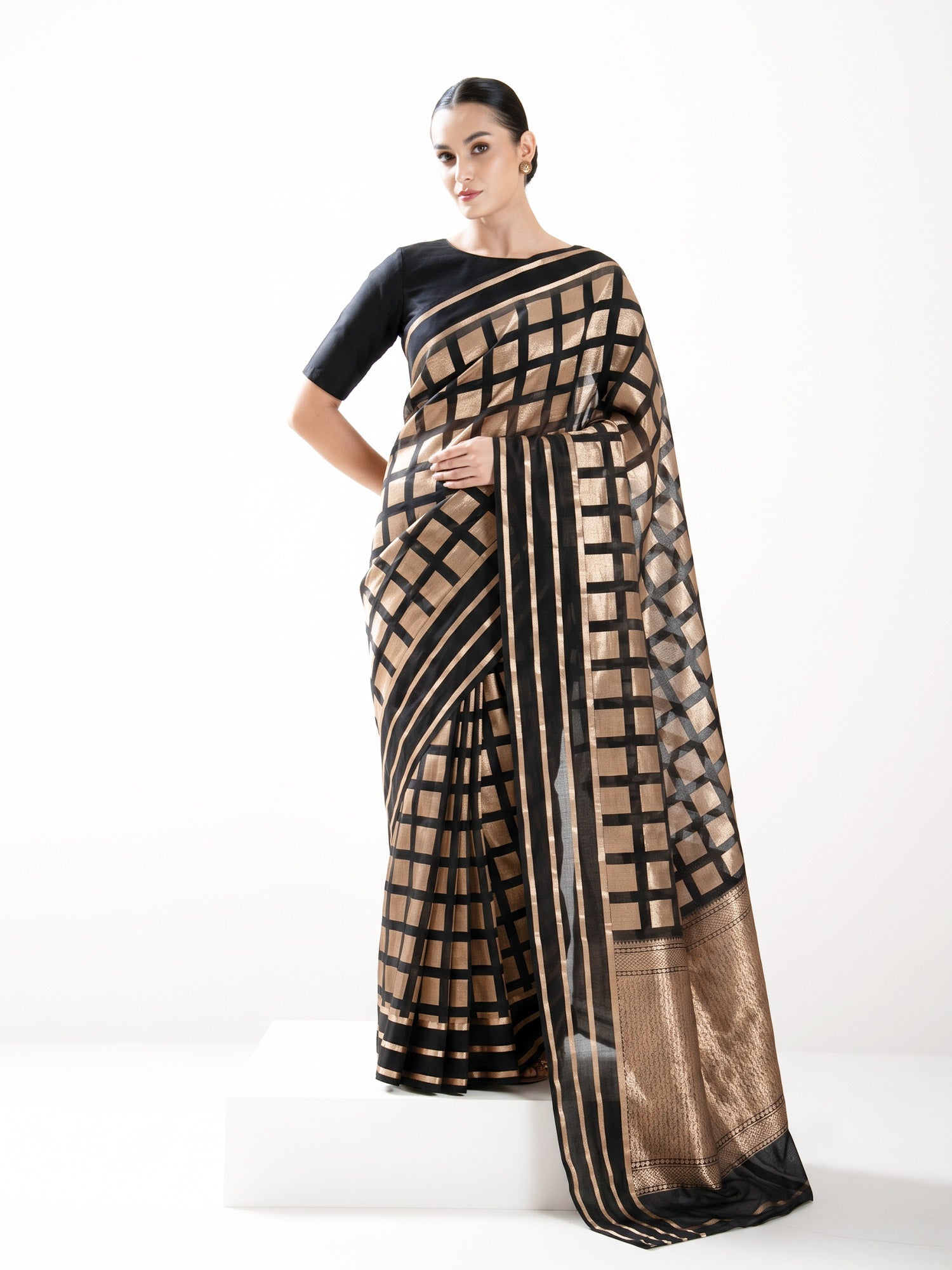 Black Checks Organza Handloom Banarasi Saree
Kora Organza provides an unusual combination: a delicate-looking fabric that can support rich traditional woven designs.
The relatively open, sheer ground allows decorative motifs to remain visually distinct.
For example, a Banarasi Kora Organza saree may feature:
Booti designs: Small motifs distributed across the body of the saree. These are suitable for buyers who prefer a simpler, elegant appearance.
Jaal patterns: Interconnected floral or geometric designs covering larger portions of the fabric. They create a richer ceremonial look.
Zari borders and pallus: Woven metallic yarn adds contrast against the sheer silk background.
Meenakari details: Additional coloured threads bring decorative elements to selected motifs.
The weaving design can change the saree's appearance considerably, even when the underlying Organza fabric remains similar.
This is why two Kora Organza Banarasi sarees may differ significantly in price and overall appearance.
Is Kora Silk Always Pure Silk?
A genuine Kora Silk saree should be made from natural silk, but buyers should not rely solely on the word Kora in a product title.
Some products are marketed using terms such as Kora Organza, Organza Silk, Art Silk Organza or Organza Blend.
These descriptions do not necessarily indicate the same fibre composition.
Before purchasing, check whether the saree is made from pure silk, synthetic material or a blend.
A Silk Mark label provides an additional assurance of genuine silk content when issued under the applicable certification requirements.
It is also important to distinguish fibre composition from weaving technique. A pure silk saree is not necessarily handwoven, and a handwoven saree is not necessarily made from pure silk.
For a more detailed explanation, read our guide to Silk Mark Certification and how it helps identify pure silk sarees.
How Can You Identify a Good-Quality Kora Organza Banarasi Saree?
A good-quality Kora Organza saree should be evaluated through its material, construction and finishing.
1. Examine the fabric against light
Organza is naturally sheer. Hold the fabric against a light source and inspect how consistently the yarns are woven.
Look for unwanted gaps, damaged threads or irregular areas that are not part of the intended weave.
Minor irregularities may occur in handloom fabrics, but these alone do not establish authenticity or quality.
2. Check the texture and drape
Silk Organza generally feels crisp and lightweight.
When draped, it should have enough structure to retain a defined shape rather than falling closely against the body.
However, texture alone cannot reliably distinguish pure silk from modern synthetic alternatives.
3. Inspect the zari work
Examine whether the motifs are woven into the fabric or simply printed on its surface.
Woven zari designs form part of the fabric construction, while printed motifs are applied to the surface.
Look closely at the reverse side to understand how the design is constructed.
4. Confirm the fibre composition
If a saree is advertised as pure silk, review the product specifications and available certification.
Do not assume that a higher price, softer texture or greater shine automatically proves silk purity.
5. Consider the finishing
Pay attention to the border, pallu, loose threads and overall fabric consistency.
A well-finished saree should have decorative work that complements the lightweight ground without causing excessive distortion.
Is Kora Organza Suitable for Weddings?
Yes. Kora Organza Banarasi sarees are particularly attractive for daytime weddings, summer celebrations, receptions and festive occasions.
The fabric provides an elegant appearance without the weight associated with some densely woven silk sarees.
For daytime wedding functions, softer colours such as pastel green, blush pink, ivory and powder blue can complement the fabric's delicate appearance.
For evening celebrations, deeper colours combined with contrasting zari work can create a more formal look.
However, Organza's relatively sheer construction means that an appropriate underskirt is important.
A densely woven pallu or substantial zari border can also affect how the saree drapes and feels when worn.
Buyers who prefer a more substantial silk fabric for traditional bridal ceremonies may also consider Banarasi Katan Silk sarees.
How Much Does a Kora Organza Banarasi Saree Cost?
There is no single standard price for a Kora Organza Banarasi saree.
The price depends on factors such as:
-
Pure silk versus synthetic or blended fibres
-
Handloom or powerloom production
-
Complexity of the woven motifs
-
Type and quantity of zari
-
Border and pallu detailing
-
Finishing and overall workmanship
A plain silk Organza saree with minimal woven work may cost considerably less than an elaborate Banarasi saree featuring intricate zari patterns.
At Sacred Weaves, the Organza Banarasi saree collection includes both simpler and more elaborate handwoven designs across different price points.
Rather than judging quality by price alone, buyers should compare the fibre composition, weaving details and decorative work of individual sarees.
Kora Organza vs Katan Silk: Which Should You Choose?
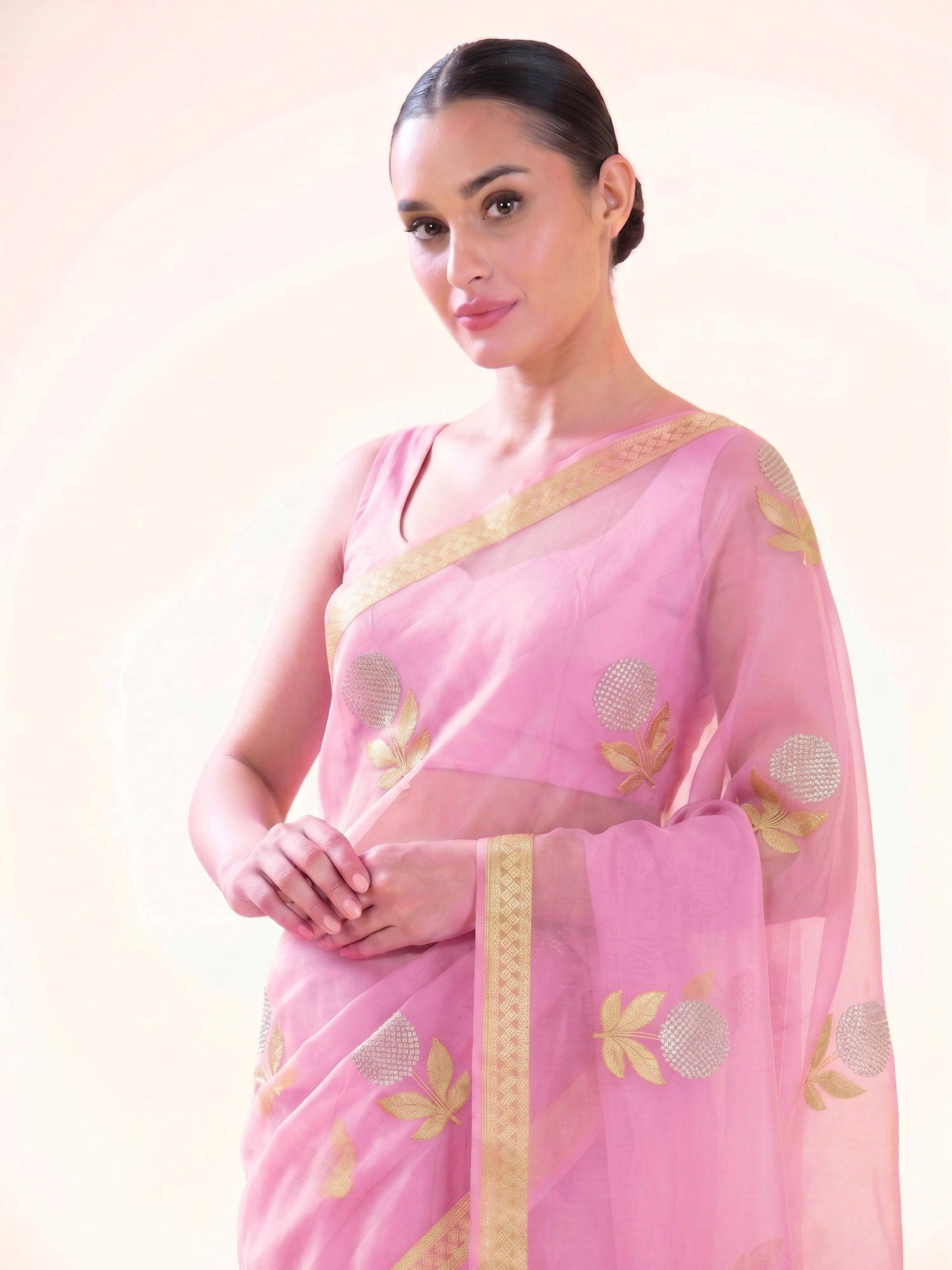 Pink Boota Organza Handloom Banarasi Saree
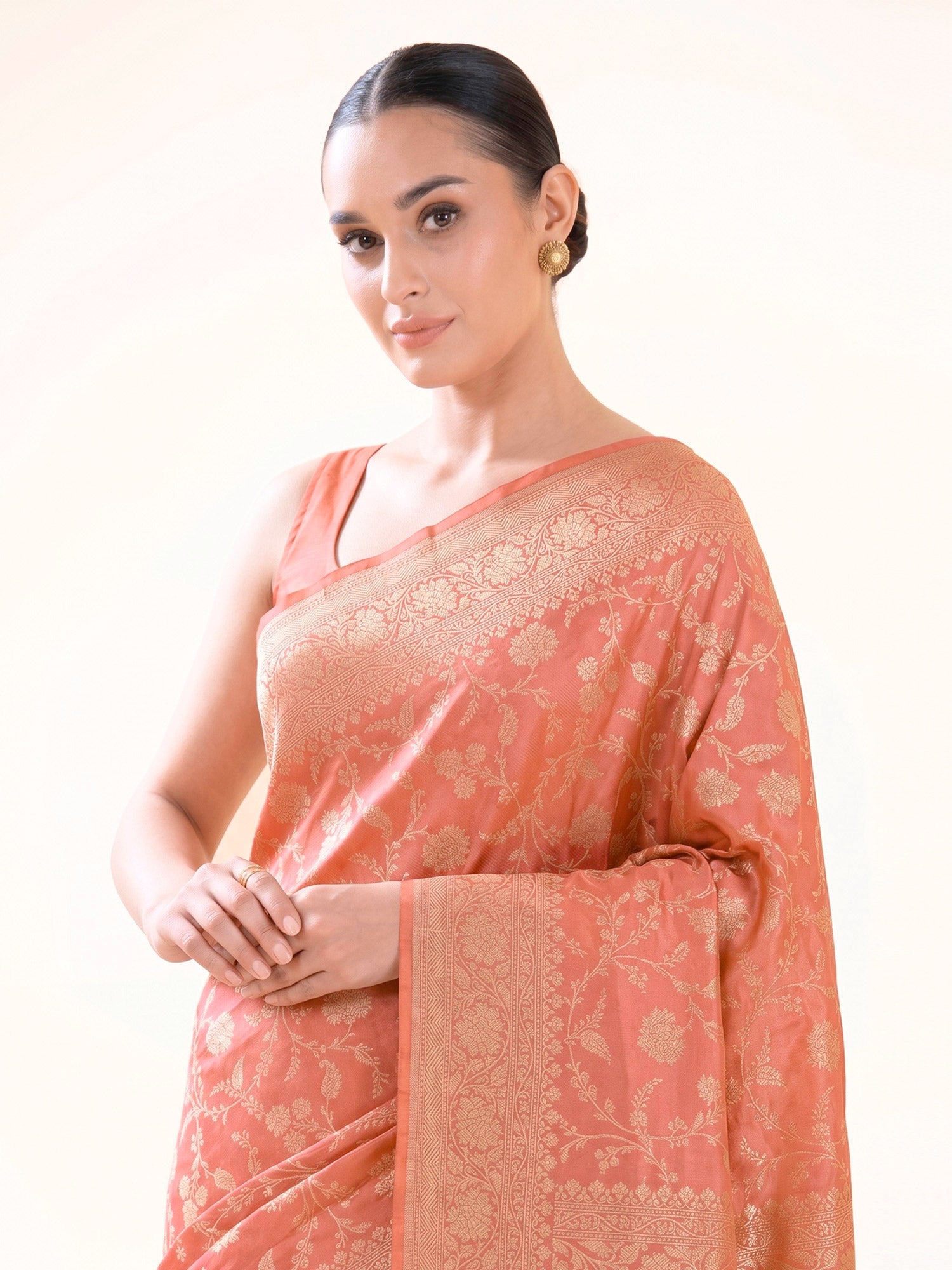 Pink Orange Jaal Katan Silk Uppada Handloom Banarasi Saree
Although Kora Organza and Katan Silk are both used in Banarasi weaving, their wearing characteristics are different.
Kora Organza is sheer, crisp and lightweight. It creates a slightly structured silhouette and is particularly suitable for customers who prefer an airy saree.
Katan Silk generally has a denser construction and a more substantial feel. It is commonly selected for traditional wedding sarees, ceremonial clothing and richly woven Banarasi designs.
Neither fabric is inherently superior.
If your priority is lightness and a crisp appearance, Kora Organza may be more suitable. If you prefer a denser silk fabric with greater body, Katan Silk is worth considering.
You can learn more in our guide to Katan Silk and its characteristics.
How Should You Care for a Kora Organza Saree?
Because Organza is lightweight and its woven threads can be delicate, careful handling is important.
Avoid pulling sharply on the fabric or attaching heavy accessories that may damage the fine weave.
Keep sharp jewellery edges, rough handbags and Velcro away from the saree to reduce the risk of snagging.
For storage, fold the saree gently in a clean, breathable cotton or muslin covering and keep it in a cool, dry place.
Follow the garment's specific care instructions. Professional dry cleaning is generally preferable for decorated pure silk Organza sarees, particularly those with extensive zari work.
Final Thoughts: Is Kora Silk Different from Organza?
Kora Silk and Organza are closely connected terms in Banarasi textiles.
While Kora traditionally relates to relatively raw or minimally processed silk, Organza describes a lightweight, sheer and crisp fabric construction.
In the Banarasi saree market, Kora Silk, Kora Organza and Silk Organza frequently refer to similar or essentially identical sarees.
For buyers, the more important questions are whether the saree is made from pure silk, how it is woven and whether its design suits the intended occasion.
Explore the pure silk Organza Banarasi sarees at Sacred Weaves to discover lightweight handloom sarees with traditional woven designs.


