

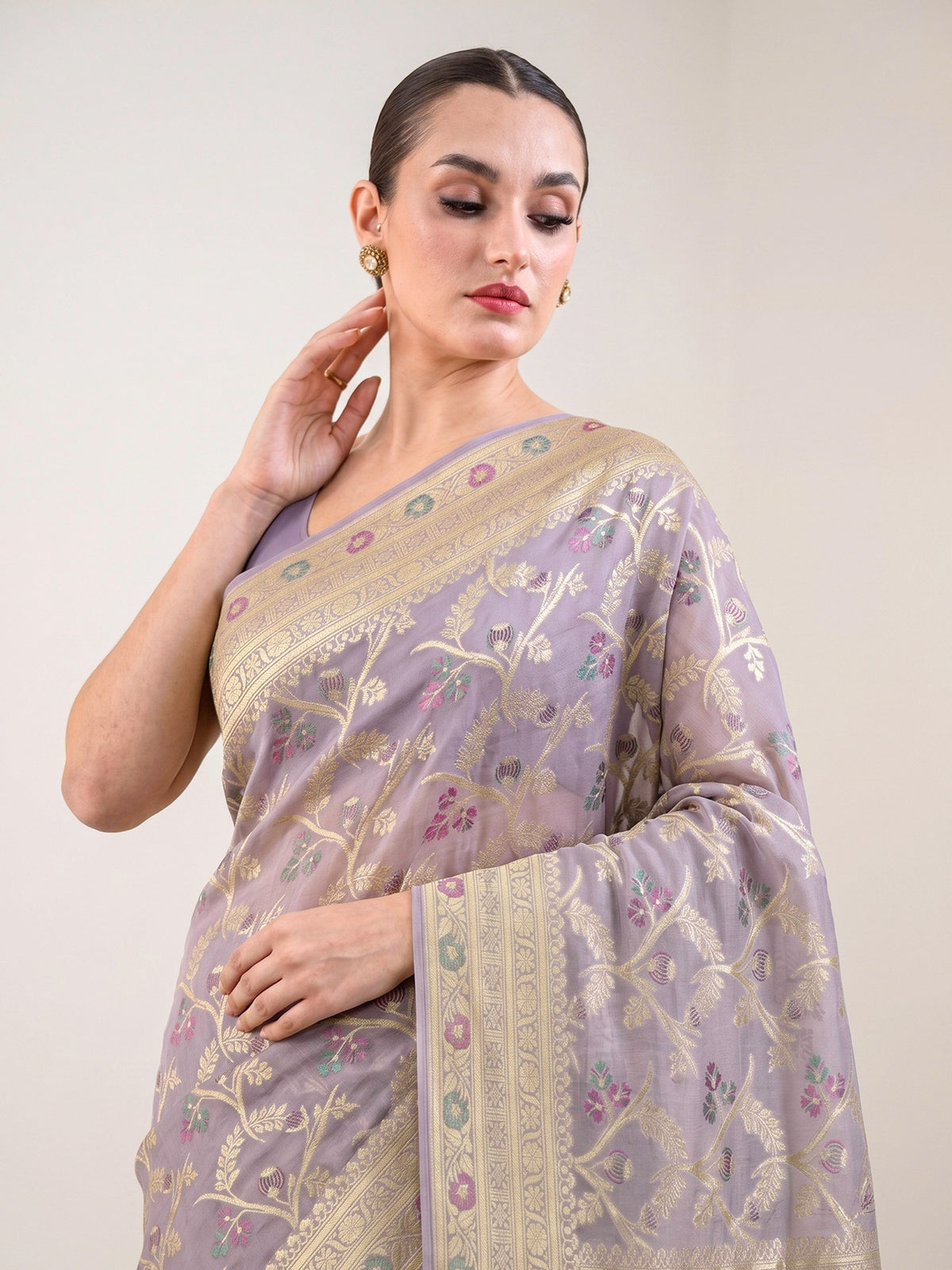
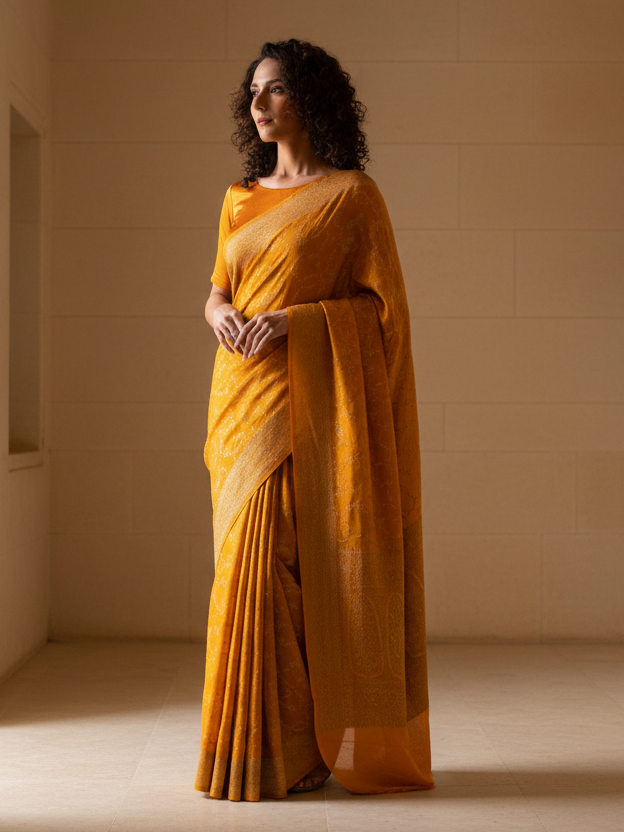
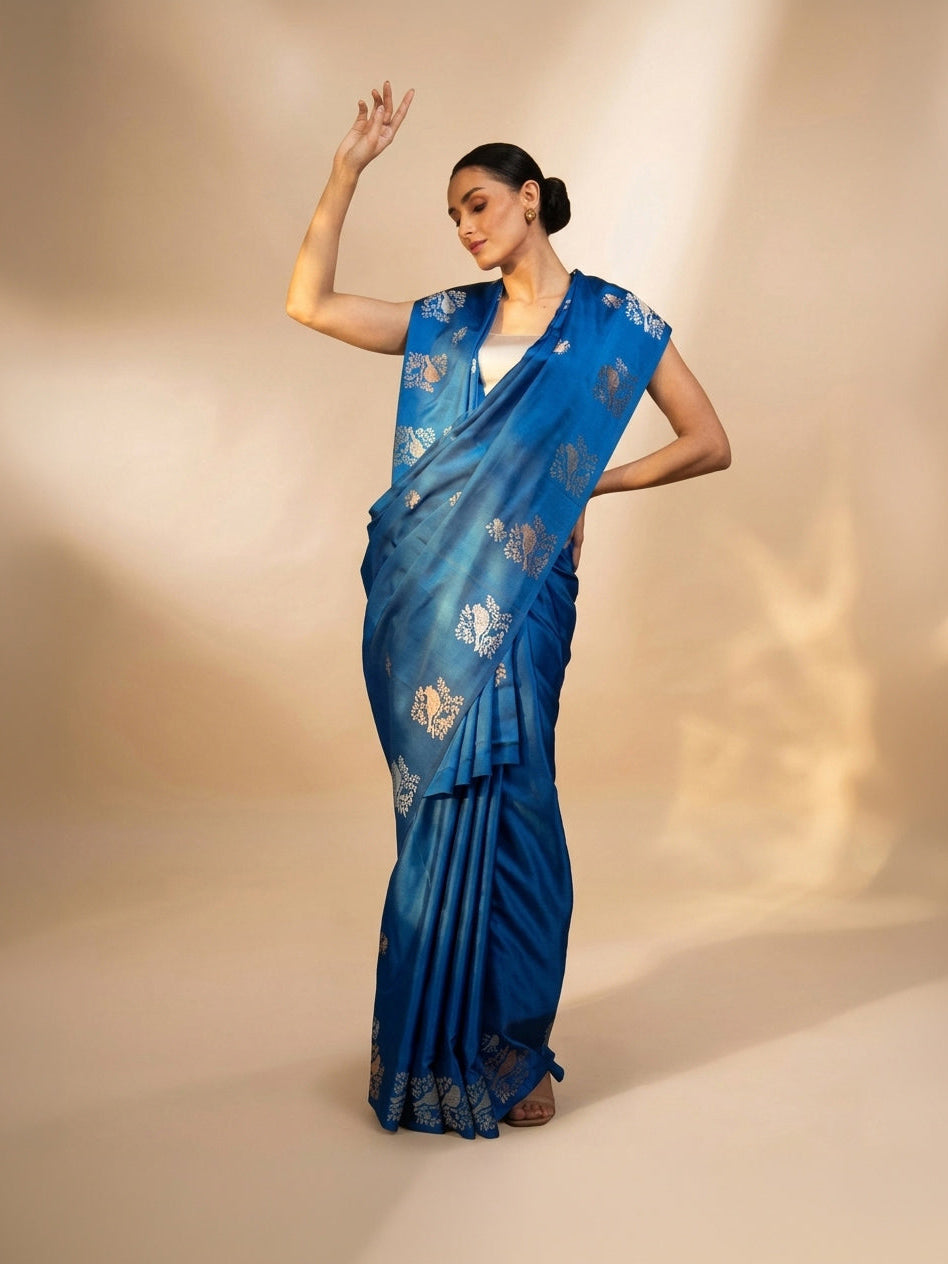
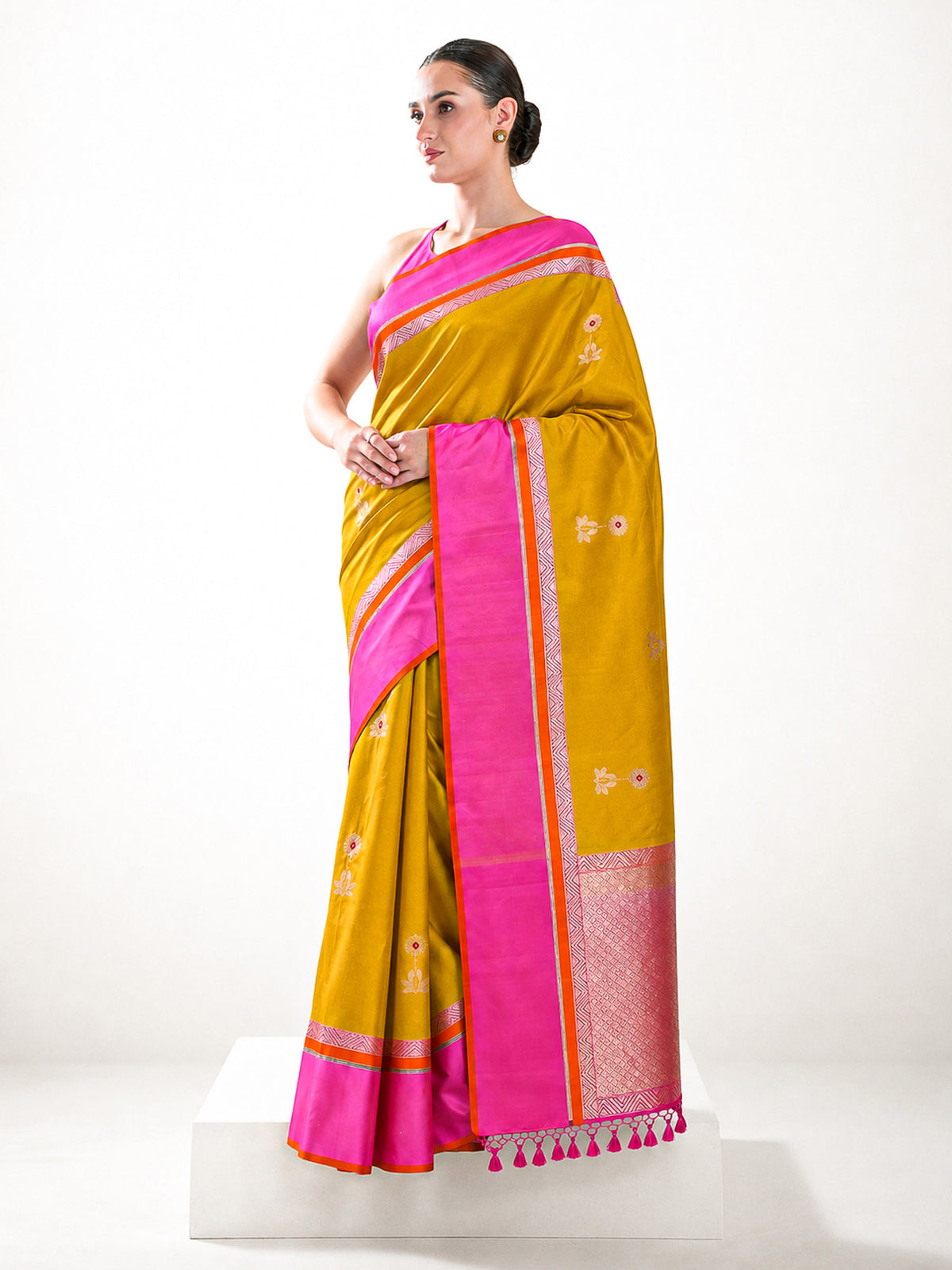

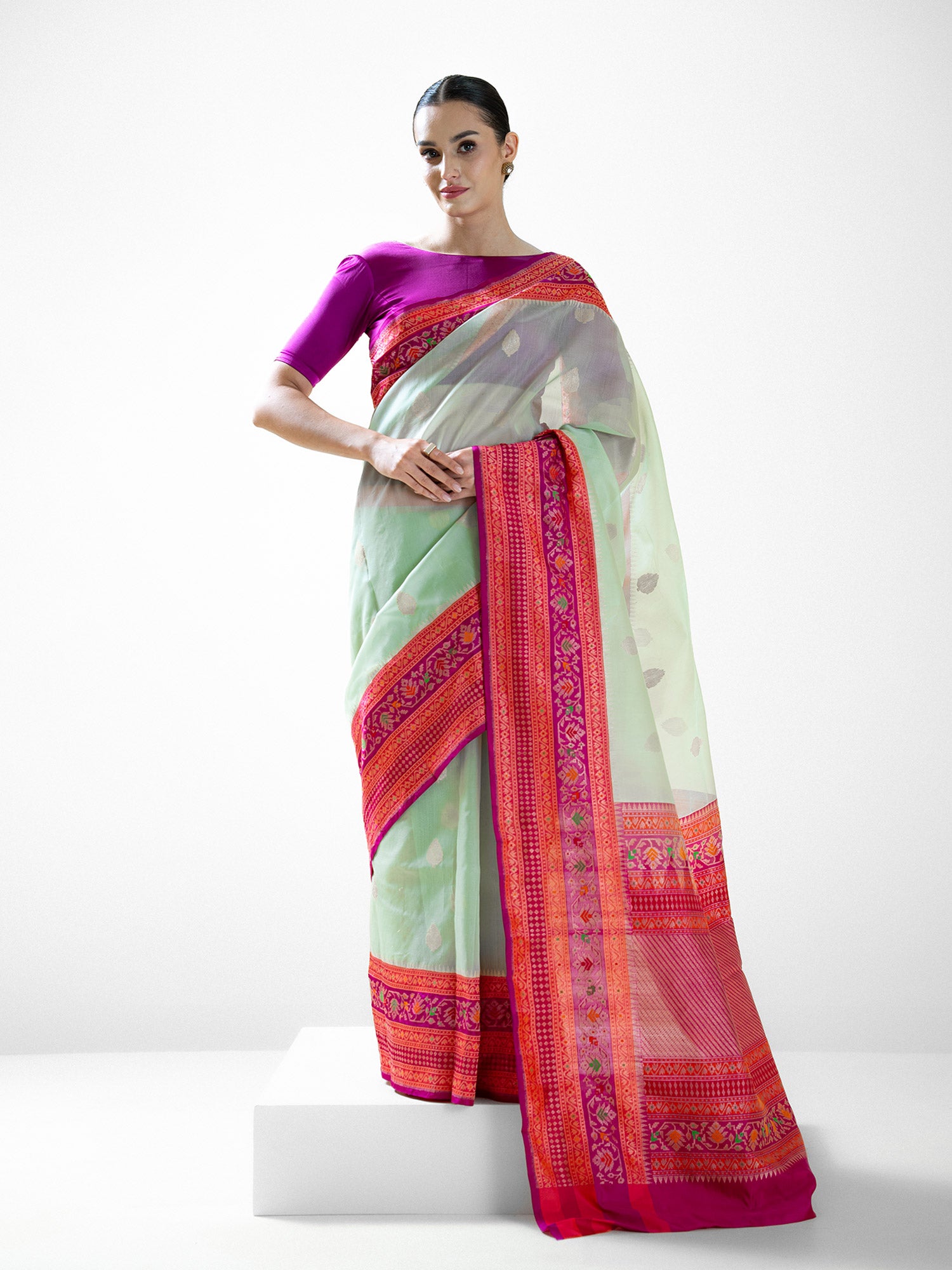
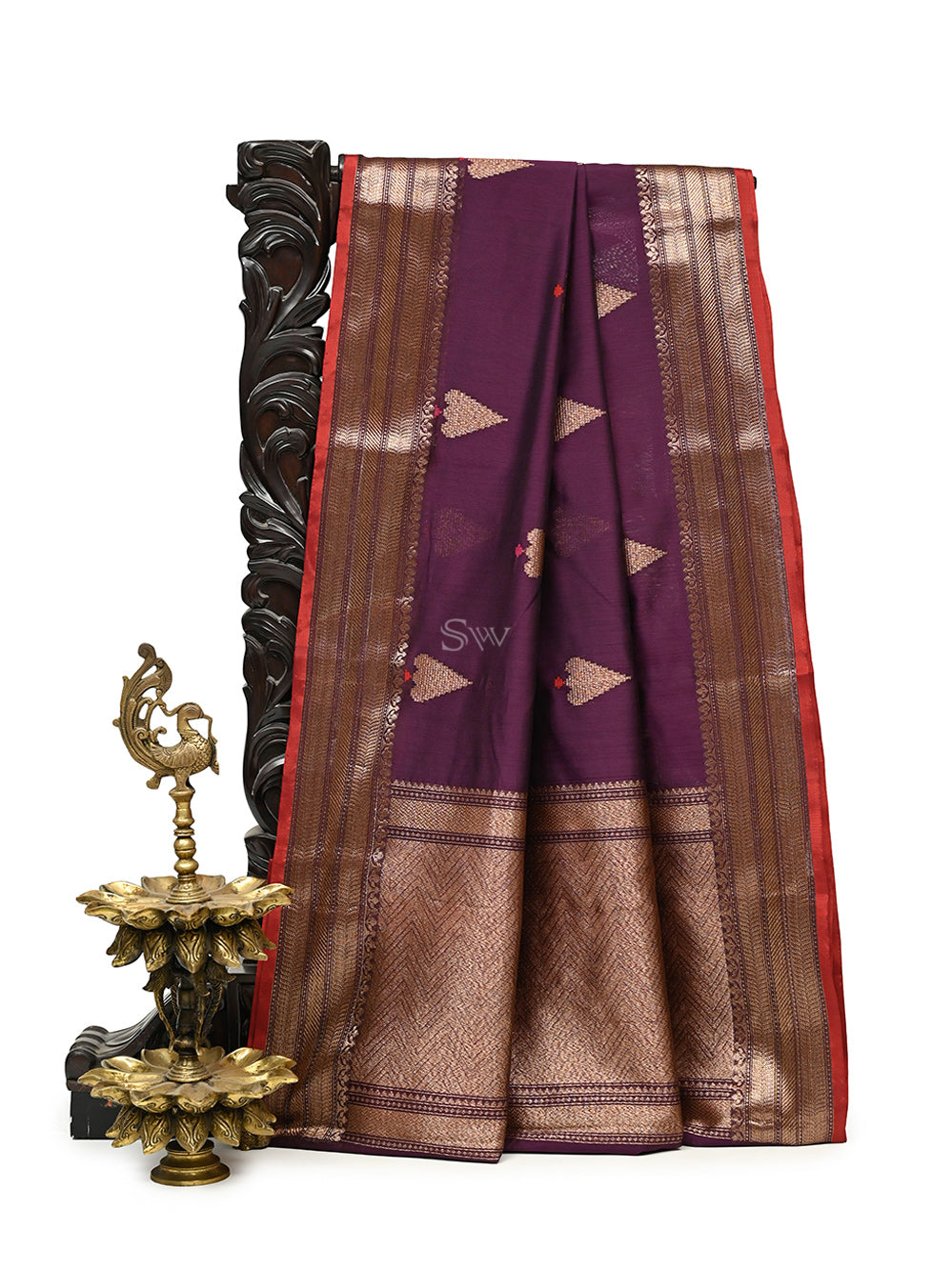


Buying a Banarasi saree online can be difficult when you cannot touch the fabric, examine the zari or see how the saree drapes. Two sarees may look almost identical in photographs but differ considerably in silk quality, weaving technique, workmanship and price.
The good news is that you can evaluate many important quality details before placing an order.
To check the quality of a Banarasi saree online, verify its fabric composition, examine close-up photographs of the front and reverse, confirm the weaving technique, review zari details, check applicable certification and assess the seller's credibility. For an expensive saree, request a live video showing the actual product.
Here is a practical checklist to help you make an informed purchase.
Banarasi Saree Quality Checklist: What to Check Before Buying
| Quality check | What to look for | Why it matters |
|---|---|---|
| Fabric composition | Pure silk, silk blend, cotton silk or synthetic | Establishes what material you are buying |
| Silk certification | Silk Mark tag and applicable verification details | Supports genuine silk claims |
| Weaving method | Handloom or powerloom, clearly disclosed | Helps you understand the workmanship |
| Zari details | Type of zari, coverage and finish | Influences appearance and price |
| Motif construction | Clear views of woven designs and their reverse | Helps assess weaving technique |
| Fabric condition | Snags, stains, broken threads or damaged areas | Reveals potential quality problems |
| Actual colour and drape | Video in suitable lighting | Reduces surprises after delivery |
| Seller information | Contact details, reviews, invoices and policies | Reduces purchasing risk |
Not every saree needs to meet the same specifications. A lightweight Organza saree, for example, should not be evaluated using exactly the same expectations as a densely woven Katan Silk saree.
The objective is to confirm that the product matches its description and is suitable for your requirements.
1. Check the Exact Fabric Composition
Start with the product description.
Banarasi sarees are available in various fabrics, including Katan Silk, Khaddi Georgette, Organza, Crepe, Tissue and Cotton Silk.
These fabrics differ in texture, structure, transparency and drape.
A listing that only says "Banarasi Silk Saree" may not provide enough information to establish the actual fibre composition.
Look for a clear statement such as:
-
100% pure silk
-
Silk-cotton blend
-
Pure silk Georgette
-
Polyester or artificial silk
-
Other specified fibre combinations
If the product is described as pure silk, ask whether certification or supporting documentation is available.
Does the word "silk" guarantee pure silk?
No.
Terms such as art silk, silk finish and silk look do not establish that the fabric contains natural silk.
Even words such as Katan and Organza should be supported by accurate fibre information.
If you are specifically looking for genuine silk, explore Silk Mark certified Banarasi sarees and review the material specifications of the individual products.
2. Examine Close-Up Photographs of the Saree

Product photography is one of the most useful tools available to an online buyer.
However, a full-length model photograph may not show enough detail to evaluate workmanship.
Before purchasing, look for photographs of five specific areas.
The saree body
Examine the fabric surface and the placement of motifs.
Check whether the design appears consistent with the seller's description. If a saree is advertised as having woven zari motifs, a close-up should help you distinguish the woven threads from surface printing.
The border
Look closely at the border's detailing, finishing and alignment.
If the border contains intricate floral or geometric patterns, inspect how clearly those details are formed.
The pallu
The pallu is often the most elaborately decorated part of a Banarasi saree.
Check the clarity of its motifs, colour combinations and woven detailing. A beautiful pallu should also complement the body and border.
The reverse side
Ask for a clear image of the back of the saree, especially the reverse of its decorative motifs.
This can reveal supplementary threads, floats, cut ends and other aspects of the weaving construction.
The reverse side is particularly useful when comparing Kadhwa and Cutwork designs.
However, the appearance of the back alone cannot conclusively prove that a saree is handwoven.
The fabric edges
Inspect the edges for visible damage, broken threads, excessive loose yarns or irregular finishing.
Small variations can occur in handwoven fabric, but significant damage should not be dismissed as a natural feature of handloom production.
Buying tip: If a website only provides one or two heavily edited product images, request additional photographs before ordering an expensive saree.
3. Confirm Whether the Banarasi Saree Is Handloom or Powerloom
Handloom and powerloom Banarasi sarees may share similar motifs, colours and overall appearances.
The difference lies in how they are manufactured.
A handloom saree is woven using a manually operated loom, whereas a powerloom uses mechanical power to operate the weaving process.
Handloom production may involve greater manual intervention, particularly for intricate designs.
Powerloom sarees can also have attractive designs and good finishing. The important issue is whether the product is accurately represented.
If you are paying a premium for handloom craftsmanship, ask the seller:
-
Is this particular saree handwoven?
-
Where was it woven?
-
Which weaving technique was used?
-
Is there any supporting documentation for the handloom claim?
Do not assume that irregularities automatically prove handloom weaving or that perfect-looking motifs must be machine-made.
A photograph can provide useful clues, but reliable verification requires more than a visual shortcut.
Browse handloom Banarasi sarees to compare different weaving styles and product specifications.
4. Check the Zari Work Carefully

Zari is among the most important decorative elements in many Banarasi sarees.
It is used for borders, pallus, Booti motifs, Jaal patterns and other woven designs.
But not all zari is made from the same materials.
Depending on the product, metallic-looking threads may contain different metallic coatings, metallised materials or precious-metal components.
A gold-coloured design does not automatically indicate real gold or silver zari.
How can you evaluate zari quality online?
Ask for close-up photographs of the border and pallu.
Look for clear, consistently executed motifs and any visible damage or loose decorative threads.
Also ask the seller to specify the zari type when purchasing a premium saree.
A densely woven zari design can add weight and increase manufacturing costs, but the quantity of zari alone does not determine overall quality.
If two similar sarees have very different prices, the zari composition and complexity of the weaving may help explain the difference.
5. Understand the Weaving Technique Before Comparing Prices
The weaving method directly affects the work involved in producing a Banarasi saree.
For example, Kadhwa and Cutwork are two different approaches used in Banarasi decorative weaving.
In traditional Kadhwa weaving, individual motifs are created using supplementary weft threads, often requiring careful handling and additional labour.
Cutwork uses a different method of managing supplementary decorative threads, with unwanted floats cut away after weaving.
A complex Kadhwa design may cost more to produce than a comparable Cutwork design, but that does not automatically mean every Cutwork saree is inferior.
Both can produce beautiful fabrics when executed well.
If you are comparing two expensive sarees, ask which technique was used and what details contribute to the price.
For a detailed explanation, read our guide to Kadhwa weaving in Banarasi sarees.
6. Verify Silk Mark Certification When Buying Pure Silk
If a Banarasi saree is advertised as 100% pure silk, Silk Mark certification is a useful form of assurance.
The Silk Mark Organisation of India operates a certification system for genuine natural silk products.
For a Silk Mark-labelled saree, ask to see the actual tag and its identifying information. Check the details through the official certification channels where available.
However, it is important to understand the limits of the certification.
Silk Mark concerns silk authenticity. It does not, by itself, prove that a saree is handwoven, verify the purity of its zari or establish the quality of the weaving.
Those characteristics must be evaluated separately.
You can read What Is Silk Mark Certification? for more information about silk authenticity.
Avoid relying on home burn tests or pulling threads from an expensive saree. Such methods may damage the fabric, and visual or tactile impressions alone are not conclusive evidence of fibre composition.
7. Request a Live Video Before Buying an Expensive Banarasi Saree
Photographs can show the design, but they do not always communicate the saree's actual fall, movement, lustre or colour.
Silk can appear different under studio lighting, daylight and indoor lighting.
This becomes particularly important when buying sarees in shades such as rani pink, maroon, wine, emerald green and gold.
A live video consultation can help you examine details that are difficult to judge from a product page.
What should you ask the seller to show?
Request a viewing of the actual saree you intend to purchase.
During the video call, ask the seller to:
-
Open the saree fully to show the body, border and pallu.
-
Hold the fabric vertically to demonstrate its drape.
-
Show the colour in neutral lighting where possible.
-
Move the fabric slightly to demonstrate its lustre.
-
Show close-ups of the zari and decorative motifs.
-
Turn the saree over to show the reverse of the weaving.
-
Confirm the fabric composition, blouse piece and measurements.
A video call cannot conclusively prove silk purity or handloom origin, but it can substantially improve your understanding of the actual product.
Sacred Weaves offers complimentary Live Video Shopping, allowing customers to examine selected Banarasi sarees with assistance from its team before placing an order.
8. Compare the Price with the Actual Workmanship
A higher price does not necessarily mean better quality, just as a lower price does not automatically indicate a fake product.
The price of a Banarasi saree depends on multiple factors, including the fabric, weaving technique, design complexity, zari and finishing.
For example, a pure Katan Silk saree with an elaborate Kadhwa pattern may require considerably more skilled weaving time than a simpler design.
When comparing prices, make sure you are comparing similar products.
Two sarees should ideally have comparable fabric compositions, weaving techniques and decorative details before their prices are judged against each other.
A photograph of a richly decorated saree may not reveal why it costs more. A reliable seller should be able to explain the differences.
9. Check Saree Measurements, Blouse Piece and Finishing
A saree may have excellent weaving quality but still be unsuitable for you if its measurements or drape differ from your expectations.
Before ordering, confirm:
-
Saree length and width
-
Whether a blouse piece is included
-
Blouse piece length
-
Whether the saree is ready to wear or requires finishing
-
Whether fall, edging or blouse stitching is included
-
Whether the fabric is sheer and needs a suitable underskirt
Width is particularly important for taller buyers or customers who prefer longer pleats.
Do not assume that every Banarasi saree has identical measurements.
Checking these details in advance can help avoid disappointment after delivery.
10. Review the Seller's Credibility and Return Policy
Product quality and seller reliability are two separate considerations.
Even a well-made Banarasi saree can become a problematic purchase if the seller provides misleading information or has unclear after-sales policies.
Before making a payment, review the business's contact information, independent customer feedback, shipping terms and return conditions.
Pay particular attention to whether the seller provides an invoice and clearly states how defects, incorrect items or transit damage are handled.
For international purchases, confirm shipping charges, customs responsibilities and delivery terms.
A trustworthy seller should be willing to answer reasonable questions about the fabric, weaving and order conditions.
Sacred Weaves publishes its frequently asked questions, including information about product authenticity, delivery and return requests.
What Are the Warning Signs of a Poor-Quality Banarasi Saree Online?
Some listings deserve closer investigation before you purchase.
| Warning sign | What to do |
|---|---|
| The product says “pure silk” without clear specifications | Ask for fibre composition and available certification |
| Only edited catalogue photographs are provided | Request close-ups or a video of the actual saree |
| The seller cannot explain the weaving technique | Ask for additional production details |
| Real zari is advertised without specifying its composition | Request clarification |
| Handloom claims are unsupported | Ask for relevant documentation |
| The price is unusually low for the claimed materials and work | Compare with genuinely comparable sarees |
| No return or contact information is available | Review the seller’s credibility before paying |
These are reasons to ask questions, not automatic proof that a product is counterfeit.
Questions to Ask Before Ordering a Banarasi Saree Online
For an expensive wedding saree or a special purchase, use this checklist when speaking with the seller.
-
Is this saree made from 100% natural silk?
-
Is it handwoven or powerloom woven?
-
Which fabric and weaving technique are used?
-
What type of zari does it contain?
-
Can you show me the reverse side of the motifs?
-
Can I see the actual saree through a live video call?
-
Does it include a blouse piece, and what are its measurements?
-
Is Silk Mark certification available for this product?
-
What are the return conditions if the saree arrives defective or incorrectly described?
These questions are useful because they convert broad claims such as "premium quality" and "authentic Banarasi" into specific product details you can evaluate.
Final Thoughts
Checking the quality of a Banarasi saree online does not require you to become a textile expert. It requires knowing which information to verify and asking the right questions before buying.
Start with the fabric composition, inspect close-up images, understand the weaving technique, examine the zari and confirm applicable certification. For a significant purchase, a live video of the actual saree adds another useful layer of confidence.
Remember that silk purity, handloom origin, weaving quality and zari composition are different characteristics. One test or label cannot establish all four.
At Sacred Weaves, customers can explore Silk Mark certified Banarasi sarees and use Live Video Shopping to inspect fabric details before choosing a saree.
The best purchase is not necessarily the most expensive saree. It is one whose material, workmanship, appearance and price match what you have been promised.


