
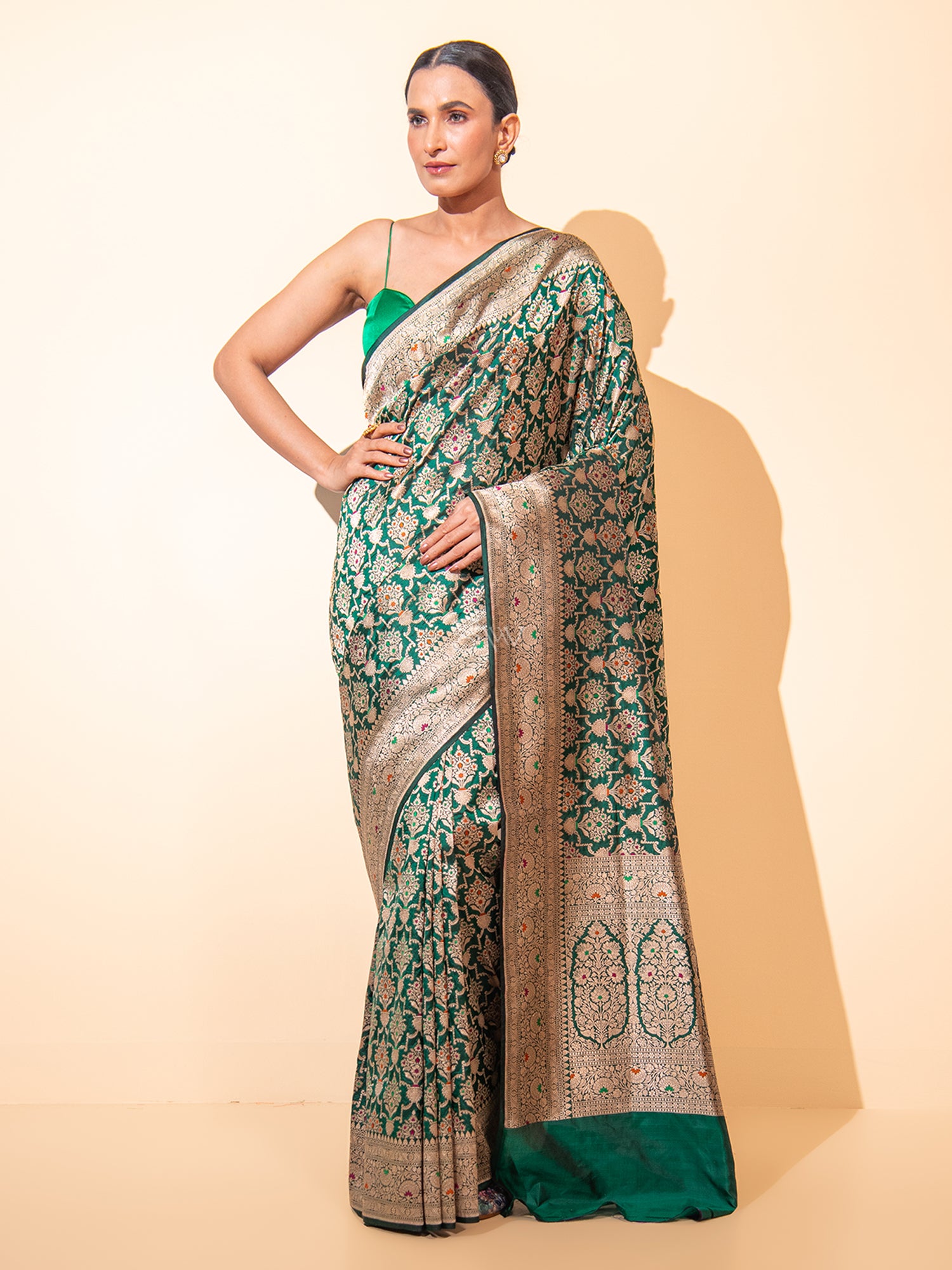
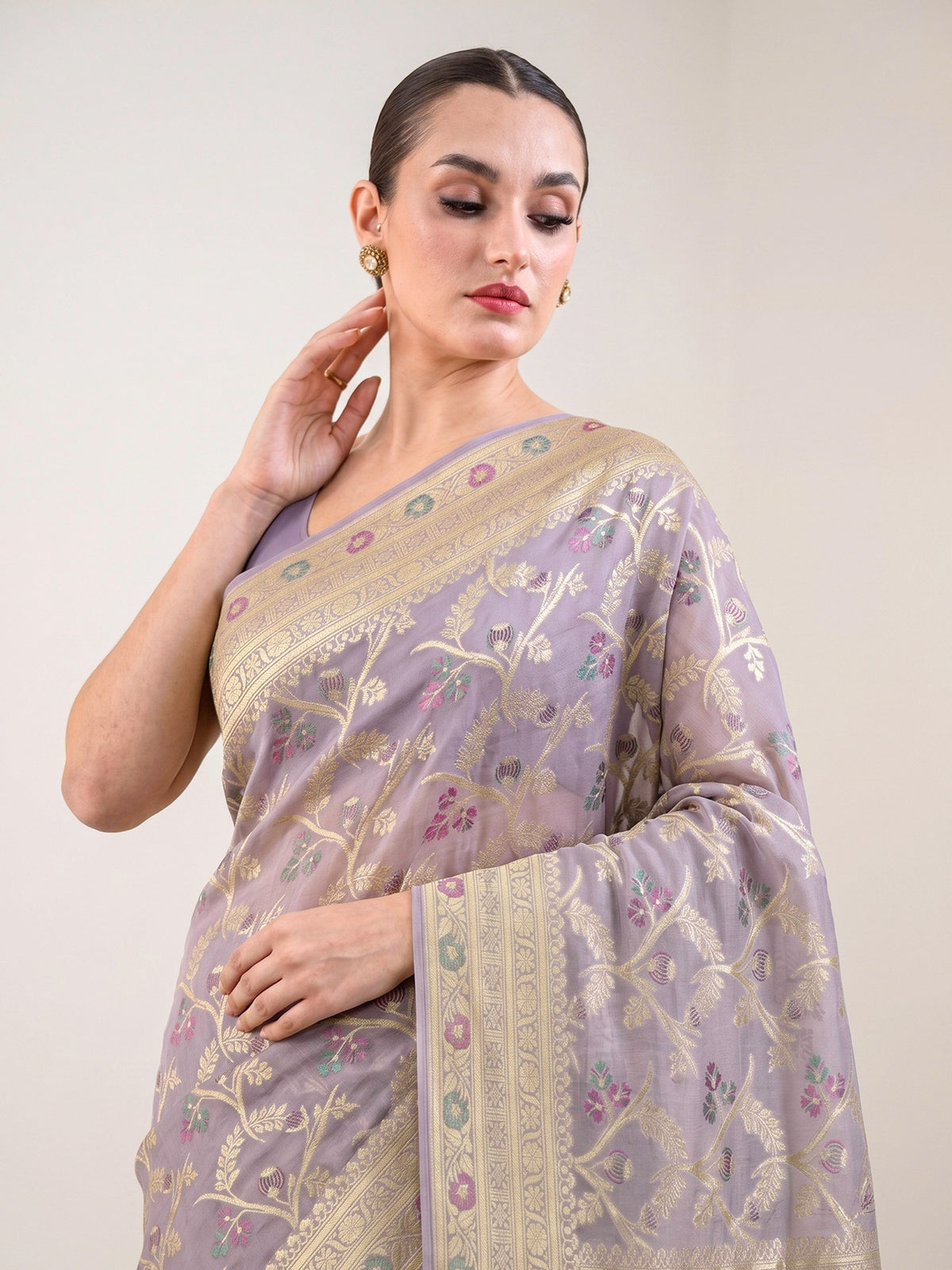
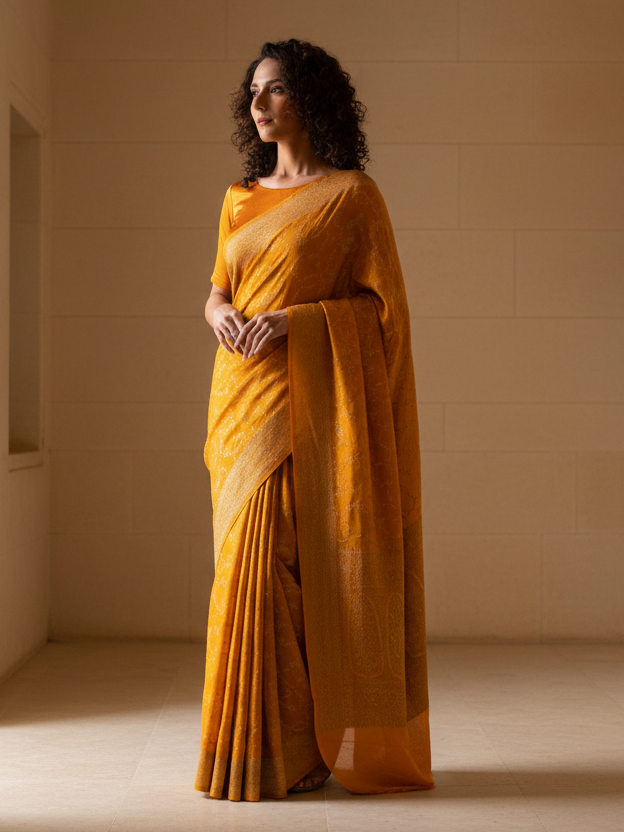
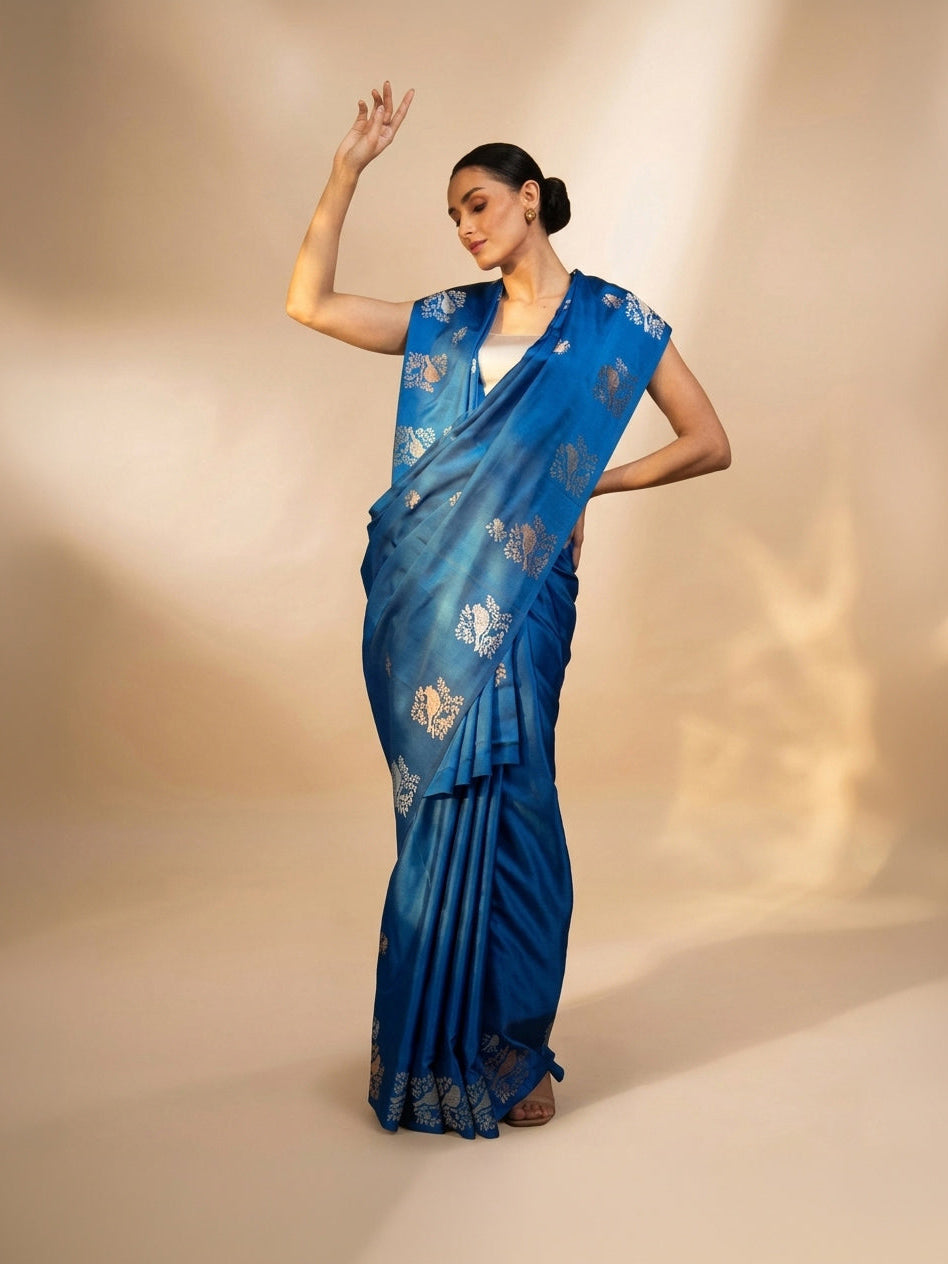
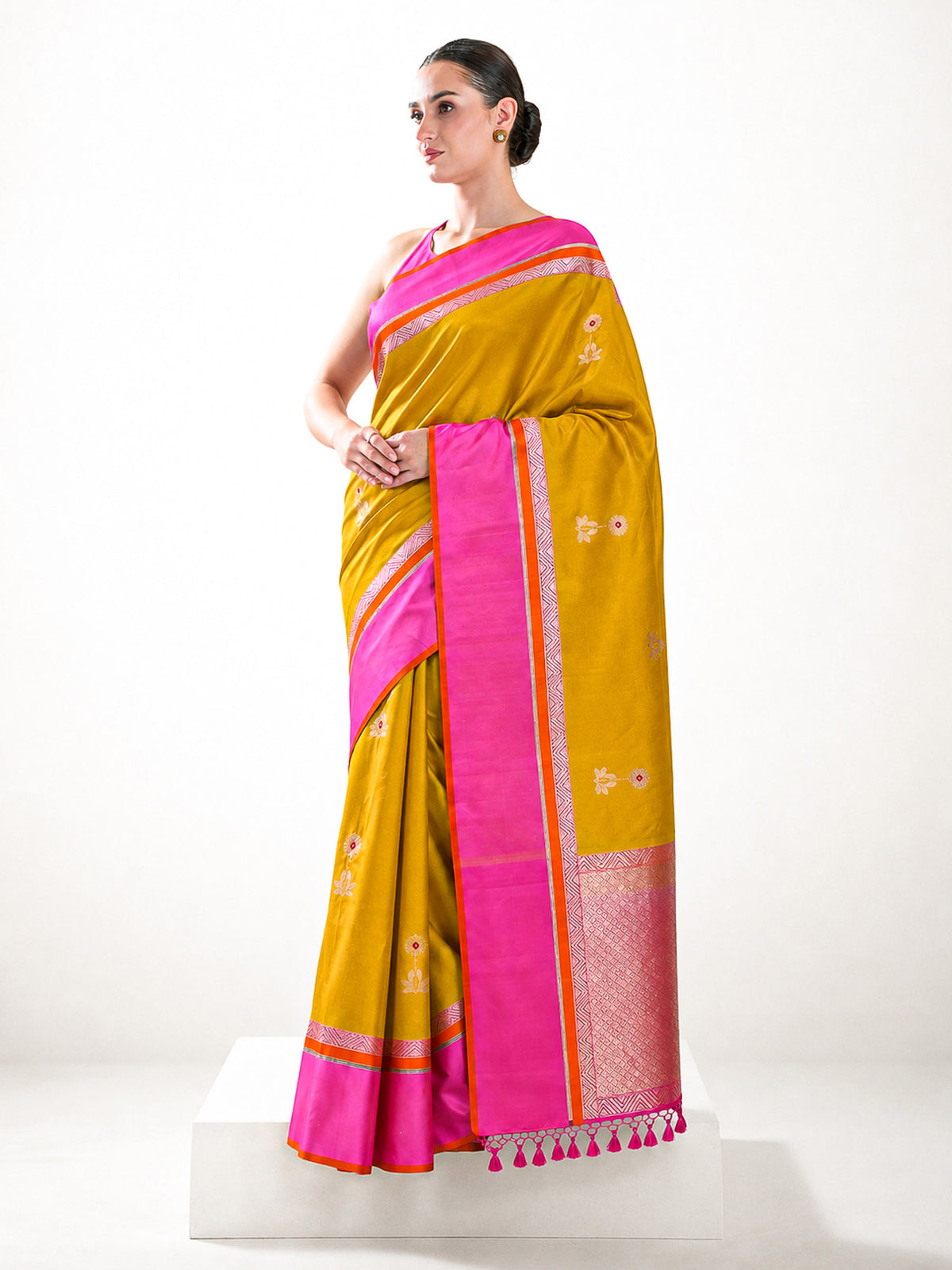
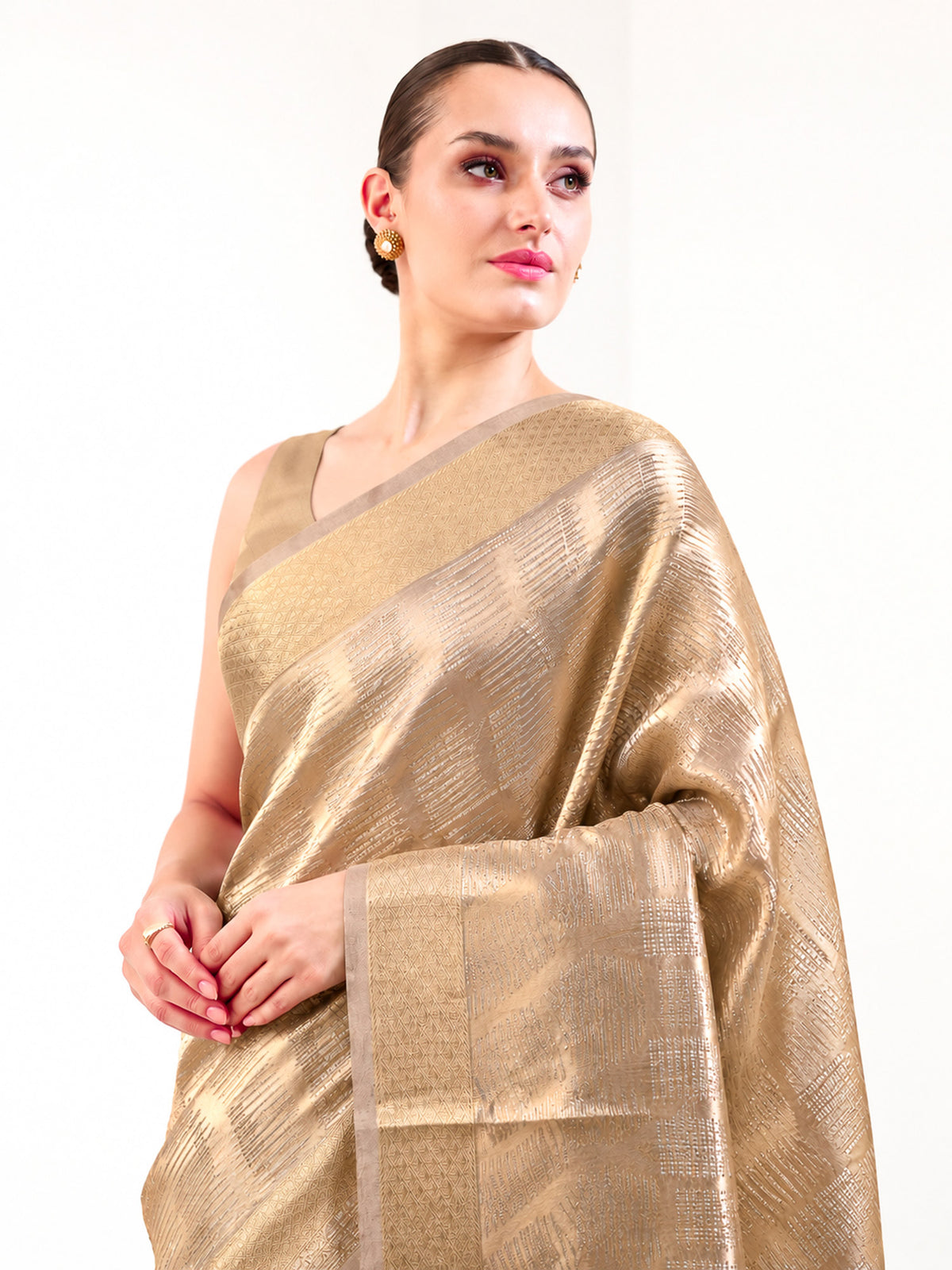
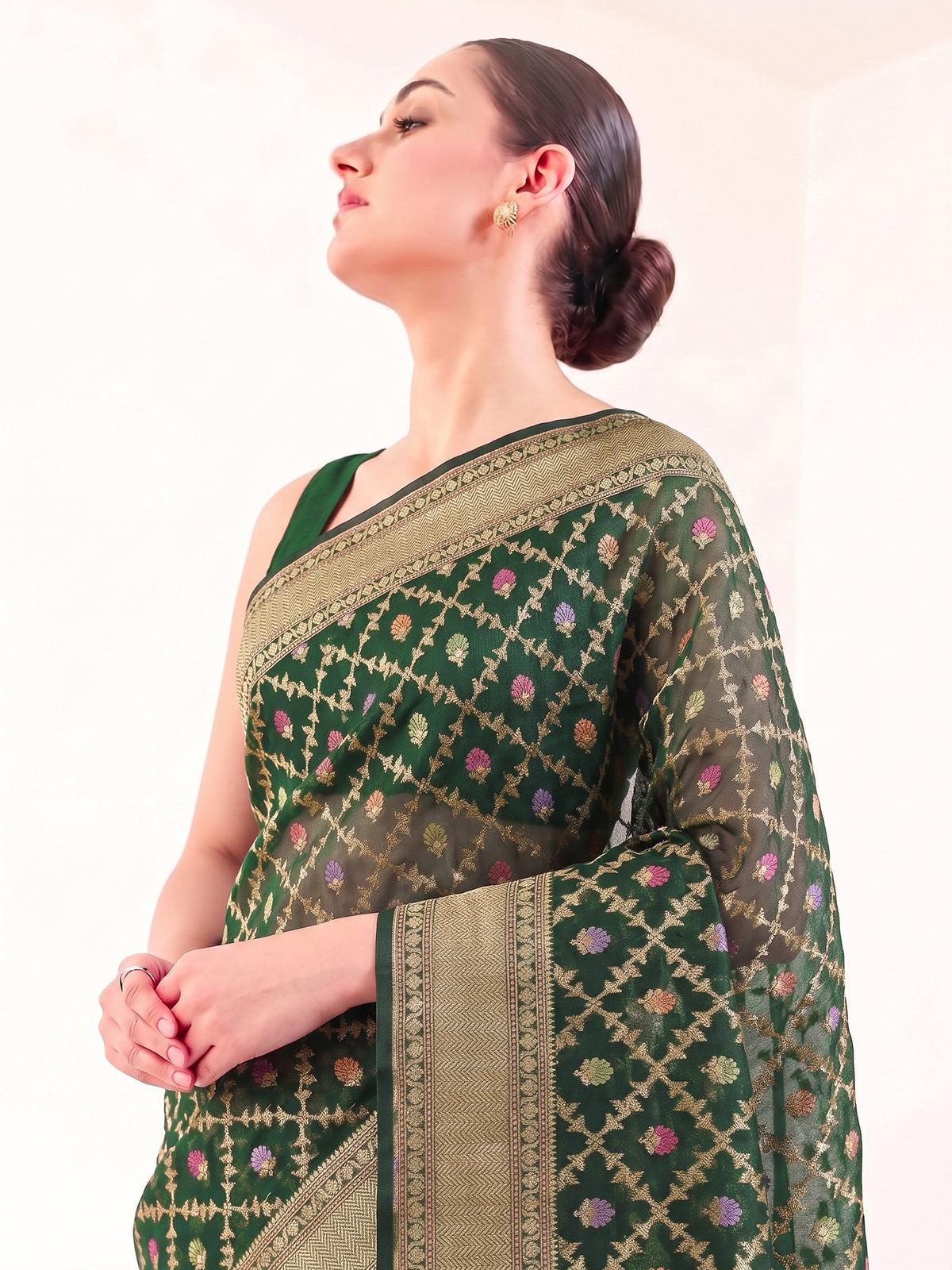
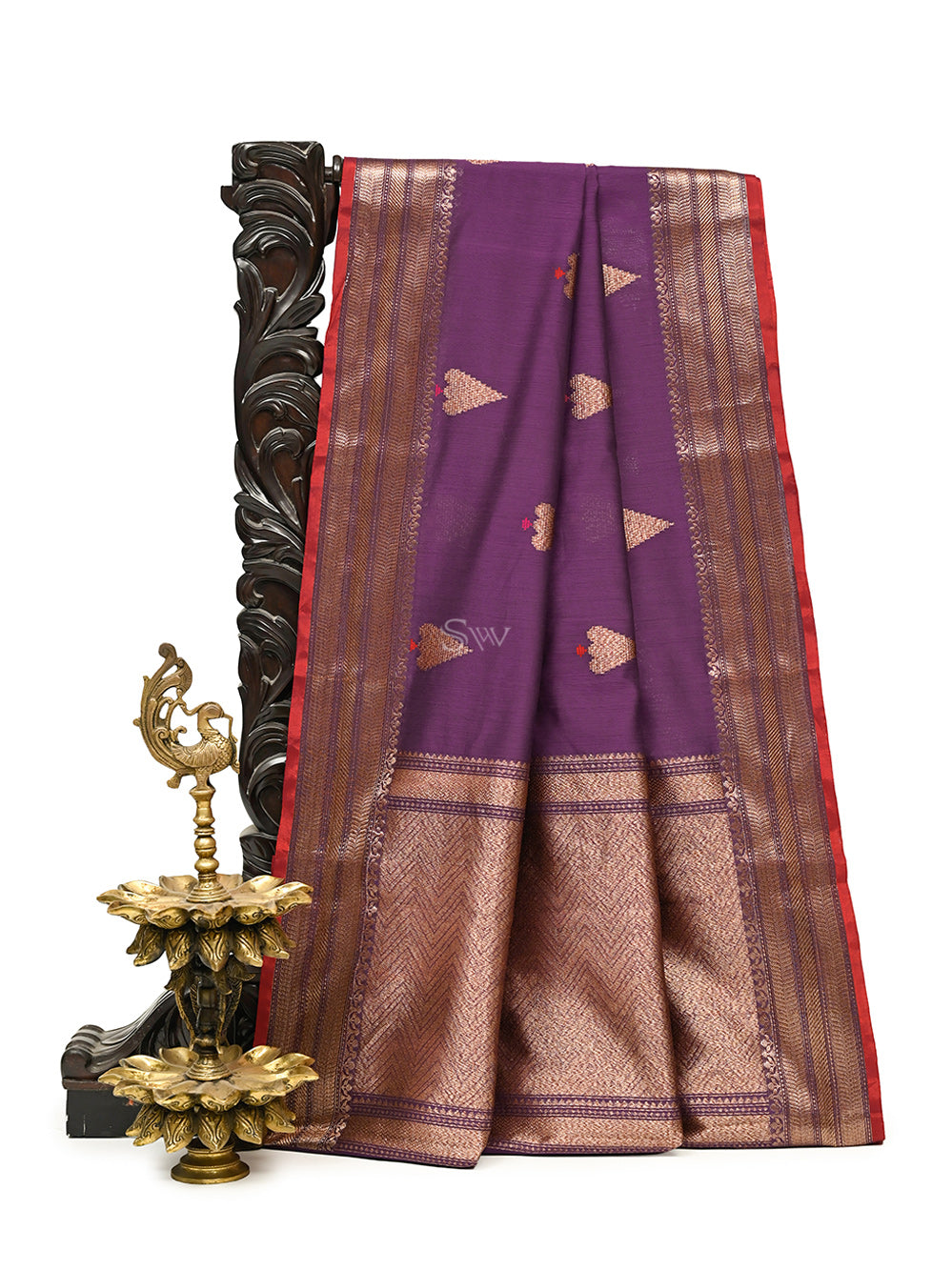


When buying a Banarasi silk saree, many customers associate weight with quality. A heavy saree may feel richer in hand, while a lightweight saree sometimes raises questions about whether it contains pure silk or genuine zari.
But does a heavier Banarasi saree actually mean better quality?
No. The weight of a Banarasi saree depends on the silk yarn, fabric construction, weaving density, zari work, borders and pallu. A heavier saree may contain more material or denser weaving, but that does not automatically make it more authentic, durable or valuable.
A lightweight Khaddi Georgette or Organza Banarasi saree can be made from excellent-quality pure silk, just as a heavier Katan Silk saree can have exceptional workmanship.
Understanding what contributes to weight can help you choose a saree that suits your occasion, comfort and budget.
What Determines the Weight of a Banarasi Silk Saree?
Five main factors influence how heavy a Banarasi saree feels.
| Factor | How it affects weight |
|---|---|
| Silk yarn | Yarn thickness and quantity contribute to the fabric's mass |
| Weaving density | Closely packed threads generally create a more substantial fabric |
| Zari work | Additional metallic or metallised threads increase weight |
| Border and pallu | Broad, densely woven decorative sections can add considerable weight |
| Saree dimensions | Longer or wider fabrics require more material |
Finishing and additional decorative materials may also contribute.
This explains why two sarees made from the same fabric can feel noticeably different.
For example, a pure Katan Silk saree with a simple Booti design may be relatively manageable, while another Katan saree featuring a broad zari border and all-over Jaal weaving may feel substantially heavier.
Does a Heavy Banarasi Saree Mean Better Silk Quality?
Not necessarily.
Pure silk is a natural protein fibre. Its authenticity is determined by fibre composition, not by how heavy the finished saree feels.
A fine silk yarn can be used to create a lightweight yet high-quality textile. Conversely, a heavier fabric can contain synthetic fibres or additional materials that increase its weight without improving silk quality.
This is particularly relevant when comparing pure Katan Silk with lightweight Banarasi fabrics such as Organza and Georgette.
A lightweight saree does not become inferior simply because it uses finer yarns or a more open fabric construction.
Weight cannot confirm whether a saree is made from pure silk. For that, buyers should check material specifications and relevant certification.
Read our guide to Silk Mark Certification to understand how genuine natural silk is verified.
Are Katan Silk Banarasi Sarees Always Heavy?

Katan Silk is known for its smooth surface, relatively structured drape and suitability for detailed Banarasi weaving.
However, not every Katan Silk saree is heavy.
A saree featuring scattered motifs and a relatively simple border may be easier to carry than one with dense brocade weaving, extensive zari and a richly decorated pallu.
The same fabric category can therefore accommodate both lighter festive designs and substantial bridal sarees.
If you prefer a traditional silk saree with a structured appearance, explore Pure Katan Silk Banarasi Sarees.
For more detail on the fabric itself, read Is Katan Silk Soft or Stiff?.
Which Banarasi Saree Fabrics Are Lightweight or Heavy?
Different Banarasi fabrics have distinctive textures and draping characteristics.
However, their actual weight depends on the individual saree.
| Banarasi fabric | Typical wearing feel | Drape |
|---|---|---|
| Katan Silk | More substantial when densely woven | Smooth and structured |
| Khaddi Georgette | Generally lightweight and airy | Soft and flowing |
| Organza or Kora Silk | Usually lightweight with a crisp feel | Sheer and structured |
| Crepe Silk | Generally lightweight with a smooth feel | Fluid and closer-fitting |
| Tissue Silk | Can range from very light to substantial | Shimmering, with variable structure |
| Satin Silk | Depends on yarn and weaving density | Smooth with a fluid or structured fall |
These descriptions are general characteristics, not fixed weight classifications.
A heavily woven Tissue saree may weigh more than a lightly decorated Katan saree. Similarly, an Organza saree with elaborate zari work may be noticeably heavier than a simpler Organza design.
Lightweight Banarasi sarees for comfortable wear

If you prefer a lighter saree for a summer wedding, long celebration or daytime function, consider Khaddi Georgette Banarasi sarees.
Their flowing drape and generally lightweight construction make them appealing to buyers who want traditional woven designs without a particularly substantial fabric.
Another option is Organza Silk Banarasi sarees, which offer a crisp, sheer appearance.
Remember that lightweight does not always mean easier to drape. Organza, for example, has a different structure from soft Georgette and may require more attention when arranging pleats.
Does More Zari Make a Banarasi Saree Heavier?
Often, yes.
Zari introduces additional yarn into the woven fabric. As the amount of decorative work increases, so can the overall weight.
Consider two sarees made with comparable silk and dimensions.
The first has scattered Booti motifs and a narrow zari border.
The second features a dense Jaal pattern, a broad decorative border and a richly woven pallu.
The second saree may weigh more because it contains additional decorative threads.
However, the amount of zari does not establish its composition or quality.
Metallic-looking zari can be produced using different materials, including metallised yarns and varieties containing precious metals.
A heavier saree does not automatically contain real silver or gold zari.
The correct way to evaluate zari is to ask about its material composition and weaving details, not simply weigh the saree.
Does a Heavier Banarasi Saree Last Longer?
There is no dependable relationship between greater weight and longer life.
Durability depends on several factors, including yarn strength, weaving construction, quality of finishing, frequency of use and care.

A densely woven saree may be robust in certain respects, but an elaborate design can also contain delicate supplementary threads that require careful handling.
Likewise, a lightweight pure silk saree can remain in excellent condition for years if properly maintained.
Both lightweight and heavier Banarasi sarees should be protected from sharp accessories, excessive pulling and unsuitable cleaning methods.
Do not choose a saree for long-term use solely because it feels heavier.
What Is the Ideal Banarasi Saree Weight for Weddings?
There is no universally ideal weight for wedding wear.
The right choice depends on the occasion, the duration of wear and how comfortable you feel carrying the saree.
For bridal wedding ceremonies
A more substantial Katan Silk saree with elaborate zari work can provide a rich, structured traditional appearance.
However, brides who prefer an easier-to-carry saree can choose a lighter design without compromising on silk authenticity or craftsmanship.
For receptions and sangeet functions
A relatively lightweight Georgette, Crepe or Organza saree can be convenient for functions involving considerable movement.
If you prefer a richer appearance, choose a design with decorative borders or a more elaborate pallu rather than selecting by weight alone.
For daytime and summer weddings
Lightweight fabrics can be practical, especially when the event is outdoors or involves extended wear.
Khaddi Georgette and Organza are worth considering, although comfort also depends on fabric breathability, blouse construction and personal preference.
For long wedding functions
Pay attention to how the saree's weight is distributed.
A particularly heavy pallu can place more weight on the shoulder, even when the overall saree is not exceptionally heavy.
A well-balanced saree with securely arranged pleats may feel more comfortable than a lighter saree that needs constant adjustment.
How to Check a Banarasi Saree's Weight Before Buying Online
Photographs rarely communicate the actual weight of a saree.
A richly woven Katan Silk saree may look similar to a lighter design in product images, but feel very different when worn.
Before purchasing, ask the seller these four questions.
1. What is the actual weight of the saree?
Ask for an approximate weight in grams, measured for the individual product.
Confirm whether it includes the unstitched blouse piece, as this can affect comparisons.
2. How much zari work does it contain?
Check whether the saree has limited motifs, an elaborate border or dense weaving across the body.
3. Can I see how the saree drapes?
A short video can reveal the fabric's movement, structure and how the pallu falls.
4. Is this weight suitable for my occasion?
Tell the seller whether you need the saree for a wedding ceremony, reception, daytime event or extended celebration.
At Sacred Weaves, customers can book Live Video Shopping to examine saree designs, fabric drape and weaving details before purchasing.
A video cannot measure weight precisely, but it can help you understand how the saree moves and how substantial it appears.
How to Judge Banarasi Saree Quality Without Relying on Weight
Instead of considering weight as the main indicator, evaluate these characteristics together:
-
Fibre composition: Confirm whether the saree is pure silk or another material.
-
Weaving workmanship: Examine the execution of motifs, borders and pallu.
-
Zari details: Check the type, quantity and quality of the decorative yarn.
-
Finishing: Look for damaged threads, snags or visible defects.
-
Fabric suitability: Assess whether its drape and structure suit your needs.
-
Product authenticity: Request suitable supporting information for pure silk and handloom claims.
These details reveal considerably more about the product than its weight alone.
Two sarees of identical weight may differ in materials, weaving methods, price and overall workmanship.
Final Verdict: Is a Heavy Banarasi Saree Better Than a Lightweight One?
A heavier Banarasi saree is not necessarily better quality.
Greater weight may indicate denser weaving, additional yarn or extensive zari work, but it does not establish pure silk content, handloom authenticity or superior craftsmanship.
A lightweight Banarasi saree can be just as valuable when made with high-quality silk and skilled weaving.
If you prefer a substantial traditional drape, consider a richly woven Katan Silk Banarasi saree.
If comfortable movement and a lighter feel are your priorities, explore Khaddi Georgette Banarasi sarees.
Ultimately, the best saree is one whose fabric, workmanship, design and wearing comfort meet your expectations.


