

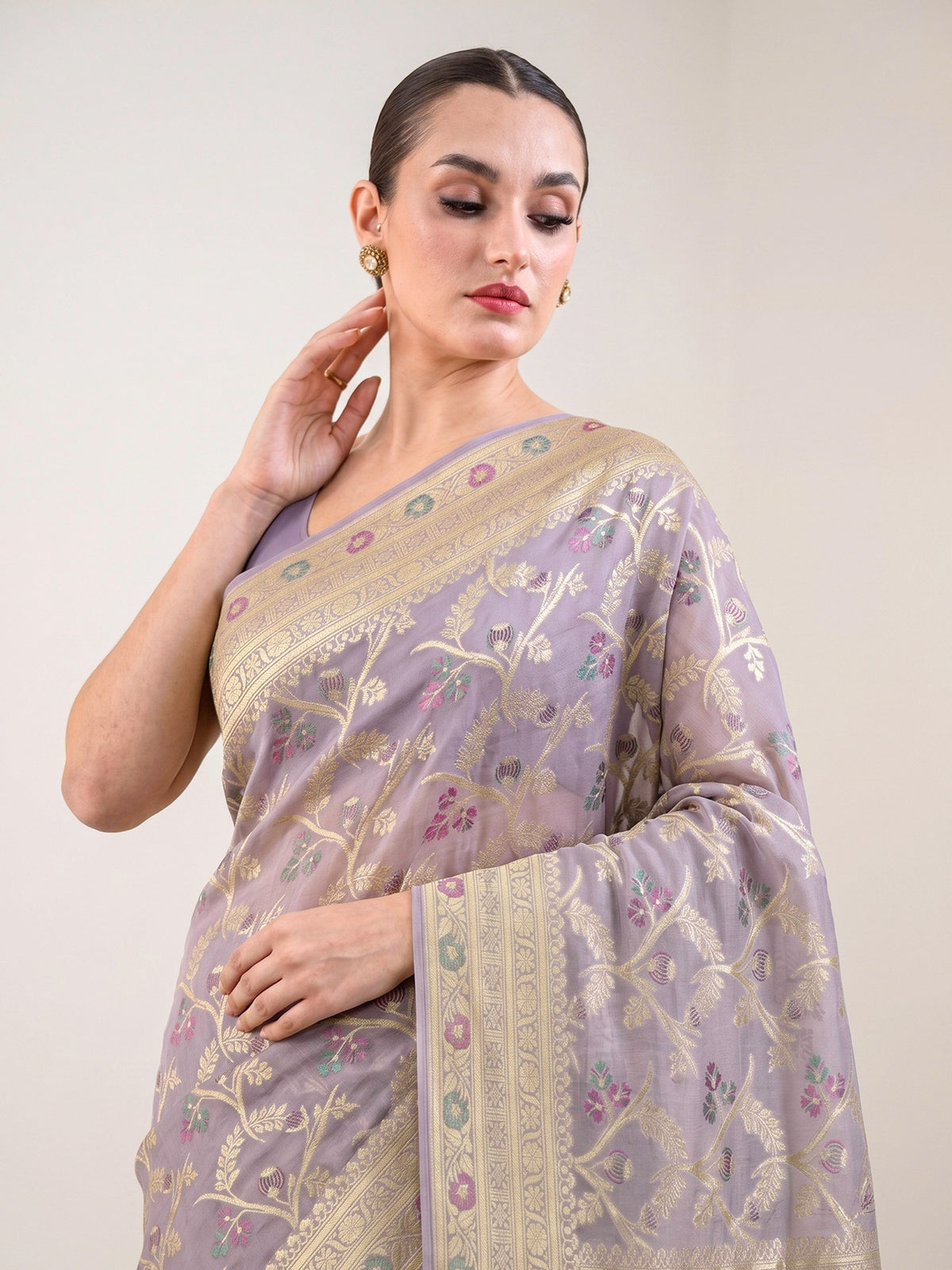
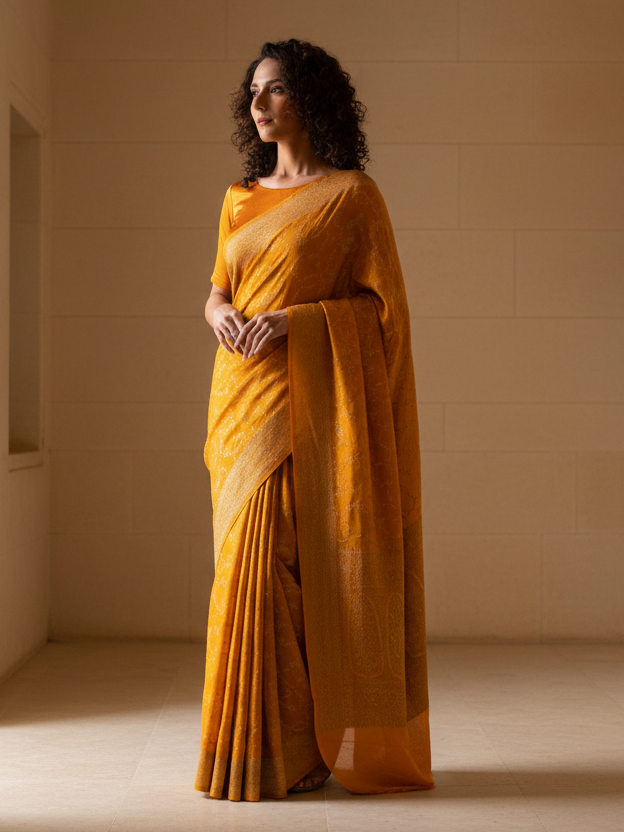
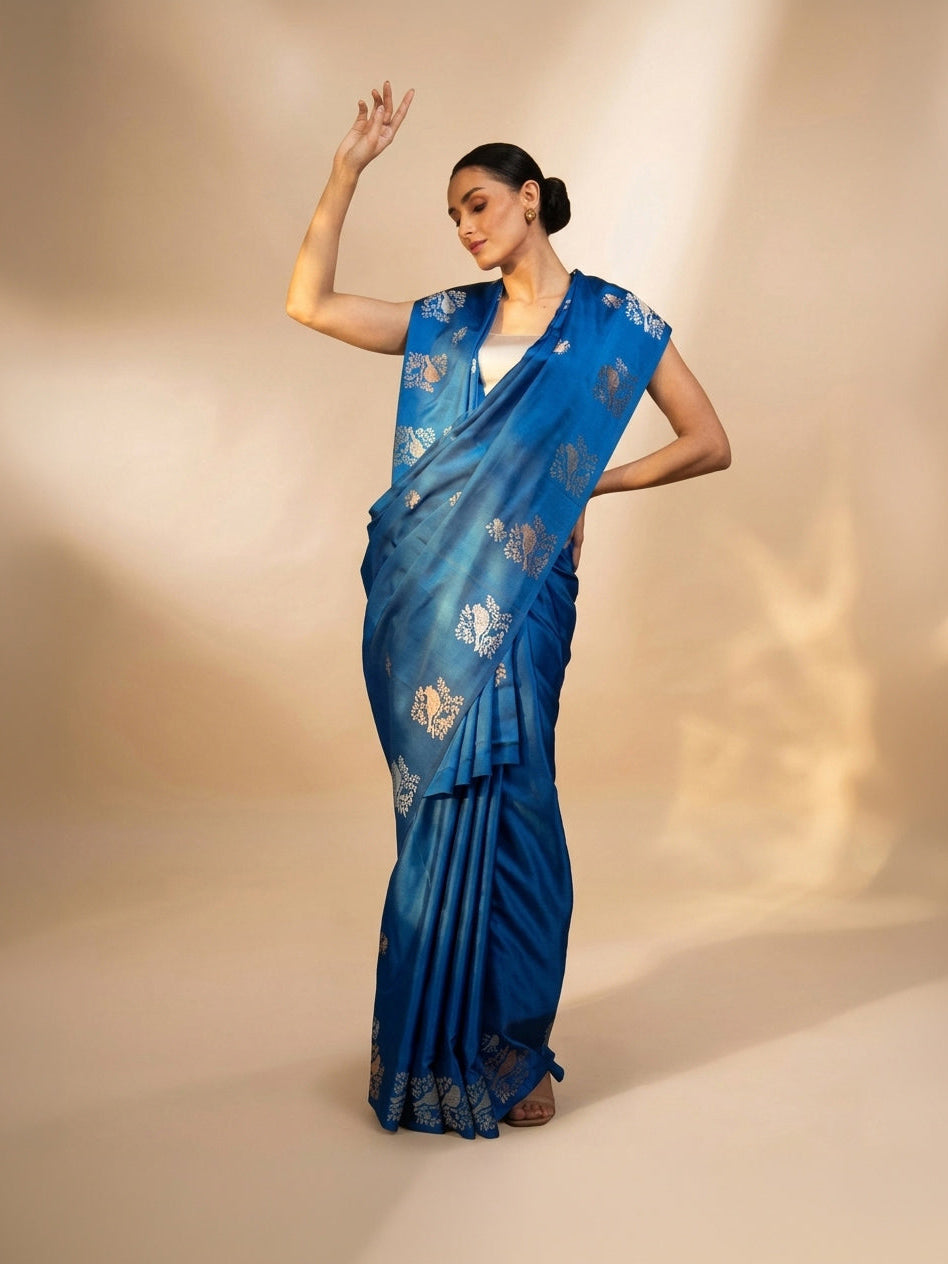
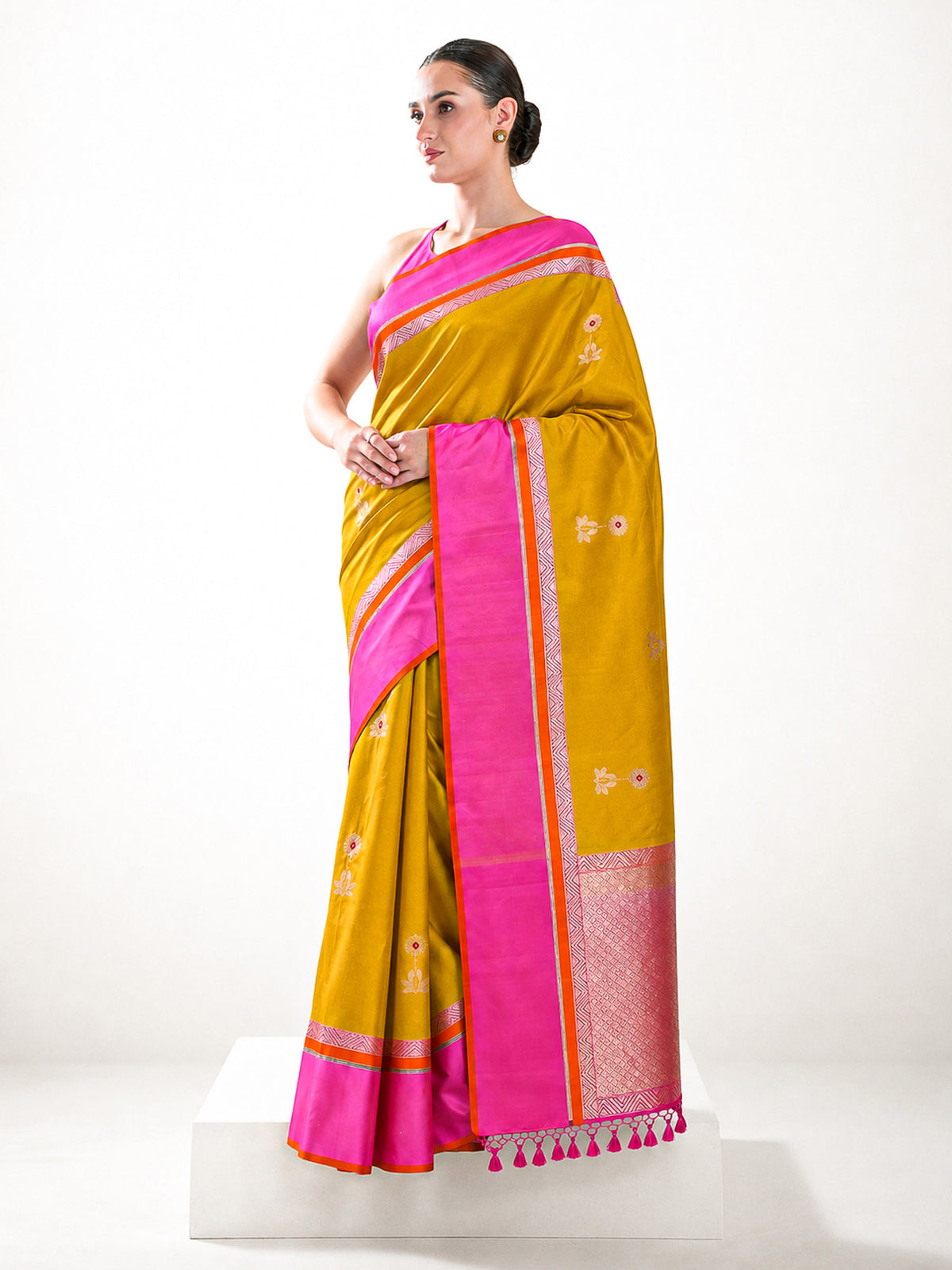

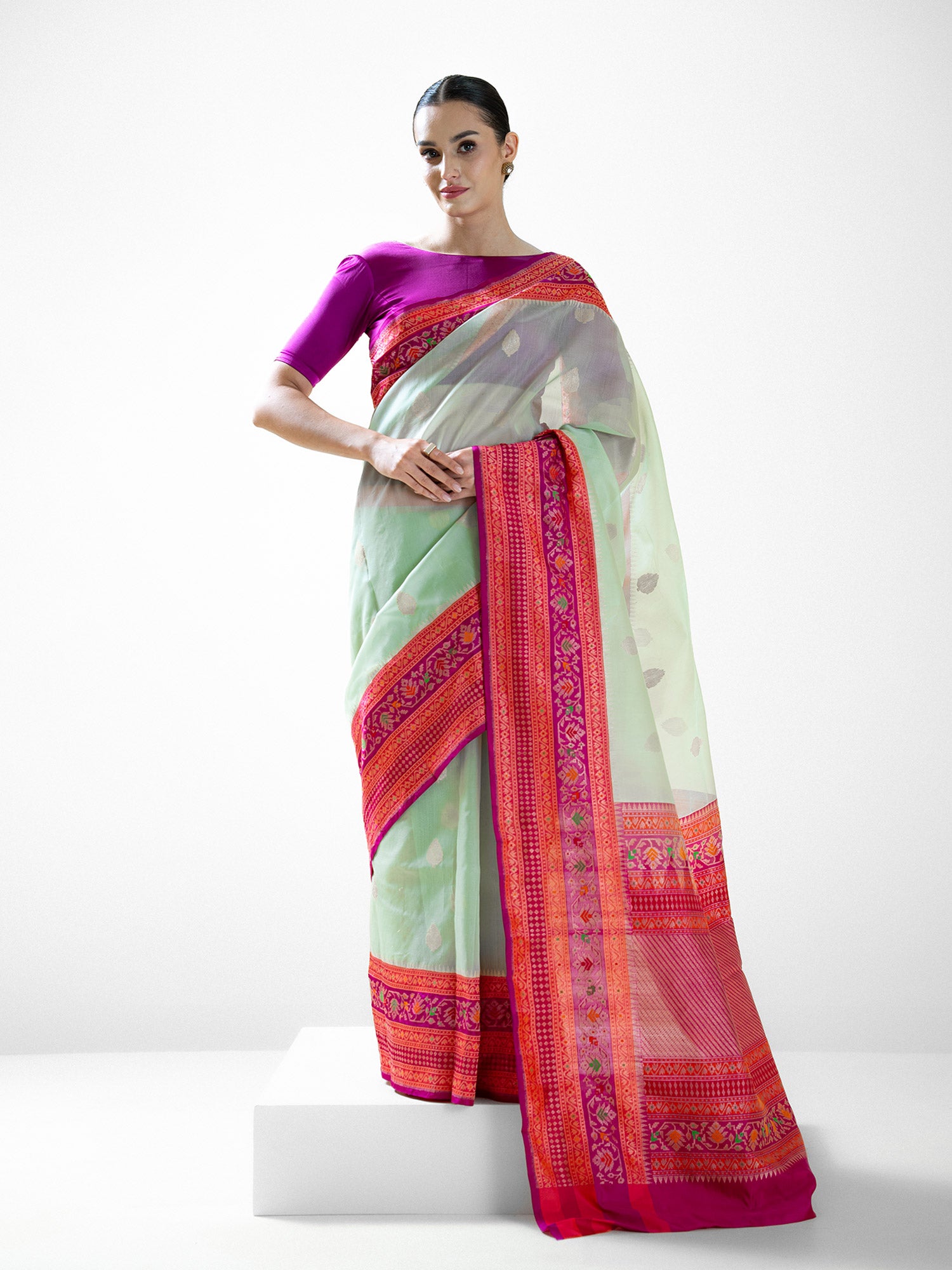
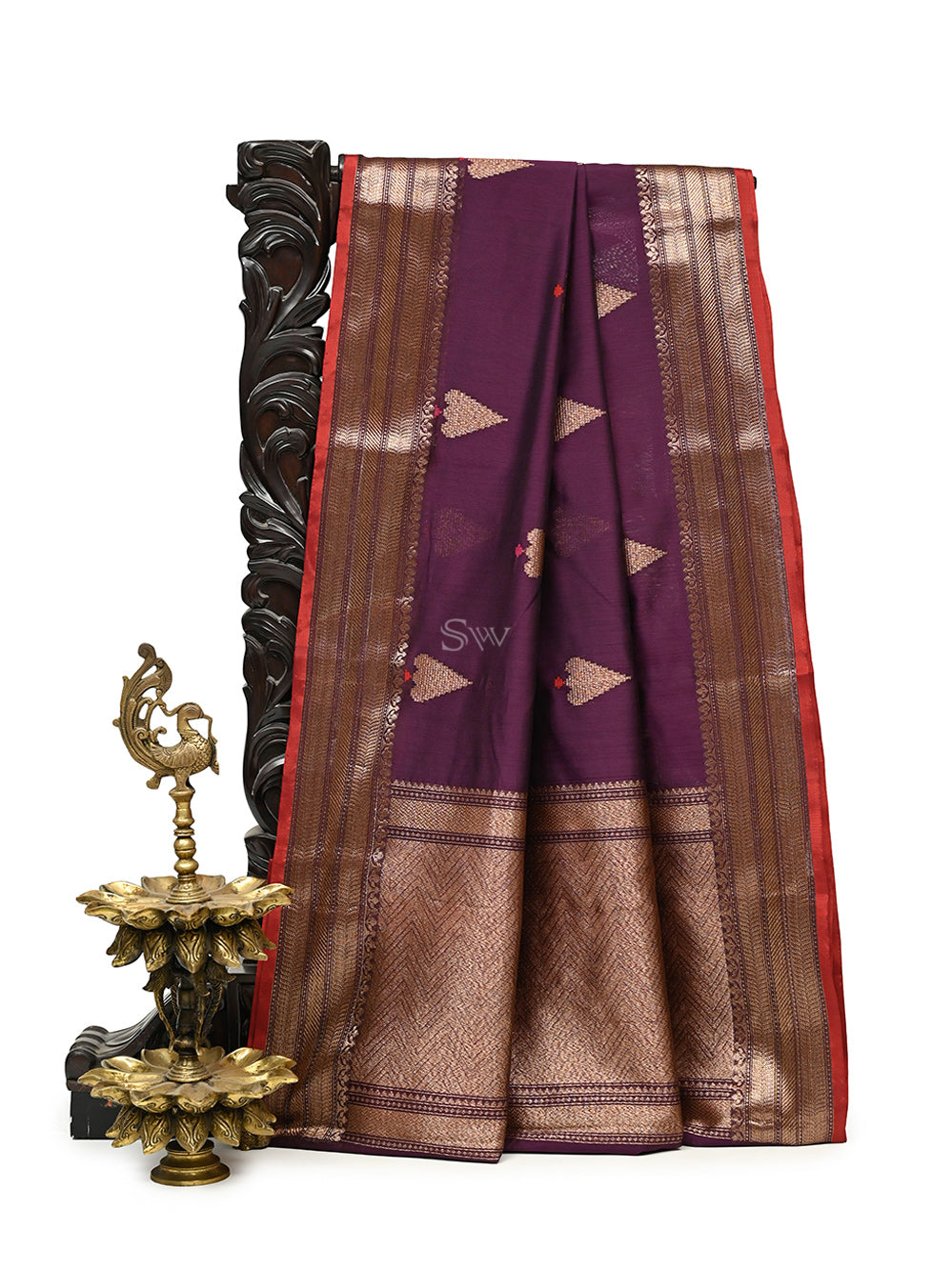


Tissue silk is a distinctive fabric known for its shimmering metallic finish, fine texture, and luxurious appearance. Unlike conventional silk sarees, which have a natural, softer sheen, Tissue silk gets its characteristic glow from metallic threads woven into the fabric.
When this beautiful fabric is combined with traditional Banarasi weaving, it creates Banarasi Tissue Silk Sarees featuring intricate Brocade patterns, elaborate zari work, and elegant designs. Their luminous appearance makes them a popular choice for weddings, receptions, and festive celebrations.
But what exactly is Tissue silk, how is it different from other silk fabrics, and what should you look for before buying one? Let's understand.
What Is Tissue Silk Fabric?
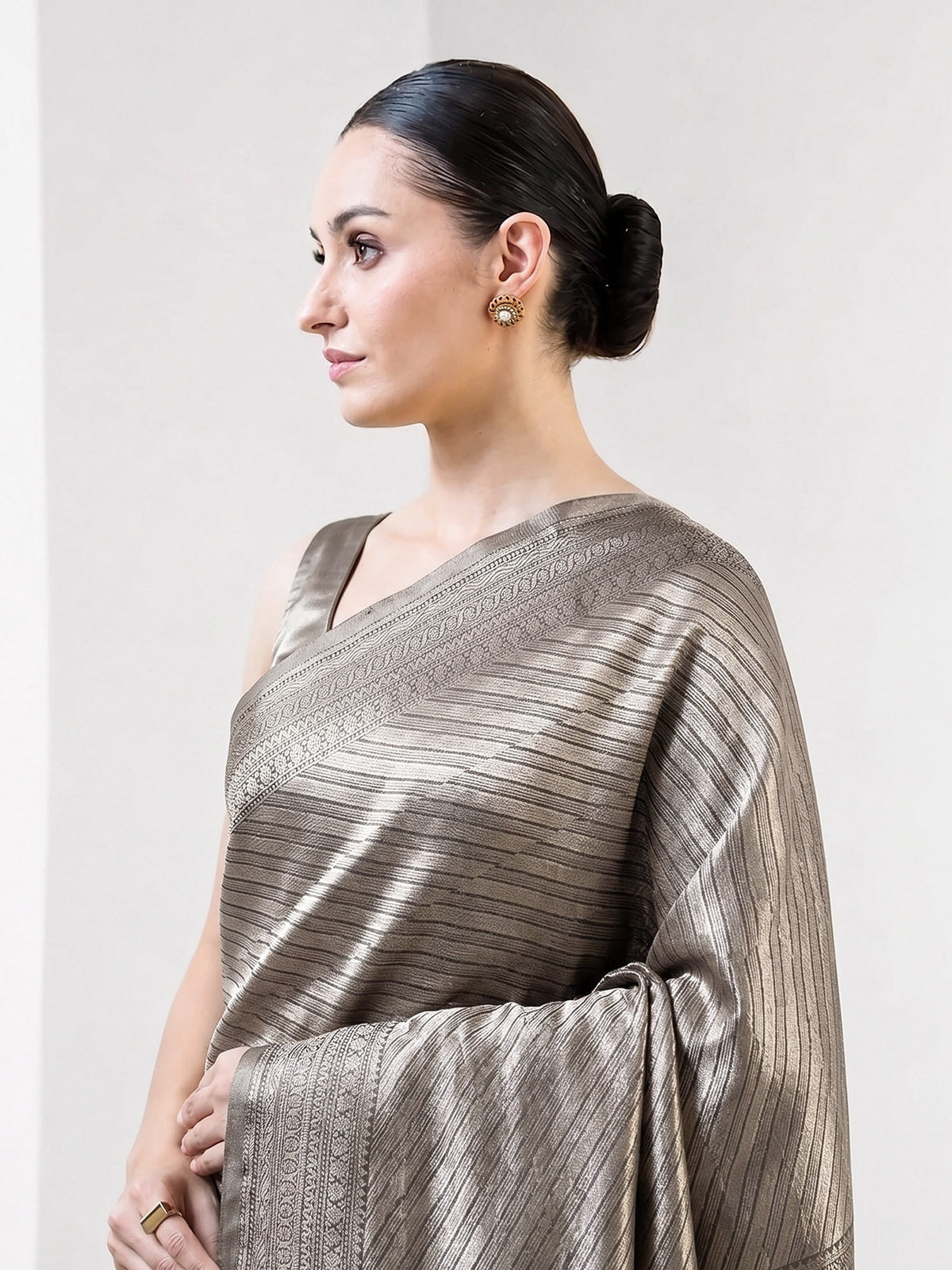
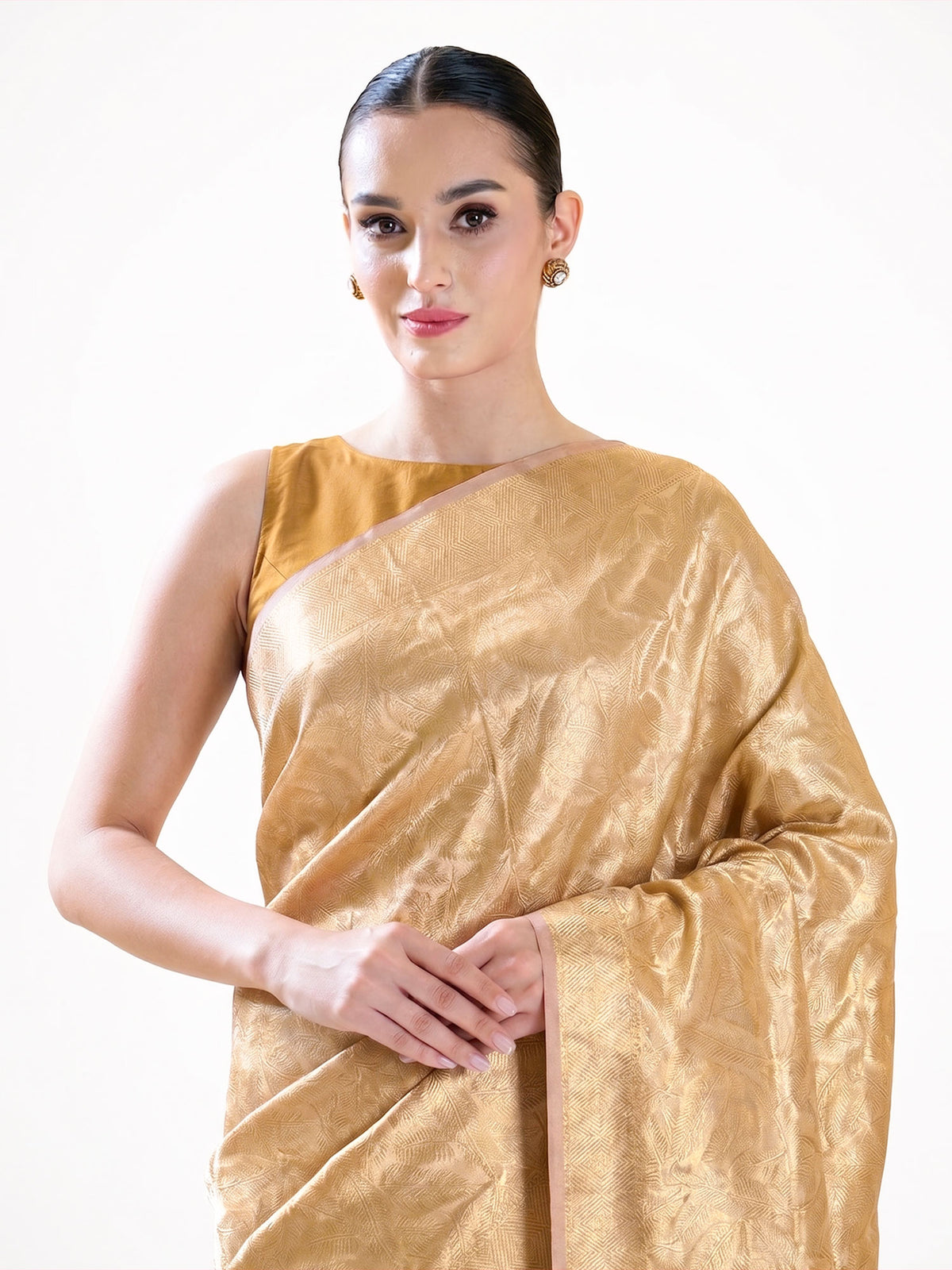
Tissue silk is a finely woven fabric that combines silk yarns with metallic threads, often gold- or silver-toned zari, to create a distinctive shimmering surface.
The term Tissue describes the fabric's construction and appearance rather than a separate variety of silk fibre. Traditionally, fine silk threads and metallic yarns are interwoven to produce a delicate-looking fabric that reflects light beautifully.
Depending on the weaving technique and yarn composition, Tissue silk can have a soft, flowing drape or a slightly crisp, structured feel.
 |
 |
The main characteristics of Tissue silk are:
-
Metallic sheen: A luminous surface created by zari or metallic threads woven into the fabric.
-
Fine texture: A delicate-looking weave that may have varying degrees of transparency.
-
Distinctive drape: Some Tissue fabrics fall softly, while others maintain a more structured appearance.
-
Decorative versatility: Tissue can be woven with intricate Brocade patterns, traditional motifs, and elaborate borders.
These characteristics give Tissue silk its recognizable appearance, especially when used in traditional Indian sarees.
How Are Banarasi Tissue Silk Sarees Made?
Banarasi Tissue sarees are woven using techniques associated with the traditional textile industry of Varanasi, where silk weaving and intricate zari craftsmanship have been practised for generations.
The characteristic shimmer develops during weaving rather than being added through surface printing or a shiny coating.
In a traditional Tissue construction, fine silk yarns form part of the fabric's foundation, while metallic threads are incorporated to produce a reflective surface.
For more decorative sarees, weavers introduce Brocade motifs using additional patterned yarns. These may include floral designs, paisleys, vines, and other traditional Banarasi patterns.
The complexity of the design determines how much additional weaving work is required. A saree with closely arranged motifs or elaborate borders generally requires more detailed weaving than a comparatively simple pattern.
However, not every fabric marketed as Tissue silk uses the same yarn composition or weaving method. This is why checking the product specifications is important when buying an authentic handloom saree.
What Makes Banarasi Tissue Silk Sarees Special?
What distinguishes a Banarasi Tissue saree is the combination of the fabric's metallic lustre and the decorative richness of Banarasi weaving.
1. A Distinctive Metallic Finish
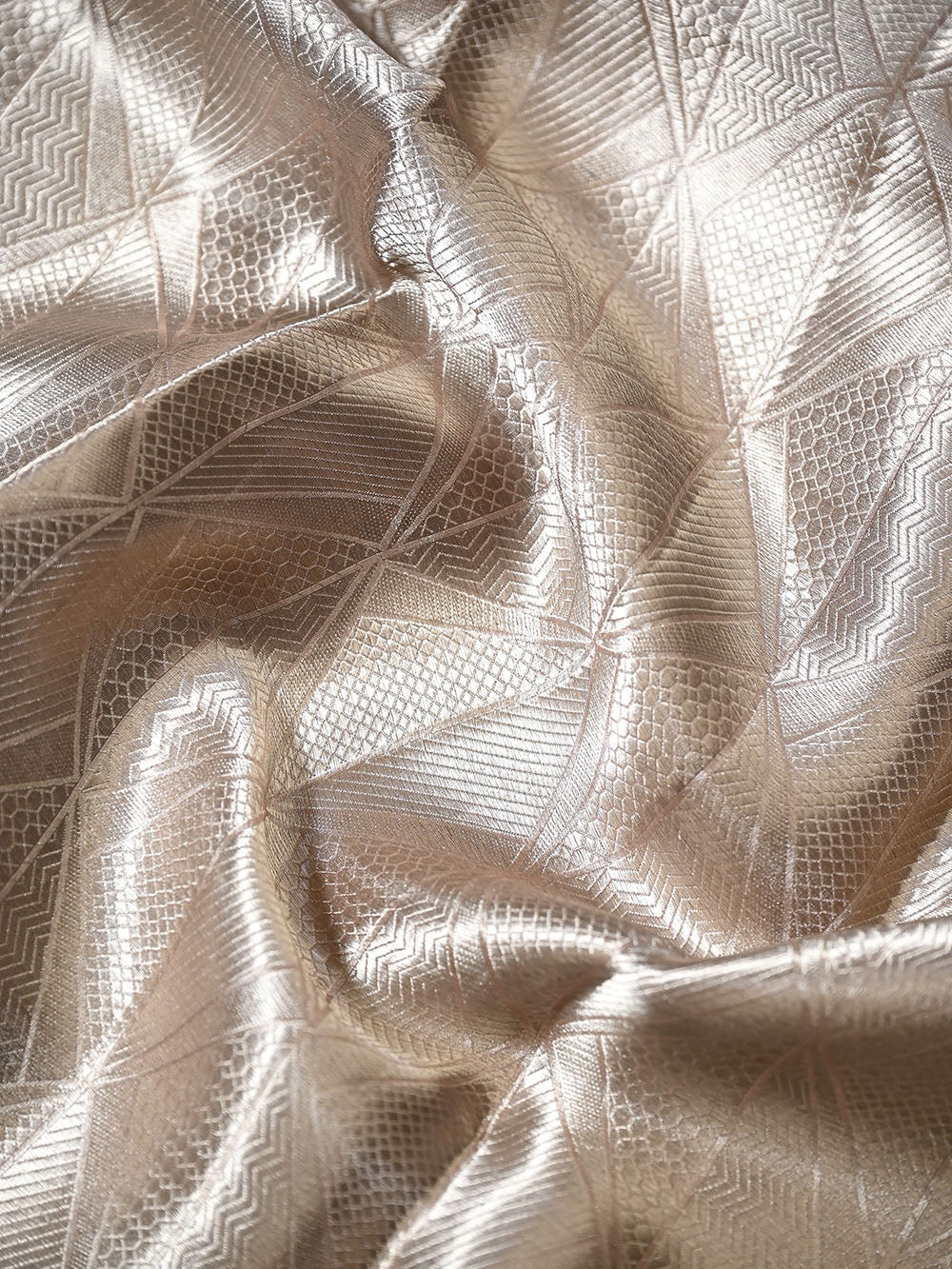
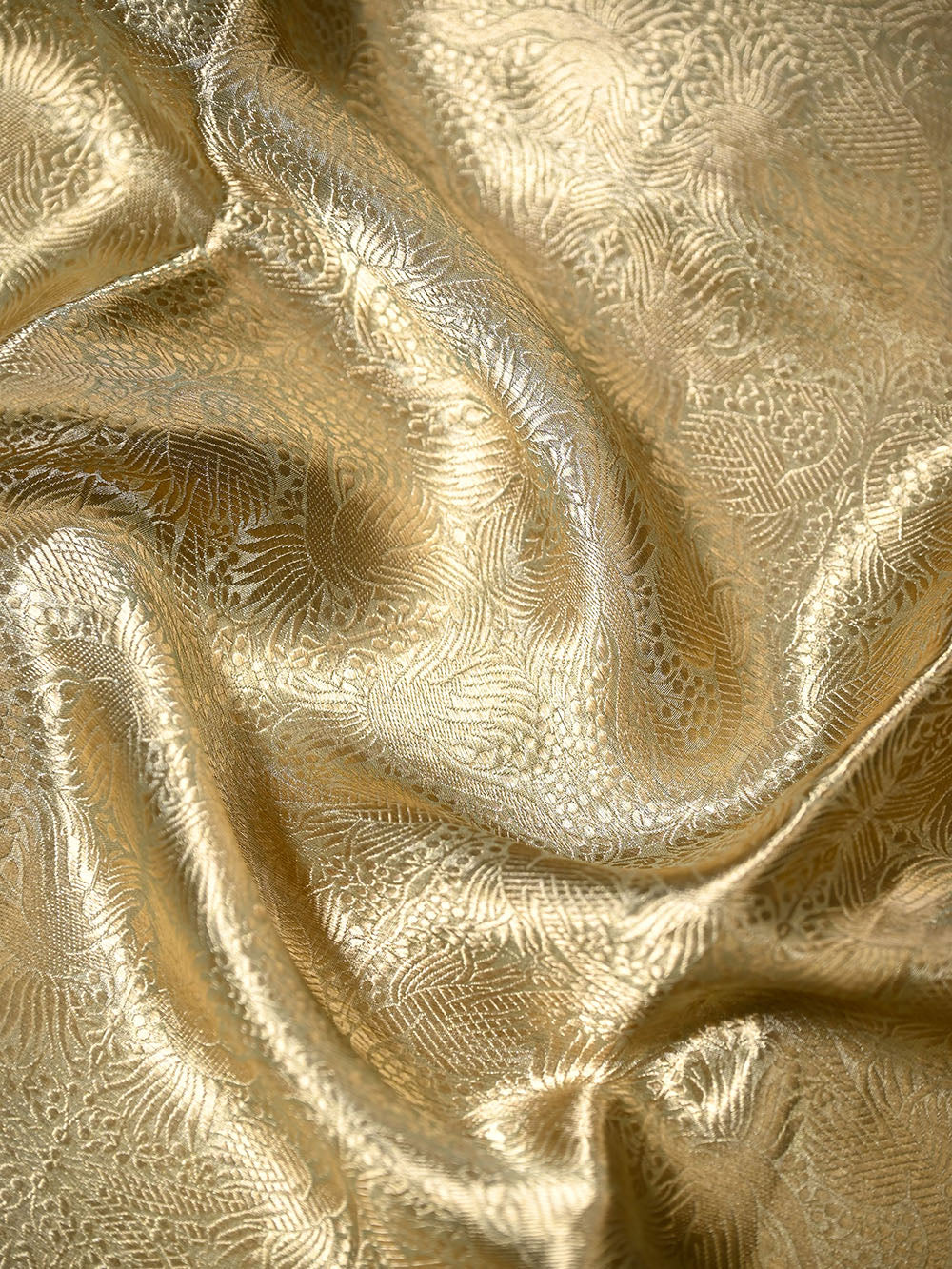
The shimmering appearance is one of the most noticeable features of Tissue silk. Gold- and silver-toned threads reflect light across the surface, creating a luminous effect that changes with movement and lighting.
Unlike sarees where zari is limited to the border or pallu, Tissue fabrics can display metallic lustre across the body itself.
2. Intricate Banarasi Brocade Designs
Brocade weaving adds another layer of visual richness to Tissue silk.
Traditional floral motifs, decorative vines, and carefully arranged patterns become more prominent against the shimmering background.
A beautifully woven Tissue Brocade saree can therefore create a grand appearance without relying on heavy embroidery or separate embellishments.
3. Elegant Colours with a Subtle Glow
Tissue fabric has a distinctive way of reflecting colour. Pastel shades can appear soft and luminous, while deeper colours create a more striking contrast with metallic threads.
This makes Tissue sarees particularly attractive in shades such as pastel pink, mint green, sky blue, beige, gold, red, and magenta.
At Sacred Weaves, the Banarasi Tissue Silk Sarees collection features handloom Tissue Brocade designs in an elegant selection of traditional and contemporary colours.
 |
 |
Tissue Silk vs Katan Silk vs Organza: What's the Difference?
Buyers often compare Tissue with Katan and Organza because all three are popular choices in Banarasi sarees.
However, they differ in construction, appearance, and drape.
| Feature | Tissue Silk | Katan Silk | Organza Silk |
|---|---|---|---|
| Appearance | Metallic shimmer | Rich natural silk lustre | Sheer, delicate appearance |
| Texture | Fine, sometimes crisp | Smooth with substantial body | Crisp and lightweight |
| Drape | Soft or structured, depending on weave | Usually fuller and more substantial | Often structured and airy |
| Distinctive quality | Reflective metallic threads | Twisted silk yarn construction | Fine, sheer weave |
| Popular occasions | Weddings, receptions, celebrations | Traditional weddings, bridal wear | Daytime events, contemporary festive looks |
A Katan Silk Banarasi Saree is a suitable choice if you prefer the rich appearance and substantial feel of traditional silk.
Tissue silk, on the other hand, is particularly appealing if you want a shimmering saree that naturally creates a festive, dressed-up appearance.
The actual weight and comfort of each saree will depend on its weave, zari density, and fabric composition.
Are Banarasi Tissue Silk Sarees Suitable for Weddings?
Yes. Tissue Silk Banarasi sarees are particularly well suited to weddings because their metallic sheen creates an elegant ceremonial appearance.
They work beautifully for wedding guests, bridesmaids, engagement functions, receptions, and festive gatherings.
The right colour and design depend on the occasion.
For Daytime Weddings
Pastel Tissue sarees in pink, mint green, sky blue, or beige are excellent choices for daytime ceremonies.
Their metallic lustre complements softer colours without creating an overly heavy appearance.
Choose subtle Brocade motifs and pair the saree with pearl jewellery or delicate gold accessories.
For Wedding Receptions
For evening receptions, consider Tissue Brocade sarees with more prominent woven patterns.
Gold-toned, red, magenta, grey, or darker shades can create a richer look under evening lighting.
A well-fitted blouse and carefully arranged pallu will help showcase the saree's weaving.
For Engagements and Festive Celebrations
Tissue sarees are also attractive for engagement ceremonies, Diwali celebrations, family weddings, and other traditional occasions.
If you prefer understated elegance, choose a comparatively simple design. For grand celebrations, elaborate Brocade patterns offer a more decorative appearance.
How to Identify a Good-Quality Tissue Silk Saree
When purchasing a Tissue saree, especially online, its appearance alone should not determine your decision.
A saree may have a beautiful metallic finish, but the quality depends on the actual fabric composition, weaving, and zari materials.
Here are the most important things to check.
Check the Silk Composition
Not every saree marketed as Tissue silk is necessarily made entirely from natural silk.
Some commercially available Tissue fabrics contain synthetic or blended yarns.
If you are buying a pure silk saree, check the product description and ask for clarification about the fibre composition.
For products carrying a genuine Silk Mark label, the certification provides assurance regarding natural silk purity. It does not independently certify the purity of zari.
Examine the Zari Work
Metallic threads contribute significantly to a Tissue saree's appearance.
Look closely at the weaving, metallic finish, and consistency of the decorative patterns.
Also understand that gold-coloured zari does not necessarily mean real gold or silver zari. Different metallic yarns are used at different price points.
Look at the Weaving Details
Handloom Tissue sarees may show subtle variations associated with their woven construction.
Examine the Brocade motifs, border finishing, pallu design, and reverse side of the fabric.
However, small irregularities alone cannot establish whether a saree is handwoven. Reliable product information and seller documentation are more useful than relying on visual tests.
Check the Drape Before Buying
Tissue sarees can differ considerably in stiffness and transparency.
Some have a delicate, fluid appearance, while others have more body because of their metallic threads and Brocade construction.
When shopping online, request close-up photographs or a live video demonstration to understand the actual texture, shine, and drape.
Why Do Banarasi Tissue Silk Saree Prices Vary?
The price of a Banarasi Tissue saree depends on several factors, particularly silk quality, zari materials, and the complexity of weaving.
Fabric composition: Pure silk and silk-blend fabrics can have different manufacturing costs.
Zari quality: The type of metallic thread used influences both the appearance and price of the saree.
Weaving technique: Intricate handloom Brocade designs require skilled workmanship and additional production time.
Design complexity: Elaborate motifs, extensive zari work, and detailed borders may increase weaving costs.
Two Tissue sarees may appear similar in photographs but differ in their yarn composition, pattern complexity, and overall craftsmanship.
Instead of judging solely by price, compare the product specifications and weaving details.
How to Care for a Banarasi Tissue Silk Saree
Tissue sarees require careful handling because fine silk yarns and metallic threads can be sensitive to pressure, moisture, and improper cleaning.
A few practical precautions can help preserve their appearance:
-
Prefer professional dry cleaning by a cleaner experienced with silk and zari fabrics, following the garment's care label.
-
Store the saree wrapped in clean muslin or cotton cloth.
-
Keep it away from prolonged direct sunlight and damp storage conditions.
-
Avoid applying perfume directly to the saree.
-
Refold it periodically to avoid prolonged pressure along the same fold lines.
Avoid direct high-temperature ironing, particularly over metallic threads. If pressing is necessary, follow the manufacturer's care recommendations.
Shop Banarasi Tissue Silk Sarees Online at Sacred Weaves
A Banarasi Tissue Silk saree is an appealing choice if you appreciate traditional handloom craftsmanship and want a saree with a distinctive metallic glow.
Whether you prefer a soft pastel Tissue Brocade design for a daytime wedding or a richly coloured saree for a reception, choosing the right weave, colour, and fabric quality makes all the difference.
Sacred Weaves offers a curated selection of handloom Tissue Brocade Banarasi sarees featuring intricate woven patterns and elegant colour combinations.
You can also explore available live video shopping options to examine the fabric and detailing before purchasing.
Explore the Banarasi Tissue Silk Sarees collection at Sacred Weaves and discover a design that complements your next special occasion.


