

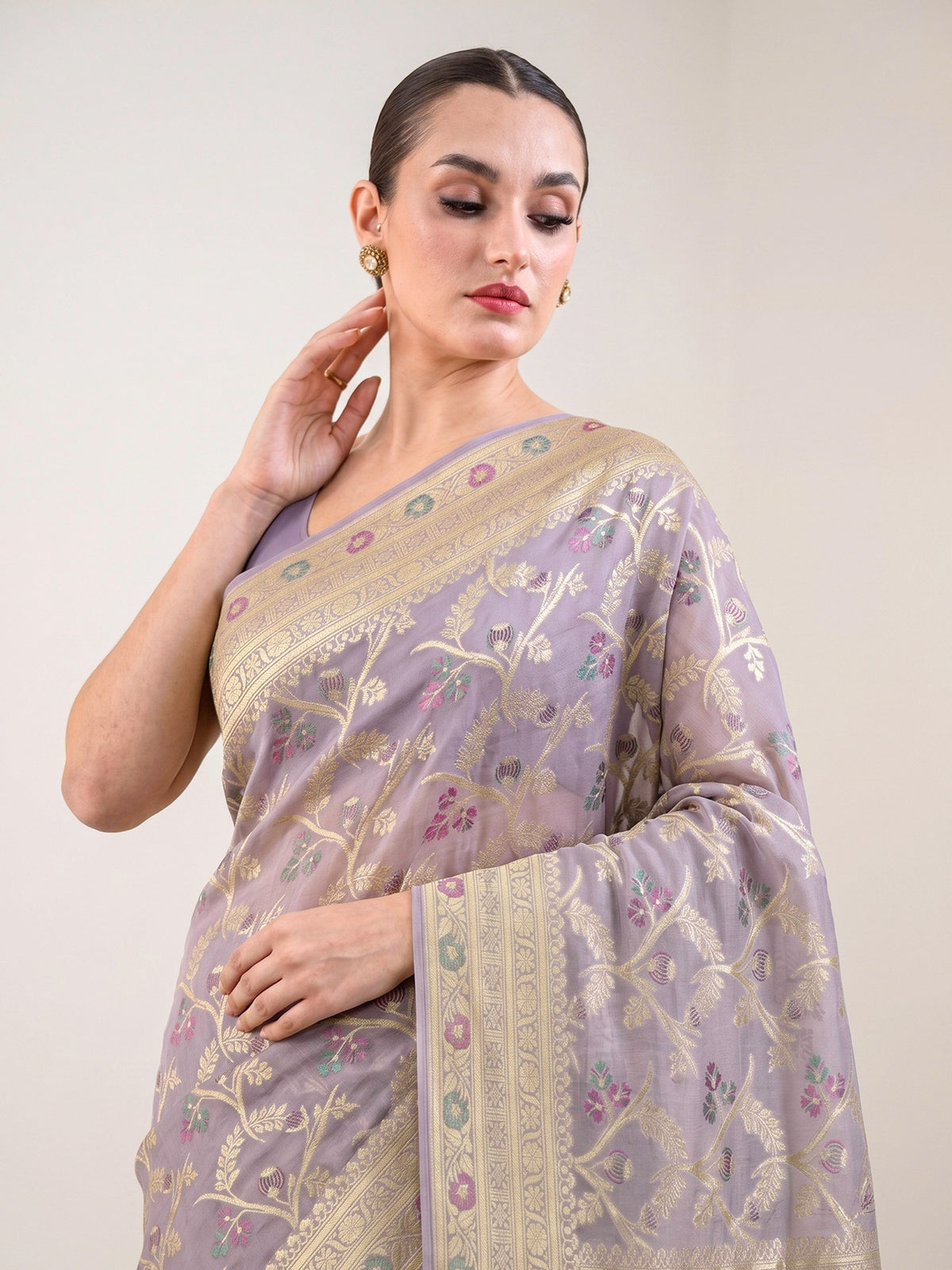
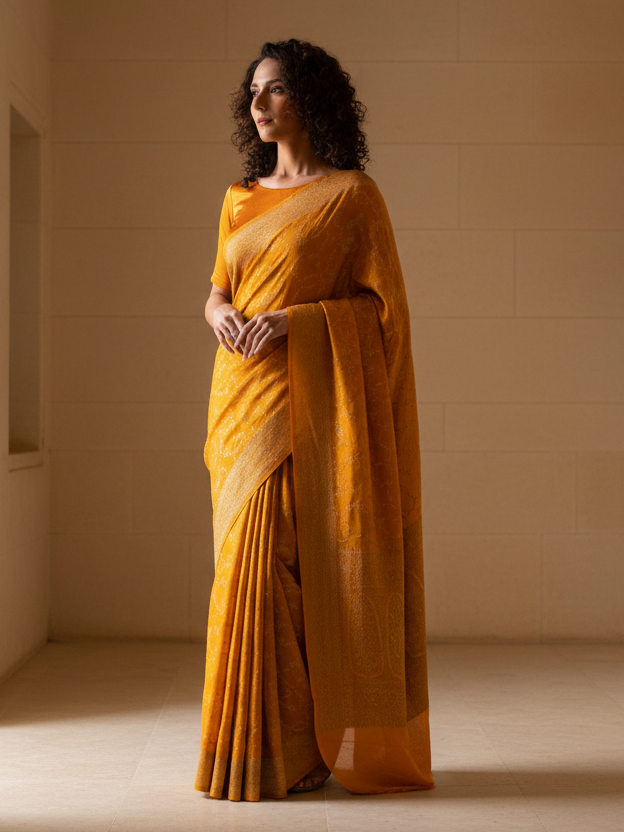
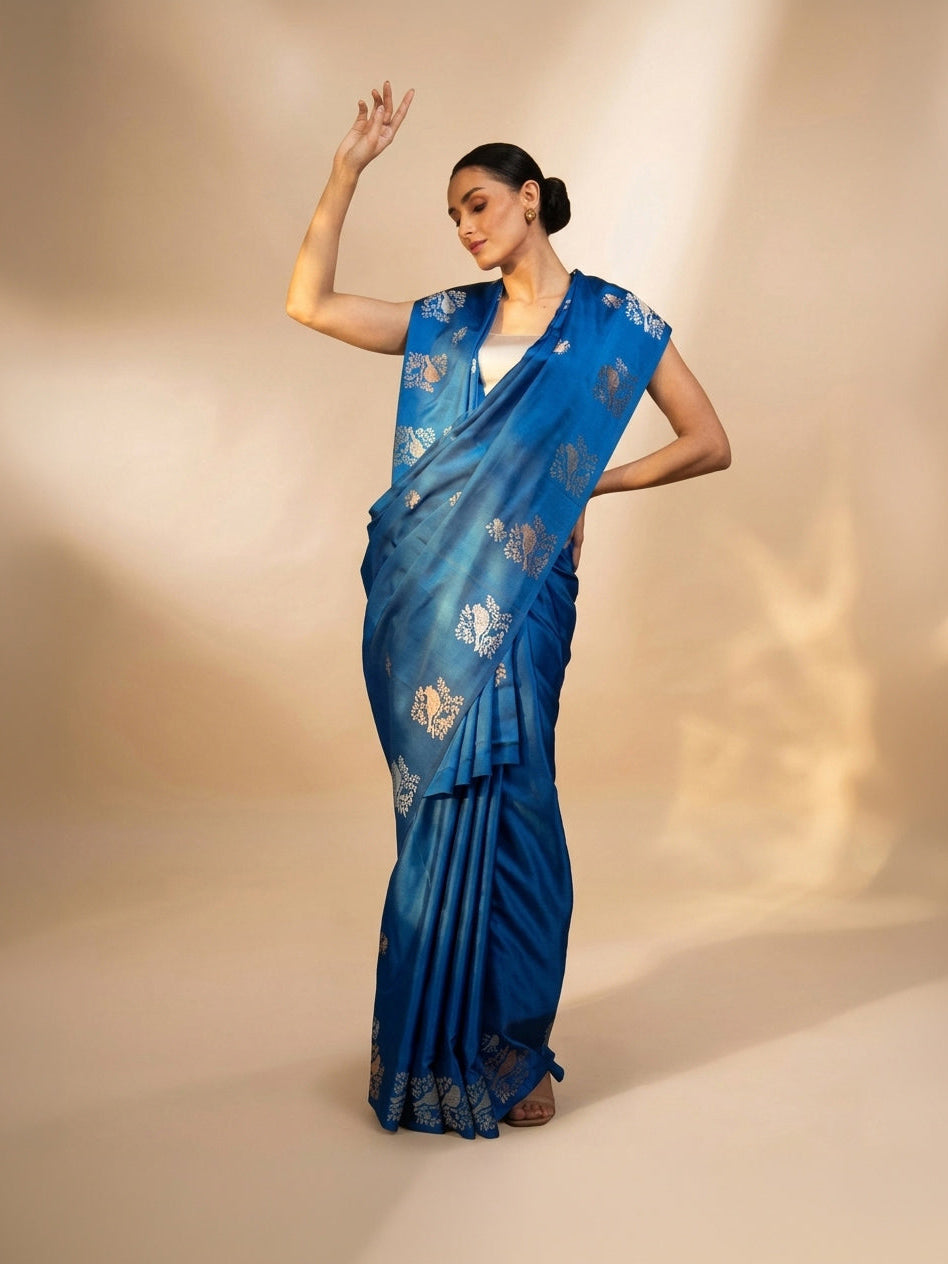
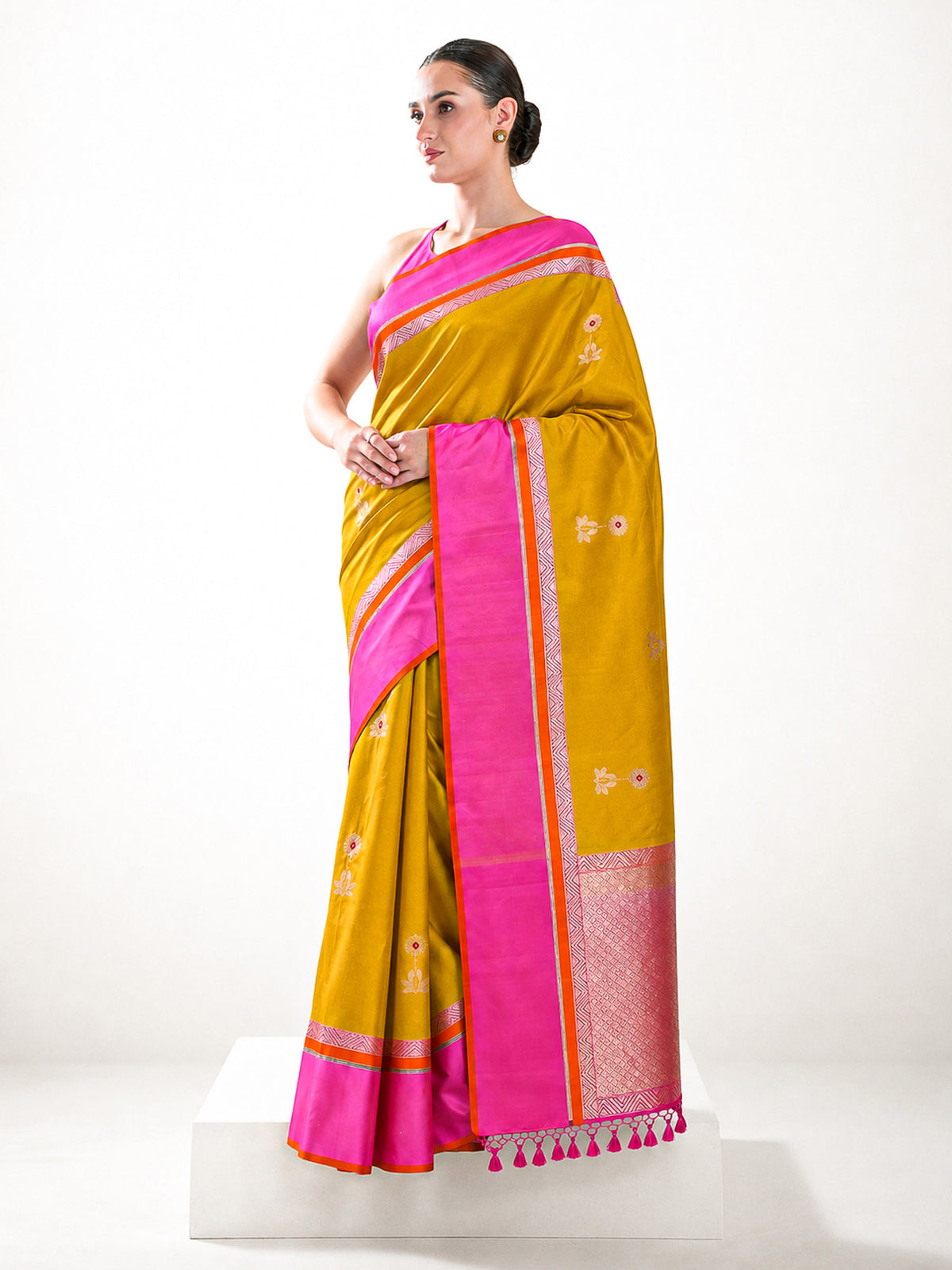

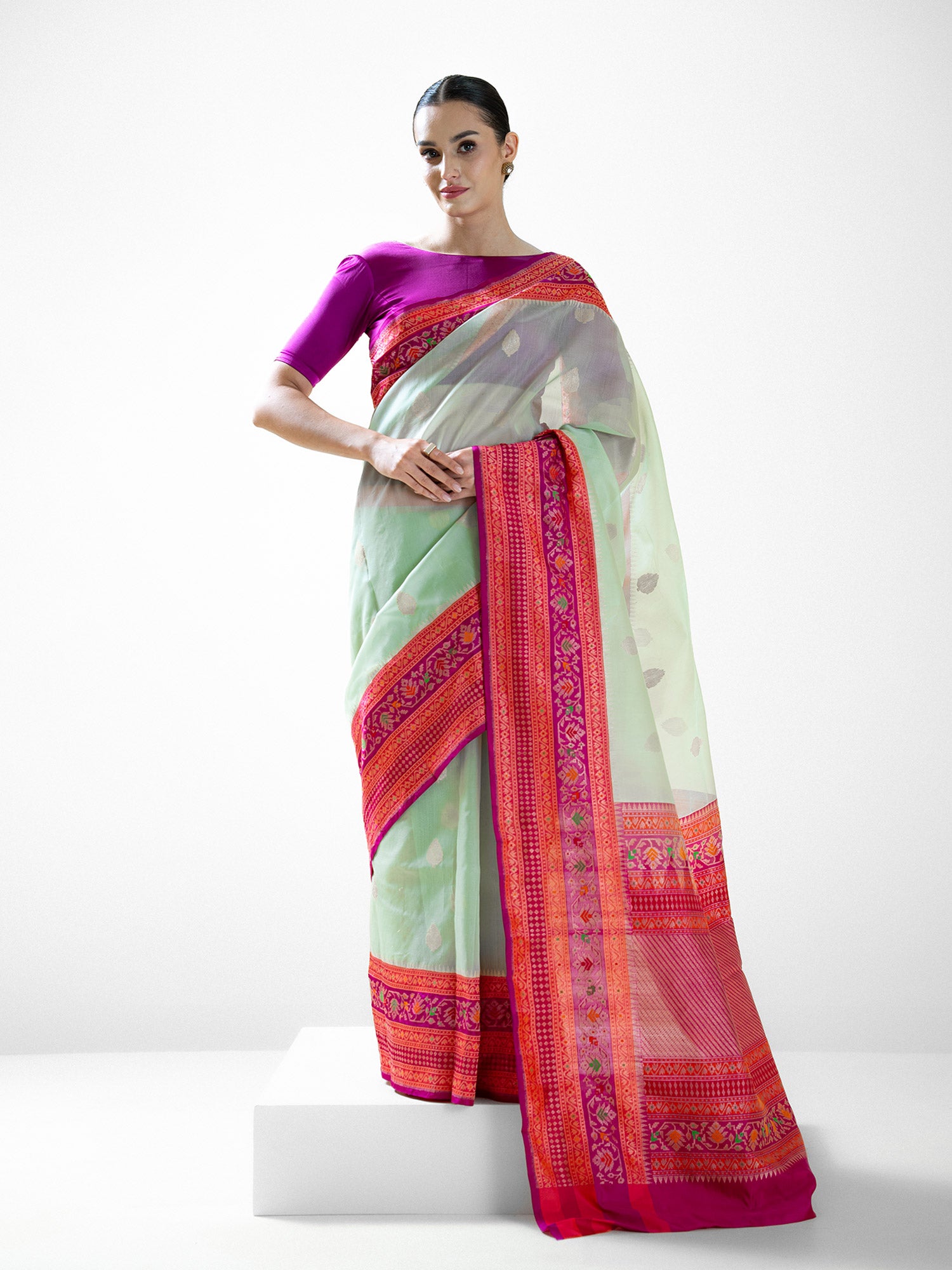
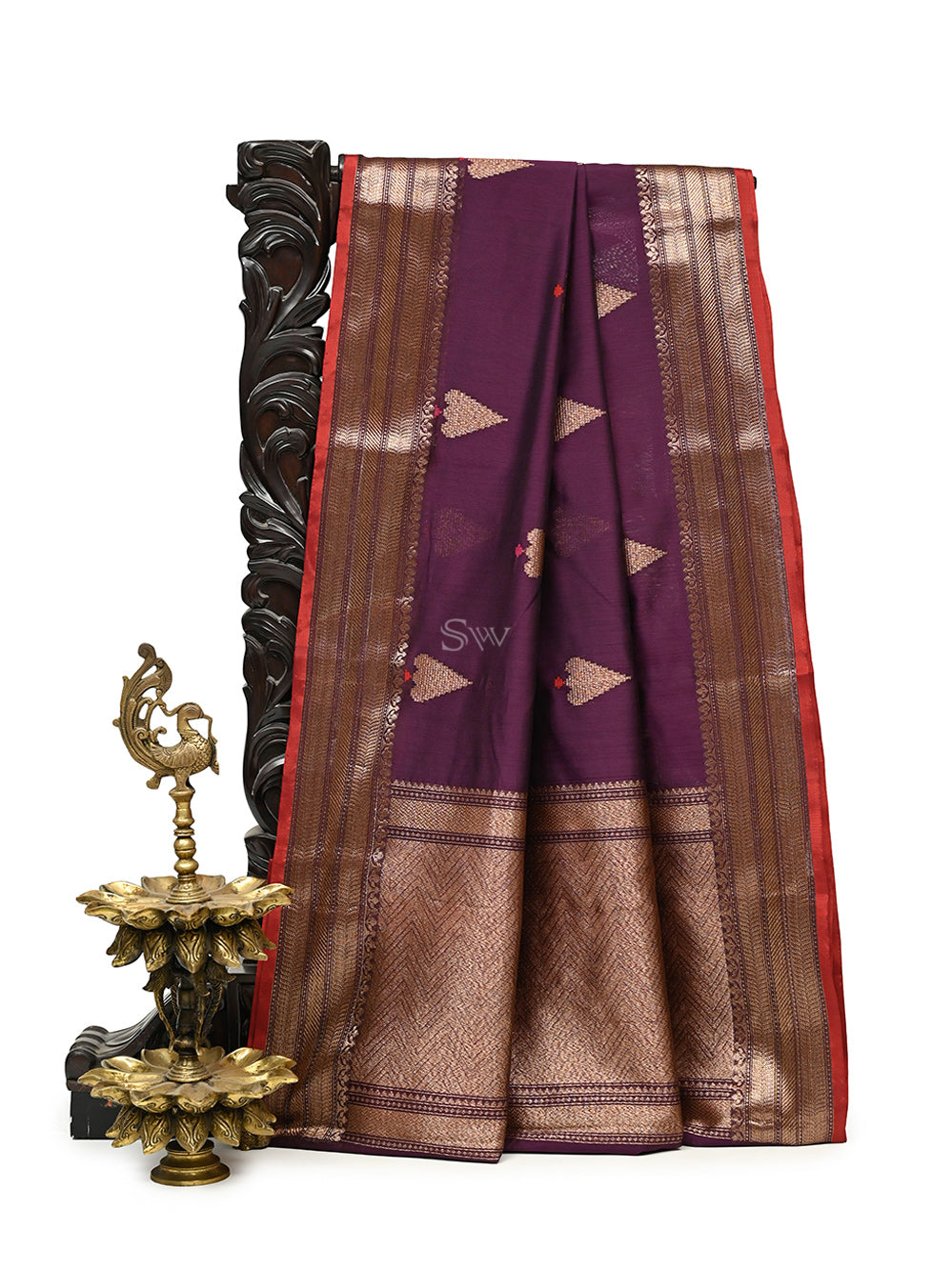


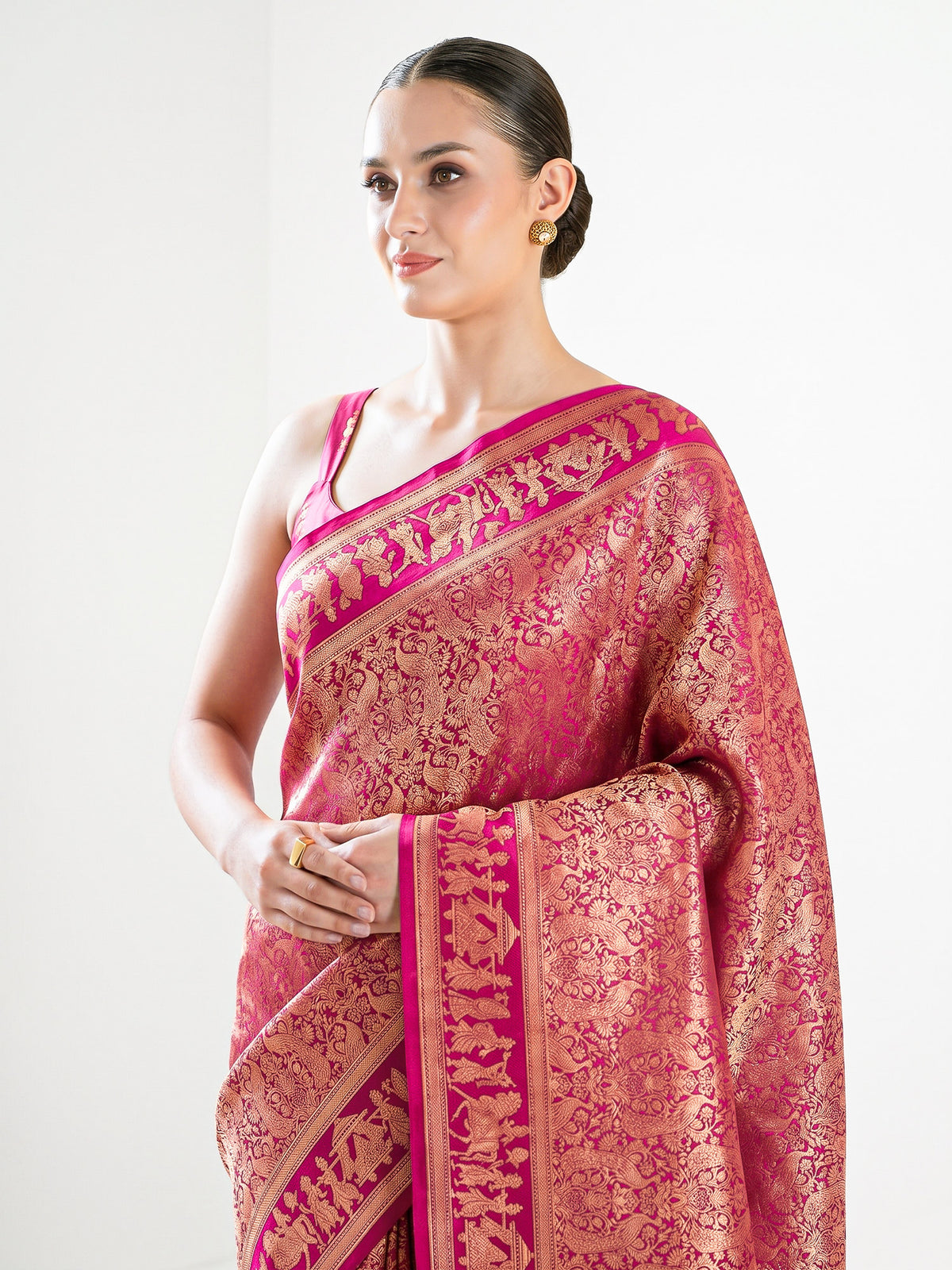
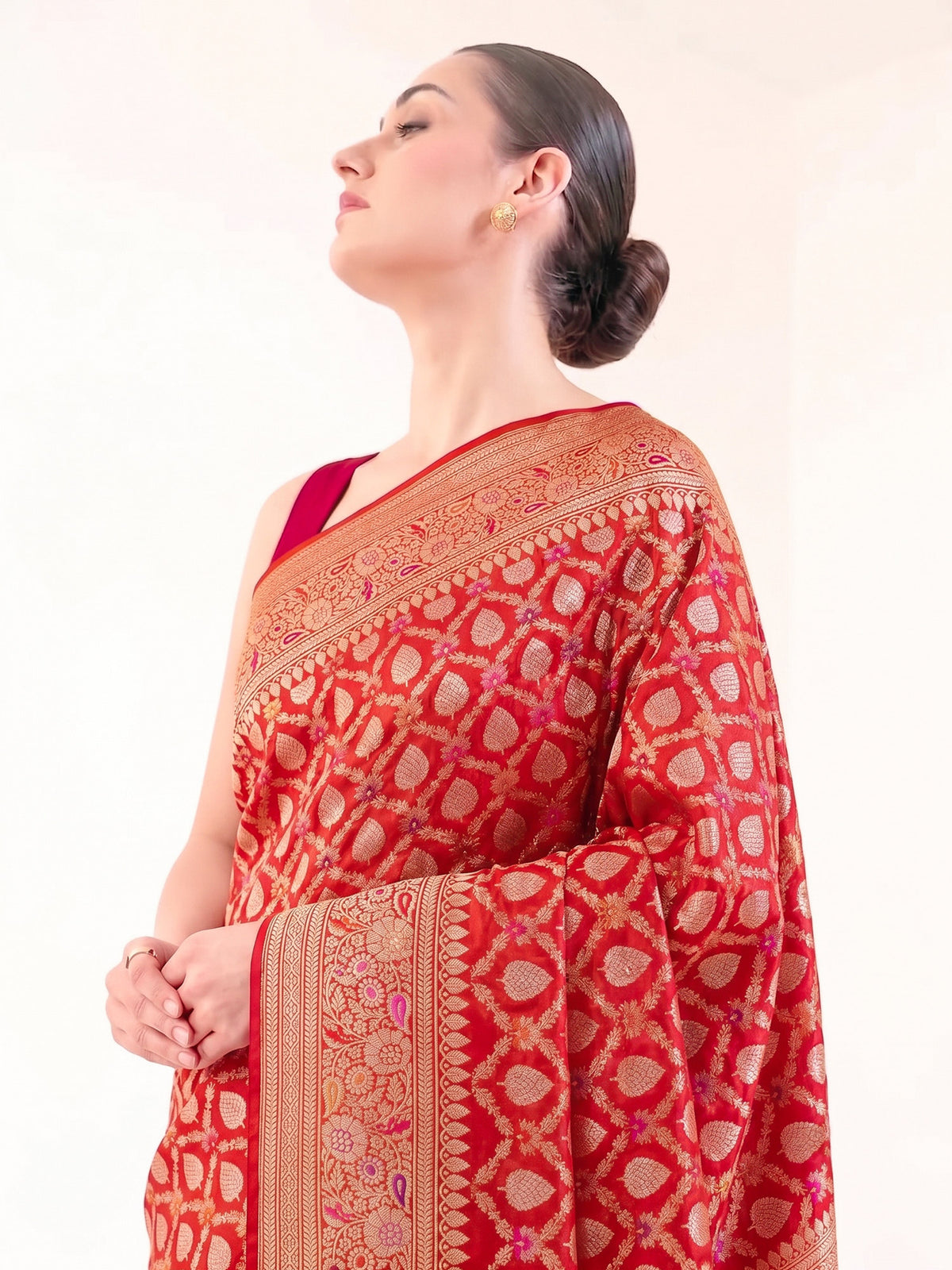
Satin Silk is known for its exceptionally smooth surface, rich lustre and fluid drape. In Banarasi sarees, this gives the fabric a distinctive character—more glossy and fluid than traditional Katan Silk, while still carrying the woven motifs, zari work and craftsmanship associated with Banaras.
But there is an important distinction to understand: silk is a fibre, while satin is a weave.
So, when we talk about a Pure Satin Silk Banarasi Saree, we are referring to a saree woven from pure silk yarn using a satin weave structure and crafted within the Banarasi weaving tradition.
If you prefer a saree with a smooth finish, deep colour and elegant fall, Satin Silk is one of the most distinctive Banarasi fabrics to consider.
What Is Satin Silk?
Satin is not a type of silk by itself. It is a method of weaving yarn.
In a satin weave, the yarns are arranged with fewer visible interlacings on the face of the fabric. This allows longer portions of the silk yarn to remain visible on the surface.
The result is the characteristic Satin Silk finish:
-
exceptionally smooth to touch
-
naturally glossy
-
rich colour depth
-
soft and fluid drape
-
a surface that reflects light beautifully
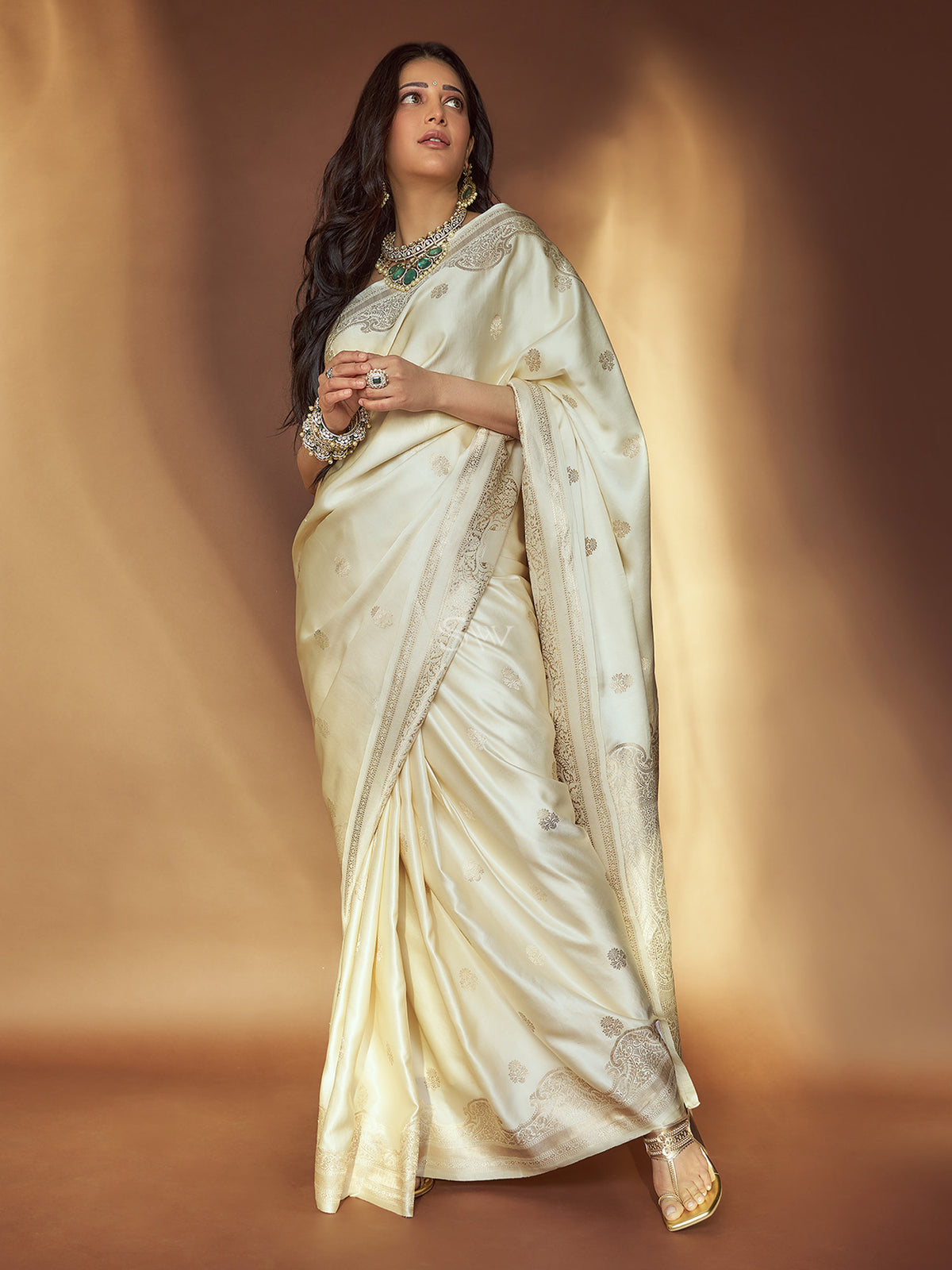
Because silk itself has a natural lustre, weaving pure silk in a satin structure makes the finished fabric particularly luminous.
 |
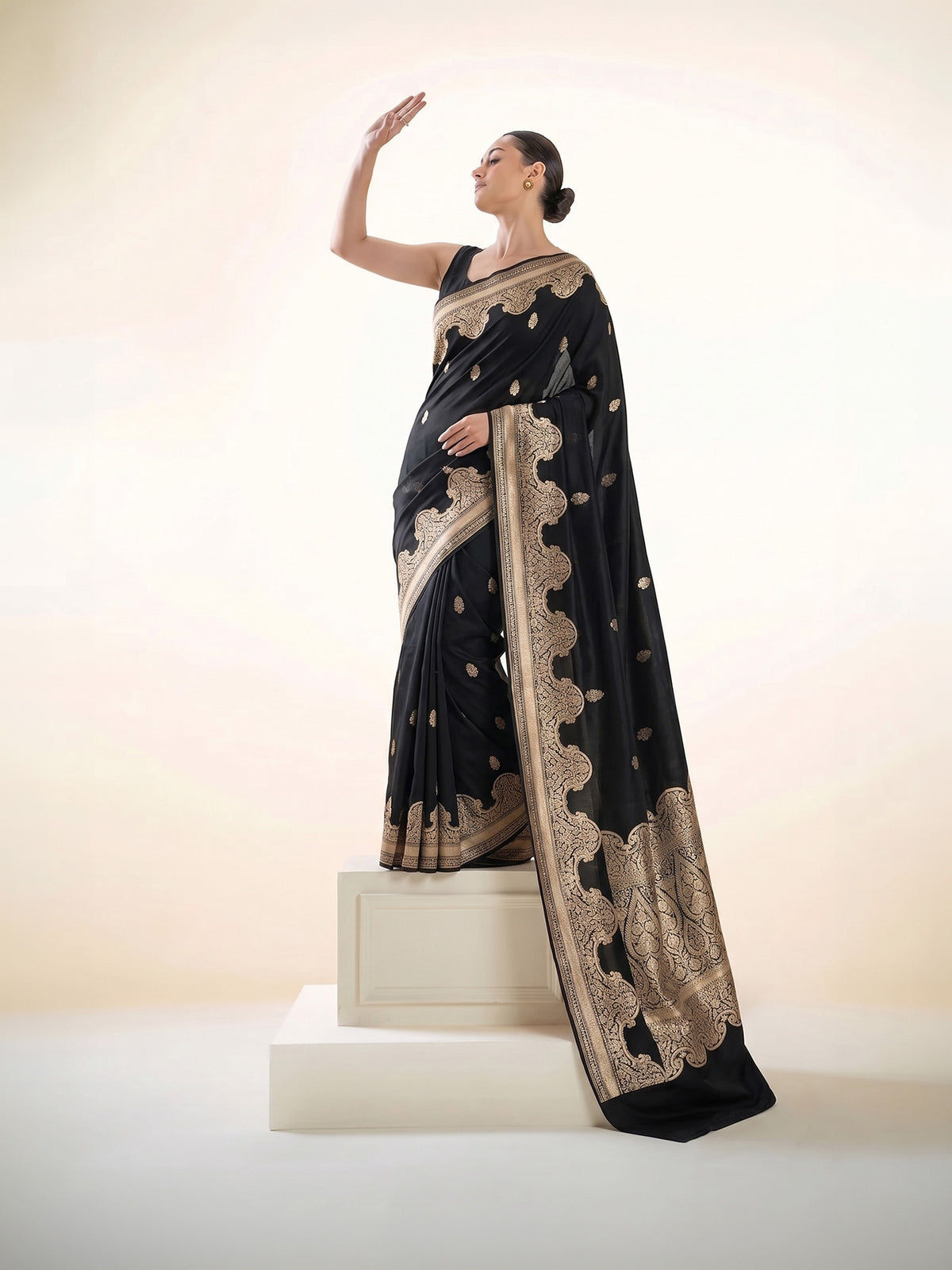 |
This is why Satin Silk sarees often appear richer when seen in movement—the sheen changes naturally with the folds and angle of the fabric.
Is Satin Silk Pure Silk?
It can be, but the word “satin” alone does not mean pure silk.
Satin describes the weave and can be produced using different fibres, including polyester, viscose or silk.
Therefore, there is an important difference between ordinary satin fabric and Pure Satin Silk.
A Pure Satin Silk saree is woven using natural silk yarn in a satin weave.
When shopping online, do not judge purity simply by how shiny the fabric appears. Synthetic satin can also have a strong shine.
For greater assurance, look for clear information about fibre composition and recognised silk certification.
At Sacred Weaves, the Satin Silk Banarasi Sarees are woven in pure silk and are Silk Mark certified, helping buyers verify the authenticity of the silk used in the saree.
What Is a Satin Silk Banarasi Saree?
A Satin Silk Banarasi Saree combines the smooth satin-woven silk base with the weaving and design vocabulary of Banaras.
Depending on the saree, the satin base can be complemented by:
-
traditional bootis
-
zari work
-
Meenakari detailing
-
Tanchoi patterns
-
jaal designs
-
floral motifs
-
Sona Roopa work
-
plain or minimal woven designs
The smooth surface of Satin Silk also allows colours and woven details to appear particularly sharp and rich.
This gives Satin Banarasi sarees a slightly different character from more structured Banarasi fabrics.
They retain the richness expected from a pure silk Banarasi saree but offer a smoother, softer and more fluid appearance.
Satin Silk vs Katan Silk: What Is the Difference?
Buyers looking for a pure Banarasi silk saree often compare Satin Silk with Katan Silk.
Both can be woven using pure silk, but their construction and resulting appearance are different.
| Feature | Satin Silk | Katan Silk |
|---|---|---|
| Surface | Very smooth and glossy | Smooth with a more restrained silk lustre |
| Drape | Soft and fluid | More structured |
| Appearance | Sleek and luminous | Classic and traditional |
| Colour effect | Deep and highly reflective | Rich with natural silk sheen |
| Best suited for | Elegant festive and occasion wear | Traditional weddings, bridal and formal occasions |
 |
 |
Neither fabric is inherently “better.”
The choice depends on the look and drape you prefer.
Choose Katan Silk when you want the traditional body and structure associated with a classic Banarasi saree.
Choose Satin Silk when you prefer a smoother surface, stronger lustre and a more fluid fall.
Why Does Satin Silk Look So Glossy?
The gloss of genuine Satin Silk comes largely from its weave structure combined with the natural lustre of silk.
Because fewer interlacings interrupt the face of a satin weave, longer sections of silk yarn remain exposed on the surface. These smooth yarn floats reflect light more evenly.
This creates Satin Silk's characteristic luminous finish.
It is also why darker and deeper colours can look especially rich on the fabric. Shades such as black, wine, maroon, royal blue, bottle green and purple can develop considerable depth when woven in Satin Silk.
The shine of genuine silk should not be confused with the uniform or artificial-looking gloss often associated with synthetic satin.
Are Satin Silk Banarasi Sarees Good for Weddings?
Yes.
Satin Silk Banarasi sarees work particularly well for wedding receptions, engagement ceremonies, festive celebrations and evening functions.
For example, a Satin Silk saree with elaborate Meenakari, zari, jaal or Tanchoi work can create a rich wedding look, while a plain Satin Silk saree with a refined border offers a more contemporary and understated appearance.
The fabric is particularly suitable when you want the richness of a pure silk Banarasi saree without choosing the more structured appearance of traditional Katan.
For receptions especially, the glossy surface responds beautifully to evening lighting and gives the saree an elegant, sophisticated finish.
What Designs Are Available in Satin Silk Banarasi Sarees?
Satin Silk should not be understood as one particular Banarasi design.
It is the fabric base upon which different weaving styles and motifs can be created.
At Sacred Weaves, the Pure Satin Silk Banarasi Saree collection includes options ranging from relatively minimal plain sarees to richer Booti, Meenakari, Tanchoi, Sona Roopa, Jangla and brocade designs.
This makes Satin Silk suitable for both buyers looking for traditional Banarasi detailing and those who prefer a cleaner, more contemporary saree.
How to Choose a Pure Satin Silk Banarasi Saree
When buying Satin Silk, focus on the fabric and craftsmanship rather than shine alone.
Check the fibre
Confirm that the saree is actually woven from pure silk rather than polyester or another synthetic fibre marketed simply as “satin.”
Look for Silk Mark certification
A Silk Mark label provides stronger assurance that the product is made using pure natural silk.
You can also explore Sacred Weaves' Silk Mark Certified Banarasi Sarees if silk purity is one of your main considerations.
Consider the design
For weddings and larger celebrations, look at richer woven options such as Meenakari, jaal, Tanchoi or elaborate zari designs.
For receptions, parties or elegant festive dressing, plain Satin Silk and smaller booti patterns can create a more refined appearance.
Choose according to drape
Satin Silk has a smoother and more fluid fall than highly structured Banarasi fabrics.
If that is the silhouette you prefer, Satin is worth considering alongside Katan, Georgette and Organza before making your final choice.
Is Satin Silk Worth Buying?
For someone looking for a pure silk Banarasi saree with a smooth texture, rich lustre and fluid drape, Satin Silk offers a very distinctive option.
Its appeal lies less in heaviness and more in the quality of its surface—the way the silk feels, catches light and gives depth to colour.
The important thing is to distinguish Pure Satin Silk from generic synthetic satin and buy from a source that clearly specifies the material and authenticity of the saree.
Explore the complete collection of Satin Silk Banarasi Sarees at Sacred Weaves, including plain, Booti, Meenakari, Tanchoi, Sona Roopa and other handloom designs woven in Banaras.


