
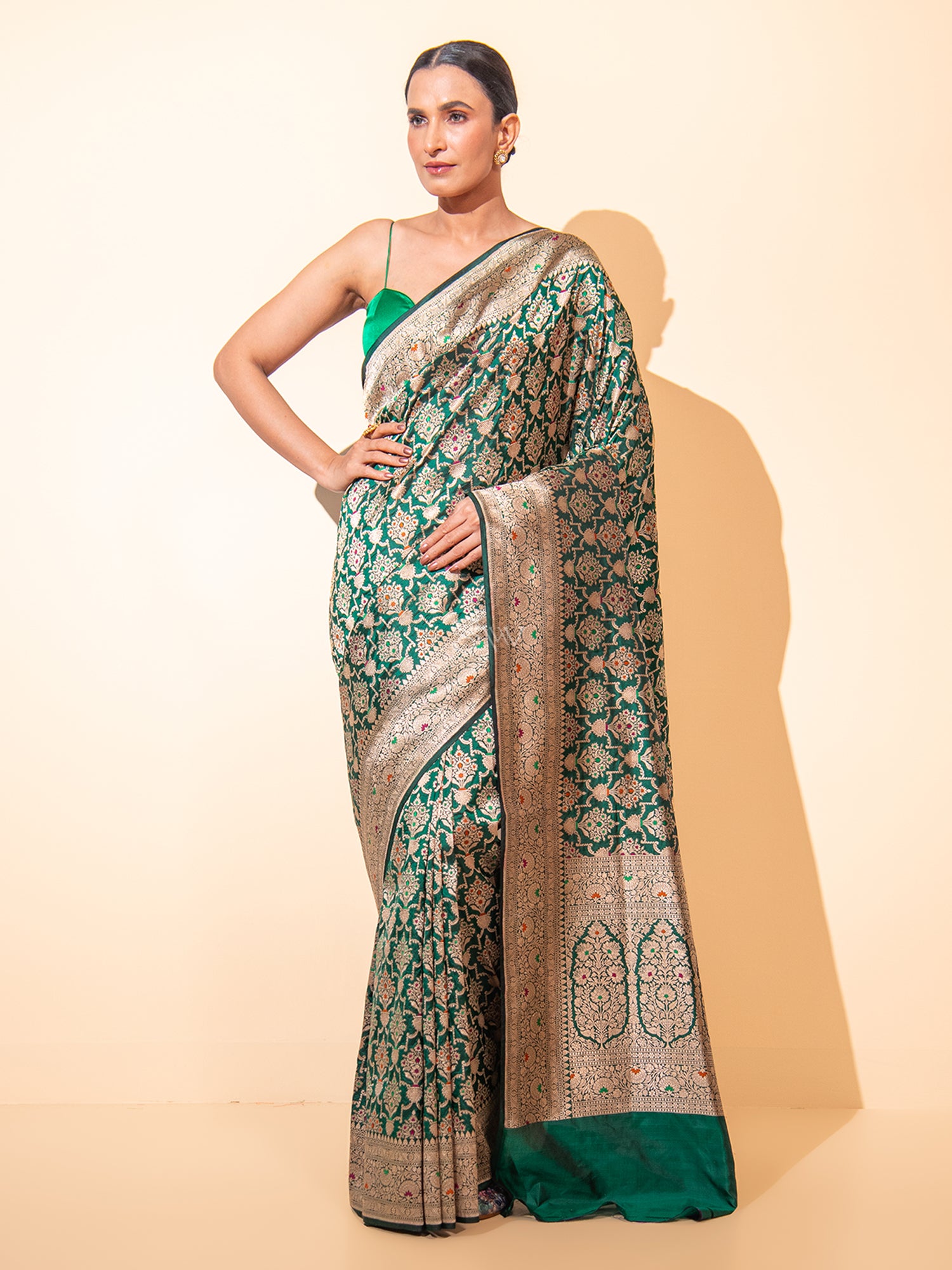
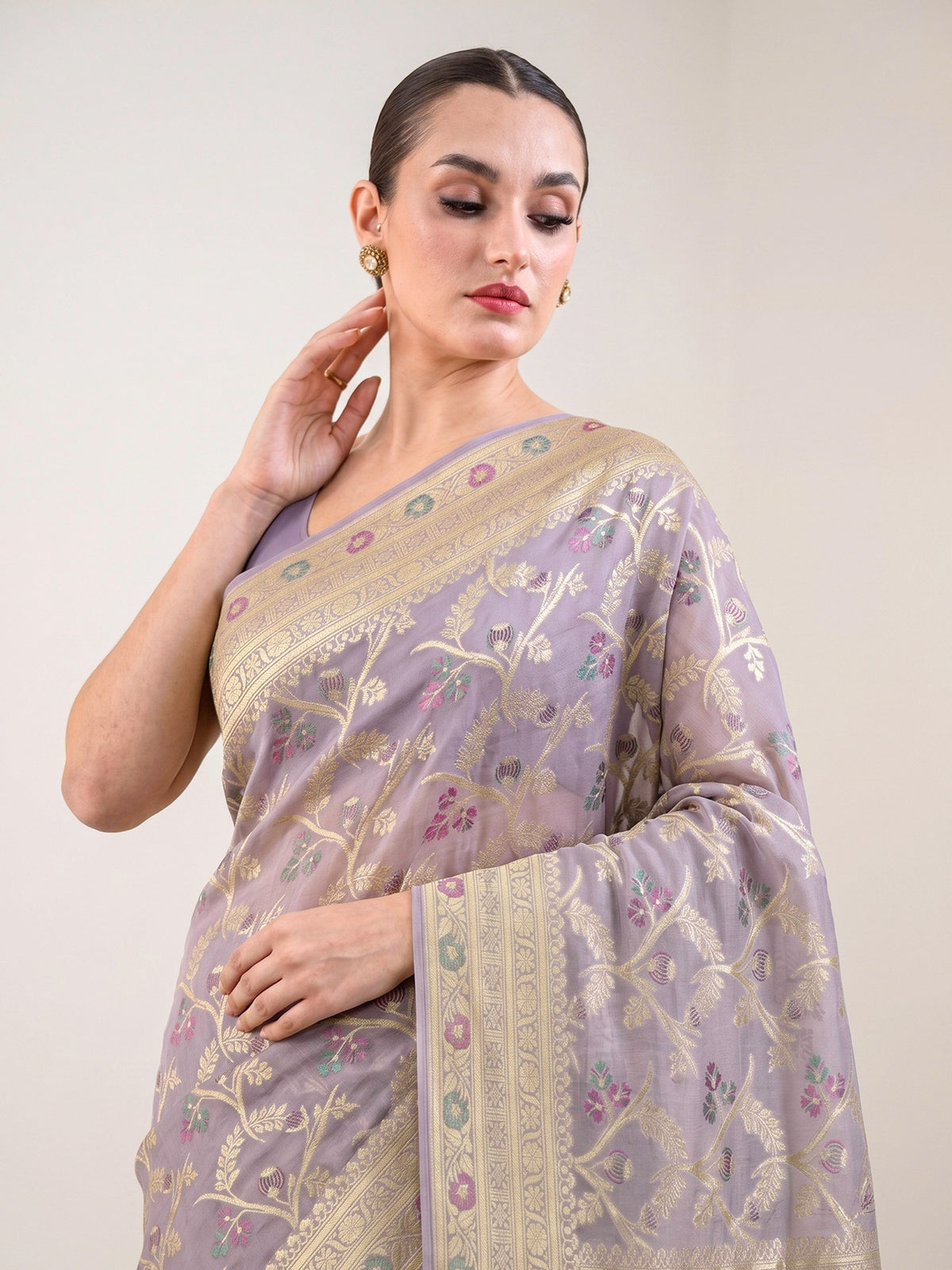
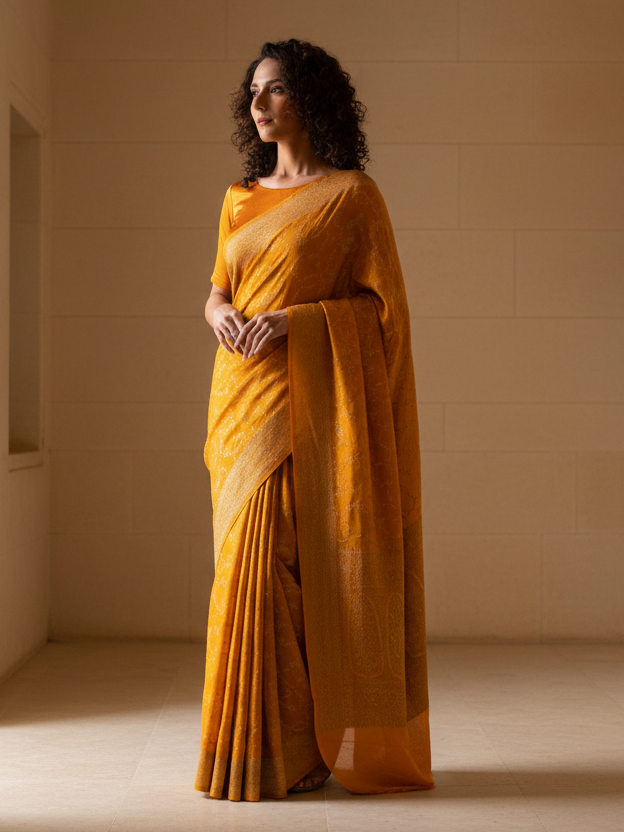
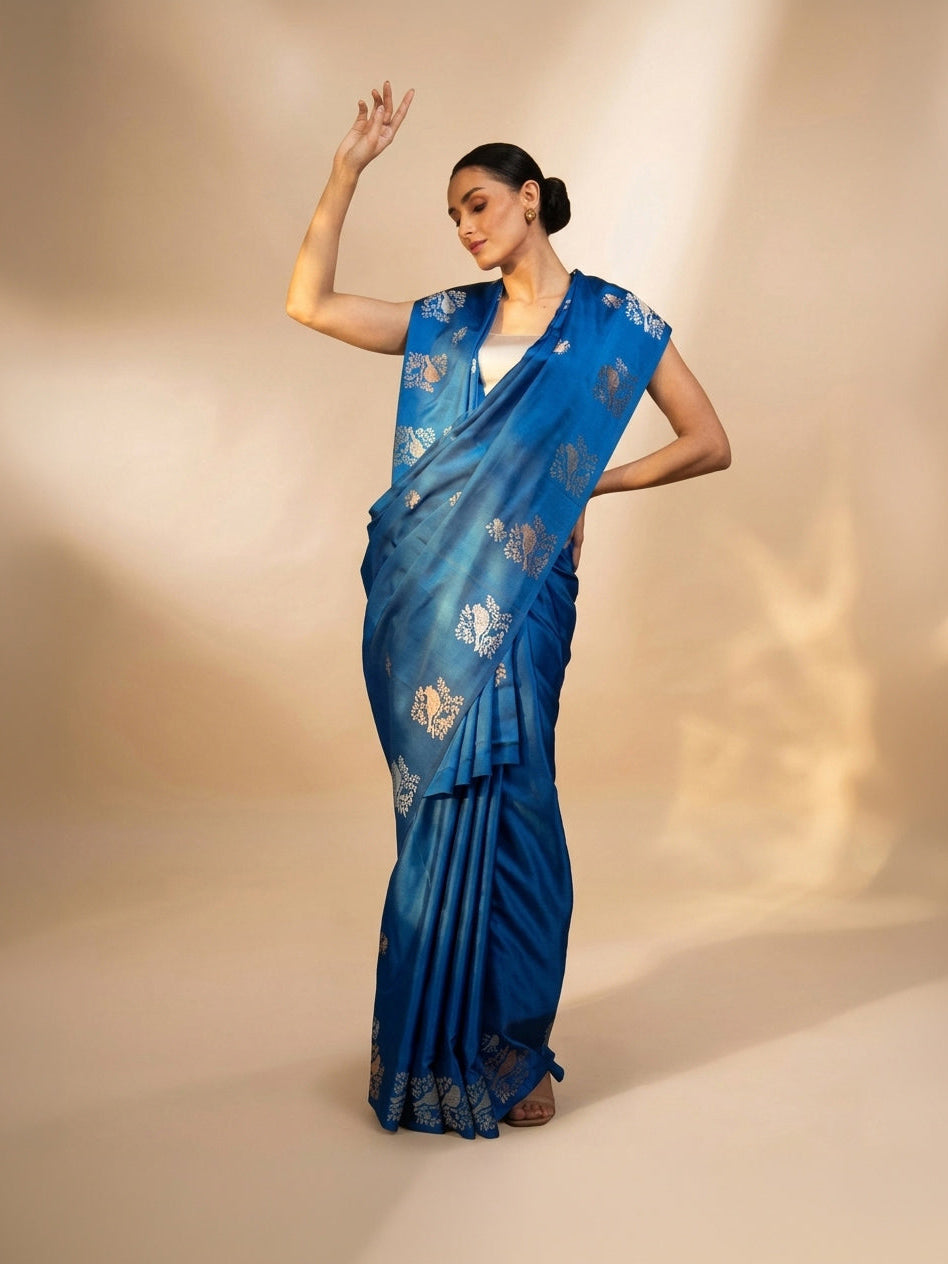
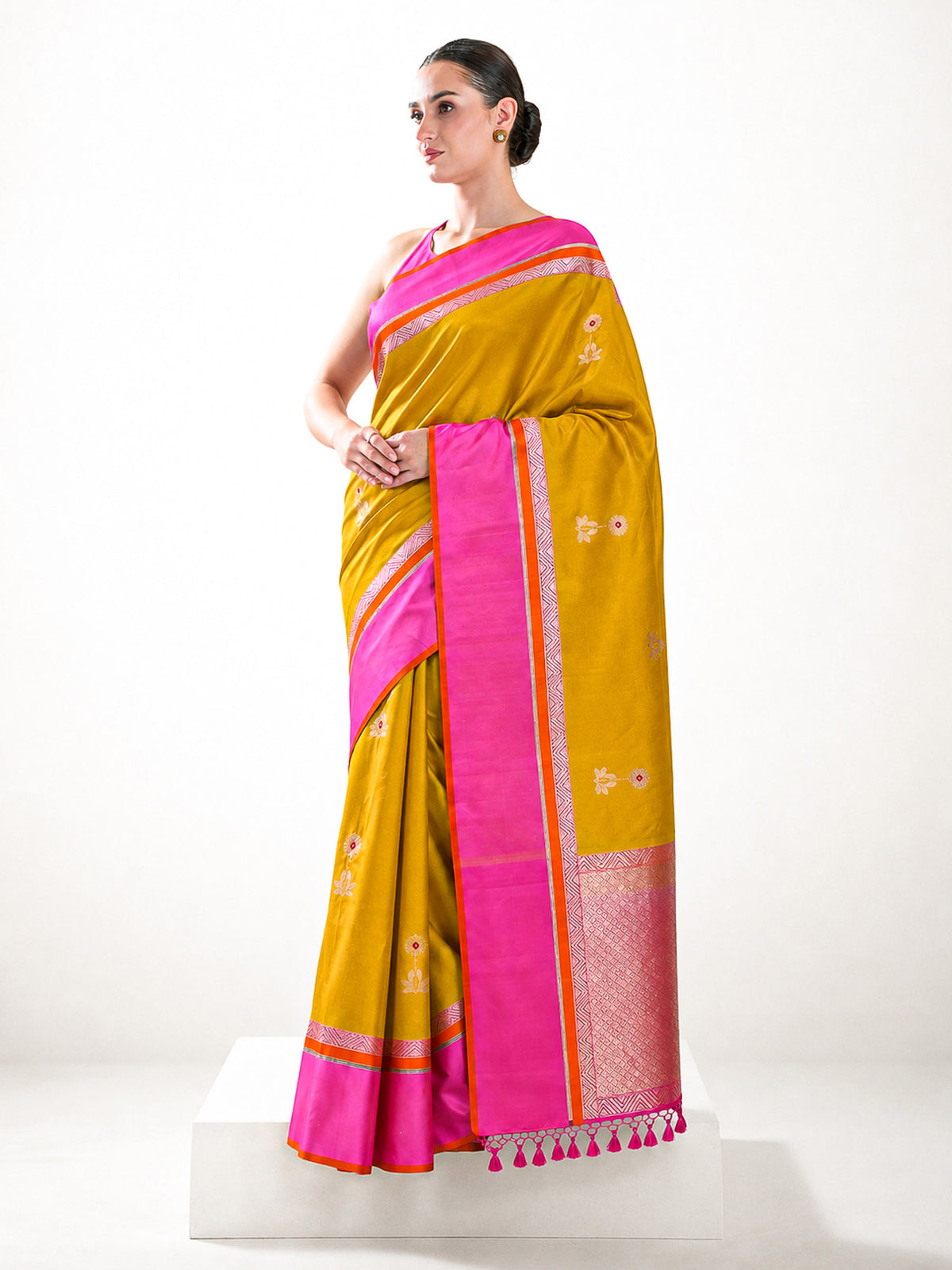
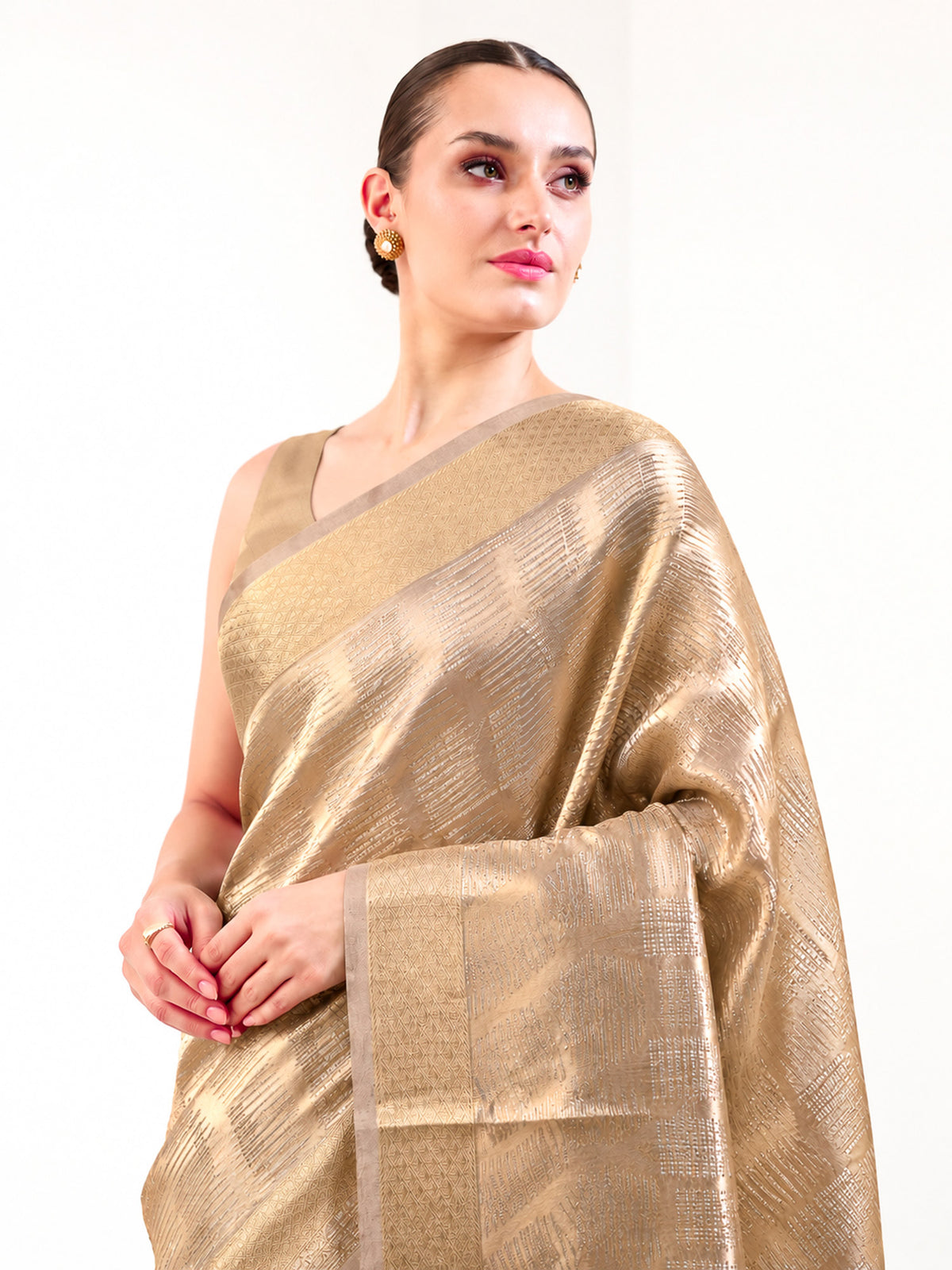
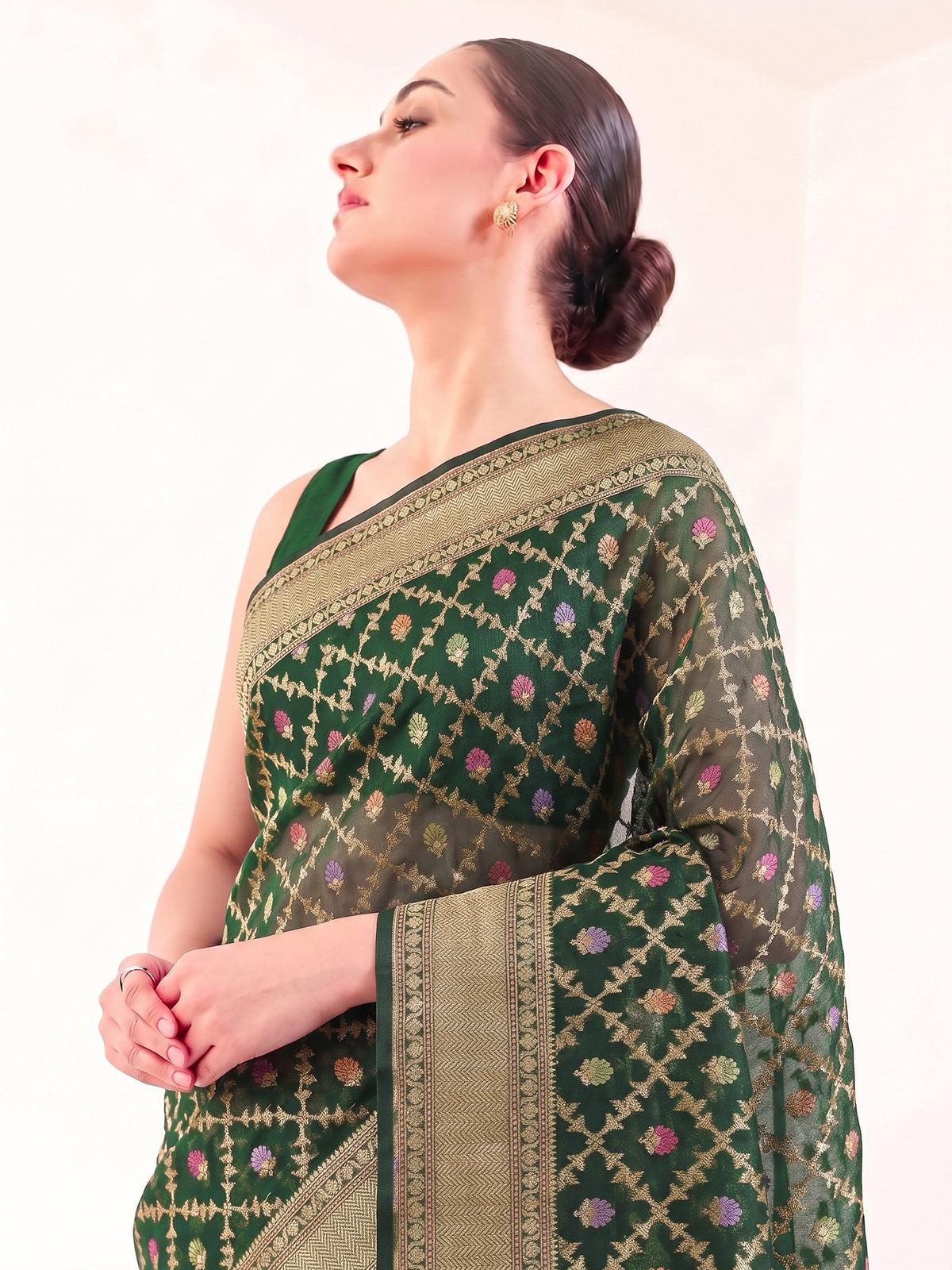
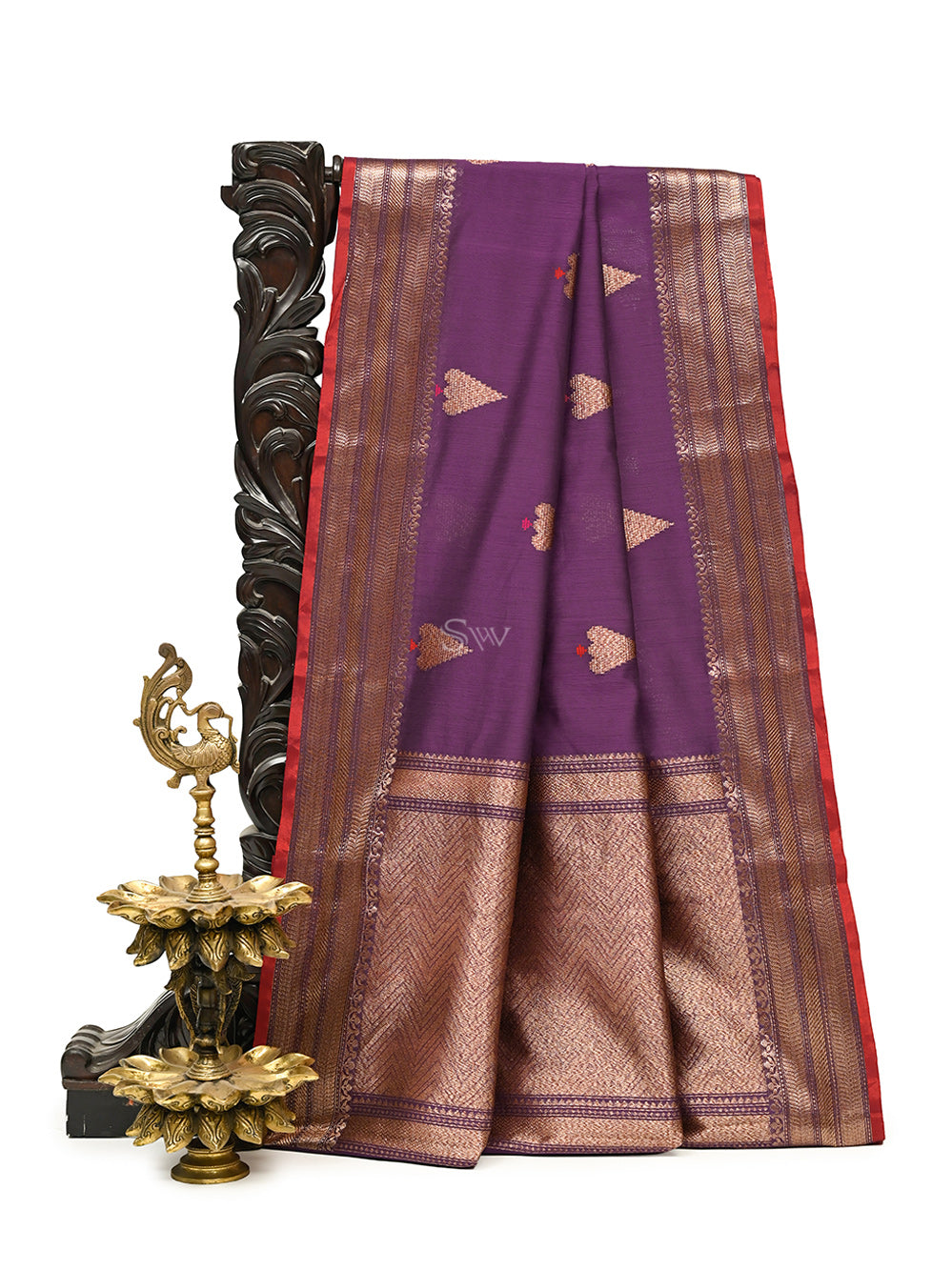


The main difference between Tussar silk and Katan silk lies in their fibre origin, yarn preparation, texture and appearance. Tussar is a non-mulberry silk known for its naturally textured surface and understated lustre, whereas Banarasi Katan silk is traditionally woven using twisted mulberry silk yarn, giving it a smoother finish and more structured appearance.
Both can be pure natural silk and are used in traditional Banarasi handloom weaving. The right choice depends on your preferred texture, design, occasion and budget.
Tussar Silk vs Katan Silk: Comparison at a Glance
| Feature | Tussar Silk | Katan Silk |
|---|---|---|
| Silk origin | Non-mulberry silk | Traditionally mulberry silk |
| Texture | Naturally textured | Generally smooth and refined |
| Lustre | Subtle, earthy sheen | Rich natural lustre |
| Drape | Varies with fabric construction | Often more structured |
| Natural appearance | Warm, golden undertones | Smooth and even |
| Popular designs | Plain, Booti and contrast borders | Kadhwa, Jangla, Meenakari and Brocade |
| Suitable occasions | Formal events, festivities and weddings | Weddings, bridal wear and celebrations |
| Price | Depends on weaving and design | Depends on weaving, zari and design |
| Maintenance | Gentle handling and dry cleaning | Gentle handling and dry cleaning |
What Is Tussar Silk?

Tussar silk, also known as Tasar silk, is a natural silk obtained from certain non-mulberry silkworms.
It is recognised for its distinctive surface texture, subtle sheen and naturally warm colour. Undyed Tussar silk often possesses beige, cream or golden-brown undertones.
According to the Silk Mark Organisation of India, Tussar is one of India's principal varieties of natural silk.
When woven in Varanasi, Tussar silk combines its distinctive fabric characteristics with traditional Banarasi motifs, borders and weaving techniques.
Explore our detailed guide on what Tussar silk is to learn more about its origin and characteristics.
What Is Katan Silk?

Katan silk is traditionally made using twisted silk yarn, typically derived from mulberry silk.
In Banarasi weaving, Katan silk is appreciated for its refined texture, natural lustre and ability to support intricate decorative patterns.
Its fabric structure makes it particularly suitable for traditional woven designs such as Kadhwa, Meenakari, Jangla, Shikargah and elaborate zari work.
Read our complete guide on what Katan silk is to understand its construction and importance in Banarasi textiles.
What Is the Difference Between Tussar and Katan Silk?
1. Origin of Silk
Tussar silk is obtained from non-mulberry silkworms, while traditional Katan silk is made using mulberry silk yarn.
The distinction begins with the silk fibre itself and continues through yarn preparation and fabric construction.
2. Fabric Texture
Tussar silk is known for its naturally irregular surface. These subtle variations contribute to its distinctive character.
Katan silk usually has a smoother and more uniform appearance because of the nature of its yarn and preparation.
3. Lustre and Appearance
Tussar silk generally has a softer, understated sheen that complements earthy colours and subtle decorative patterns.
Katan silk often displays a richer lustre, making it particularly suitable for grand occasions and traditional bridal sarees.
4. Weight and Drape
Tussar sarees can offer a relaxed and elegant drape, depending on the yarn, weave and finishing.
Katan silk sarees often have a more structured appearance, particularly when combined with dense zari work and elaborate woven patterns.
However, neither fabric has a fixed weight. A finished saree's weight depends on its construction and decorative elements.
5. Weaving and Decorative Designs
Both fabrics can be used in traditional Banarasi weaving.
Tussar silk is particularly attractive in Plain and Booti designs, where the fabric's natural texture remains visible.
Katan silk is frequently used for more elaborate designs, including intricate floral motifs, Jaal patterns and traditional Kadhwa work.
Which Is More Expensive: Tussar Silk or Katan Silk?
There is no fixed rule that Tussar silk is cheaper than Katan silk. The price of either saree depends on the quality of materials, weaving technique, design complexity and craftsmanship.
A simple Katan silk saree may cost less than an intricately handwoven Tussar silk saree. Similarly, a Katan bridal saree featuring elaborate Kadhwa work and premium zari may command a considerably higher price.
The main factors influencing prices include:
-
Quality and preparation of silk yarn.
-
Handloom weaving technique.
-
Complexity of decorative motifs.
-
Quantity and composition of zari.
-
Time and expertise required for weaving.
-
Quality of finishing.
When comparing prices, consider the complete saree rather than judging its value solely by the silk variety.
Tussar Silk vs Katan Silk: Which Is Better for Weddings?
Both Tussar and Katan silk sarees can be worn for weddings. The choice depends on the wedding function, personal preferences and the desired level of embellishment.
| Wedding occasion | Recommended choice |
|---|---|
| Main wedding ceremony | Katan silk with rich zari work |
| Bridal trousseau | Both Tussar and Katan silk |
| Engagement | Either fabric with refined woven designs |
| Wedding reception | Katan or zari-detailed Tussar |
| Family ceremonies | Tussar or understated Katan |
| Wedding guest attire | Booti Tussar or classic Katan |
Choose Tussar Silk If You Prefer:
-
Naturally textured silk.
-
Understated elegance.
-
Subtle woven motifs.
-
Refined festive and formal looks.
-
A distinctive alternative to conventional bridal silk.
Choose Katan Silk If You Prefer:
-
Rich, smooth silk with natural lustre.
-
Traditional Banarasi bridal designs.
-
Intricate zari work.
-
Structured saree draping.
-
Elaborate wedding and heirloom pieces.
Explore our Banarasi Sarees for Weddings to discover suitable designs for different wedding functions.
Is Tussar Silk More Comfortable Than Katan Silk?
Comfort depends on the construction of the individual saree rather than simply the type of silk.
A lightly woven Tussar saree with minimal decorative work may feel more comfortable during extended wear than a heavily embellished Katan saree.
However, a lightweight Katan silk saree may also offer excellent comfort.
Before purchasing, consider the weight, texture, drape, amount of zari and duration for which you intend to wear the saree.
How to Identify Pure Tussar and Katan Silk Sarees?
Both Tussar and Katan silk can be imitated using synthetic or blended fibres. Therefore, appearance and price alone cannot establish silk purity.
When purchasing either variety, consider the following:
-
Look for genuine Silk Mark certification.
-
Check the fibre composition in the product description.
-
Ask the seller about the weaving technique.
-
Examine the texture, motifs and zari details.
-
Obtain a proper purchase invoice.
Silk Mark certification helps verify natural silk purity but does not independently certify handloom production, zari quality or geographical origin.
At Sacred Weaves, customers can also use Live Video Shopping to examine their shortlisted sarees before purchasing.
Shop Pure Tussar and Katan Silk Banarasi Sarees at Sacred Weaves
At Sacred Weaves, we offer both Tussar and Katan silk sarees, celebrating the distinctive characteristics of each fabric through traditional Banarasi handloom craftsmanship.
Explore our Banarasi Tussar Silk Sarees collection for naturally textured silk, elegant Plain designs and traditional Booti motifs.
If you prefer rich zari detailing, intricate woven patterns and traditional bridal styles, discover our Banarasi Katan Silk Sarees collection.
Every saree is Silk Mark certified, handwoven in Varanasi and accompanied by a certificate of authenticity. Live Video Shopping and worldwide duty-prepaid shipping are also available.


