
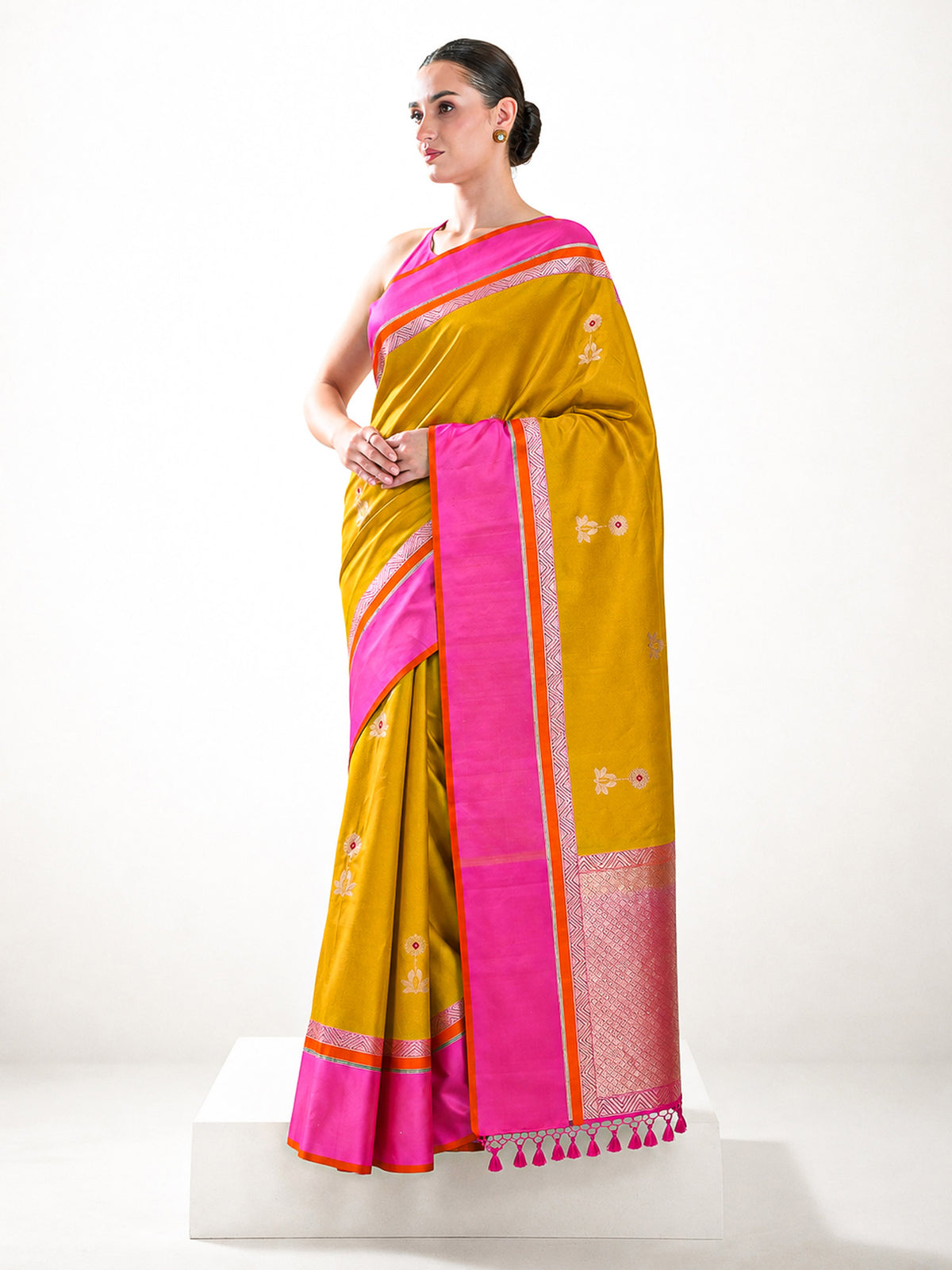

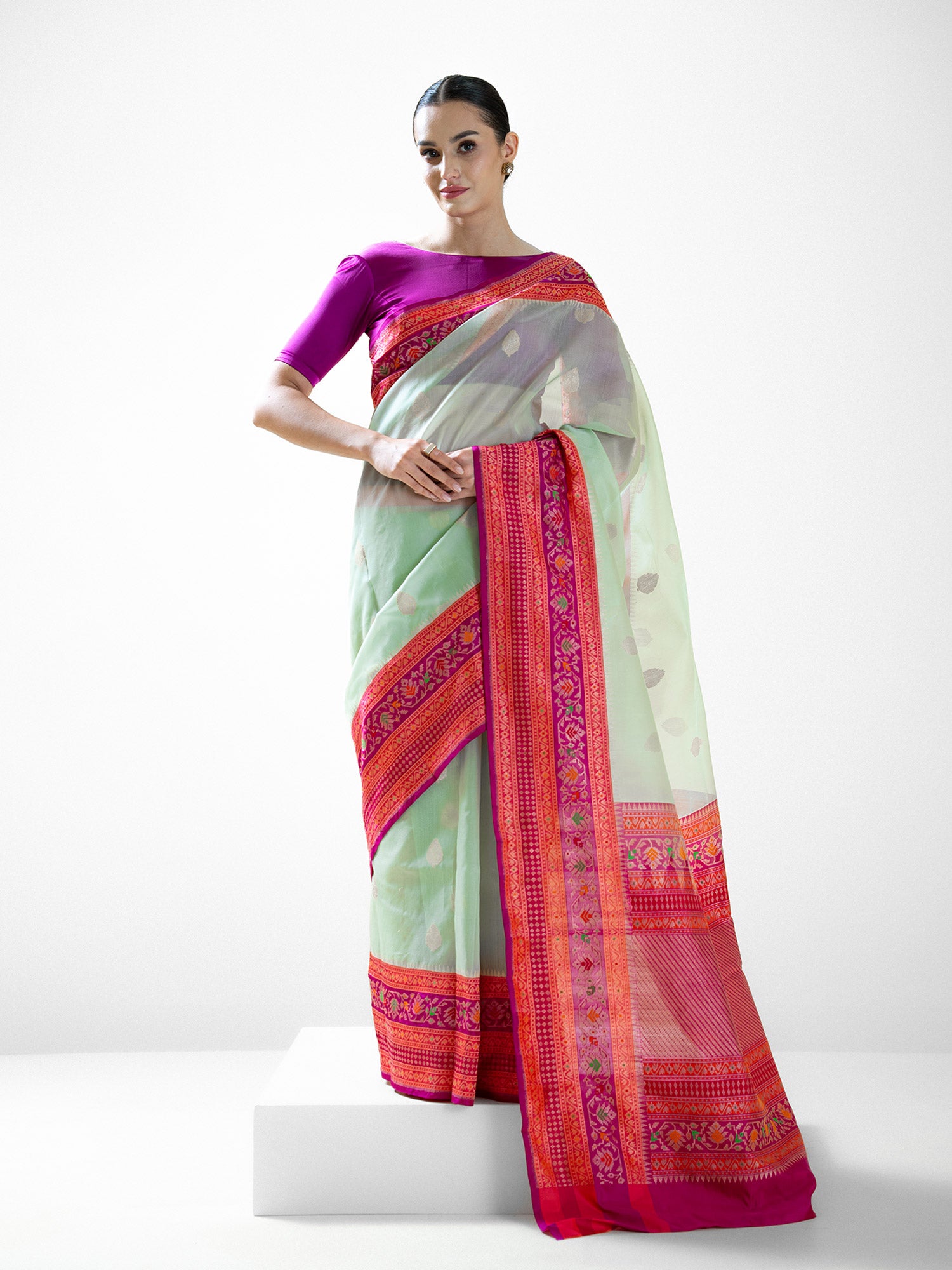
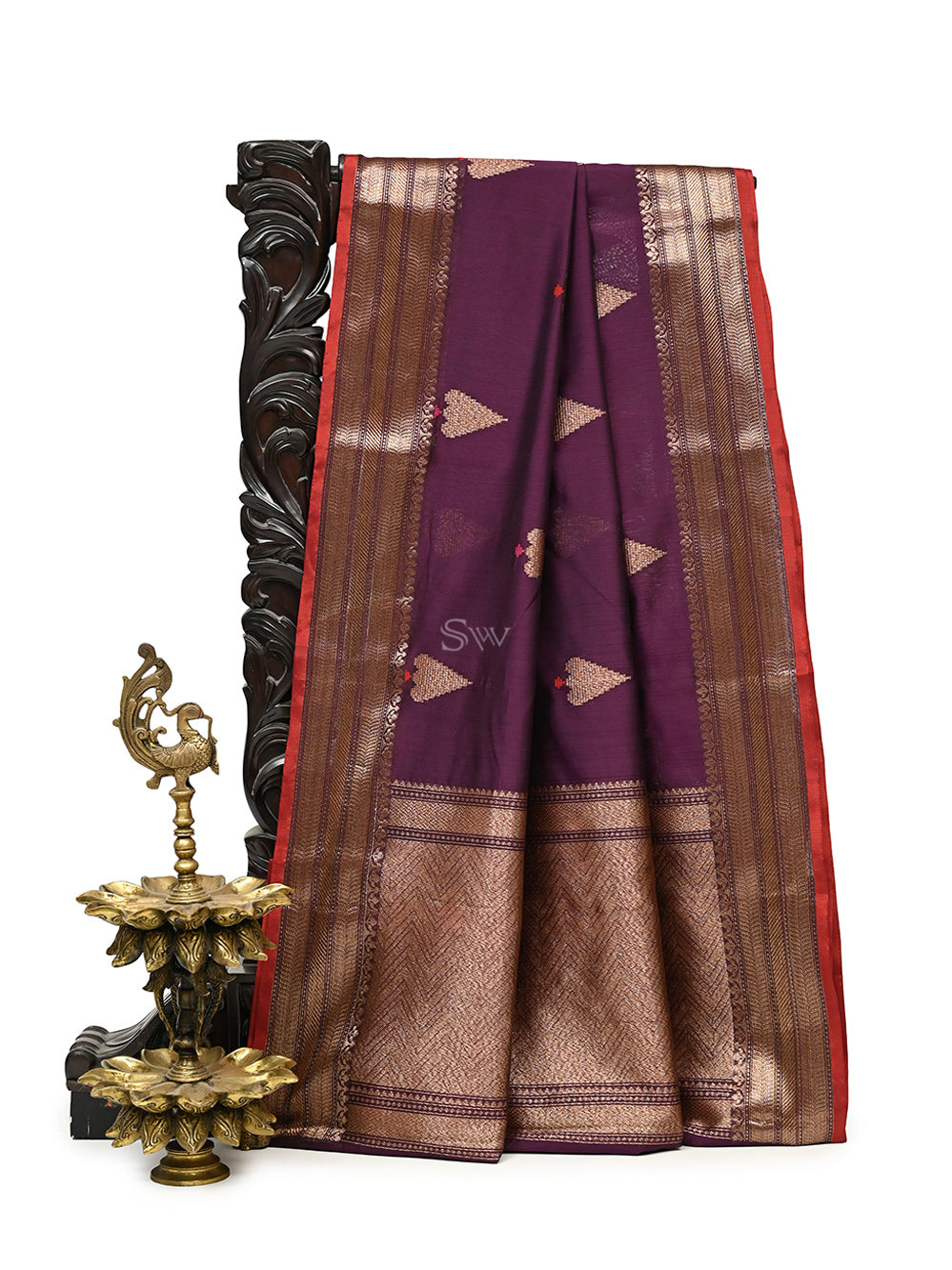


If you want a Banarasi saree that feels lighter and easier to wear than a richly woven traditional silk saree, Banarasi Cotton Silk and Banarasi Chanderi Silk are two options worth comparing.
Both work well for women who prefer comfortable occasion wear, but they create noticeably different looks.
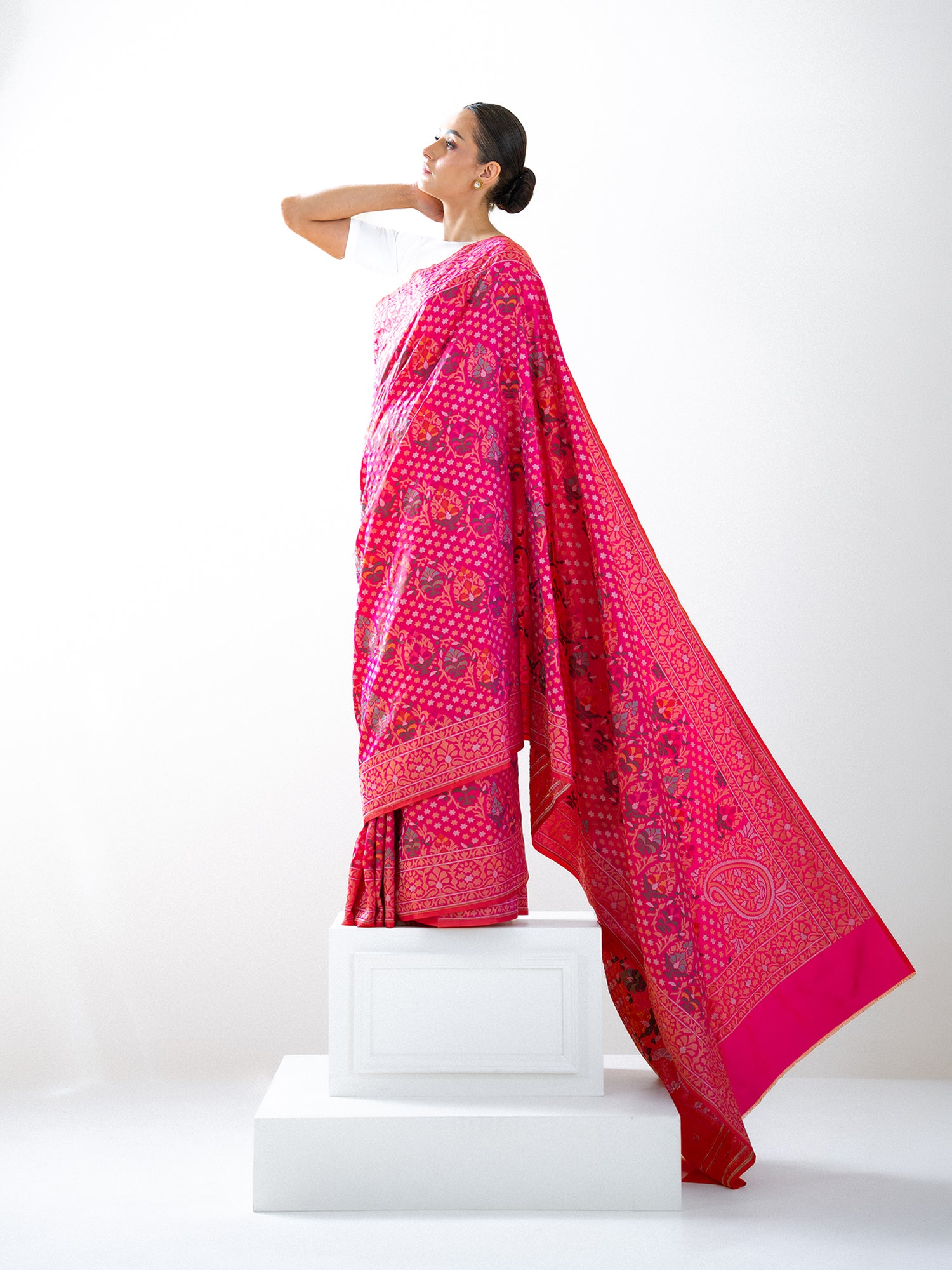
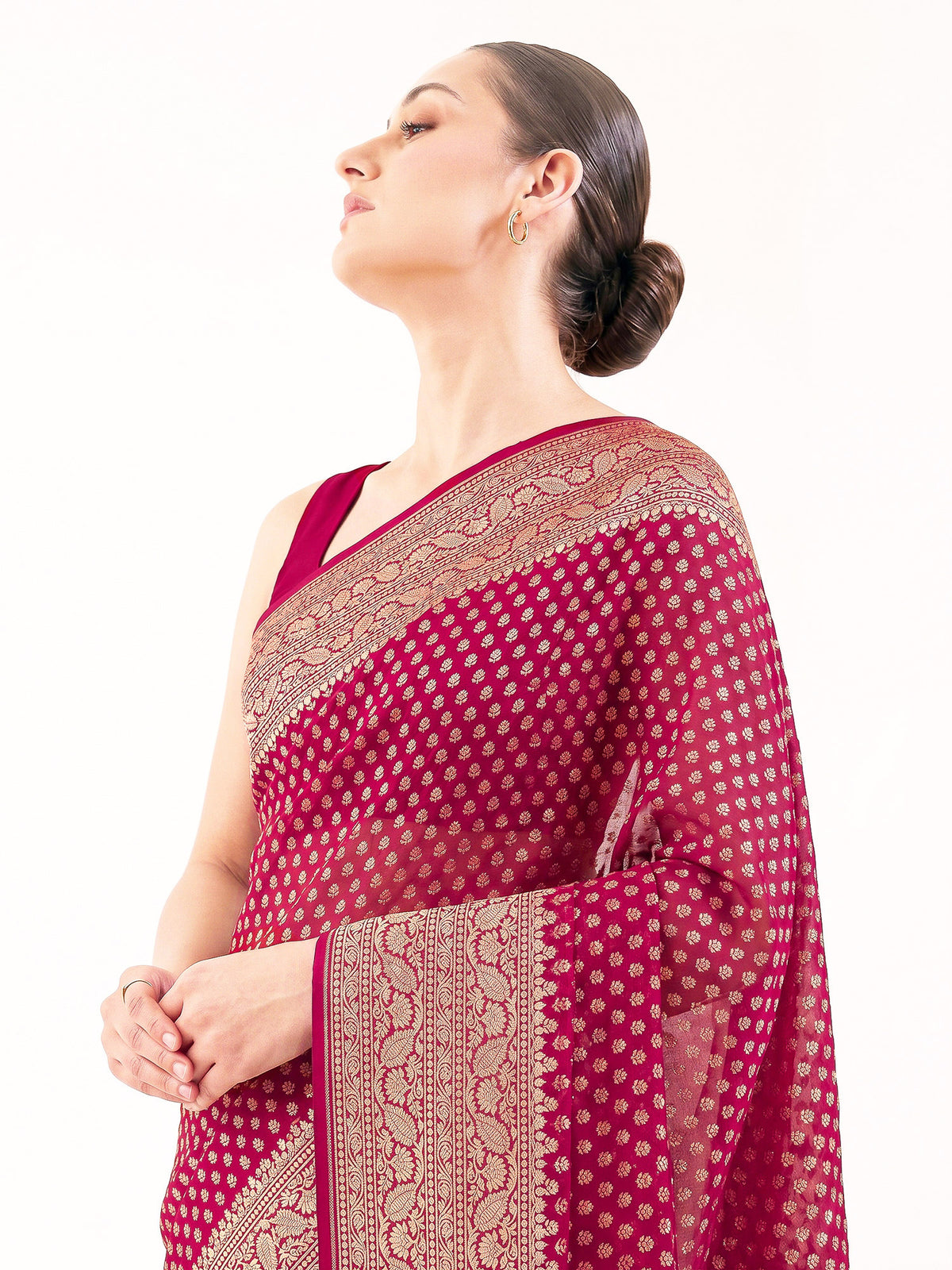
A Banarasi Cotton Silk Saree gives you greater variety—from simple Booti designs to fuller Jaal and colourful Meenakari work—making it easy to move between understated and festive dressing.
A Banarasi Chanderi Silk Saree, on the other hand, is better suited to a lighter, more refined look where delicate motifs and restrained zari remain the focus.
So which one should you choose? Start with how you want the saree to look when worn.
Banarasi Cotton Silk vs Chanderi Silk at a Glance
| Feature | Banarasi Cotton Silk | Banarasi Chanderi Silk |
|---|---|---|
| Overall look | Versatile, from simple to decorative | Light, refined and understated |
| Design possibilities | Booti, Jaal, Meenakari and richer patterns | Particularly suited to delicate Booti and subtle zari |
| Occasion | Festivals, family functions, celebrations and smaller wedding events | Day functions, pujas, intimate celebrations and elegant occasion wear |
| Styling | Can easily be dressed up or down | Best with balanced, refined styling |
| Statement potential | Higher with Jaal and Meenakari | More restrained |
| Best for | Women wanting versatility | Women preferring understated elegance |
Neither is automatically the better saree. They simply solve different wardrobe needs.
Choose Cotton Silk If You Want More Design Variety
|
|
|


One of the strongest reasons to choose Banarasi Cotton Silk Sarees is the range of looks possible within the category.
A small Booti design can feel simple enough for a puja or daytime family function, while a fuller Jaal or Meenakari pattern can create considerably more festive presence.
This makes Cotton Silk useful if you want a lighter Banarasi saree but do not necessarily want a minimal look.
For example, a woman shopping for Diwali, an engagement or a family celebration may prefer the additional colour and surface detail of a Meenakari Cotton Silk saree.
If you want to understand the fabric itself before comparing designs, read What Is a Banarasi Cotton Silk Saree?.
Choose Banarasi Chanderi If You Prefer a Refined, Lighter Look
|
|
|


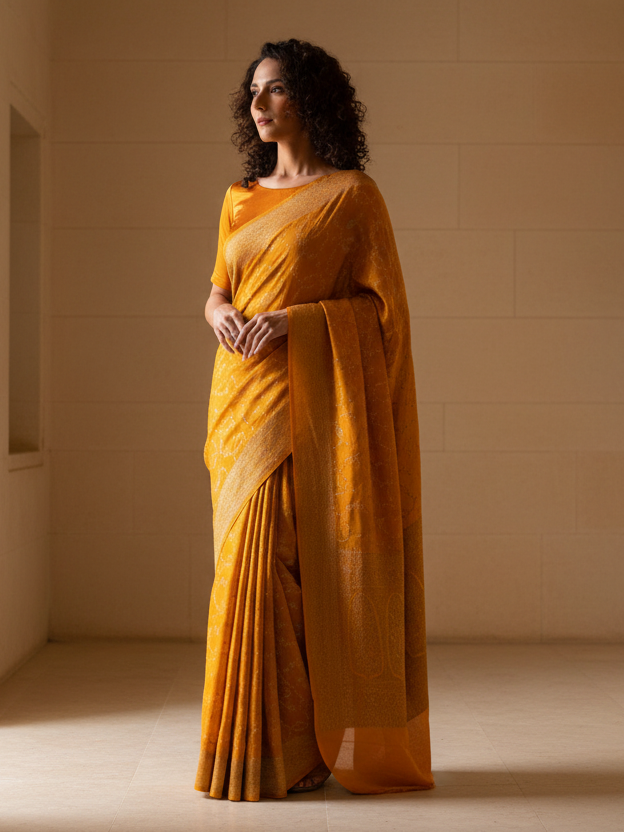
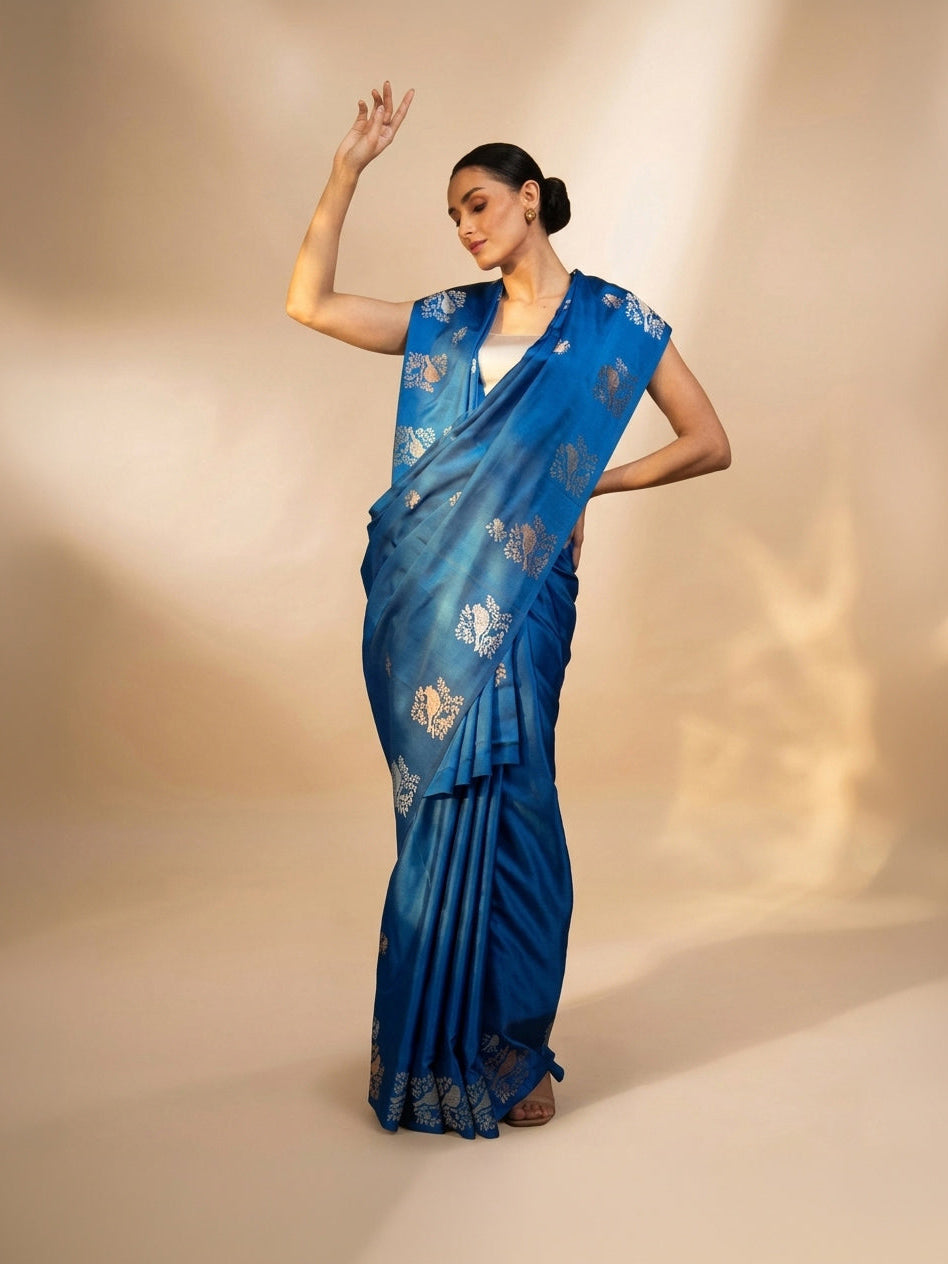
The appeal of Banarasi Chanderi Silk Sarees is different.
Here, the saree works particularly well when you want the Banarasi elements to remain delicate rather than dominant.
Small Booti, subtle zari and open space across the body create a cleaner surface. That can make the saree especially attractive for women who like traditional Indian textiles but do not enjoy very elaborate dressing.
Banarasi Chanderi can work beautifully for:
morning functions, pujas, intimate weddings, festive lunches, family gatherings and occasions where understated dressing feels more appropriate.
For a deeper explanation of this category, see What Is a Banarasi Chanderi Silk Saree?.
Which One Has the Better Drape?
There is no universal winner because drape depends on the individual saree as much as the category.
Instead of asking which fabric is “better,” think about what you want from the silhouette.
Cotton Silk usually has enough body to hold the saree together neatly while still being appropriate for lighter dressing.
Banarasi Chanderi is better suited to a delicate, refined visual effect where the fabric and motifs do not appear too dense.
But weaving changes everything.
A Cotton Silk saree covered in Jaal will behave differently from one with widely spaced Booti. Likewise, additional zari can change the way a Chanderi saree feels once it is fully draped.
If comfort is your primary requirement, compare the actual sarees rather than buying purely by the fabric name.
Which One Is Better for Summer and Day Functions?
Both categories deserve consideration for warm-weather occasions, especially when compared with very dense Banarasi weaving.
The decision comes down to the function.
For a morning puja, festive lunch or daytime ceremony, Banarasi Chanderi's restrained surface can feel particularly appropriate.
For a daytime celebration where you still want more colour or decorative weaving, Cotton Silk gives you more options through Jaal and Meenakari.
The amount of zari also matters.
A lightly woven Cotton Silk saree may be more comfortable for a summer event than a more densely woven saree simply because the latter happens to belong to a category considered lightweight.
Sacred Weaves' guide to Banarasi Sarees for the Summer Season is useful if comfort in warmer weather is your main priority and you want to compare these options with other Banarasi fabrics.
Which One Looks More Festive?
Cotton Silk gives you more room to increase the visual richness without moving into a completely different saree category.
A Meenakari Jaal Cotton Silk Saree, for example, can use both a fuller woven surface and coloured detailing to create a stronger festive impression.
You can explore more of this design language through Sacred Weaves' Meenakari Banarasi Sarees.
Banarasi Chanderi tends to work best when you allow its refined character to remain visible.
Rather than trying to make it look excessively ornate, you can increase the occasion feel through:
a contrasting blouse, traditional earrings, a statement necklace, bangles or richer styling.
So if you want the fabric itself to carry more decorative detail, Cotton Silk may give you more choices.
If you prefer the complete look to feel elegant without the saree becoming visually busy, Chanderi is often the stronger direction.
Which Is Better for Weddings?
For wedding guests and secondary wedding functions, both can work.
The occasion should decide which one you choose.
Choose Banarasi Chanderi for:
-
morning weddings
-
smaller ceremonies
-
engagement lunches
-
intimate functions
-
guests who prefer understated dressing
Choose Cotton Silk for:
-
festive family functions
-
engagements
-
pre-wedding celebrations
-
guests wanting more decorative designs
-
occasions where Jaal or Meenakari can add richness
Neither would necessarily be my first recommendation for a bride seeking a highly traditional, grand main-wedding saree.
If the occasion requires that level of visual richness, it makes more sense to compare them with Banarasi Katan Silk Sarees rather than forcing a lightweight category to fulfil a different purpose.
Which One Is Easier to Rewear?
Both have strong repeat-wear potential, but in different ways.
A Banarasi Chanderi saree with delicate Booti can move easily between a puja, festive lunch, family event and wedding guest look simply by changing the blouse and jewellery.
Cotton Silk offers another kind of versatility because you can choose the level of decoration from the beginning.
A simple Cotton Silk Booti saree can become a frequent festive-wear option, while a Jaal or Meenakari saree may be kept for more celebratory occasions.
If you are specifically buying a saree you hope to wear frequently, look for:
a versatile colour + moderate zari + motifs that are not too occasion-specific.
That combination is often more important than choosing between Cotton Silk and Chanderi alone.
What About Price?
Do not choose between these categories based only on which one appears cheaper.
The price of a handloom Banarasi saree depends heavily on the work involved.
A simple Booti saree and an elaborate Jaal saree do not require the same level of weaving even when their base fabric belongs to the same category.
Similarly, Meenakari, additional zari and more complicated motifs can influence price.
Compare:
fabric + weaving technique + motif density + zari + craftsmanship
rather than comparing two numbers without considering what is actually woven into the saree.
Sacred Weaves displays current prices individually within both its Banarasi Cotton Silk Sarees and Banarasi Chanderi Silk Sarees collections, making it easier to compare actual designs.
Cotton Silk or Chanderi: Which Should You Buy?
|
|
|


The simplest way to decide is to identify what you want the saree to do.
Choose Banarasi Cotton Silk if you want:
-
more variety in woven designs,
-
Booti, Jaal or Meenakari options,
-
a saree that can move from simple to fairly festive,
-
repeat wear across different occasions,
-
or a lighter Banarasi saree with more decorative possibilities.
Choose Banarasi Chanderi if you want:
-
an understated Banarasi look,
-
delicate Booti and subtle zari,
-
elegant daytime dressing,
-
a saree for intimate or smaller celebrations,
-
or a refined aesthetic rather than a highly decorative one.
If you are choosing between two actual sarees, compare them side by side rather than choosing the fabric first.
Look at the colour, motif density, zari, border, pallu and how you intend to style it.
That will usually make the decision much clearer.
Explore Banarasi Cotton Silk and Chanderi Silk Sarees at Sacred Weaves
Sacred Weaves keeps the two categories separate so buyers can explore them according to the type of saree they actually want.
Browse the Banarasi Cotton Silk Sarees collection if you want greater variety across Booti, Jaal and Meenakari designs.
Explore the Banarasi Chanderi Silk Sarees collection when your preference is a light, refined saree with delicate Banarasi detailing.
If you are still unsure, Sacred Weaves' Live Video Shopping option can also help you compare the actual colour, texture, motifs and overall character of a saree before purchasing.
The right choice is ultimately not simply Cotton Silk versus Chanderi.
It is the saree that fits your occasion, preferred level of detailing and the way you genuinely enjoy dressing.


