
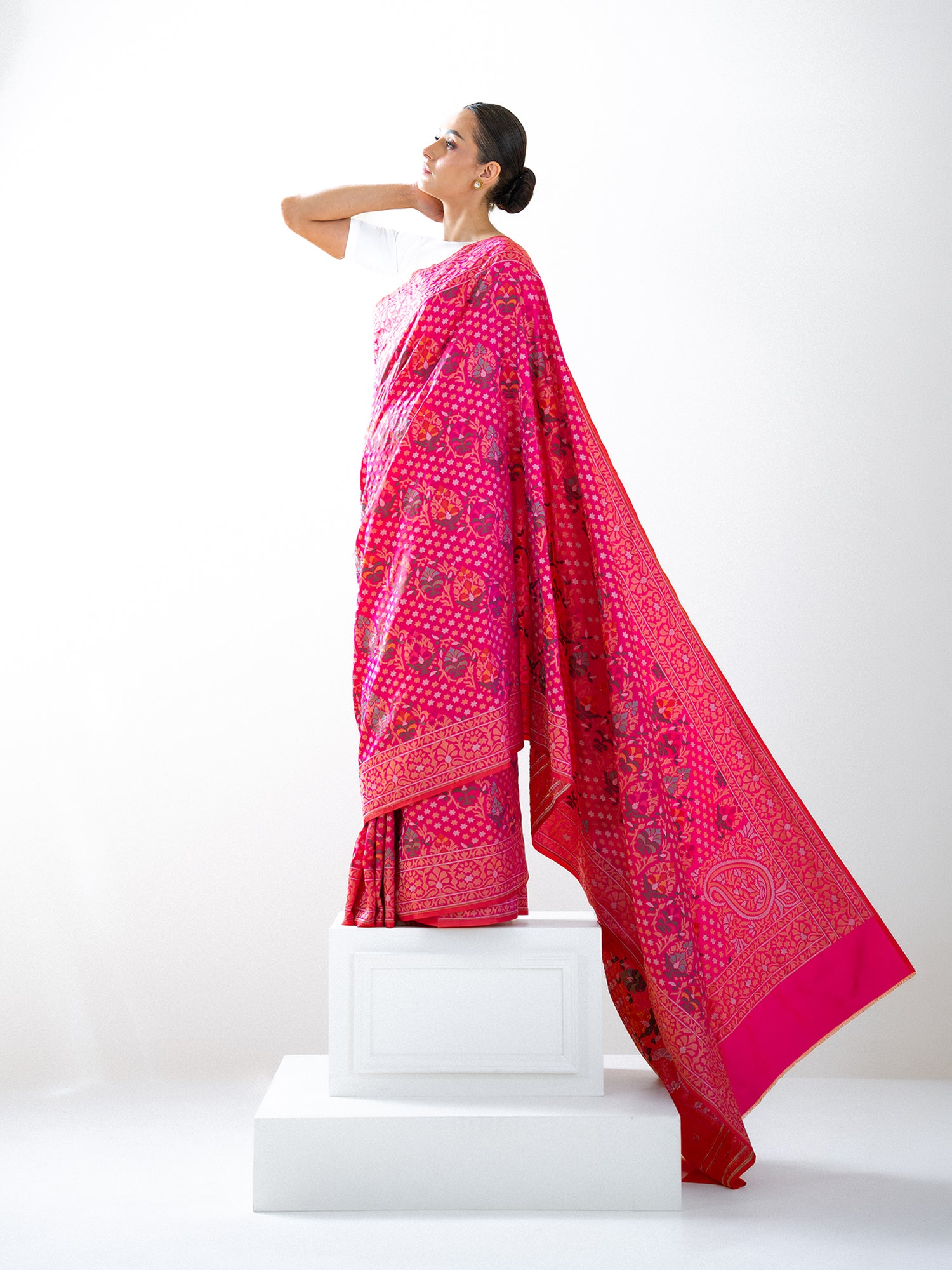
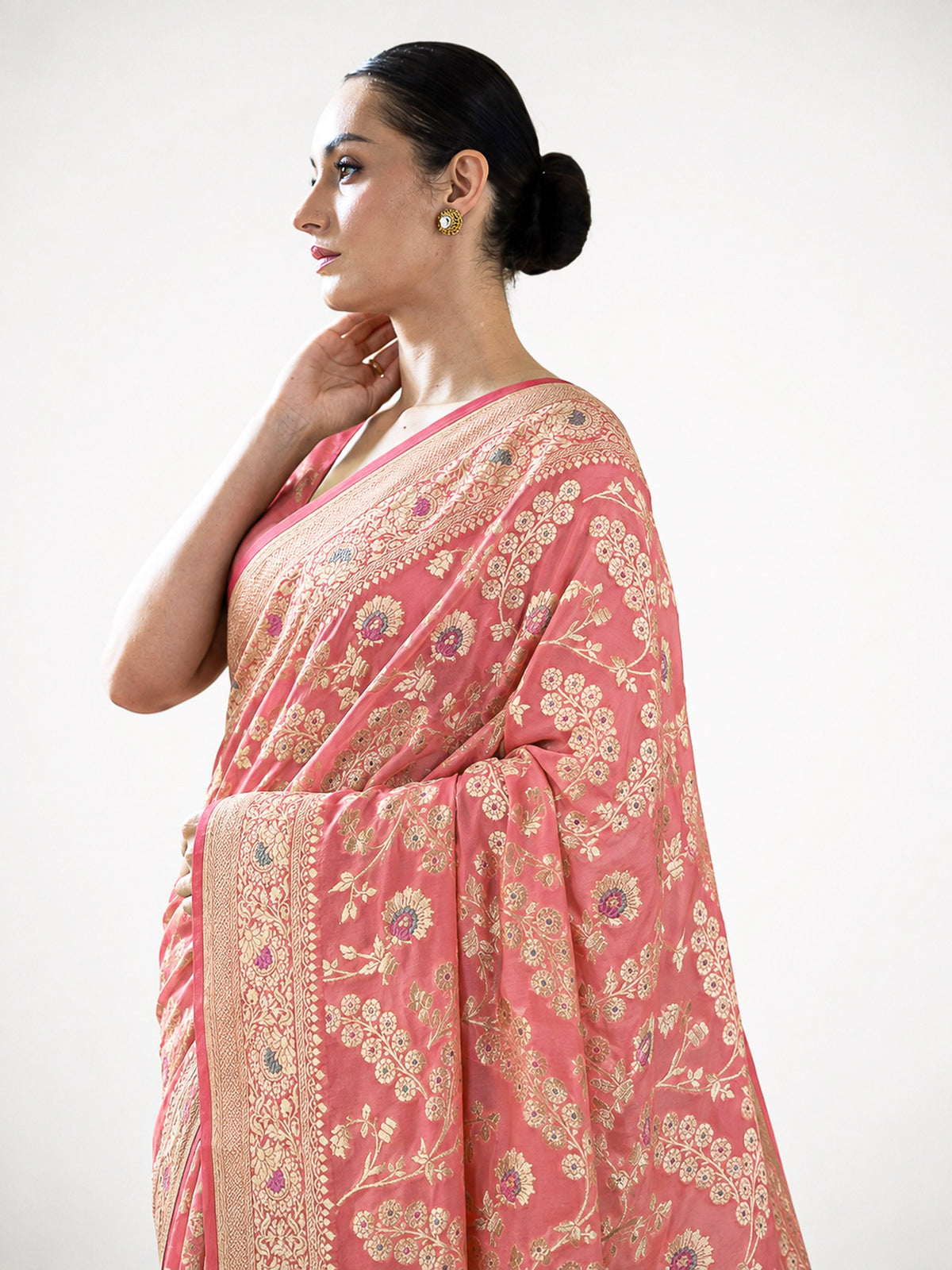
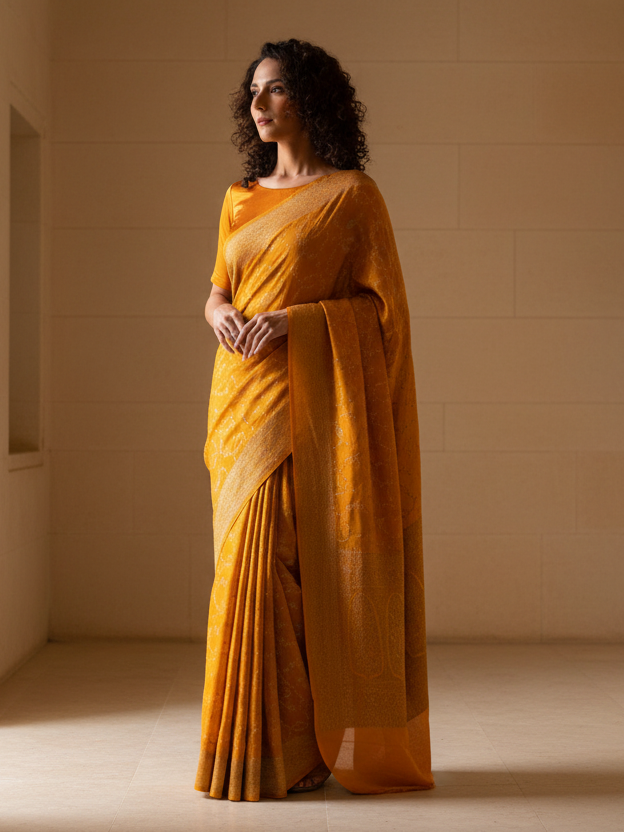
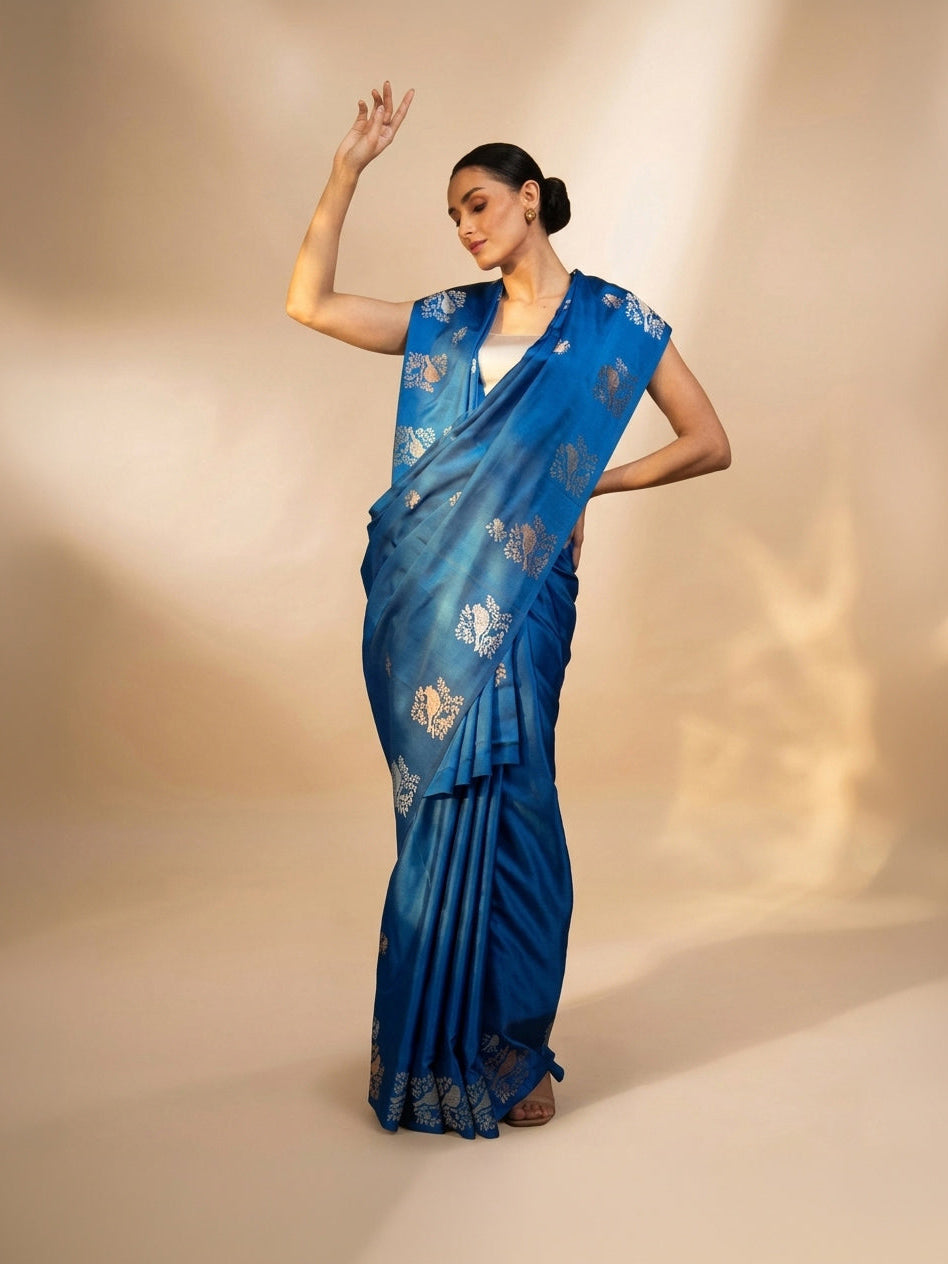
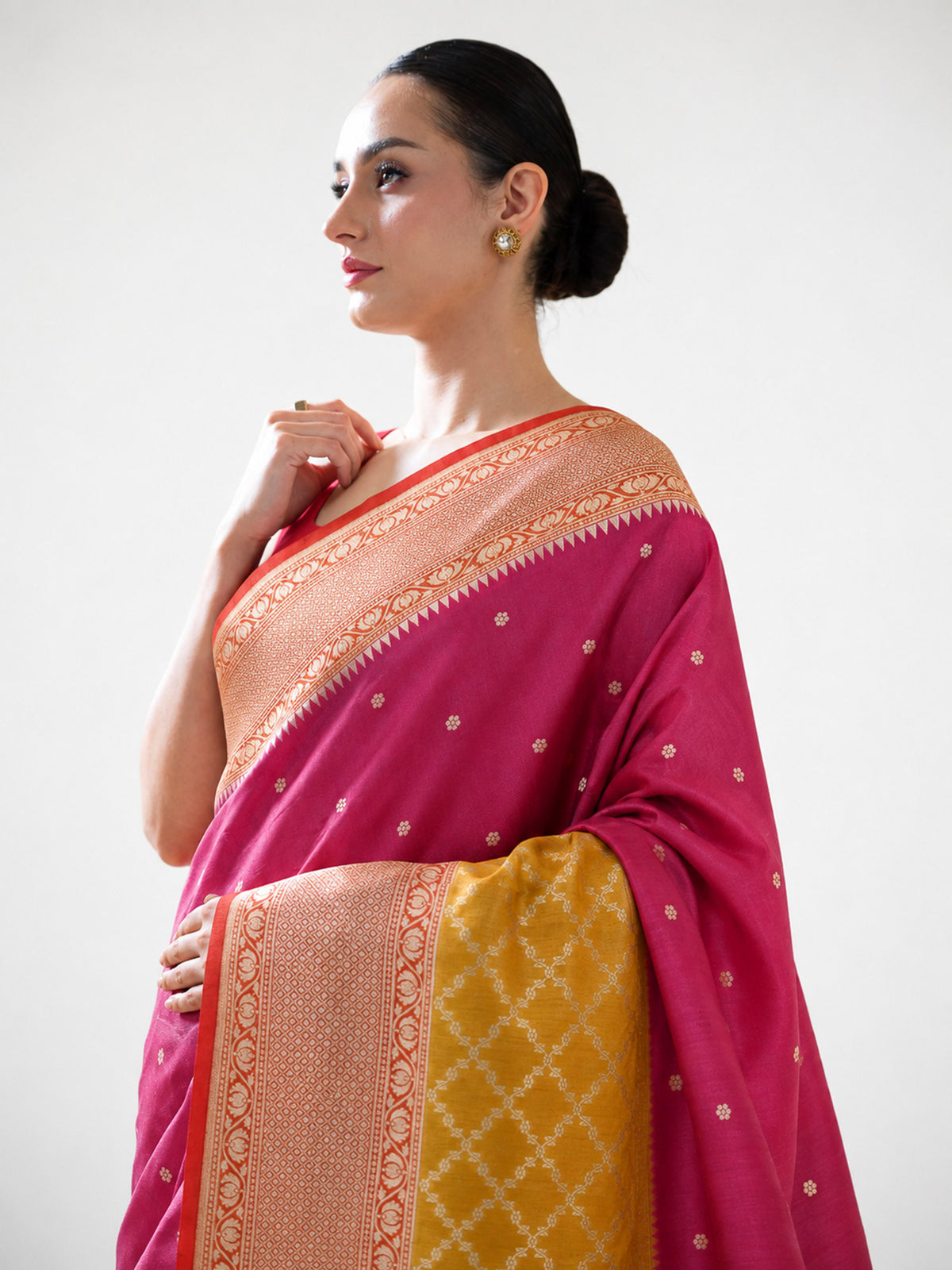

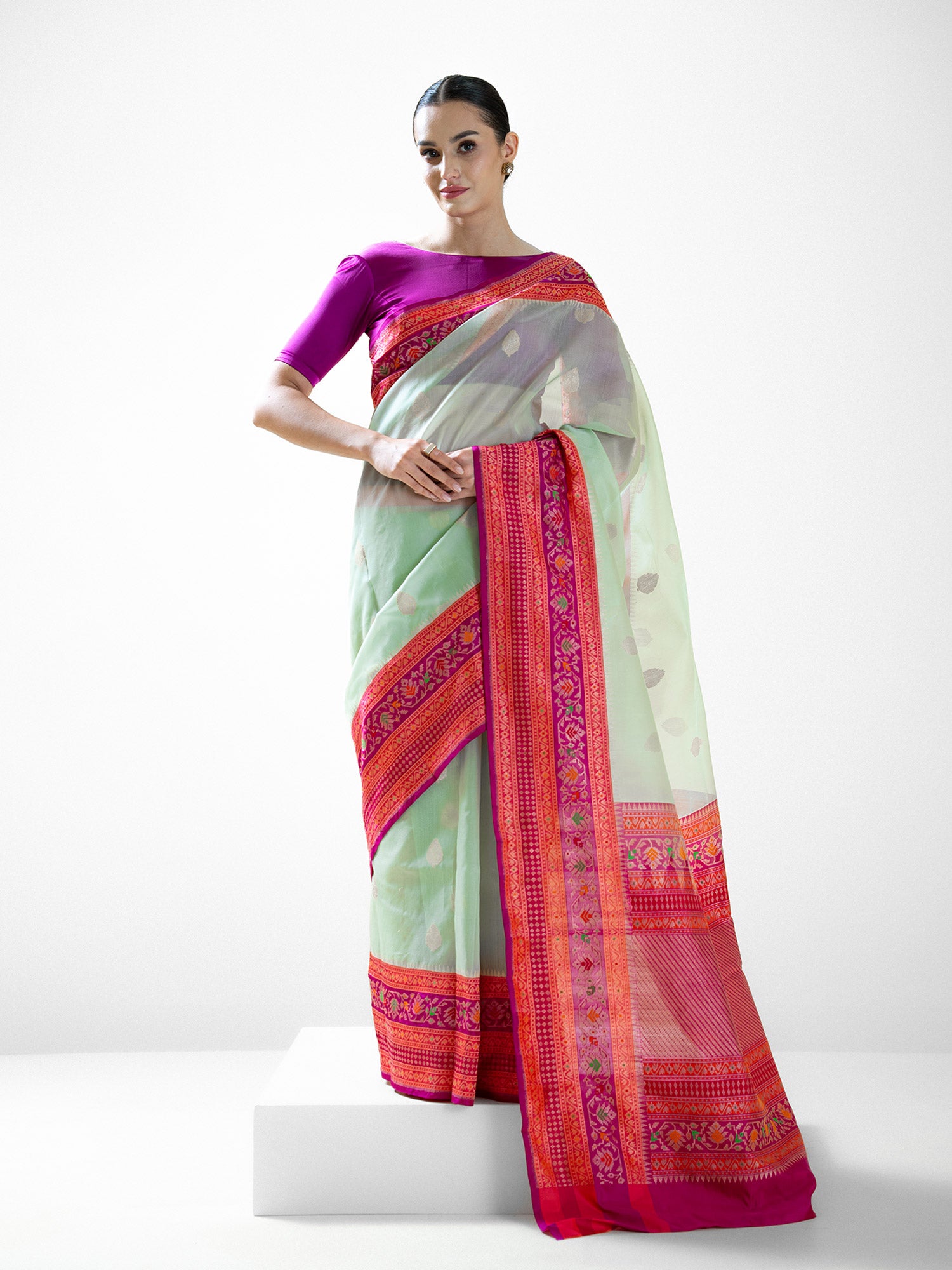
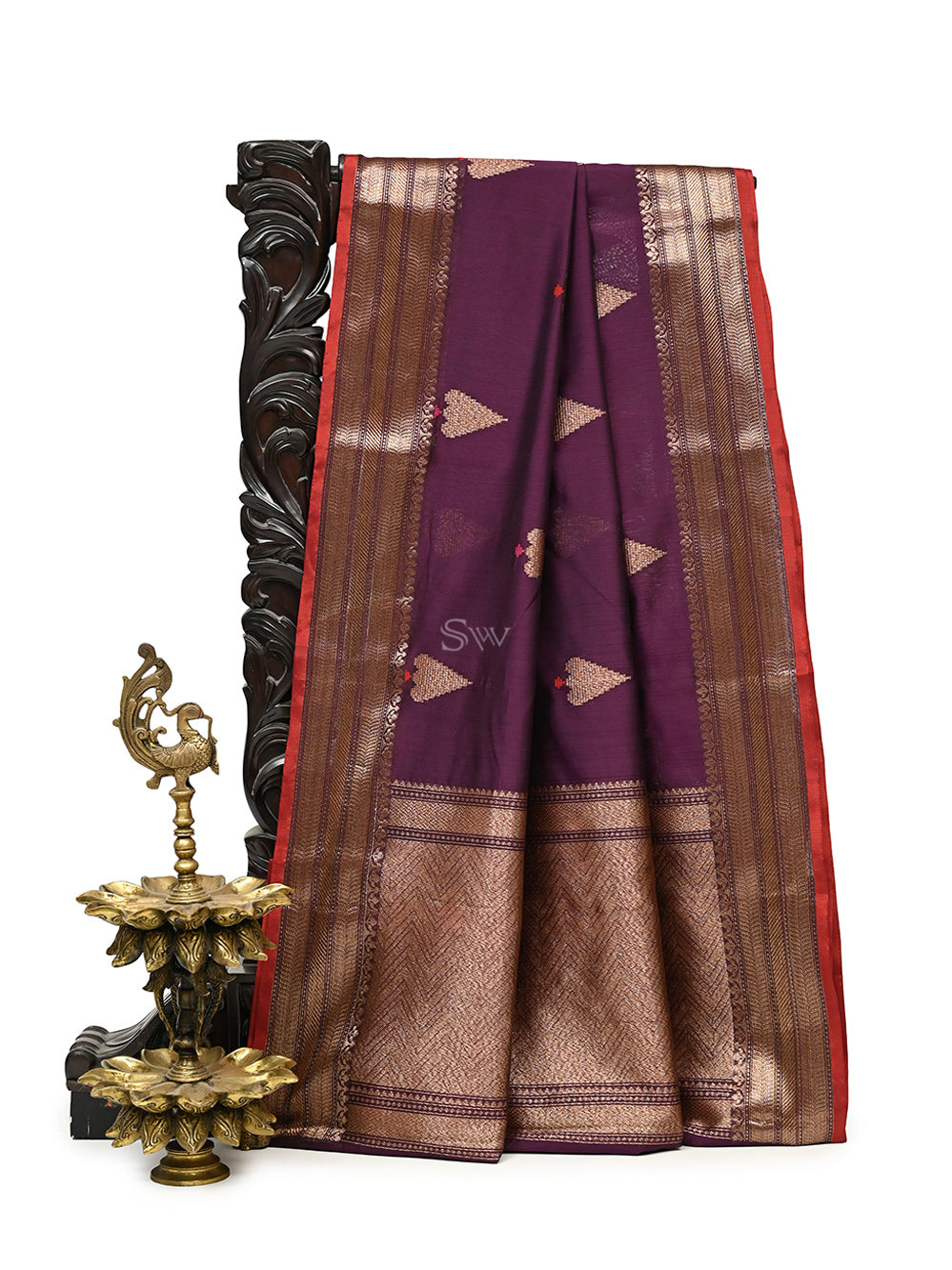


Silk has long been regarded as one of the most lavish and of great cultural value fabrics in India. From weddings to festivals, silk sarees symbolise elegance, tradition, and craftsmanship. However, with the increasing presence of artificial silk in the market, many buyers find it difficult to identify between 100% pure silk and artificial silk.
Understanding the difference is essential—not just for value, but also for authenticity, longevity, and cultural integrity. This guide will help you easily identify the difference between artificial silk and pure silk, while also explaining the important technical details like HSN codes and Silk Mark certification.
What Is Pure Silk?
Pure silk is a natural protein fiber produced from the cocoons of silkworms, primarily Bombyx mori. It is breathable, durable, and develops a graceful sheen over time rather than losing its charm.
In India, pure silk fabrics—especially handloom silk like Banarasi—are prized for:
- Rich texture and natural luster
- Comfort across seasons
- Heirloom and resale value
What Is Artificial Silk?
Artificial silk (also called art silk) is a man-made or semi-synthetic fabric designed to imitate the look of real silk. Common types include:
- Viscose
- Rayon
- Polyester silk
While artificial silk may appear shiny at first glance, it lacks the structural integrity, breathability, and longevity of pure silk.
Key Differences Between Artificial Silk and Pure Silk
1. Texture & Feel
- Pure Silk: Soft, smooth, and warm to the touch
- Artificial Silk: Slippery or stiff, often feels cool and synthetic
2. Shine
- Pure Silk: Natural, subtle sheen that changes with light
- Artificial Silk: Uniform, overly glossy shine
3. Breathability
- Pure Silk: Highly breathable and temperature-regulating
- Artificial Silk: Poor airflow; can feel uncomfortable over time
4. Ageing Over Time
- Pure Silk: Becomes softer and more graceful
- Artificial Silk: Loses shine and structure quickly
Easy Tests to Identify Pure Silk
Burn Test (Traditional Method)
- Pure Silk: Smells like burnt hair and turns to ash (This test should only be done by professionals.)
- Artificial Silk: Smells like plastic and melts into hard residue
Ring Test
- Pure Silk: Easily passes through a ring due to fine fibers
- Artificial Silk: Often resists due to stiffness
Zari & Weave Inspection
Pure silk sarees—especially Banarasi—often use real zari or tested zari and have intricate handwoven detailing that is difficult to replicate with artificial materials.
Understanding HSN Codes for Silk
HSN (Harmonised System of Nomenclature) codes are used for GST classification in India and can help identify fabric authenticity.
Common Silk-Related HSN Codes:
- HSN 5007 –Code for Pure Silk
- HSN 5407 / 5516 – Code for Artificial Silk, Synthetic Silk
When purchasing silk, checking the HSN code on invoices is an important step to confirm whether the product is genuine silk or synthetic.
Silk Mark Certification: The Most Reliable Proof
The Silk Mark is a certification issued by the Silk Mark Organisation of India (SMOI) under the Central Silk Board.
A Silk Mark certified product:
- Is made of 100% pure natural silk
- Comes with a Silk Mark hologram label
- Guarantees authenticity and quality
This certification protects consumers from misleading claims and ensures transparency in the silk industry.
Our Commitment to Pure Silk
At Sacred Weaves, we work exclusively with 100% pure silk fabrics. All our silk products are:
- Made from genuine natural silk
- Silk Mark certified
- Supplied with an official Silk Mark hologram
- Aligned with the correct HSN codes for pure silk
Our focus is not only on luxury but also on authenticity, ethical sourcing, and preserving India’s handloom heritage.


