
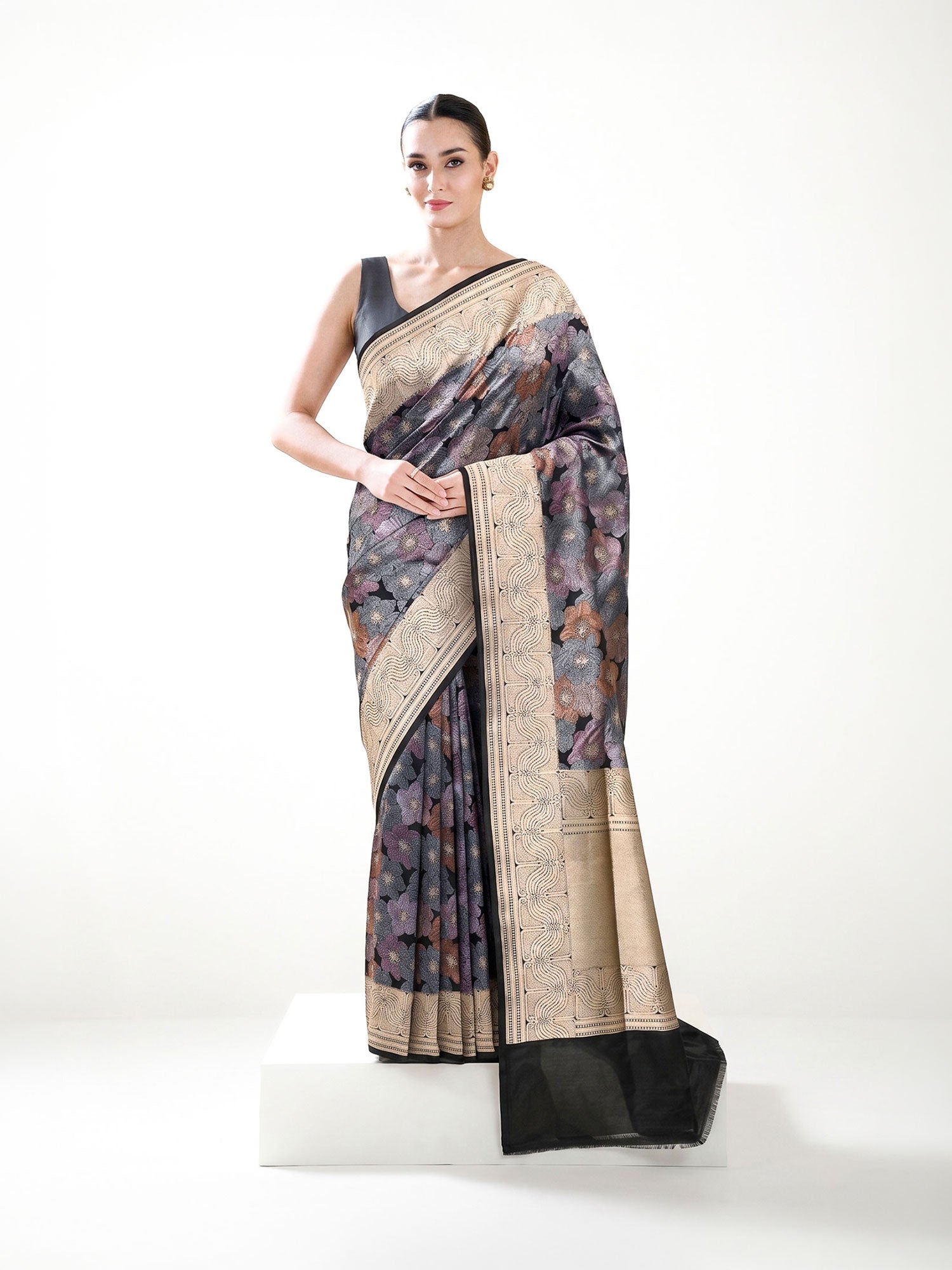
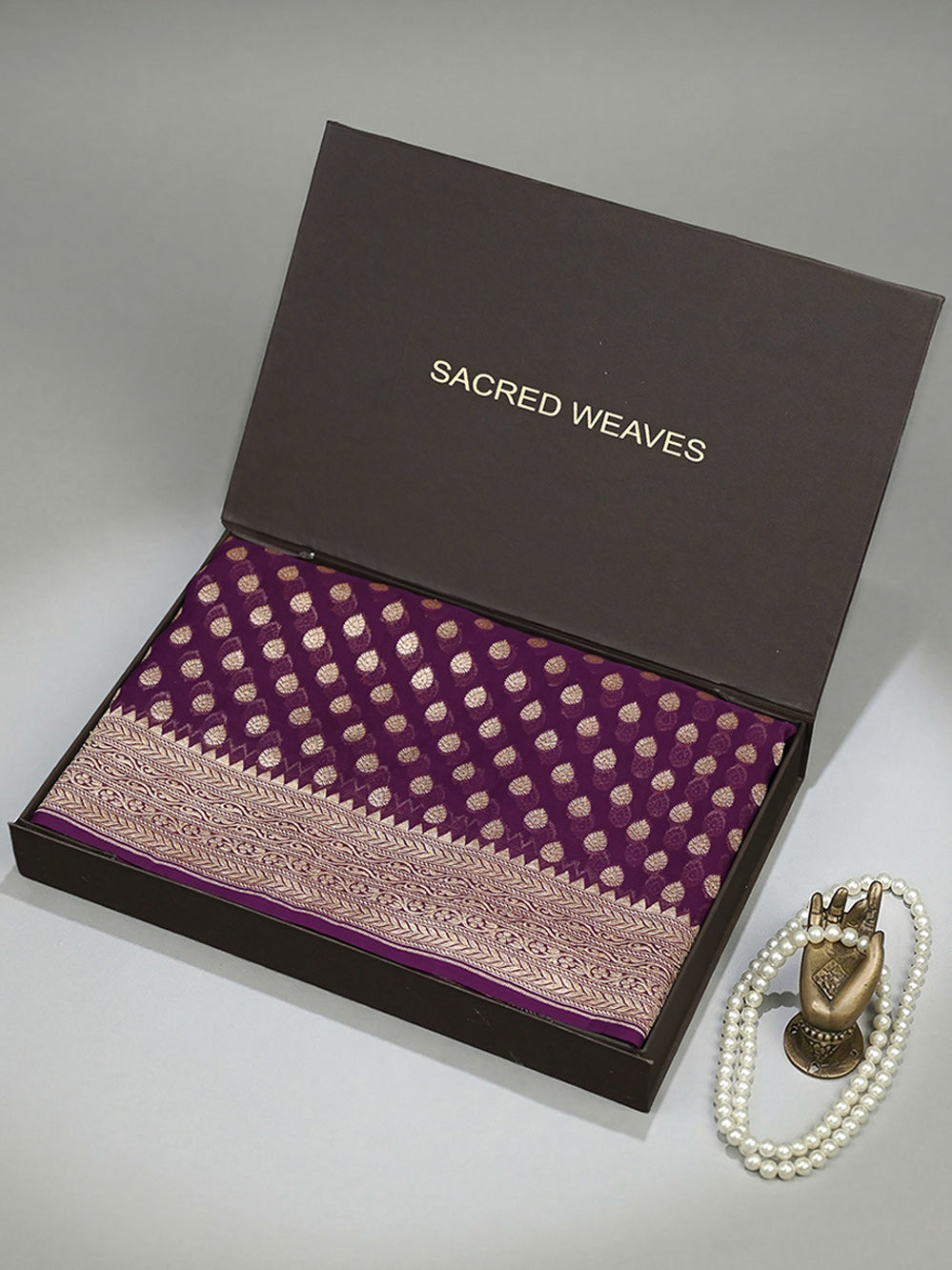
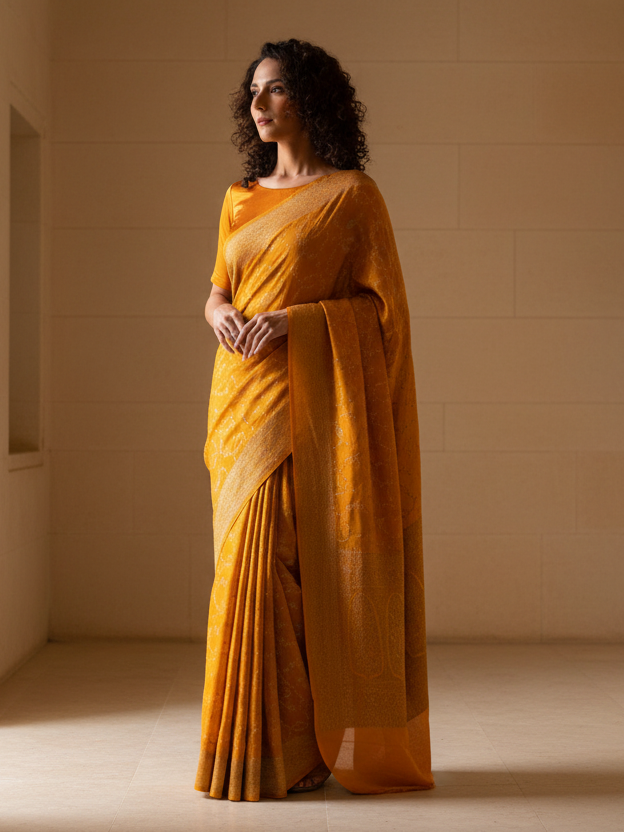
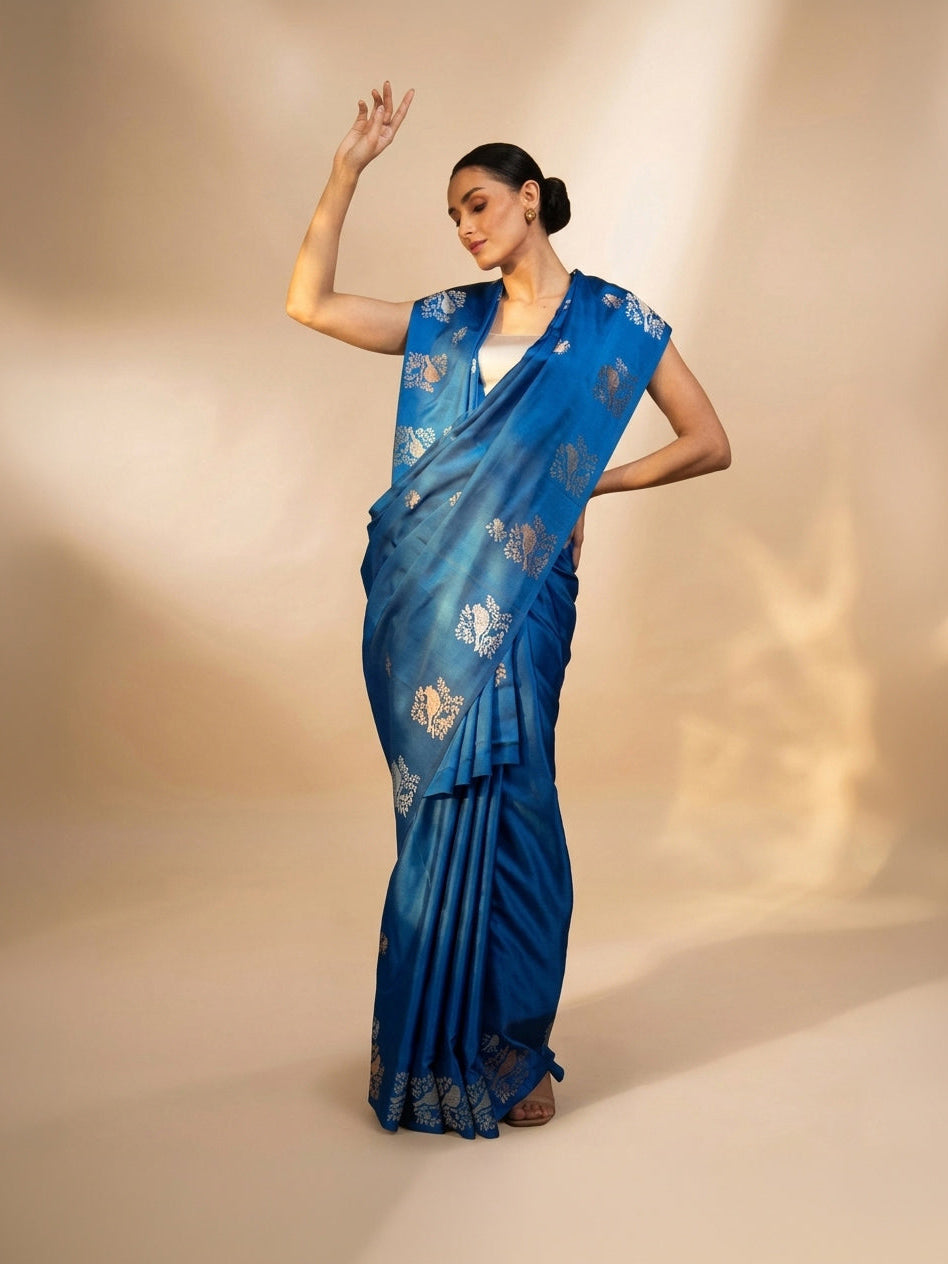
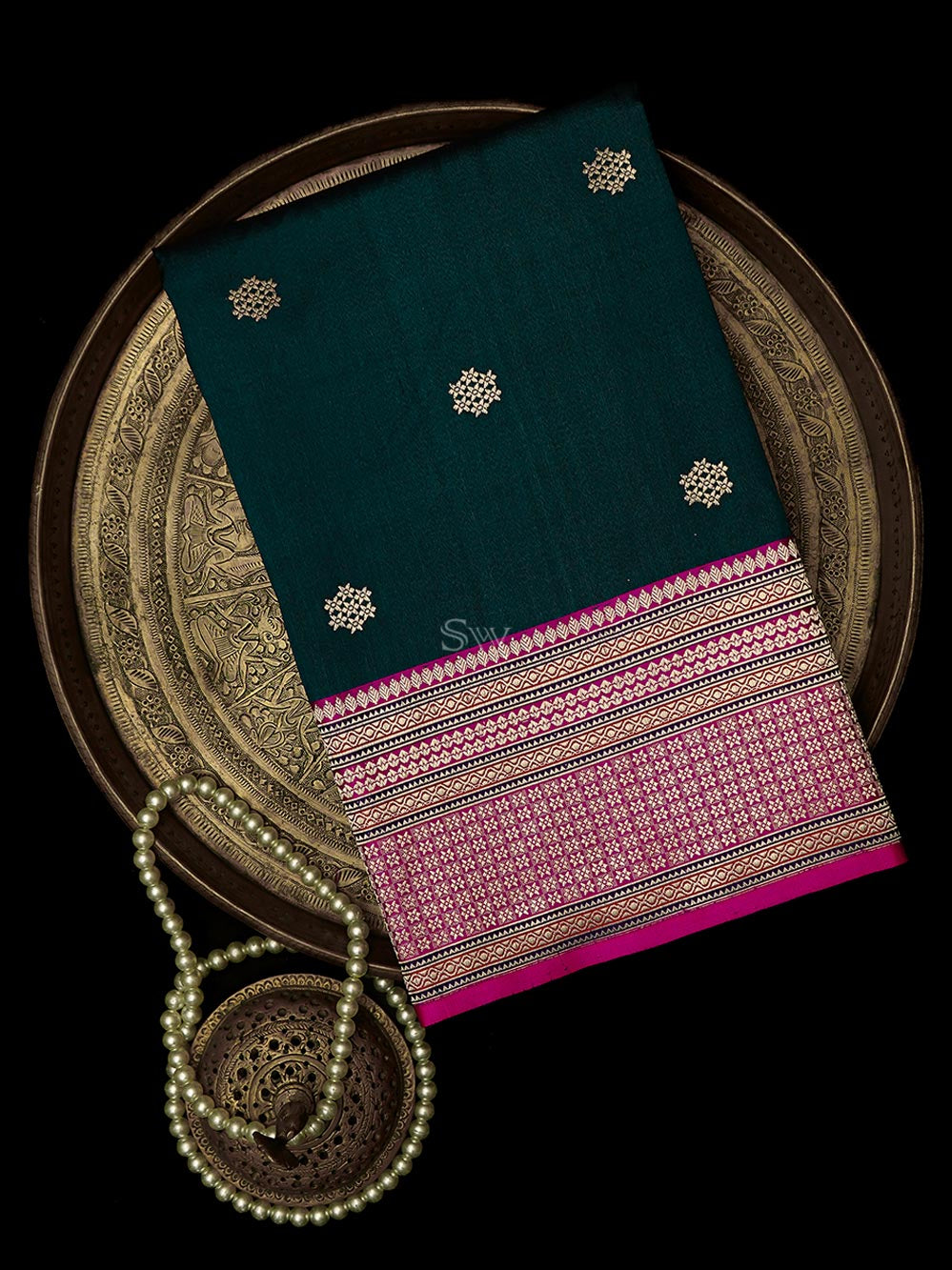
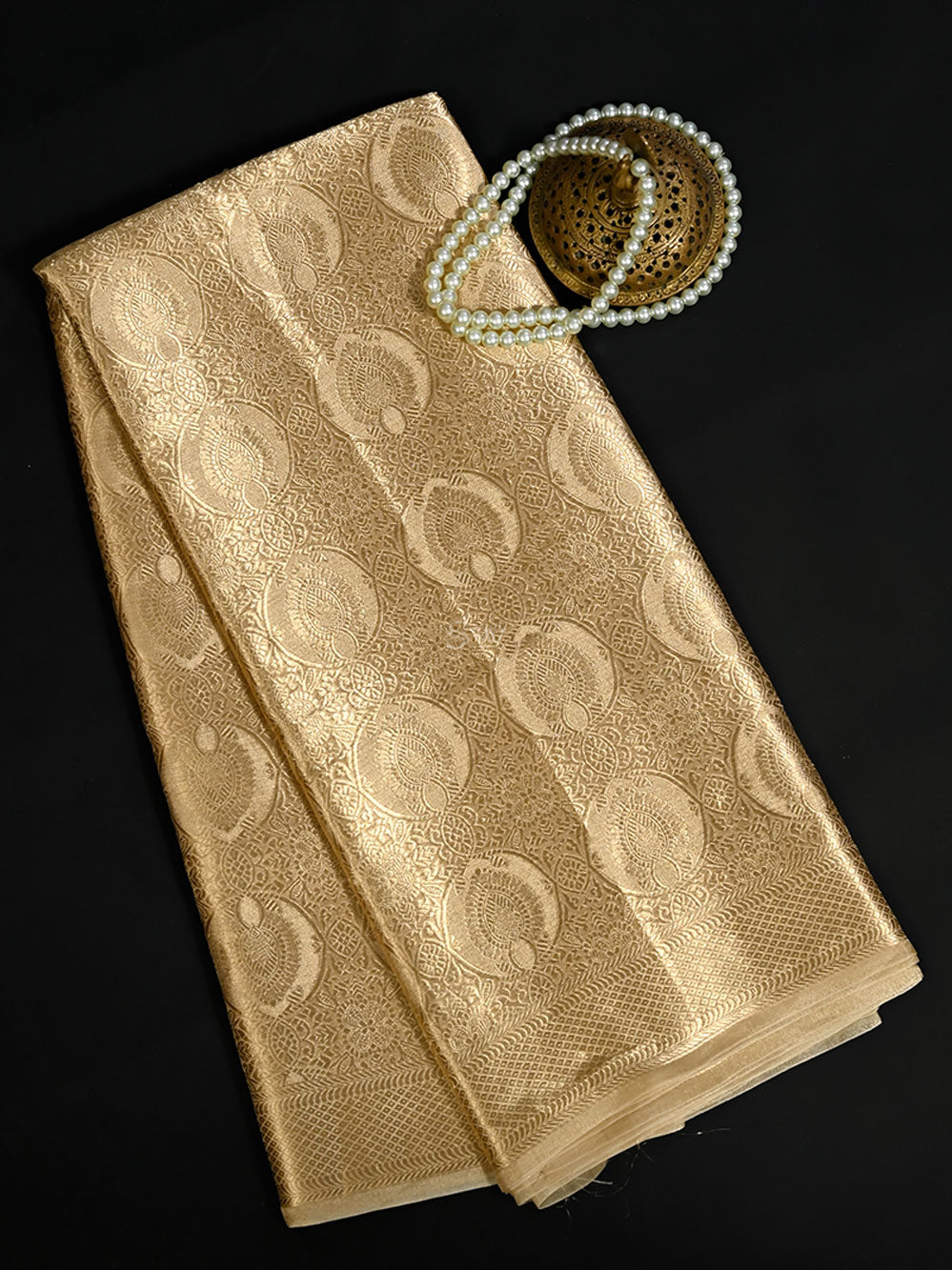
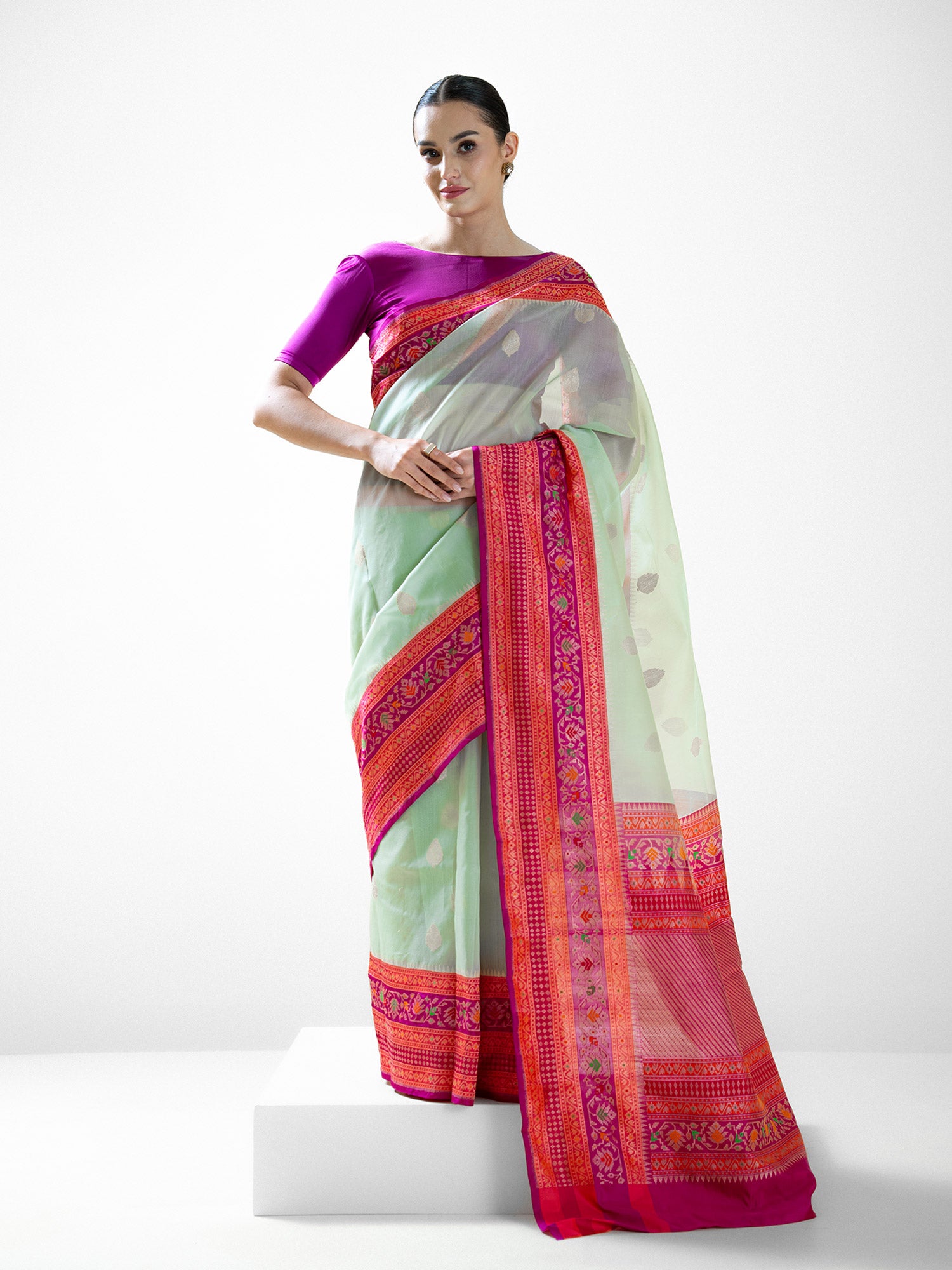
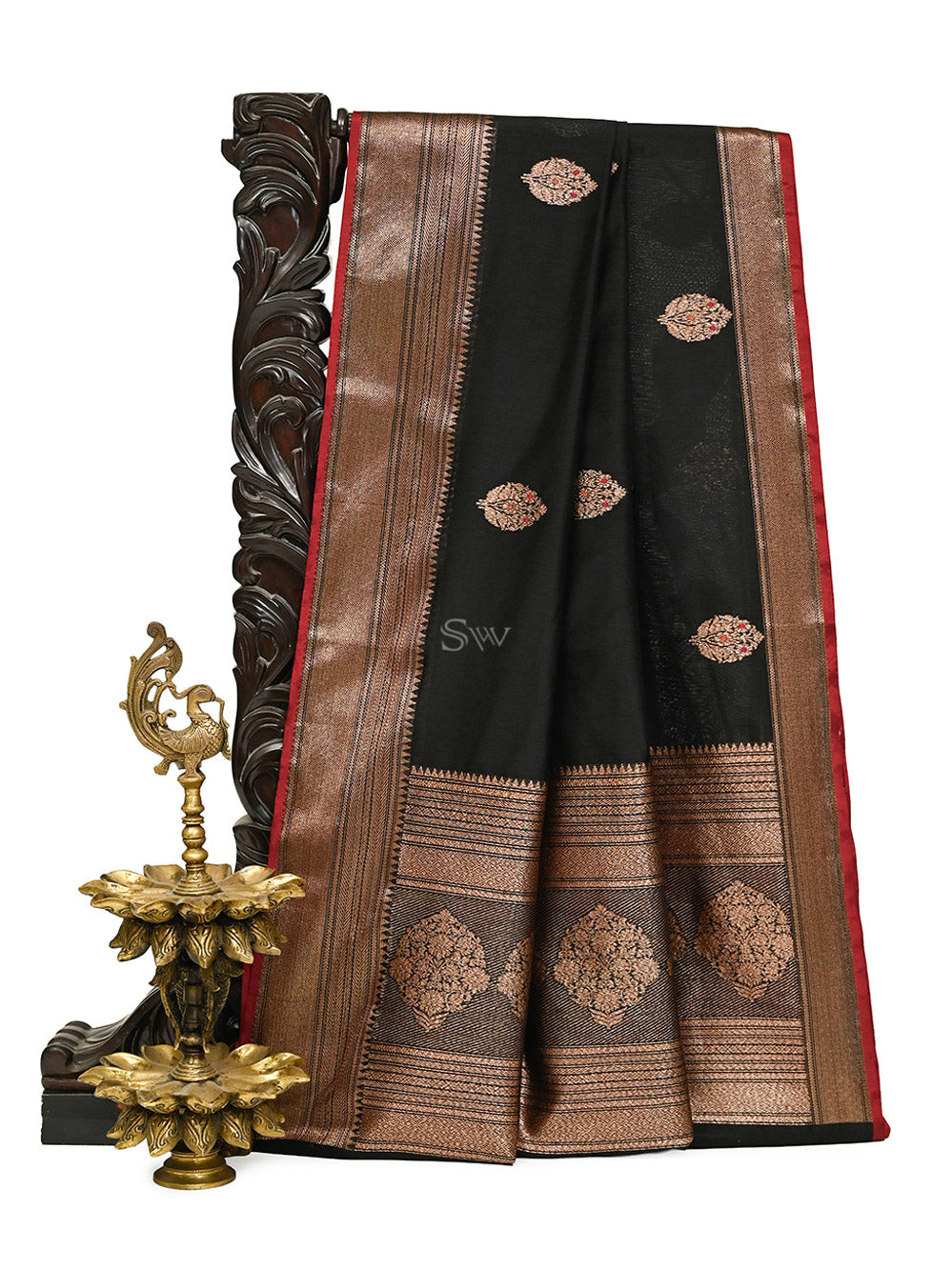


Have you ever paid good money for a "pure silk" saree — only to realise months later that it lost its sheen too quickly, or that it just didn't feel right? Maybe someone in the family pointed it out. Maybe you figured it out yourself after washing it once.
You're not the first. And sadly, you won't be the last.
The Indian silk market — especially the Banarasi saree segment — has a serious problem with mislabelling. Synthetic fabrics, blended yarns, and machine-made copies are sold daily under the tag of "pure silk." And unless you've been buying silk sarees for decades, it's genuinely hard to tell the difference just by looking.
That's why Silk Mark exists. And if you're serious about buying real silk, this is the one thing you absolutely must understand.
So, What Exactly Is Silk Mark?
Silk Mark is a certification label — an official quality assurance stamp — issued by the Silk Mark Organisation of India (SMOI). SMOI functions under the Central Silk Board, which reports to India's Ministry of Textiles.
In the simplest terms: if a saree carries the Silk Mark label, it has been independently verified to be made from 100% pure natural silk. No blending. No synthetic substitutes. No shortcuts.
You can think of it the same way you think about BIS hallmark for gold jewellery. The hallmark tells you the gold is real and pure. Silk Mark does the same for silk.
The label itself has a distinctive look — a cream-coloured tag featuring a golden silk cocoon design. It also carries a unique serial number, and increasingly, a QR code that you can scan on the spot to verify authenticity.
Why Was This Even Needed?
India is no small player in silk. We are the second-largest silk producer in the world, after China. Silk is woven into our culture — literally. From wedding trousseaus in Tamil Nadu to bridal Banarasi sets in UP to Muga silk worn during Bihu in Assam — silk is everywhere.
But that popularity created a market opportunity for the wrong kind of sellers.
As demand grew, cheaper alternatives flooded in. Art silk (artificial silk), viscose, polyester, and blended fabrics started getting sold as "pure silk" across markets, online platforms, and even some retail stores. The price points looked attractive. The sarees looked decent. But they weren't silk.
For buyers — especially those spending ₹15,000 to ₹80,000 on a Banarasi silk saree for a wedding — this was a real betrayal. And for the weavers? It crushed their livelihoods because fake products undercut genuine handloom work.
SMOI was set up to fix exactly this. The Silk Mark creates accountability. It protects buyers. And it protects the craftsmen who've spent generations perfecting their art.
Which Types of Silk Does It Cover?
This is something many people don't realise — Silk Mark isn't limited to just one variety. It covers the full range of India's natural silk types:
- Mulberry Silk is the most widely used. Almost every classic Banarasi or Kanjivaram saree is woven on a mulberry silk base. Smooth, lustrous, and strong — this is what most people picture when they think "silk saree."
- Tussar Silk comes from wild silkworms and has a slightly coarser, more textured feel. It has a warm golden tone that is very distinctive. You'll find it commonly in Jharkhand, Bihar, and Odisha.
- Eri Silk is sometimes called "Ahimsa silk" because the moth is allowed to emerge from the cocoon naturally before the fibre is harvested. It's softer and more matte than mulberry silk.
- Muga Silk is rare. Genuinely rare. It's produced only in Assam, it has a natural golden sheen that actually deepens with age and washing, and it carries a GI (Geographical Indication) tag. A real Muga saree is an heirloom piece.
- Banarasi Silk Sarees, woven in and around Varanasi, usually combine pure mulberry silk with real zari (gold or silver thread) to create the heavy, intricate brocade work that Banarasi weaving is famous for worldwide.
All of these are covered under Silk Mark — as long as the silk content is 100% natural.
How Do You Actually Spot the Silk Mark Tag?

When you're standing in a store or receiving a delivery, here's what to check:
The physical tag should be stitched onto the saree — not just loosely attached with a safety pin in a way that could easily belong to another piece. The tag is cream or off-white, with the cocoon logo printed clearly.
Each tag has a unique serial number. You can enter this number on the official SMOI website (silkmark.in) and verify whether the tag is genuine.
Many tags now also carry a QR code. Pull out your phone, scan it, and you'll get immediate information about the product and the registered seller. Takes about ten seconds.
Speaking of sellers — only SMOI-registered sellers can legally affix a Silk Mark label. So if you're buying from someone claiming to sell Silk Mark certified products, ask for their SMOI registration. A legitimate seller will have it ready.
What If There's No Silk Mark? Can You Still Test for Pure Silk?
Yes. Especially when buying from local weavers, craft fairs, or smaller establishments that may not yet be Silk Mark registered, a few basic checks help.
- The burn test is the oldest and most reliable. Take two or three threads from a hidden part of the saree — the inner border or the pallu edge. Hold a flame to them. Pure silk burns slowly, smells strongly of burnt hair (because silk is a protein fibre, like human hair), and leaves behind a fine, crushable ash. Synthetic fibres melt, smell like melting plastic, and leave a hard little bead.
- The feel test takes a bit of practice but is very intuitive once you've handled enough silk. Real silk warms up quickly in your hands. It has a subtle natural texture — not perfectly glassy smooth, but rich and slightly textured. Polyester feels uniformly slippery and stays cool.
- The price reality check is underrated. A handwoven Banarasi silk saree takes anywhere from 3 days to 3 weeks to complete, depending on the complexity of the design. Weavers need to be paid fairly for that labour. If something is priced at ₹1,500 and described as "pure Banarasi silk," it isn't. Simple as that.
Why This Matters Especially for Banarasi Silk Sarees
Varanasi has been weaving silk for over 600 years. The craft that comes out of this city — the intricate jaal work, the real zari, the thick brocade borders, the kadwa and cutwork techniques — is genuinely irreplaceable. There is nothing quite like it anywhere in the world.
But Banarasi sarees have also been the most frequently copied. Power-loom versions made from art silk are sold across India as "original Banarasi." They look similar to an untrained eye. But they lack the weight, the depth of weave, and the longevity of a genuine piece.
A real pure Banarasi silk saree with Silk Mark certification, and ideally a GI tag, is your guarantee that you're getting the real thing — something that can be passed down, that holds its value, and that honours the craftsman who made it.
At Sacred Weaves, this is not just a selling point for us. It's the foundation we are built on. Every saree we offer comes from Varanasi's genuine weaving community — because we believe you deserve to know exactly what you're wearing.
Sacred Weaves & Silk Mark Certified Sarees
At Sacred Weaves, authenticity is at the heart of every collection.
Our pure silk sarees:
- Are Silk Mark Certified
- Include the official Silk Mark label
- Come with a Certificate of Authenticity by Sacred Weaves
- Are sold under HSN Code 5007, the official code for 100% pure silk
We work closely with skilled artisans and traditional weaving communities to preserve India’s handloom heritage while ensuring transparency for modern buyers.
Sacred Weaves is rooted in the weaving lanes of Varanasi. We bring you authentic, handcrafted Banarasi silk sarees that carry the legacy of generations. Visit us at https://www.sacredweaves.com/
Shop with Confidence Through Video Shopping
Buying silk online can feel uncertain. To make the process easier, Sacred Weaves offers a personalized Video Shopping Experience.
During live consultation, customers can:
- View fabric texture and natural silk sheen
- Examine zari detailing closely
- Understand drape and fall
- Compare colours in real lighting
- Interact directly with saree experts
This recreates the experience of shopping in-store while sitting comfortably at home.

